
Germany Leads Austria and Italy in New Trans-Alpine Rail Corridor

Updated
Published
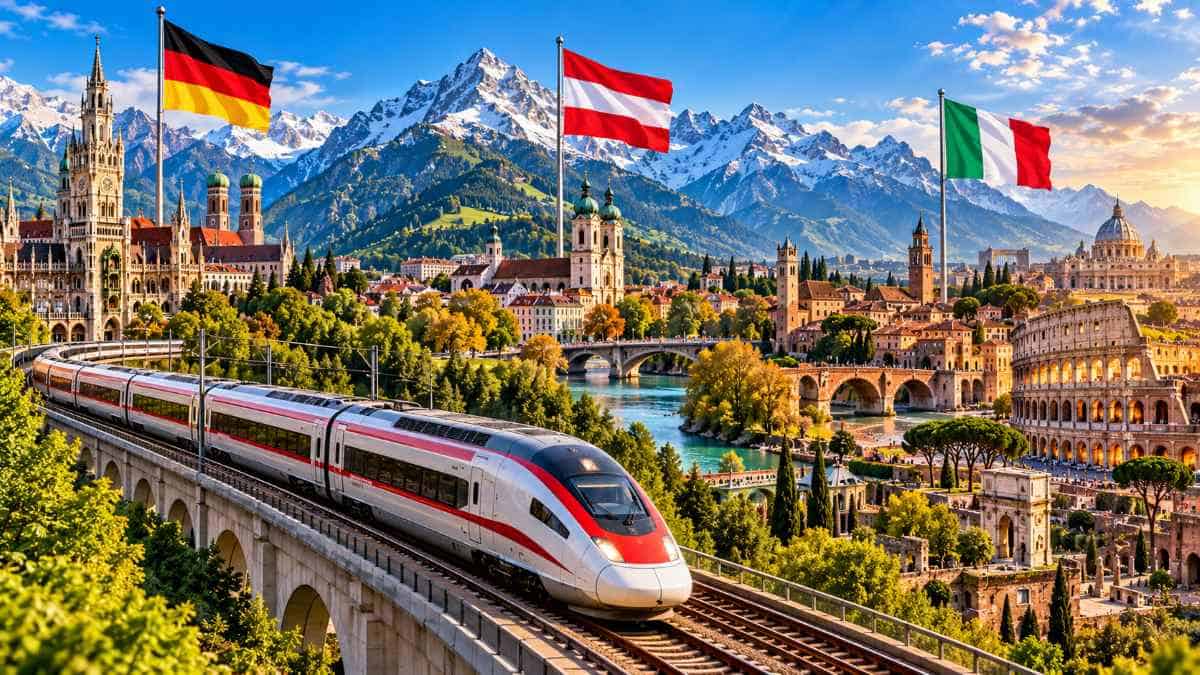
Germany Leads Austria and Italy in New Trans-Alpine Rail Corridor. The cities of Munich, Innsbruck, Verona, Milan, and Rome are expected to enjoy improved connectivity via an international railway deal between Germany, Austria, and Italy. The national railway companies of Deutsche Bahn, ÖBB, and Trenitalia have launched a joint timetable plan that will be operational starting from 13 December 2026 for these five cities. The deal is to provide synchronised tickets, international lounge privileges for business class, and a single ticket price for qualified journeys across the three countries. The aim is to enhance the cross-border travel experience and increase the preference for trains for company personnel over short-haul flights. From the point of view of international tourists, the move may prove to be beneficial in planning a holiday through these five cities of Central and Southern Europe.
Munich, Innsbruck and Verona Strengthen Alpine Connectivity
The proposed corridor brings together destinations with distinct tourism experiences, allowing travellers to move from major metropolitan centres into the Alpine region before continuing towards northern Italy.
Munich serves as an important gateway to southern Germany, attracting visitors through its historic architecture, museums, traditional Bavarian culture and culinary attractions. Marienplatz, Nymphenburg Palace and the English Garden remain among its prominent visitor destinations.
Innsbruck provides a contrasting experience, combining an established historic centre with access to the Austrian Alps. The Golden Roof, Imperial Palace and Nordkette mountain range attract visitors interested in architecture, outdoor activities and mountain scenery. Its position within the Alps also makes the city an important destination for winter sports and summer hiking.
Advertisement
Advertisement
Further south, Verona offers a combination of Roman heritage, medieval architecture and Italian cultural experiences. The Arena di Verona, Piazza delle Erbe and Juliet’s House are among the city’s recognised attractions. Its location also provides access to Lake Garda, making it a convenient base for visitors seeking additional excursions in northern Italy.
The integrated timetable aims to make these destinations easier to combine within a single international rail itinerary.
Advertisement
Advertisement
Verona, Milan and Rome Expand Italy’s Tourism Connections
The railway arrangement also connects the Alpine region with three important Italian destinations.
Milan attracts international visitors through its fashion districts, shopping streets, architecture and cultural institutions. The city’s prominent attractions include the Duomo di Milano, Galleria Vittorio Emanuele II and Santa Maria delle Grazie, which houses Leonardo da Vinci’s The Last Supper.
Rome provides a different experience, with its ancient monuments, religious heritage and historic neighbourhoods. Visitors can explore the Colosseum, Roman Forum, Vatican Museums, Trevi Fountain and St Peter’s Basilica.
For tourists, the proposed railway integration could support itineraries beginning in Munich or Innsbruck and continuing through Verona and Milan before reaching Rome. This would allow visitors to combine Alpine landscapes, northern Italian cities and the Italian capital without relying on multiple regional flights.
Unified Ticketing Simplifies International Rail Journeys
One of the central features of the agreement is synchronised ticketing across Deutsche Bahn, ÖBB and Trenitalia services.
Under the proposed framework, eligible passengers would be able to organise qualifying cross-border journeys through an integrated booking arrangement rather than purchasing separate tickets for each participating railway operator.
Advertisement
Advertisement
The dynamic single-pass pricing system is also intended to provide coordinated fares across the corridor. This could make it easier for travellers to compare journey options and organise longer rail-based holidays.
For international visitors, simplified booking could reduce the administrative work involved in planning journeys across three national railway networks.
The agreement also standardises international business-class lounge access for eligible passengers, offering a more consistent premium travel experience at participating stations.
Business Travel and Europe’s Lower-Emission Transport Goals
Corporate mobility is another important focus of the agreement. Munich, Milan and Rome are major business destinations, while Innsbruck and Verona provide important connections along the wider European transport network.
By improving timetable coordination and ticketing, the participating operators aim to make rail a more practical option for business travellers undertaking journeys across national borders.
The initiative also supports wider European efforts to encourage lower-emission transport options for suitable journeys. Replacing some short-haul regional flights with high-speed rail could reduce reliance on aviation for routes where convenient railway connections are available.
Advertisement
Advertisement
For tourism, this approach could encourage visitors to consider train-based holidays that combine several cities while providing access to central railway stations.
Implementation Scheduled for December 2026
Germany Leads Austria and Italy in New Trans-Alpine Rail Corridor. The creation of the Trans-Alpine High Speed Rail Corridor is scheduled for 13th December 2026. The operation of the Trans-Alpine Corridor would depend on the timetables, transport, the booking process, access to the lounge, and finally the price of the train service. Those individuals using the rail service to move across Germany, Austria, and Italy must consider the timetables, ticketing, luggage information, and connectivity. This kind of agreement will ensure that cities such as Munich, Innsbruck, Verona, Milan, and Rome run their operations within one railway network connecting Alpine Tourism and Italian Culture.
Advertisement
