
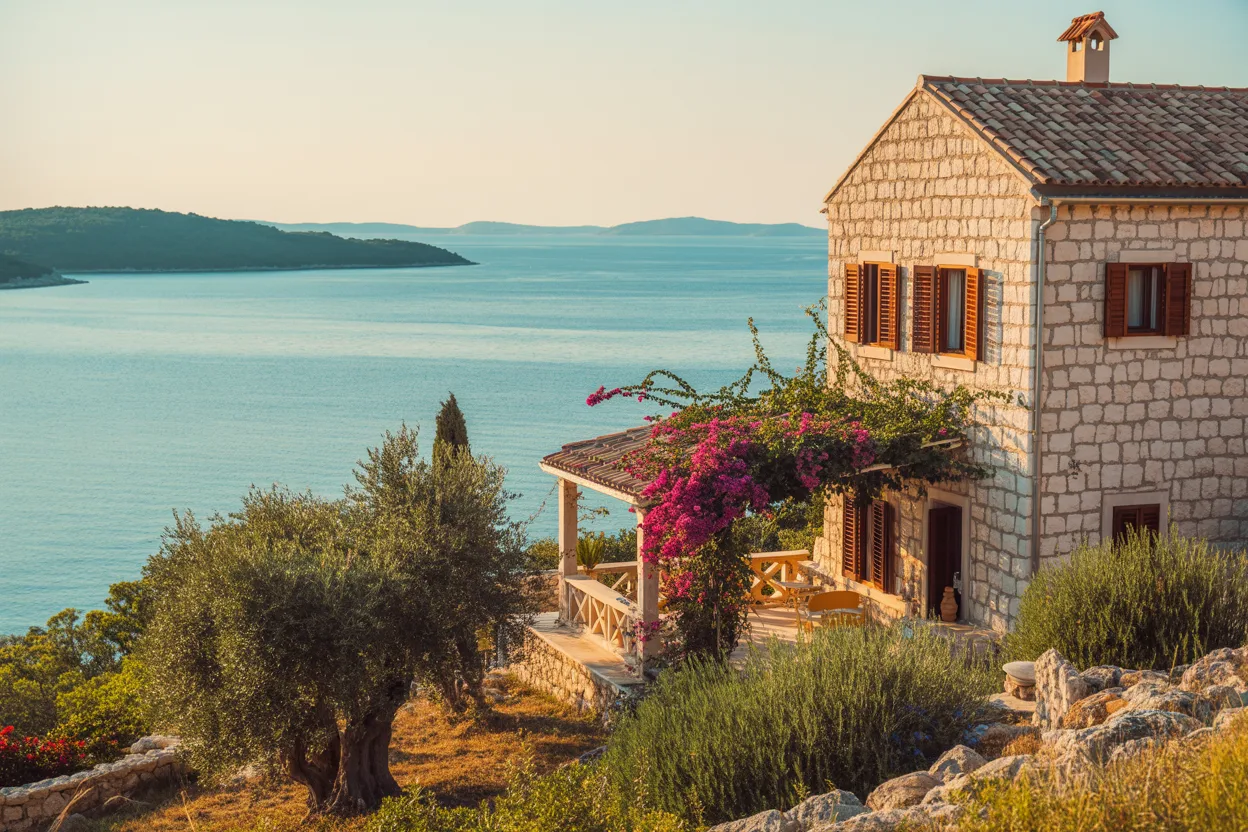
Image generated with Ai
Europe is entering a new era for EU Short-Term Rental Rules, and travellers may soon notice important changes across major tourism hotspots. Airbnb-style stays are facing closer attention as cities balance tourism demand, housing needs and local community concerns. From Florence and Sorrento to Dubrovnik and Fuerteventura, short-term rentals are increasingly shaping the debate around European travel. Meanwhile, new EU measures could give governments stronger tools to monitor and regulate holiday accommodation. Travel And Tour World urges travellers to read the entire story, because these EU Short-Term Rental Rules could influence how visitors choose, verify and book Airbnb-style stays across Europe’s busiest destinations.
Europe is preparing a new policy approach to short-term holiday rentals, potentially changing how travellers book accommodation in popular destinations.
Advertisement
The European Commission is preparing an Affordable Housing Act designed to help member states and cities respond to housing shortages. One area under consideration is the regulation of Airbnb-style holiday accommodation.
For international travellers, the development could affect apartment availability, booking requirements and accommodation choices in some of Europe’s busiest destinations.
Advertisement
Advertisement
Short-term rentals represent about 1.2% of total housing across the EU. However, their share can reach approximately 20% of housing stock in particularly tourism-dependent locations.
Sorrento in Italy, Dubrovnik in Croatia and Fuerteventura in Spain are among the destinations highlighted in the latest discussion.
Local authorities argue that large concentrations of holiday accommodation can intensify housing shortages and increase costs for residents.
However, rental platforms dispute that short-term accommodation is the primary cause of Europe’s housing problems.
Advertisement
Advertisement
Florence has introduced licensing requirements and restrictions on new short-term rentals in its historic centre.
The city subsequently expanded its restrictions, with the measures covering 44% of its housing stock, according to the Financial Times report.
The policy has faced approximately a dozen appeals from property owners and tourism operators. A regional tribunal initially supported the city, although further legal challenges remain possible.
For visitors, this means checking whether a holiday apartment complies with local requirements before booking.
European house prices increased by almost two-thirds between 2015 and 2025, while rents climbed by more than one-fifth, according to Eurostat figures cited in the report.
The European Commission’s existing Regulation 2024/1028 is also designed to improve short-term rental data collection and sharing. Better information should help authorities understand the market and develop appropriate policies.
For travellers, the emerging direction is clear: accommodation rules are becoming more local, transparent and closely monitored.
Tourists planning European city breaks should therefore check official municipal or national requirements before confirming short-term rental bookings. This is particularly important in heavily visited historic centres and destinations where housing pressure is high.
Europe’s short-term rental market has become a major tourism story as governments try to balance visitor demand, housing availability and residents’ costs.
The scale of the market is significant. Eurostat says guests spent 951.6 million nights in short-term accommodation booked through Airbnb, Booking and Expedia across the EU in 2025. That was 11.4% more than 2024 and 32.4% above 2023.
The European Commission says its new framework can improve transparency by requiring registration systems, verified registration numbers and monthly reporting of guest stays and nights where countries choose to apply the system.
The issue is especially important in tourism-intensive destinations.
| Indicator | Latest figure | Change |
|---|---|---|
| EU short-term rental guest nights, 2025 | 951.6 million | +11.4% vs 2024 |
| EU short-term rental guest nights, 2024 | 854.1 million | +18.8% vs 2023 |
| EU short-term rental guest nights, 2023 | 719.0 million | Baseline |
| Q1 2025 | 129.6 million | +4.8% vs Q1 2024 |
| Q2 2025 | 245.9 million | +17.8% |
| Q3 2025 | 398.1 million | +8.7% |
| Q4 2025 | 172.3 million | +10.9% |
| October 2025 | 72.0 million | +10.7% |
| November 2025 | 41.6 million | +7.7% |
| December 2025 | 58.7 million | +13.5% |
The strongest seasonal concentration remains summer. July, August and September 2025 generated 398.1 million guest nights, with July increasing 10% year on year and both August and September rising 8%.
| Country | 2025 guest nights through online platforms |
|---|---|
| France | 213 million |
| Spain | 189 million |
| Italy | 139 million |
| Germany | 70 million |
| Greece | 52 million |
| Portugal | 50 million |
| Poland | 46 million |
| Croatia | 43 million |
| Austria | 25 million |
| Belgium | 13 million |
France, Spain and Italy alone accounted for 56.8% of the EU total.
This makes southern European destinations particularly important for travellers watching the changing rules.
Sorrento is one of the clearest examples of a destination where tourism intensity and accommodation pressure overlap.
The European Commission’s Joint Research Centre found that short-term rentals can account for up to 20% of housing stock in some tourism hotspots, including Sorrento.
Italy’s national tourism statistics also demonstrate the destination’s enormous tourism concentration. In 2024, Sorrento recorded 2,847,463 tourist overnight stays, placing it among Italy’s leading municipalities for accommodation demand.
ISTAT reported that Sorrento had the country’s highest tourism density in 2024, at 289,411.6 tourist overnight stays per square kilometre.
For visitors, this makes Sorrento an important destination to monitor for future accommodation regulations.
Dubrovnik combines a comparatively small residential population with exceptionally strong international tourism.
Croatia’s Dubrovnik-Neretva County recorded 2,172,945 arrivals and 8,413,195 overnight stays in 2025, according to the Croatian Bureau of Statistics.
Foreign travellers dominated the market, generating 1,989,629 arrivals and 7,780,995 nights.
Dubrovnik itself recorded more than 4.28 million overnight stays in 2025, according to Croatian tourism authorities.
The destination is therefore particularly sensitive to seasonal accommodation pressure.
| Indicator | 2025 |
|---|---|
| Dubrovnik-Neretva arrivals | 2,172,945 |
| Dubrovnik-Neretva nights | 8,413,195 |
| Foreign arrivals | 1,989,629 |
| Foreign nights | 7,780,995 |
| Dubrovnik city nights | 4.28 million+ |
Fuerteventura represents the island destination side of Europe’s short-term rental challenge.
The Canary Islands were among Europe’s most important online-platform tourism regions. In Q4 2025, the Canarias recorded 8.2 million short-term rental guest nights, making it one of the EU’s leading regional markets.
The wider Canary Islands also experienced very strong tourism demand, increasing the importance of accommodation supply during peak periods.
For travellers, the key issue is not simply whether holiday apartments remain available.
The bigger question is whether individual properties comply with evolving regional registration and licensing requirements.
Florence provides perhaps the clearest example of how regulation can directly affect city accommodation.
Official municipal data show that Florence recorded 3,981,152 arrivals and 9,192,960 overnight stays in 2024. Arrivals increased 1.4%, while overnight stays grew 3% from 2023.
Foreign tourism was particularly important, with foreign arrivals increasing 5.1% and foreign overnight stays rising 6.3%.
Florence has introduced a licensing system for short-term rentals and restricted new listings in its historic centre. The policy has faced legal challenges, illustrating why European rental regulation can take years to settle.
| Year | Arrivals | Overnight stays |
|---|---|---|
| 2022 | 3,247,239 | 7,384,354 |
| 2023 | 3,926,389 | 8,928,336 |
| 2024 | 3,981,152 | 9,192,960 |
Paris represents Europe’s largest urban tourism market among the destinations discussed here.
The City of Paris reported that 6.4 million tourists visited the wider Grand Paris area during July and August 2025. The city expected approximately 37.4 million tourists across Grand Paris during 2025.
France also led Europe in short-term rental activity in 2025.
Online platforms recorded approximately 213 million guest nights in France, ahead of Spain and Italy.
This combination of enormous visitor demand and a substantial rental market makes Paris an important case for understanding Europe’s regulatory direction.
A major limitation needs to be made clear for accuracy: there is no single official government dataset providing comparable city-level visitor arrivals for every month from 2021 through 2025 for Sorrento, Dubrovnik, Fuerteventura, Florence and Paris.
Government agencies publish different geographical definitions and accommodation measures. Some report arrivals, others overnight stays, while Eurostat’s platform dataset measures nights booked through participating online platforms.
Therefore, presenting invented January-to-December numbers for all five destinations would create false precision.
The available official evidence instead shows a consistent seasonal pattern.Month European tourism pattern Traveller implication January Lower demand More accommodation choice February Lower demand Often quieter March Spring recovery Demand begins increasing April Strong spring growth Easter can significantly affect demand May Rising demand Shoulder-season opportunity June Strong demand Prices and occupancy increase July Very high demand Peak-season pressure August Very high demand Major accommodation competition September Strong demand Important shoulder season October Moderate demand Conditions become quieter November Lower demand Greater accommodation flexibility December Seasonal rebound Christmas travel lifts demand
Eurostat’s platform data confirms this broad pattern. In 2025, the third quarter alone generated 398.1 million EU guest nights, while July and August were also the two busiest months for overall EU tourism accommodation.
The rental market is not disappearing.
It is becoming more regulated.
The European Commission’s framework allows participating countries to create online registration systems, issue unique property numbers, require platforms to verify those numbers and share monthly booking information with authorities.
For tourists, this could eventually make legitimate properties easier to identify.
It could also mean fewer unregistered listings in heavily regulated destinations.
Travellers should therefore check municipal or national government accommodation information before booking an apartment, particularly in Florence, Sorrento, Dubrovnik, the Canary Islands and other high-demand tourism centres.
The most important trend is clear: Europe is attempting to protect housing availability without undermining a short-term accommodation sector that generated almost 952 million guest nights in 2025.
Europe’s short-term rental market is entering a new phase. The EU framework focuses on greater transparency, registration and data sharing, while individual cities and countries continue deciding how far they want to restrict holiday accommodation.
For travellers, the change does not mean Airbnb-style stays will disappear. Instead, visitors may encounter more registration numbers, local licensing requirements and stricter rules in heavily visited destinations. Florence and other tourism hotspots demonstrate how accommodation policies can become closely linked to housing and neighbourhood pressures.
The scale of demand also explains why the issue matters. Online platforms generated 951.6 million guest nights across the EU in 2025, highlighting how important short-term rentals have become to European tourism.
Therefore, global travellers should check official local accommodation requirements before booking. A verified property can offer greater confidence, while understanding destination-specific rules can help prevent unpleasant surprises during a European holiday.
As Europe seeks to balance tourism growth with housing needs, EU short-term rental rules could become an increasingly important consideration when planning where and how to stay.
Advertisement
Tags: Airbnb-style stays, EU Short-Term Rental Rules, europe travel, European tourism hotspots, holiday rentals Europe
Advertisement
Advertisement













Saturday, September 5, 2026

Friday, September 4, 2026

Saturday, September 5, 2026

Saturday, September 5, 2026

Thursday, September 3, 2026

Wednesday, September 2, 2026

Saturday, September 5, 2026