

Alma Air Revives Commercial Amphibious Aviation in Colombia with New Reservoir Route

Published
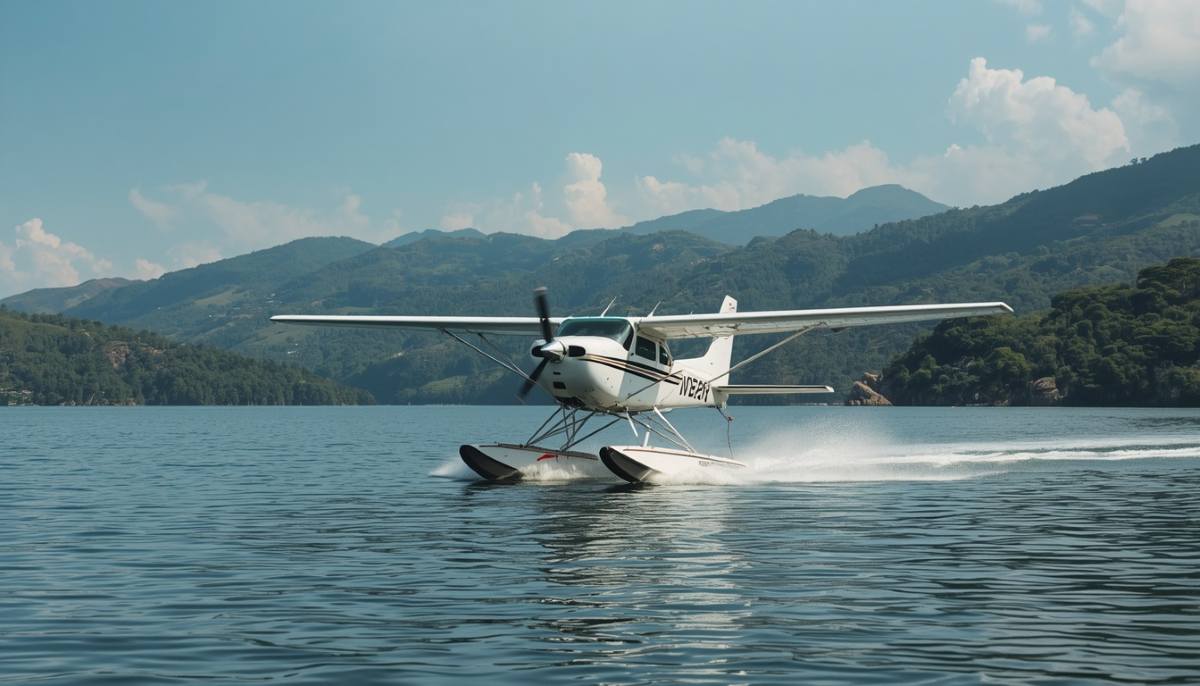
The transportation landscape of Colombia has witnessed a notable evolution with the introduction of a new commercial seaplane service linking Medellin and Guatape. This service has been launched by Alma Air, establishing an unprecedented direct connection between Enrique Olaya Herrera Airport and the El Peñol-Guatape Reservoir.
Traditionally, overland transit between these two prominent points in Antioquia required navigating approximately seventy-five to eighty kilometers of winding roadways through municipalities such as Marinilla and El Peñol, often resulting in a two-hour journey depending on prevailing traffic congestion. By contrast, the introduction of amphibious aviation has compressed this transit window to a mere fifteen to twenty minutes, fundamentally altering how visitors approach this region.
Practical Information
Operational logistics for the Medellin to Guatape seaplane corridor require specific parameters to be met. Flights depart systematically from Enrique Olaya Herrera Airport in Medellin and require specific aquatic dimensions on the El Peñol-Guatape Reservoir to safely execute water landings and takeoffs. Because the service is currently structured around private charters rather than individual seat sales, it is tailored primarily toward executive travelers, luxury tourists, and small groups willing to optimize their itineraries.
While traditional buses and private automobiles remain the predominant, cost-effective options for experiencing the terrestrial landscapes of eastern Antioquia, this aquatic alternative provides an elite, rapid tier of service for those prioritizing time efficiency and exclusivity.
Advertisement
Advertisement
Background and Context
The historical context of regional mobility in eastern Antioquia has long been dependent on conventional road infrastructure. The formation of the El Peñol-Guatape Reservoir in the nineteen-seventies permanently reshaped the geography of the area, creating a scenic expanse of islands and peninsulas that eventually evolved into a world-class tourism hub. Over the decades, Guatape has gained international renown for its vibrant town center, characterized by traditional houses adorned with intricate zocalos, and the iconic El Peñol Rock, a towering two-hundred-and-twenty-meter monolith that attracts countless visitors annually.
While road travel offered a scenic route through the mountains, it also exposed travelers to logistical delays and highway bottlenecks. The authorization granted to Alma Air to operate over the reservoir marks the historic return of seaplanes to commercial passenger transportation in Colombia after nearly seven decades, reviving a specialized mode of transit that bypasses terrestrial limitations entirely.
Advertisement
Advertisement
Impact on Travelers
The implementation of this seaplane service introduces a transformative paradigm for modern travelers and small tourist groups seeking efficiency and unique experiences. Operating as a charter flight utilizing an amphibious Cessna 208 Caravan equipped with floats and retractable wheels, the aircraft accommodates up to six passengers alongside two pilots. Instead of a conventional terminal touchdown, the flight culminates in a direct landing upon the waters of the El Peñol-Guatape Reservoir, after which passengers are seamlessly transferred to local accommodations or the town center.
While the one-way tariff is fixed at approximately one thousand eighty US dollars and a round trip reaches approximately one thousand seven hundred fifty-seven US dollars, the investment trades conventional transit time for an expedited aerial excursion. Consequently, the journey itself is elevated from a mere logistical necessity into an unforgettable sightseeing experience, offering panoramic vistas of eastern Antioquia from above.
Advertisement
Advertisement
Industry Insights
From an aviation and economic perspective, this amphibious route serves as a pioneering blueprint for regional connectivity across Colombia. Many key tourist destinations throughout the country lack the spatial capacity or infrastructure required for traditional airports, thereby limiting accessibility. By utilizing suitable natural bodies of water, regional operators can bypass heavy capital expenditures associated with runway construction.
Industry stakeholders have noted that Alma Air has already signaled potential interest in expanding similar water-based connections to other geographically favorable locations such as Bahia Solano, Mompox, and Ayapel. However, industry observers emphasize that each prospective route remains subject to rigorous environmental assessments, navigational evaluations, and strict regulatory authorizations to ensure safety and ecological preservation.
Comparison with Previous Policies or Developments
When evaluated against historical aviation frameworks in Colombia, the launch of this route represents a monumental regulatory and operational milestone. For the past seventy years, domestic commercial aviation has remained strictly anchored to terrestrial airports and traditional runway infrastructure, leaving remote or water-adjacent regions reliant entirely on maritime vessels or lengthy highway networks. Previous developments focused heavily on expanding regional asphalt highways or modernizing municipal airports rather than integrating amphibious capabilities.
The successful authorization and execution of water-based landings on the El Peñol-Guatape Reservoir reflect a progressive shift in modern transport policies, demonstrating a newfound regulatory flexibility toward specialized aviation models that can stimulate localized tourism without requiring disruptive major construction projects.
Advertisement
