
Building Leaders Beyond Infrastructure: Les Roches CEO Carlos Díez de la Lastra on the Future of GCC Hospitality Talent at FHS

Published
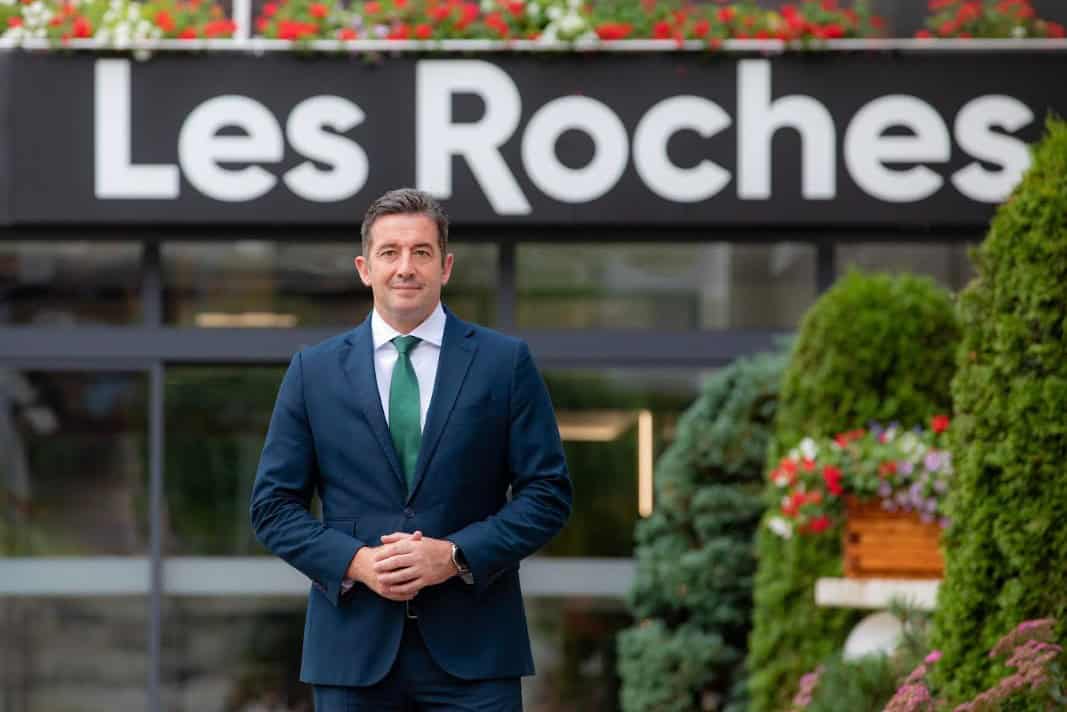
Carlos Díez de la Lastra is the Global CEO of Les Roches, a world-leading hospitality management institution, and is widely recognized as one of the most influential figures in international tourism education. Holding an Economics degree from Complutense University of Madrid and an MBA from IEDE, he brings nearly three decades of high-level leadership experience in expanding global academic programs. Under his leadership, Les Roches continues to shape the future of the experience economy by establishing strategic campuses and partnerships across key growth hubs like Saudi Arabia and Abu Dhabi. In this interview, he highlights the urgent industry transition from building infrastructure to cultivating world-class local talent capable of driving ambitious global developments like Saudi Vision 2030. He emphasizes that while AI and robotics can streamline hotel operations, core human skills—such as emotional intelligence, empathy, and cultural awareness—remain irreplaceable in luxury hospitality. Furthermore, he outlines how modern hospitality education is evolving to prepare future CEOs for “asset-light” business models by focusing on strategic ecosystem management, digital transformation, and sustainable growth across intersecting sectors like wellness and entertainment.
How are you feeling about the energy and focus on hospitality leadership and talent at FHS Dubai 2026 today?
The energy at FHS World 2026 has been exceptional. What excites me most is that the conversation has shifted from building hotels to building leaders.
Across the GCC, we are witnessing unprecedented investment in tourism, hospitality and destination development. But the industry’s greatest challenge is no longer infrastructure. It is talent.
Advertisement
Advertisement
What I found particularly encouraging throughout the event is the growing recognition that we need to approach talent development with the same level of ambition and long-term planning that we apply to major tourism projects and hospitality developments.
The Gulf is ensuring there is world-class talent behind them will be just as important as the projects themselves.
Advertisement
Advertisement
With your partnership in Saudi Arabia, how is Les Roches rapidly scaling the local talent required to support Vision 2030?
Vision 2030 is one of the most ambitious tourism transformations taking place anywhere in the world. The real question is not whether Saudi Arabia will build the hotels and destinations. It will. The challenge is developing the talent to lead them.
Our focus is on creating a sustainable pipeline of future leaders through a combination of world-class education, industry immersion, internships, mentoring and close collaboration with employers.
What makes this partnership particularly exciting is the opportunity to empower Saudi talent at scale. We are not simply preparing graduates for jobs. We are helping prepare the future leaders who will shape the Kingdom’s hospitality, tourism and experience economy for decades to come.
For our Travel and Tour World audience, your recent report highlighted a major shift toward “asset-light” luxury models. How is this changing the way you train future hotel CEOs?
Today’s CEOs need to understand brands, owner relations, partnerships, guest expectations and business strategy just as well as they understand operations. Success increasingly depends on managing ecosystems rather than simply managing properties.
Advertisement
Advertisement
This shift is reflected in how we educate future leaders. We place greater emphasis on strategic thinking, innovation, entrepreneurship, finance and stakeholder management while maintaining a strong focus on guest experience.
The future hospitality CEO will need to be equally comfortable discussing brand value, investment returns and personalised guest experiences. That combination is becoming a powerful differentiator in an increasingly competitive market.
As AI and robotics take over repetitive hotel operations, how are you teaching your students to prioritize emotional intelligence and the luxury “human touch”?
AI will transform hospitality, but it will not replace what makes hospitality special.
Technology can streamline processes, automate routine tasks and improve efficiency. What it cannot replicate is empathy, emotional intelligence, human judgement and the ability to create meaningful connections.
At Les Roches, we view technology as an enabler, not a substitute for people. As automation increases, the value of uniquely human skills actually grows. That is why we place such a strong emphasis on leadership, communication, cultural awareness and real-world industry experiences.
Advertisement
Advertisement
Technology may power the future of hospitality, but people will define it.
Following the successful launch of your Abu Dhabi campus, what specific strategic skills is your new Master’s program prioritizing for the booming GCC market?
Our commitment to the new campus in Abu Dhabi is total and we are confident that it will be a key element in supporting the success of the tourism development plan in the UAE, with a rapid and significant impact through its master’s programs for professionals and executives.
Today’s leaders need much more than operational expertise. They need strong business judgement, digital confidence, strategic thinking and the ability to navigate increasingly complex tourism ecosystems.
Our Master’s programs place particular emphasis on leadership, innovation, entrepreneurship, finance, digital transformation and sustainable growth. We are also preparing students to operate across sectors that increasingly intersect with hospitality, including luxury, wellness, entertainment, tourism and destination development.
Our goal is simple: to develop leaders who are not only prepared for the future of hospitality, but capable of helping shape it.
Advertisement
Advertisement
About Carlos Díez de la Lastra, CEO Les Roches
CEO of Les Roches since March 2022, his work focuses on promoting the international expansion of the institution, which has been ranked $2^{\text{nd}}$ worldwide in Hospitality and Leisure Management (QS University Ranking by subject, 2026), solidifying its position as a global reference in its field. Founded in 1954, Les Roches has campuses in Switzerland (Crans Montana), Spain (Marbella) and the UAE (Abu Dhabi).
Considered one of the Top Tourism Leaders among the 150 most influential professionals in hospitality and tourism in Spain and recognized by Forbes Travel as one of the 50 leaders in Spanish luxury tourism, Carlos Díez de la Lastra contributes to the industry with his experience to various executive boards, foundations, and expert groups.
- Recognized by Forbes Travel as one of Spain’s 50 leaders in luxury tourism and among the top 150 tourism professionals, he brings nearly three decades of experience in higher education and international expansion.
- As CEO of Les Roches since March 2022, Carlos oversees the institution’s international campuses in Switzerland, Spain and the UAE, along with an affiliated campus near New Delhi.
- Les Roches, founded in Switzerland in 1954, is ranked #2 in the world in hospitality and leisure management.
- His leadership focuses on driving the school’s global expansion and strengthening its reputation as a worldwide leading institution in hospitality management education.
- Under his leadership, Les Roches has embarked on an ambitious plan of international expansion and has positioned itself at the forefront of innovation in the Hospitality Sector.
- Prior to his current role, Carlos served as Managing Director of Les Roches Marbella (2014-2024), where he played a pivotal role in the institution’s expansion and global recognition.
- His career also includes executive positions at Universidad Europea de Madrid and Universidad Europea de Canarias within the Laureate International Universities network.
- Beyond his work at Les Roches, Carlos actively contributes to the industry through various executive boards, foundations, and expert groups.
- He is a member of the UN Tourism Online Education Committee and has advised key industry initiatives, including Costa del Sol Tourism’s crisis response strategy during the COVID-19 pandemic.
- A sought-after speaker at international conferences, Carlos is known for his deep understanding of market trends and strong connections with industry leaders.
- He holds a degree in Economics and Business Administration from the Complutense University of Madrid and an MBA from IEDE Business School.
Advertisement
