
Driftless Area Expands New Farm And Outdoor Tourism Across Wisconsin And Iowa

Published
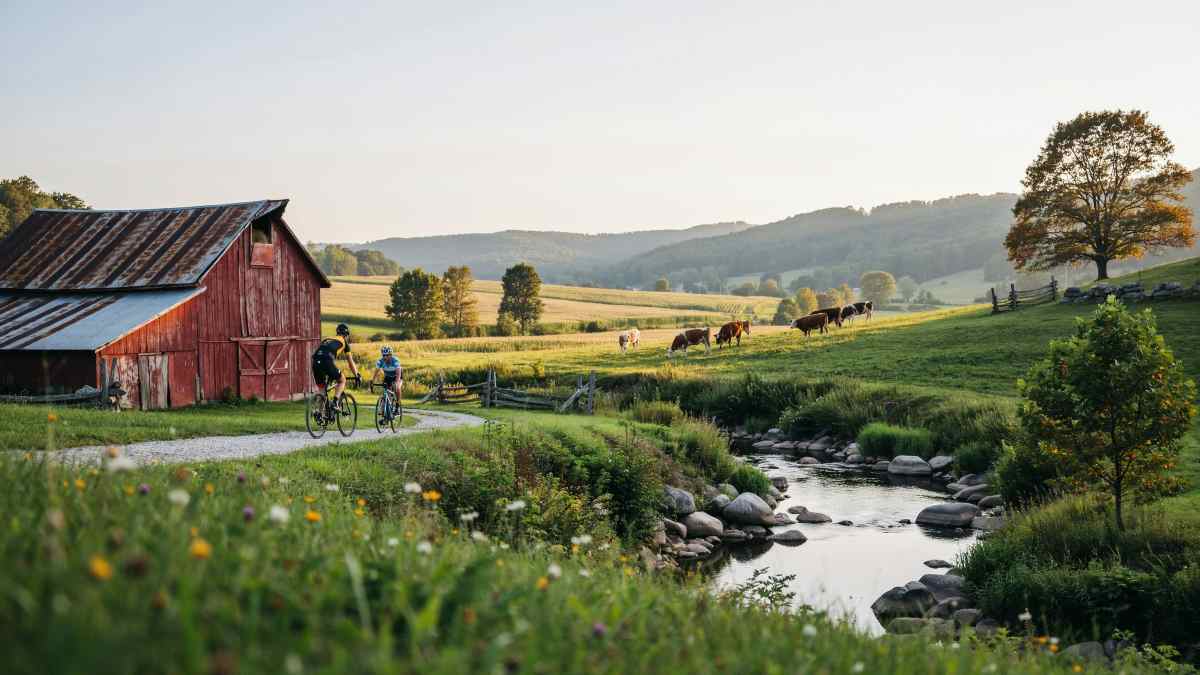
This area has gained more interest as tourists look for rural landscape-based outdoor activities involving conservation, fly-fishing and agriculture. The area spans part of Wisconsin, Minnesota, Iowa and Illinois and consists of landforms that were not covered by the last continental glaciers. Instead of wide and mostly flat glacial terrains, one will find rugged and steep limestone formations, deep valleys, watercourses fed by natural springs and country roads in the area. There is talk of an agricultural conservation compact involving three states, known as the “Driftless Ridge & Spring Creek Watershed Trail,” which will connect the terrains through regulated fly-fishing, gravel road cycling and regenerative farm retreats. However, the particular compact and trail network for 26 September 2026 could not be independently confirmed from the official government documents consulted in preparing this article. The stated ban on the operation of large hospitality chains in the rural townships of the area also requires verification from individual municipalities.
Why The Driftless Landscape Is Different
The Driftless Area’s geological history is central to its appeal.
Unlike much of the Upper Midwest, the core Driftless region was not flattened or covered by the most recent continental glaciers. The result is a distinctive landscape of deeply carved valleys, exposed rock, wooded hillsides and cold-water streams.
Advertisement
Advertisement
Wisconsin’s Department of Natural Resources identifies the Driftless Area as an important region for trout fisheries, with spring-fed streams providing cold, clean water that supports brown, brook and rainbow trout.
These waterways have also helped create a strong fly-fishing culture.
Advertisement
Advertisement
For visitors, the appeal is not simply the fish. It is the combination of clear spring creeks, limestone valleys, quiet roads and small communities that makes the region suitable for slower outdoor travel.
Spring Creeks Are A Major Tourism Asset
Advertisement
Advertisement
Cold-water streams are among the most sensitive natural assets in the Driftless Area.
The Wisconsin Department of Natural Resources manages numerous trout waters throughout the region and notes that groundwater-fed streams can maintain relatively cold temperatures even during summer.
That makes them particularly important for trout habitat.
It also means tourism needs to be managed carefully. Excessive development, agricultural runoff, altered streambanks and increasing impervious surfaces can affect groundwater recharge and water quality.
Advertisement
Advertisement
The reported conservation compact’s emphasis on watershed protection therefore reflects an established environmental concern, even though the specific new trail programme remains unverified.
Gravel Cycling Turns Rural Roads Into Tourism Routes
The Driftless landscape has also become a major destination for gravel cycling.
Wisconsin’s network of quiet rural roads provides natural opportunities for long-distance cycling, particularly where paved roads give way to gravel routes crossing valleys and climbing steep ridges.
The terrain can be deceptive. Distances may look manageable on a map, but repeated climbs can make a Driftless cycling route considerably more demanding than a flat Midwestern ride.
That combination has helped establish the region as an attractive destination for experienced cyclists seeking multi-day journeys rather than conventional road-race tourism.
Advertisement
Advertisement
The reported trail concept would expand this model by connecting gravel roads, spring-fed waterways and agricultural properties.
Family Farms Add An Agricultural Dimension
Agriculture is inseparable from the identity of the Driftless Area.
Family farms operate across the region, producing milk, cheese, vegetables, fruit and other agricultural products. Some have developed direct-to-consumer businesses, farm shops, tasting experiences and seasonal visitor activities.
Wisconsin is particularly well known for dairy and cheese production, while the Driftless landscape also supports orchards, vineyards and diversified farms.
Farm tourism can provide another source of income while allowing visitors to understand how food is produced in a landscape where agriculture and conservation are closely connected.
Advertisement
Advertisement
The reported emphasis on regenerative farm retreats would fit within that wider movement, although the specific properties involved in the proposed trail network have not been officially confirmed.
Small-Scale Tourism Could Keep Spending Local
One of the most important elements of the reported project is its focus on rural businesses rather than large hospitality developments.
The claim that participating townships would prohibit large commercial hotel chains cannot currently be confirmed as a region-wide policy. Zoning authority in the Driftless Area is distributed among counties, municipalities and townships, meaning restrictions would need to be established through individual local regulations.
The underlying tourism model is nevertheless familiar across rural Wisconsin and Iowa.
Small inns, farm stays, campgrounds, cafes, outfitters, cheese producers and local guides can capture visitor spending while maintaining a stronger connection between tourism and the existing rural economy.
Advertisement
Advertisement
For travellers, that can mean accommodation with a more local character and easier access to the people producing food and maintaining the landscape.
A Practical Base For Outdoor Travellers
There is no single “Driftless Area gateway” because the landscape crosses several states and numerous rural communities.
On the Wisconsin side, La Crosse, Prairie du Chien, Viroqua, Richland Center and surrounding communities can serve as bases for different sections of the region.
In Iowa, Decorah and other communities in the state’s northeast provide access to limestone valleys, trout streams, cycling routes and agricultural landscapes.
Travellers should plan routes carefully because services can become sparse outside the larger towns.
Advertisement
Advertisement
The US dollar (USD) is the local currency. Cell coverage can also vary in rural valleys, while gravel roads may be affected by heavy rain, making offline maps and flexible routing useful for cyclists.
Fly-Fishing Requires Local Rules
Anglers should pay particular attention to local regulations.
Wisconsin and Iowa manage fisheries under their respective state systems, with specific waters subject to regulations covering seasons, tackle, catch limits and access.
Private land is also common around rural streams, so visitors should never assume that a visible creek or farm road provides public access.
Where a trail or fishing route crosses private property, travellers should follow posted permissions and established access arrangements.
Advertisement
Advertisement
The same principle applies to campsites and farm properties. A proposed regional trail does not automatically create public access to every parcel along its route.
The Conservation Story Is Bigger Than One Trail
Though the Driftless Ridge & Spring Creek Watershed Trail has been reported to exist, it is yet to be formally verified, so it cannot be treated as an official trail until then. Nevertheless, the idea of tourism in the area is based on its geography. There is no doubt that cold-water trout streams, limestone valleys, gravel roads and farms are present there and thus, they serve as a basis for developing an outdoor travel industry. The task is to ensure that the new tourism industry will complement these features instead of putting pressure on them.
Advertisement
