
Montana, Minnesota and Michigan Move With Seven Other States as Northern Lights Forecast Opens Autumn Viewing

Published
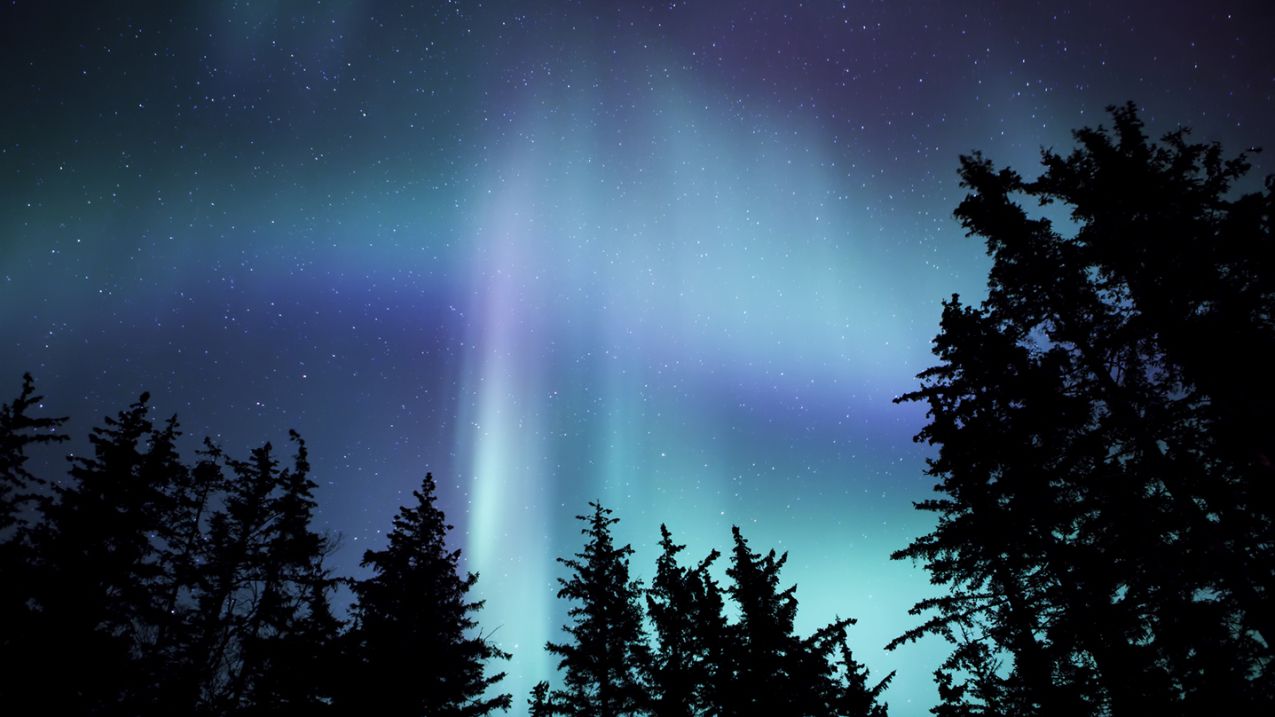
The Northern Lights Forecast offers an unusual opportunity for autumn travellers, with up to 10 US states potentially seeing the aurora on Wednesday night. NOAA forecasts a Kp 5 level, allowing the auroral oval to push further south across the northern United States. Potential viewing areas include Washington, Idaho, Montana, Wyoming, North Dakota, South Dakota, Minnesota, Wisconsin and Michigan. Alaska remains considerably better placed for aurora viewing than the contiguous states. However, this is not a major geomagnetic storm forecast. Travellers will need dark skies, suitable weather and patience. The strongest viewing window should fall between 10pm and 2am, while the 91% illuminated Moon could reduce contrast.
Ten States Enter The Aurora Zone
The latest forecast creates a broad potential viewing corridor across the northern United States. NOAA’s forecast places portions of 10 states within the possible aurora viewing zone, although visibility will vary sharply by location and weather.
Northern Washington could see activity, while Idaho’s northern tip also falls within the forecast area. Montana has a particularly broad footprint, extending across much of the state and towards the Wyoming border.
Further east, the potential viewing belt includes North Dakota and northern South Dakota. Minnesota, northern Wisconsin and Michigan’s Upper Peninsula also sit within the projected zone.
Advertisement
Advertisement
Northern Michigan could likewise experience auroral activity. However, being inside the forecast area does not guarantee that travellers will see the lights.
Advertisement
Advertisement
| Potential Viewing Area | Forecast Opportunity | Travel Consideration |
|---|---|---|
| Northern Washington | Possible | Seek darker locations away from urban lighting |
| Northern Idaho | Possible | Mountain and rural areas can improve darkness |
| Montana | Broad potential zone | Large rural areas offer stronger viewing conditions |
| Wyoming-Montana border | Possible | High elevations may provide useful sightlines |
| North Dakota | Possible | Open landscapes can offer wide horizons |
| Northern South Dakota | Possible | Move away from town and highway lighting |
| Northern Minnesota | Possible | Rural and lakeside areas may offer darker skies |
| Northern Wisconsin | Possible | Northern locations provide better access to darkness |
| Upper Peninsula, Michigan | Possible | Remote areas can offer favourable viewing conditions |
| Northern Michigan | Possible | Cloud cover remains a key variable |
| Alaska | Higher probability | Stronger auroral visibility remains possible |
The distinction matters for travellers. A forecasted auroral oval indicates where conditions may support aurora visibility, rather than where a display will definitely appear.
NOAA’s own aurora guidance explains that higher K-index values generally increase the likelihood of auroral activity. The Kp index provides a global measure of geomagnetic activity, with values ranging from 0 to 9.
Kp 5 Changes The Travel Equation
A Kp 5 forecast is significant for aurora hunters because stronger geomagnetic activity can push the visible aurora farther from the polar regions. Yet travellers should not interpret Kp 5 as a guarantee of spectacular skies.
Advertisement
Advertisement
The forecast supplied for Wednesday indicates no geomagnetic storm impacts. That separates this event from the extraordinary displays associated with major solar storms.
For travel businesses, that distinction is important. Aurora tourism increasingly depends on flexible itineraries rather than fixed sightseeing schedules.
Advertisement
Advertisement
A traveller booking a single evening specifically for the aurora faces greater uncertainty. Visitors staying several nights can improve their chances by responding to changing forecasts.
| Factor | Wednesday Forecast | Traveller Impact |
|---|---|---|
| Forecast Kp | 5 | Aurora may extend farther south |
| Geomagnetic storm | None forecast | No major storm-driven display expected |
| Best viewing period | 10pm–2am | Late-night travel may be necessary |
| Moon illumination | 91% | Bright moonlight may reduce contrast |
| Alaska outlook | Higher probability | Stronger aurora potential |
| Lower 48 outlook | Localised | Conditions vary considerably by state |
| Thursday outlook | Around three states | Much narrower opportunity expected |
The Northern Lights Forecast therefore presents a potentially attractive but weather-sensitive travel opportunity.
Autumn Darkness Creates An Advantage
September brings a useful combination for aurora tourism. Nights are lengthening across the northern United States, while autumn landscapes can add considerable visual appeal to the experience.
However, the Moon presents a competing source of illumination. Wednesday’s Moon is expected to be 91% illuminated, which can make faint auroral structures harder to distinguish.
Travellers should therefore prioritise locations with minimal artificial lighting. High vantage points can also help, particularly where surrounding terrain does not obstruct the northern horizon.
Advertisement
Advertisement
Urban centres remain less suitable. Even when auroral activity reaches a particular state, city lights can overwhelm weaker portions of the display.
For tourism operators, this creates an opportunity to package aurora experiences around dark-sky locations, rural accommodation and late-evening excursions.
Where Travellers Should Watch
The practical strategy is straightforward, although success depends on several variables. Travellers should move away from populated areas and choose locations with an unobstructed view towards the northern sky.
The recommended observation period runs from 10pm to 2am. However, auroral activity can change quickly, so travellers should avoid treating the window as a rigid appointment.
Weather remains equally important. Thick cloud can completely obscure an otherwise strong aurora, making local cloud forecasts as important as the space-weather forecast.
Advertisement
Advertisement
A traveller in Montana, for example, may have stronger atmospheric conditions than another observer farther north. Conversely, a cloudy location could produce no visible aurora despite sitting directly beneath the forecast viewing zone.
This is why experienced aurora travellers often combine space-weather forecasts with local weather data before leaving their accommodation.
Photography Needs More Than A Smartphone
The aurora can appear relatively faint to the naked eye, particularly during weaker activity. Cameras, however, can capture colours and structures that appear less obvious to observers.
Smartphone users should switch off the flash and activate night mode. Holding the phone steady is equally important because longer exposures amplify movement.
Traditional camera users can benefit from a wide-angle lens, tripod and low aperture. A stable setup allows the camera to collect more light without introducing excessive blur.
Advertisement
Advertisement
| Photography Element | Recommended Approach |
|---|---|
| Smartphone | Use night mode |
| Flash | Keep switched off |
| Camera stability | Use a tripod where possible |
| Lens | Wide-angle lens is useful |
| Aperture | Use a low aperture |
| Location | Choose dark skies |
| Composition | Include foreground landscape |
| Timing | Photograph during darker intervals |
For travel photographers, the current forecast also offers a compelling seasonal composition. Autumn foliage, lakes, mountains and rural landscapes can provide foreground interest beneath the aurora.
That combination can make northern US destinations attractive beyond the phenomenon itself.
Solar Cycle Still Supports Aurora Tourism
The wider scientific backdrop remains important. NASA and NOAA announced in October 2024 that the Sun had entered the solar maximum period of Solar Cycle 25. Solar maximum is the most active stage of the roughly 11-year solar cycle.
During this phase, solar activity can produce more flares and coronal mass ejections. These events can interact with Earth’s magnetic environment and generate auroras at lower latitudes.
The extraordinary May 2024 geomagnetic storm demonstrated that potential dramatically. NASA described that event as the strongest geomagnetic storm to reach Earth in two decades. The resulting auroras were potentially among the strongest displays witnessed in roughly 500 years.
Advertisement
Advertisement
That history helps explain the continued interest in aurora travel during 2026. Yet it should not create unrealistic expectations for every forecast.
Solar maximum does not mean continuous spectacular auroras. Instead, it increases the broader opportunity for significant space-weather events.
Why Aurora Tourism Keeps Expanding
The aurora has become more than a seasonal attraction for specialist travellers. It increasingly influences destination marketing, accommodation choices and winter and shoulder-season travel patterns.
Alaska naturally remains one of the strongest US destinations for aurora-focused trips. Its northern latitude gives travellers a structural advantage compared with most destinations in the contiguous United States.
However, Wednesday’s forecast demonstrates the commercial appeal of destinations farther south. Montana, Minnesota, Michigan and Wisconsin can potentially participate in aurora tourism when geomagnetic conditions expand the viewing zone.
Advertisement
Advertisement
That creates an important opportunity for regional tourism boards. Aurora tourism can encourage visitors to explore rural communities, dark-sky areas and shoulder-season destinations.
The benefit also extends beyond the night itself. Travellers can combine aurora hunting with hiking, scenic drives, autumn foliage, wildlife experiences and local hospitality.
Alaska Retains A Different Advantage
The lower 48 states require stronger geomagnetic conditions for widespread aurora visibility. Alaska, by contrast, sits much closer to the auroral oval.
That geographical advantage means Alaska can remain an aurora destination even when the continental United States sees little activity.
The current forecast nevertheless creates a different proposition. Travellers already visiting the northern states may have an additional evening attraction without making a dedicated Alaska journey.
Advertisement
Advertisement
| Travel Scenario | Aurora Strategy |
|---|---|
| Dedicated aurora holiday | Stay several nights |
| Existing Montana trip | Add a late-night viewing opportunity |
| Michigan autumn trip | Consider Upper Peninsula locations |
| Minnesota nature holiday | Combine dark-sky viewing with outdoor activities |
| Alaska aurora trip | Retain flexibility across multiple nights |
| Short city break | Aurora opportunity remains less reliable |
The key lesson for travellers is flexibility. Aurora conditions can change faster than conventional tourism itineraries.
Dark Skies Matter More Than City Lights
For visitors, the most useful decision may not be which state to choose. It may be where within that state to stand.
Light pollution can dramatically reduce the visibility of weaker auroral structures. Therefore, travellers should consider rural areas, designated dark-sky locations and open landscapes.
High ground can provide a wider horizon. Lakeshores can also offer strong photographic compositions, provided access remains safe and permitted at night.
Travel businesses can support this trend by offering late-night transport, guided excursions and accommodation packages built around forecast alerts.
Advertisement
Advertisement
Such services could also reduce the risks associated with visitors driving unfamiliar rural roads after midnight.
Thursday Offers A Narrower Window
The opportunity appears considerably more limited on Thursday. The supplied forecast indicates that only around three states could have a chance of seeing the aurora.
That sharp change illustrates the volatility of auroral forecasting. A destination that looks promising one evening can become much less attractive the following night.
For travellers planning an autumn trip, the implication is clear. Aurora viewing should complement a holiday rather than become its only purpose unless the itinerary allows multiple nights.
This approach also protects tourism businesses from overpromising. Operators can market the experience around aurora hunting, rather than guaranteeing a visible display.
Advertisement
