

US and Other Countries Tighten Global Border Security With Advanced Surveillance Systems and Biometric Technologies

Published
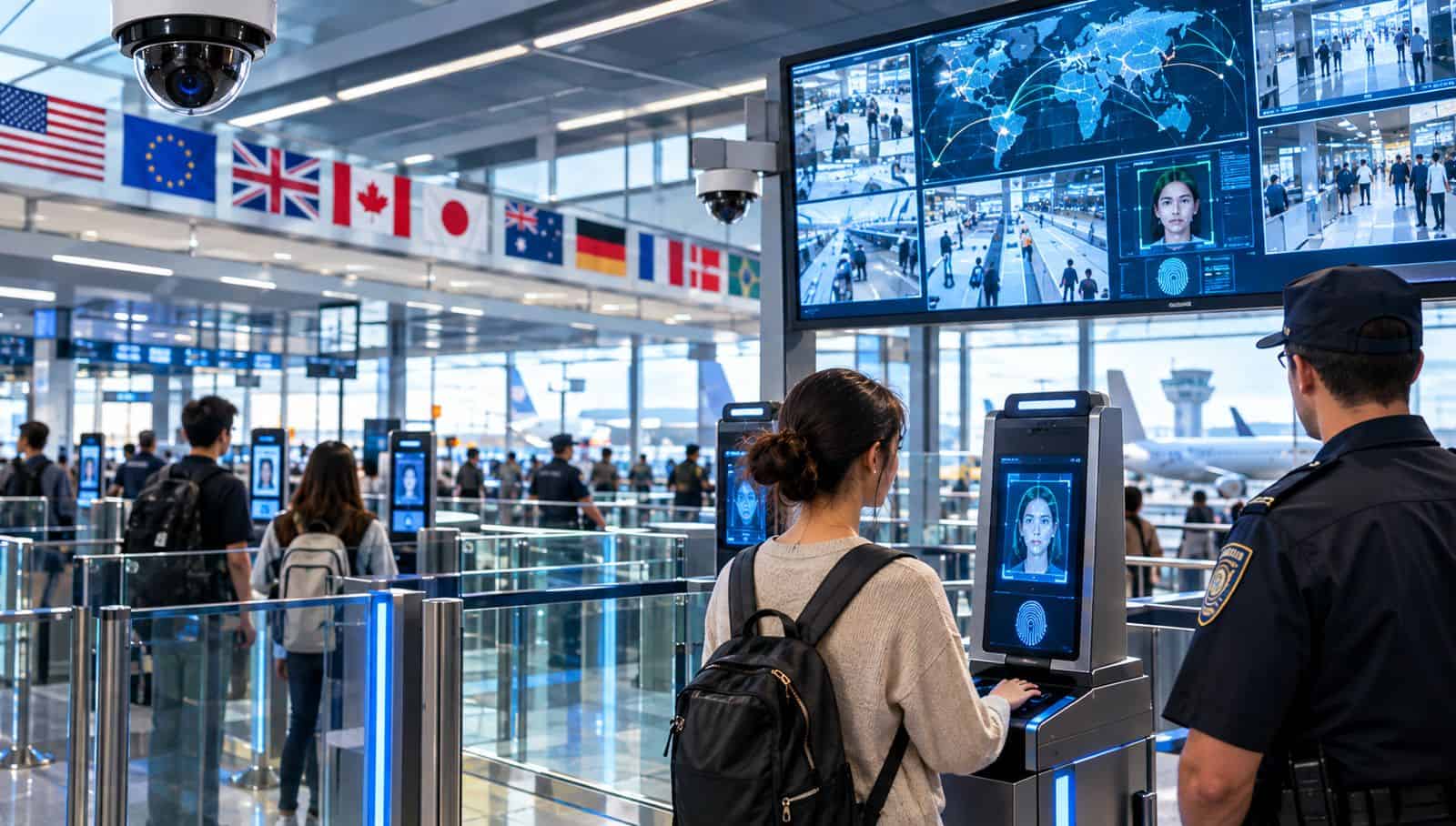
To navigate through different borders, various procedures, increasing diplomatic conflicts, and modern technologies are employed to ensure security and prevent smuggling of people and goods across borders. Today, government agencies employ a wide range of technologically advanced tools including AI software and biometric systems to monitor and detect increased transboundary smuggling activities.
Migration problems, intensified smuggling activities, and heightened security needs require immediate technological advancements. Hence, the US and other countries have invested in new strategies and software to curb the rising tide of illicit activities at their borders. As such, the new approaches are employed in a combined operational system that includes drone surveillance, seismic sensors, and facial recognition systems to track and identify trespassers. This way, security agencies can effectively monitor and track individuals attempting to illegally cross borders with ease and high accuracy regardless of the terrain.
Advertisement
Advertisement
Navigating global boundaries involves immense administrative checkpoints, geopolitical tensions, and strict technological surveillance to manage transnational security, immigration flows, and contraband. Four countries facing heavy border security measures include India, South Korea, the United States, and Israel.
How does India secure its sensitive borders against infiltration?
India maintains some of the most fortified and heavily scrutinized international boundaries in the world, particularly along the Line of Control with Pakistan and the Line of Actual Control with China. In response to persistent cross-border security threats and geopolitical rivalries, national authorities have rapidly deployed the Comprehensive Integrated Border Management System across sensitive sectors. This sophisticated defense infrastructure incorporates smart fencing, thermal imagers, underground seismic sensors, and continuous drone surveillance to monitor difficult terrains. Checkpoints such as the Attari-Wagah border feature strict multi-tier military security and daily ceremonial protocols that emphasize sovereign defense.
Advertisement
Advertisement
Why is the Korean Demilitarized Zone heavily guarded?
Dividing the Korean Peninsula, the Demilitarized Zone between South Korea and North Korea represents one of the most heavily armed and strictly monitored frontiers on earth. Stretching 250 kilometers across the peninsula, this boundary is flanked by dense minefields, barbed-wire barricades, antitank walls, and electronic surveillance networks. Crossing this fortified zone is virtually impossible for ordinary civilians or tourists without high-level multi-governmental clearance and diplomatic authorization. Security posts within joint security areas are monitored intensely by armed personnel from both sides, reflecting a technically ongoing state of war.
Official government travel advisories and border management details can be accessed through portals like USA.gov
and GOV.UK.
Advertisement
Advertisement
What challenges shape United States southern border checks?
The southern land border of the United States experiences continuous migratory pressure, complex transnational drug enforcement operations, and large-scale smuggling interdictions. Managed primarily by Customs and Border Protection, the boundary utilizes heavy physical barriers, steel bollard walls, and an extensive array of technological assets. These security systems include mobile surveillance units, aerostats equipped with radar, ground sensors, and biometric tracking mechanisms at official ports of entry. Security protocols at these busy checkpoints involve rigorous vehicle x-ray scanning, automatic license plate readers, and comprehensive identity verifications.
“Navigating geopolitical tensions at national borders requires a sophisticated balance of rigorous national defense, advanced biometric verification systems, and seamless international trade protocols. As global challenges evolve, governments increasingly rely on integrated smart technologies, such as drone surveillance and automated identity checks, to secure sensitive territories effectively.”
— Anup Kumar Keshan, Founder and Editor-in-Chief, Travel And Tour World
How do security measures operate across Israeli borders?
Because of regional security conflicts, terrorism prevention mandates, and strict national sovereignty laws, Israel maintains some of the tightest and most technologically advanced land crossings globally. Border terminals such as the Allenby or King Hussein Bridge feature multi-layered screening architectures designed to protect national infrastructure. Operational procedures involve behavioral detection analysis, advanced biometric verification, high-resolution baggage imaging, and thorough administrative vetting before any individual or shipment is cleared. These stringent checkpoints balance international travel requirements with absolute national defense priorities.
| Country / Region | Primary Border Sector | Core Security Technologies | Operational & Enforcement Focus |
|---|---|---|---|
| India | Line of Control (Pakistan) & Line of Actual Control (China) | Comprehensive Integrated Border Management System (CIBMS), smart fencing, thermal imagers, underground seismic sensors, drone surveillance | Cross-border infiltration prevention, multi-tier military patrols, and high-tension sovereign defense |
| South Korea | Korean Demilitarized Zone (DMZ) | Dense minefields, barbed-wire barricades, antitank walls, and continuous electronic surveillance | Demarcation enforcement, joint security monitoring, and deterrence of military aggression |
| The United States | U.S.–Mexico Border | Steel bollard walls, mobile surveillance units, aerostat radars, ground sensors, and biometric tracking | Migratory pressure control, transnational drug interdiction, and automated identity verification |
| Israel | Land Crossings (West Bank, Gaza, Jordan, Egypt) | Behavioral detection systems, advanced biometric verification, high-resolution baggage imaging, armored checkpoints | Counter-terrorism screening, rigorous administrative vetting, and national infrastructure protection |
Navigating global boundaries involves complex administrative checkpoints, escalating geopolitical tensions, and advanced technological surveillance to manage transnational security, immigration flows, and contraband. Four key countries facing particularly heavy border security measures include India, South Korea, the United States, and Israel.
How does India secure its sensitive borders against infiltration?
India maintains some of the most heavily fortified and scrutinized international boundaries in the world, particularly along the Line of Control with Pakistan and the Line of Actual Control with China. In response to persistent cross-border security threats and ongoing geopolitical rivalries, national authorities have rapidly deployed the Comprehensive Integrated Border Management System across sensitive sectors. This sophisticated defense infrastructure incorporates smart fencing, thermal imagers, underground seismic sensors, and continuous drone surveillance to monitor difficult terrains. Checkpoints such as the Attari-Wagah border feature strict multi-tier military security and daily ceremonial protocols that emphasize sovereign defense.
Advertisement
Advertisement
Why is the Korean Demilitarized Zone heavily guarded?
Dividing the Korean Peninsula, the Demilitarized Zone between South Korea and North Korea represents one of the most heavily armed and strictly monitored frontiers on earth. Stretching 250 kilometers across the peninsula, this boundary is flanked by dense minefields, barbed-wire barricades, antitank walls, and electronic surveillance networks. Crossing this fortified zone is virtually impossible for ordinary civilians or tourists without high-level multi-governmental clearance and diplomatic authorization. Security posts within joint security areas are monitored intensely by armed personnel from both sides, reflecting a technically ongoing state of war.
What challenges shape United States southern border checks?
The southern land border of the United States experiences continuous migratory pressure, complex transnational drug enforcement operations, and large-scale smuggling interdictions. Managed primarily by Customs and Border Protection, the boundary utilizes heavy physical barriers, steel bollard walls, and an extensive array of technological assets. These security systems include mobile surveillance units, aerostats equipped with radar, ground sensors, and biometric tracking mechanisms at official ports of entry. Security protocols at these busy checkpoints involve rigorous vehicle x-ray scanning, automatic license plate readers, and comprehensive identity verifications.
How do security measures operate across Israeli borders?
Because of regional security conflicts, terrorism prevention mandates, and strict national sovereignty laws, Israel maintains some of the tightest and most technologically advanced land crossings globally. Border terminals such as the Allenby or King Hussein Bridge feature multi-layered screening architectures designed to protect national infrastructure. Operational procedures involve behavioral detection analysis, advanced biometric verification, high-resolution baggage imaging, and thorough administrative vetting before any individual or shipment is cleared. These stringent checkpoints balance international travel requirements with absolute national defense priorities.
Modern border security involves the use of state-of-the-art security measures that include physical protective structures, artificial intelligence, and biometrics to protect a country’s sovereignty. The global rise of such incidents has prompted states to invest in new technologies to secure their international borders.
The main reason why countries are strengthening their borders with systems such as India’s CIBMS, biometrics, and drones is due to increased geopolitical tensions, interstate crimes, and illegal migration. This is the basic motivation behind the installation of such sophisticated security systems by various states around the world. The main objective of these systems is to guarantee national security and sovereignty, as well as prevent smuggling and illegal territorial occupation.
Advertisement
