
Greece Aligns With Cyprus And More Launching Regional Tourism Routes Across Vibrant Thessaloniki

Published
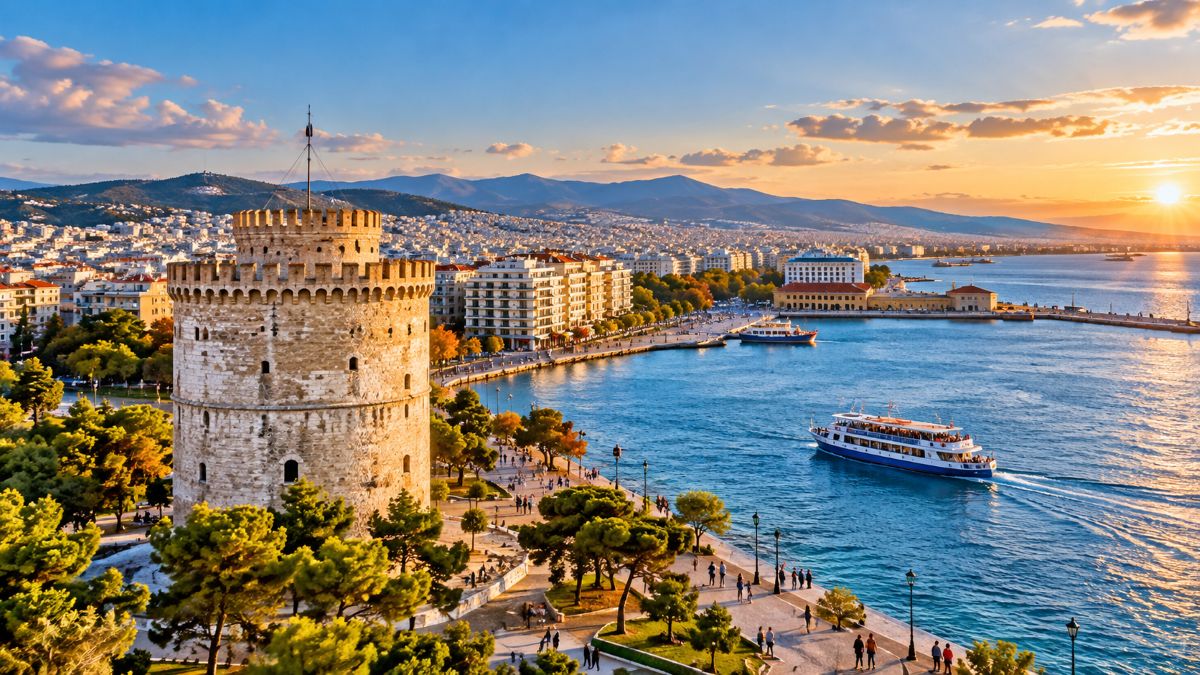
Image generated with Ai
Greece has formally aligned regional travel priorities with Mediterranean partners including Cyprus to accelerate urban leisure corridors, situating Thessaloniki as the premier northern gateway for transnational cultural itineraries. This collaborative deployment focuses on sustainable visitor management, maritime connectivity, and multimodal transport links that unite Aegean coastal hubs. By positioning the historic co-capital as a central anchor, international travellers gain streamlined access to deep architectural legacies, exceptional culinary heritage, and expanded transport networks designed to alleviate pressure on classic southern island hubs.
As global interest shifts towards year-round city breaks and authentic regional storytelling, the metropolis on the Thermaic Gulf provides an ideal blend of ancient heritage and contemporary urban vitality. From its monumental Roman foundations and early Christian basilicas to revitalised Ottoman-era market quarters, the city offers an immersive exploration ground. Travellers, industry stakeholders, and culture enthusiasts now look to Central Macedonia as an essential stopover, where expanded infrastructure investments harmonise historic preservation with elevated hospitality standards across every district.
Advertisement
Advertisement
Strategic Location and Historical Significance
Thessaloniki was founded in 315 BC by King Cassander of Macedon and named in honour of his wife Thessalonike, the half-sister of Alexander the Great. Its geography on the Thermaic Gulf established the settlement as a vital maritime and overland crossroad linking Europe to the East. During the Roman era, the construction of the Via Egnatia solidified its status as an administrative hub, a role that expanded dramatically during the Byzantine Empire when the city served as the revered co-regent metropolis alongside Constantinople.
Centuries under Ottoman governance further shaped the urban landscape, introducing distinct trading bazaars, fortified towers, and multicultural neighbourhoods that sheltered Jewish, Turkish, and Greek populations. This complex history remains visible across modern streets, where ancient forums and defensive ramparts sit naturally alongside vibrant residential quarters and grand neoclassical avenues.
Advertisement
Advertisement
Architectural Marvels and UNESCO Heritage Sites
The city holds fifteen distinct early Christian and Byzantine monuments inscribed collectively upon the UNESCO World Heritage list, reflecting exceptional spiritual and artistic achievement. The Church of Agios Dimitrios honours the patron saint of the city, featuring a profound five-aisled basilica, delicate fifth-century mosaics, and an underground crypt erected over ancient Roman bath foundations where Saint Demetrius was martyred. Nearby, the Rotunda showcases monumental Roman masonry, originally planned as an imperial mausoleum by Emperor Galerius before serving as an imperial church and an Ottoman mosque.
Adjacent to the Rotunda stands the Arch of Galerius, adorned with intricate marble reliefs commemorating Roman victories over the Persians. On the coastal fringe, the White Tower rises as the defining architectural silhouette of the waterfront. Once an Ottoman defensive stronghold and prison, the circular fortress now accommodates a modern museum documenting urban growth from antiquity to the twentieth century, providing visitors with sweeping views across the Gulf.
Advertisement
Advertisement
Ano Poli, or the Upper Town, offers a profound contrast to the coastal grid below. Escaping the catastrophic Great Fire of 1917, its winding alleys, timber-framed houses, and peaceful courtyards lead upward to the Byzantine Walls and the Eptapyrgio Fortress. These ancient fortifications frame the northern horizon, providing sweeping viewpoints over the entire metropolis during the golden hours of dusk.
Urban Renewal and the Waterfront Experience
The transformation of the central waterfront promenade has redefined civic life, providing kilometres of pedestrian paths that stretch from the historic port warehouses past the White Tower to the Thessaloniki Concert Hall. Landscaped thematic gardens, open-air art displays, and public spaces invite residents and international visitors to stroll, jog, or cycle along the sea.
At the core of the urban design sits Aristotelous Square, planned by French architect Ernest Hébrard following the 1917 fire. This open civic arena opens directly towards the sea, flanked by arched neoclassical facades hosting grand hotels, open-air cafes, and bookshops. The square functions as a dynamic gathering place for festivals, exhibitions, and everyday conversation, capturing the open hospitality that defines the northern Aegean territory.
Gastronomic Identity and Market Culture
Thessaloniki holds designation within the UNESCO Creative Cities Network for Gastronomy, a testament to culinary traditions shaped by Roman, Sephardic Jewish, Balkan, and Anatolian crosscurrents. Mornings routinely begin with freshly baked bougatsa, a delicate filo pastry encasing sweet semolina cream or savoury cheese, lightly dusted with cinnamon and icing sugar. Street bakeries across every neighbourhood prepare koulouri, the classic ring-shaped bread crusted with toasted sesame seeds.
Dining across the city celebrates mezedes, communal plates designed to accompany regional spirits such as tsipouro and ouzo. Tavernas serve grilled sardines, slow-braised beef cheeks, and mussel saganaki cooked with tomatoes, peppers, and pungent feta. Confectionery shops specialise in Trigona Panoramatos, crisp triangular filo pockets filled with rich custard, alongside syrup-soaked revani cakes.
Historic markets such as Kapani and the newly restored Modiano Market serve as the lively epicentre of this food culture. Within these vaulted arcades, traditional purveyors present wheels of aged graviera, barrels of brine-cured olives, wild mountain oregano, and fresh seafood sourced daily from regional fishing fleets.
Advertisement
Advertisement
| Sector | Core Highlights | Key Visitor Recommendation |
|---|---|---|
| Historic Heritage | Rotunda, White Tower, Ano Poli Walls, Roman Agora | Secure early entry at UNESCO sites for uncrowded photography |
| Gastronomy | Bougatsa, Trigona, Mussel Saganaki, Tsipouro | Explore Kapani Market and traditional tavernas in Ladadika |
| Urban Leisure | Aristotelous Square, Nea Paralia Seaside Promenade | Walk the coastal boardwalk towards sunset for sea vistas |
| Accommodation | Waterfront boutique hotels, renovated art concepts | Reserve rooms near City Centre for effortless pedestrian access |
| Regional Excursions | Pella, Vergina royal tombs, Mount Olympus, Meteora | Book morning coach or rail links for full-day cultural heritage tours |
Optimal Seasons for Exploration
Spring and autumn offer optimal conditions for architectural touring and regional excursions, characterised by comfortable daylight temperatures and low rainfall. April and May bring lush coastal landscapes and elaborate Orthodox Easter observances that fill neighbourhood squares with evening candlelit processions. September and October offer warm sea waters alongside prominent gatherings, including the Thessaloniki International Fair and cultural events like the Dimitria Festival.
Summer brings warm sunshine that draws crowds to the nearby sand beaches of Thermaikos and Chalkidiki. During these months, evening activity transfers to open-air rooftop bars and seaside restaurants that operate well into the night. Winter presents a relaxed, atmospheric alternative suitable for museum discovery, culinary exploration, and convenient excursions to surrounding ski centres such as Kaimaktsalan and Seli.
Transportation Infrastructure and Urban Mobility
Reaching the Macedonian capital is efficient via Thessaloniki Airport Makedonia, which handles frequent direct services across the European continent. Dedicated express bus services and licensed taxi ranks connect the airport terminal with central districts in under forty minutes. Overland rail connections run smoothly along the Athens-Thessaloniki line, supplemented by intercity KTEL bus services that connect every regional district.
Within the municipal centre, pedestrian access remains the most rewarding method of navigation between major monuments. The local OASTH bus routes offer extensive coverage across outer districts, while the modern Thessaloniki Metro underground railway system transforms movement between key transport termini, commercial districts, and residential zones. Official yellow taxis operate continuously with metered rates, presenting an accessible transit choice for late-night journeys across the city.
Frequently Asked Questions
What is the best way to travel from the airport to the city centre? Direct public bus line X1 runs continuously between Thessaloniki Airport and the main railway station, while official taxis provide direct transit to central accommodations within thirty to forty minutes.
Which historic sites in the city are listed by UNESCO? Fifteen paleochristian and Byzantine monuments hold UNESCO designation, including the Church of Agios Dimitrios, the Rotunda, the Church of Hagia Sophia, and the city walls.
Advertisement
Advertisement
How walkable is central Thessaloniki for first-time visitors? The core historical centre is exceptionally compact and flat along the sea, allowing travellers to easily walk between major sights, markets, and dining districts without vehicles.
What signature dishes should travellers try during a visit? Essential local dishes include sweet or savoury bougatsa pastries, sesame koulouri, mussel saganaki, soutzoukia meatballs, and custard-filled Trigona Panoramatos pastries.
When was the Thessaloniki Metro network introduced? The modern underground transit system commenced its initial commercial passenger service in late 2024, providing rapid urban transit beneath central avenues.
Are there convenient day trips accessible from the city? Travellers can easily arrange day trips to the royal Macedonian tombs at Vergina, the ancient ruins of Pella, Mount Olympus, or the cliff-top monasteries of Meteora.
What makes Ano Poli architecturally distinct from the lower city? Ano Poli survived the devastating urban fire of 1917, preserving winding Ottoman-era stone lanes, traditional timber architecture, and intimate Byzantine pocket churches.
Is Thessaloniki suitable for visiting during the winter months? Winter provides a calm, authentic cultural atmosphere with mild temperatures, uncrowded archaeological museums, festive winter markets, and proximity to regional ski resorts.
Advertisement
Advertisement
Where can visitors find the best scenic view of the waterfront? The upper viewing platform of the White Tower and the elevated ramparts of Eptapyrgio Fortress offer exceptional panoramic viewpoints over the Thermaic Gulf.
What local drink is traditionally paired with mezedes? Locals traditionally pair their savoury small plates with distilled grape spirits such as tsipouro or ouzo, served neat or over ice alongside fresh seafood.
Advertisement
