
Italy Travel Gets More Selective as Filicudi Restricts Non-Resident Vehicles and Museum Visits Need Booking

Updated
Published
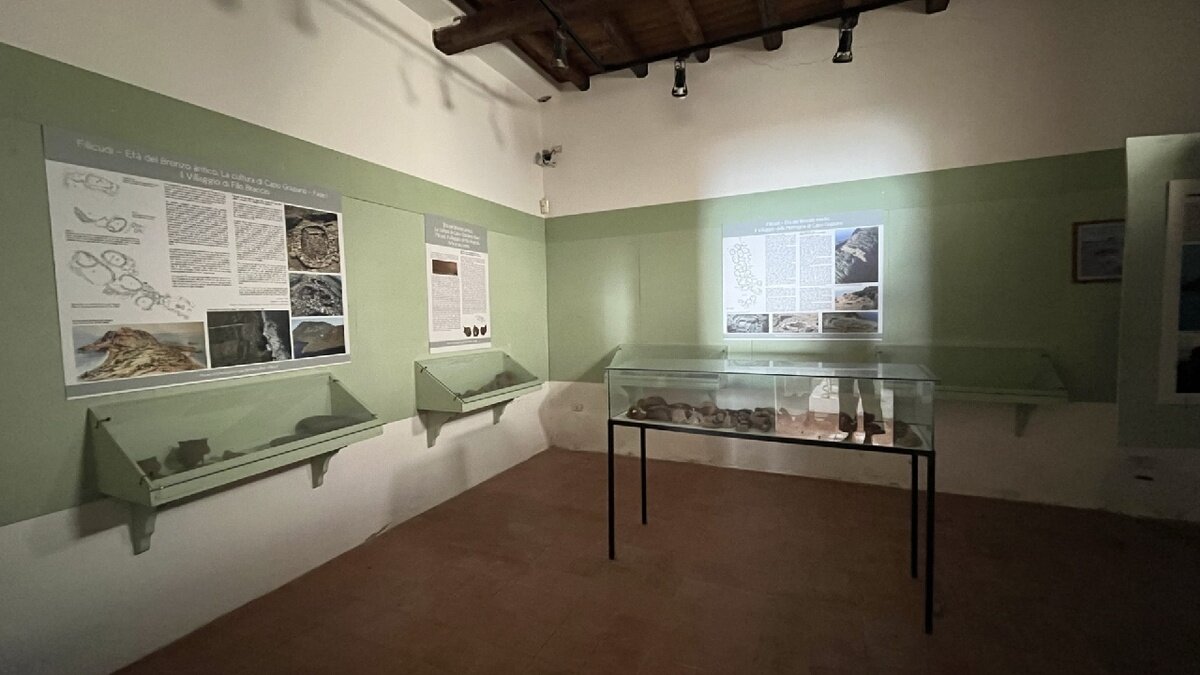
Image Credit: Regione Siciliana
Travellers heading to Filicudi this September face an unusual late-season access equation. Non-resident motor-vehicle restrictions remain in force until 30 September under Sicily’s 2026 decree, while the official Archaeological Park visitor page lists July and August as the standard opening period for Filicudi’s museum and requires appointments during the rest of the year. The result is a month in which arriving by sea remains straightforward, bringing a vehicle requires eligibility and documentation, and seeing one of the island’s principal indoor heritage attractions increasingly depends on planning before arrival.
Advertisement
Advertisement
Filicudi’s September Travel Story Is About Two Different Access Calendars
The most important development for September visitors is not a newly introduced ban. It is the overlap between two existing access systems whose calendars do not end together.
According to the Sicilian Region’s Presidential Decree D.P. 85 of 17 April 2026, the landing and circulation of motor vehicles belonging to people who are not permanently resident in the islands of the Municipality of Lipari are restricted on Filicudi from 1 June until 30 September 2026. The measure forms part of a wider Aeolian Islands traffic regime authorised for months of intense tourist movement.
Advertisement
Advertisement
The official Archaeological Park of the Aeolian Islands, meanwhile, currently states that the Filicudi section of the Luigi Bernabò Brea Archaeological Museum operates in July and August, with the rest of the year available by appointment. Admission is free.
Advertisement
Advertisement
That difference makes September operationally distinctive.
| Filicudi travel component | Official position as of 5 September 2026 | Key date | What travellers should understand |
|---|---|---|---|
| Non-resident motor vehicles | Landing and circulation restricted, subject to exemptions | Until 30 September 2026 | Do not assume a ferry vehicle booking automatically permits island access |
| Holiday-stay vehicle exemption | Available where qualifying accommodation requirements are met | During restriction period | A stay of at least seven days is required for this exemption route |
| Museum regular seasonal period | Official visitor page specifies July and August | Ended after August | September visitors should arrange access in advance |
| Museum admission | Free | Current | Appointment requirements concern access, not ticket price |
| Summer museum schedule announced in July | Monday, Wednesday and Friday, 09:15–15:45 | Published for the summer season | It should not automatically be treated as the September timetable |
| Sea connectivity | Ferry and hydrofoil access remains available | Seasonal schedules vary | Recheck departure times and weather-related operating information before travel |
The distinction matters because a traveller researching Filicudi from an older summer announcement could reasonably expect the museum to open automatically on Monday, Wednesday or Friday. The live visitor information now provides the more useful September planning signal by separating July and August from the rest of the year.
September Museum Visits Now Require More Planning Than Summer Trips
The Archaeological Park announced on 15 July 2026 that the detached Filicudi Porto museum section would operate during the summer on Mondays, Wednesdays and Fridays from 09:15 until 15:45. The institution also indicated that openings could be considered on request when particular needs arose.
Advertisement
Advertisement
For September travellers, however, the current ticket and visitor-information page is crucial because it explicitly identifies July and August as the operating period and states that access during the remainder of the year is by appointment. It provides the archaeological park’s telephone and email contact details for arranging visits.
This is not a minor attraction.
Advertisement
Advertisement
The museum occupies a traditional two-storey island house at Filicudi Porto and contains five exhibition rooms. Its collections cover Bronze Age communities associated with Capo Graziano, Greek and Roman material, maritime archaeology, anchors and amphorae recovered from surrounding waters, and objects documenting Filicudi’s rural and maritime traditions.
The heritage connection extends beyond the building. The Archaeological Park states that the prehistoric settlement at Capo Graziano developed from around 1700 BC, while excavations between 1952 and 1969 uncovered 27 oval huts on the settlement terrace. Artefacts recovered from the island are displayed both in Lipari’s principal archaeological museum and in the Filicudi branch.
For cultural-tour operators, this changes itinerary design. Museum entry may be free, but dependable access in September increasingly becomes a scheduling issue rather than a pricing issue.
Filicudi Vehicle Rules Create a Clear Divide Between Short and Longer Stays
The vehicle regulation is also more nuanced than a simple tourist-car ban.
Under the Filicudi-specific exemptions in D.P. 85/2026, non-resident visitors may bring cars, mopeds or motorcycles when they can demonstrate a reservation of at least seven days in a hotel, non-hotel accommodation or rented private home. Where the accommodation is inside the urban perimeter, private parking availability must also be demonstrated through the prescribed declaration process.
Advertisement
Advertisement
That produces an important B2B travel distinction.
A short-break visitor spending two, three or four nights on Filicudi cannot rely on the seven-day accommodation exemption. A traveller staying a full week may potentially qualify, provided all documentary conditions are satisfied.
Other Filicudi exemptions include qualifying non-resident homeowners registered for the relevant 2026 municipal waste tax, goods vehicles supplying commercial businesses, authorised vehicles linked to cultural or entertainment activity, ambulances and law-enforcement vehicles. Vehicles carrying disabled passengers with the appropriate recognised permit are also covered by a wider exemption applying across the islands of the Municipality of Lipari.
The decree allows Lipari Municipality to issue additional exemptions where urgent and unavoidable requirements are demonstrated.
Violations are not merely advisory matters. The decree sets an administrative penalty ranging from €430 to €1,731.
Advertisement
Advertisement
Why the Seven-Day Threshold Matters to the Travel Trade
The seven-day rule creates an unintended but commercially relevant distinction between short stays and week-long holidays.
It does not establish a tourism policy favouring longer stays, and it should not be described as doing so. Yet from a distribution and itinerary perspective, it means travellers booking seven nights may have a mobility option unavailable through the same exemption to someone booking a weekend escape.
Travel agents therefore need to establish trip duration before discussing vehicle transport.
This is particularly important for self-drive clients reaching Sicily by car and assuming they can simply continue aboard a vehicle-carrying ferry.
Lipari Sets the Municipal Context While Messina Has a Direct Enforcement Role
Lipari and Messina are not incidental geographical references.
Advertisement
Advertisement
Filicudi forms part of the Municipality of Lipari, and Lipari’s municipal government supported the preparation of the 2026 traffic restriction through its decision of 31 January 2026. The regional decree specifically records that municipal step.
The Municipality of Lipari’s institutional description places Filicudi at 9.5 square kilometres, with its highest point reaching 774 metres at Fossa delle Felci. The island’s steep volcanic terrain and dispersed settlements reinforce why road access and local mobility cannot be treated like transport on a conventional Mediterranean resort island.
Messina is equally connected to the legal framework. Before the decree was adopted, the Prefecture of Messina gave a favourable opinion on the restrictions. The decree subsequently assigned the Prefect of Messina responsibility for execution and systematic supervision of compliance throughout the applicable period.
That makes Lipari the direct municipal authority and Messina an operational part of the enforcement structure.
Ferry Availability Does Not Override Filicudi’s Vehicle Restrictions
Filicudi remains accessible by sea.
Advertisement
Advertisement
Caronte & Tourist Isole Minori through Siremar identifies ferry connections to Filicudi from Milazzo and Naples, as well as inter-island travel within the Aeolian archipelago. Its current travel information also confirms that vehicle-carrying services exist.
Liberty Lines separately provides hydrofoil connections serving Filicudi and maintains a ticket office on the island.
The critical point for travel sellers is that transport availability and legal permission are separate questions.
D.P. 85/2026 instructs shipping companies to ensure passengers travelling with vehicles are informed about restrictions and exemptions. The decree further connects issuance of the relevant vehicle travel documentation with proof that the traveller qualifies for an exemption.
A ferry capable of carrying a car therefore does not, by itself, create permission to land that car on Filicudi.
Advertisement
Advertisement
For agencies packaging Sicily road trips with Aeolian extensions, the safer itinerary may involve leaving the mainland vehicle before embarkation unless eligibility has been checked in advance.
Filicudi’s Low-Access Model Now Sits Beside Stronger Conservation Management
The sustainability dimension requires careful reporting.
The traffic decree itself is grounded in road-safety legislation governing small islands where tourist-season vehicle movements can create particular traffic difficulties and hazards. It should therefore not be presented as a dedicated carbon-reduction programme.
However, the wider environmental context is substantial.
On 26 May 2026, Sicily’s Environment Department approved updated conservation objectives and measures for the Natura 2000 Special Area of Conservation ITA030024 Isola di Filicudi.
Advertisement
Advertisement
The Sicilian Region also identifies the Isola di Filicudi e Scogli Canna e Montenassari Nature Reserve as covering 635.93 hectares, with Lipari as the municipality and the area connected to both the Filicudi Special Area of Conservation and the wider Aeolian protected network.
UNESCO has listed the Aeolian Islands as a World Heritage property since 2000, recognising their exceptional volcanic landforms and their importance to the scientific study of volcanology.
Italy’s official tourism portal consequently promotes Filicudi and neighbouring Alicudi as destinations suited to slow and sustainable tourism.
The significant editorial point is therefore not that every restriction was created for sustainability. It is that Filicudi’s September visitor experience is increasingly shaped by the interaction of controlled road access, protected landscapes, sea-dependent connectivity and managed heritage availability.
New Marine and Port Decisions Add Another Layer to the Island’s Access Strategy
Filicudi is not simply being restricted. Infrastructure and access systems are also being developed.
Advertisement
Advertisement
On 28 August 2026, only days before the start of September, the Sicilian Environment Department recorded a positive environmental-incidence screening decision for a proposed short-duration buoy field at Pecorini Mare, Filicudi, within the Municipality of Lipari in Messina. The decision concerns environmental screening and should not be interpreted as confirmation that the facility is already operational.
Earlier, in March 2026, the Sicilian Region announced almost €17 million in national funding for structural prevention and safety work at ports serving Sicily’s minor islands. The programme identified infrastructure within Lipari municipality, including Alicudi, Filicudi and Panarea, among the locations covered by the wider investment framework.
Filicudi also entered a separate infrastructure cycle after Sicily announced the award of works worth just over €3 million in November 2025 to improve safety on the road linking the port area with Pecorini a Mare.
For the travel industry, these projects demonstrate an important difference between limiting unmanaged visitor pressure and limiting connectivity itself. Filicudi continues to require maritime, road and visitor infrastructure, but those systems are being developed within an unusually sensitive island environment.
September 2026 Filicudi Planning Matrix for Travel Sellers
| Issue | Risk for traveller or operator | Recommended B2B response |
|---|---|---|
| Bringing a rental or private car | Traveller may not qualify for exemption | Verify eligibility before booking vehicle passage |
| Stay shorter than seven days | Seven-day accommodation exemption route unavailable | Build a car-free itinerary unless another exemption applies |
| Seven-night or longer booking | Documentation still required | Confirm reservation evidence and parking requirement where applicable |
| Museum visit | Walk-in opening should not be assumed in September | Contact the Archaeological Park before finalising the itinerary |
| Older museum timetable | Monday-Wednesday-Friday information may be interpreted as year-round | Use the current visitor page rather than summer announcement alone |
| Ferry booking | Vehicle space can be confused with legal landing permission | Treat carrier availability and island access law as separate checks |
| Weather-sensitive island transport | Sea conditions can affect journeys | Retain schedule flexibility and check operator updates |
| Heritage itinerary | Indoor museum access may require coordination | Pair booked museum access with outdoor archaeological experiences |
| September departure after month-end | Seasonal transport information changes | Reconfirm October timetables rather than extending September assumptions |
| New marine infrastructure | Environmental approval may be mistaken for operational status | Do not advertise new facilities until commissioning is independently confirmed |
What Travel Agents and Tour Operators Need to Do Now
- Check the travel date first. The Filicudi motor-vehicle restriction remains legally applicable through 30 September 2026.
- Ask how long the client is staying. Seven days is a material threshold for the accommodation-based vehicle exemption.
- Do not equate a ferry vehicle booking with permission to land the vehicle. The regional decree remains controlling.
- Pre-arrange museum access. The official archaeological visitor page places regular opening in July and August and the remainder of the year on an appointment basis.
- Keep Filicudi itineraries mobility-light. Walking, local transfers and passenger maritime transport should be considered before building a self-drive programme.
- Verify rather than assume October conditions. The vehicle restriction ends after September, but transport schedules and individual attraction access should be checked independently.
- Separate sustainability analysis from statutory purpose. Traffic safety is the legal basis for the vehicle controls, while Natura 2000 protection, UNESCO status and conservation measures provide the broader environmental context.
- Treat approved infrastructure as a pipeline, not a finished tourism product. Recent buoy-field, port and road decisions should only be marketed as operational when official commissioning or service information confirms availability.
Filicudi Could Become a Test Case for Better Low-Intensity Island Tourism
Filicudi’s September situation reveals a wider challenge for Mediterranean island tourism.
Advertisement
Advertisement
Destinations increasingly need to protect fragile environments while remaining accessible enough to sustain residents with accommodation providers alongside cultural institutions and tourism businesses. Filicudi demonstrates that this balance is not achieved through one headline regulation. It emerges from multiple systems operating simultaneously: road controls, ferry capacity, heritage opening arrangements, conservation law, port resilience and local infrastructure.
For travelers the quick take is easy to understand. September 2026 is not like the summer days on Filicudi. The island is still possible to reach. You can’t just show up and drive around. Museum visits need planning and thinking ahead.
For the people who help plan trips this gives a chance to create a kind of Aeolian travel plan: slower more thought out and not so focused on private cars.
The bigger question is whether Filicudi can turn these rules into a way to offer low-impact tourism without making it harder to see the history and culture that make the island special. The way the island is handling protection efforts building things and managing how people move is making this balance more important. This is true not for Italy, Lipari and Messina but for small islands all, over Europe.
Advertisement
