
Norway Goes Hand in Hand With Sweden and More as Wild Camping Rules Shape Adventure Plans for Budget Travel

Updated
Published
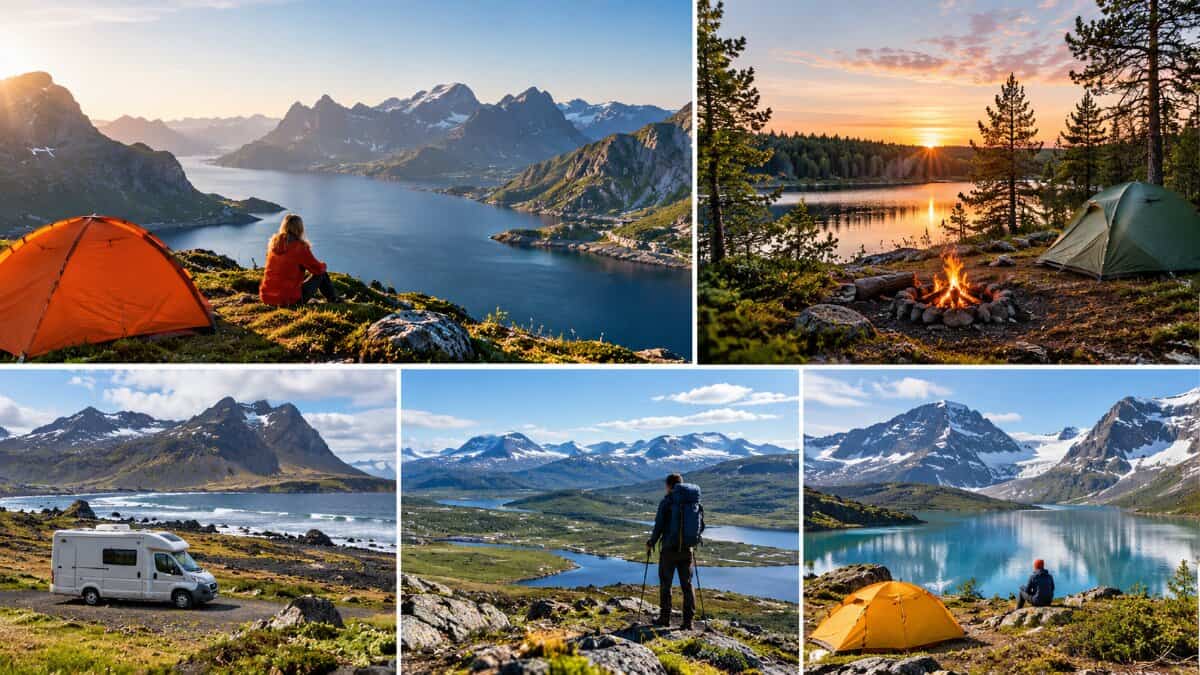
Wild camping remains possible in Norway, Sweden and Finland, but public-access rights do not automatically extend to motorhomes or protected land. Iceland restricts most campervan overnights outside organised campsites; Canada applies provincial and park-specific permits. The 2026 pricing development is in Canada, where standard Parks Canada admission and camping charges resumed on 8 September after temporary summer concessions ended. Independent hikers and tour operators must distinguish free tent access from lawful vehicle stays, permit charges and the full cost of travelling off-grid.
Wild Camping in 2026: The Adventure Travel Story Is Access Versus Actual Cost
All five destinations appeal to wilderness travellers, yet no single camping law connects them. Norway, Sweden and Finland have longstanding public-access traditions; Iceland particularly restricts vehicle-based overnights; and Canada regulates land by jurisdiction. There is no verified joint restriction announced in October 2026.
Advertisement
Advertisement
According to Parks Canada, its Canada Strong Pass free admission and 25 per cent discount on eligible overnight stays ended on 7 September 2026. Standard fees returned on 8 September. Provincial campsites and public-land permits followed different systems.
Wild camping is therefore a location-specific experience, not a universal free-accommodation entitlement. The pitch price and the cost of reaching it lawfully are different calculations.
Advertisement
Advertisement
Five-Country Wild Camping Rules Compared for International Travellers
| Destination | Tent camping outside commercial sites | Campervan and motorhome position | Main booking or compliance risk |
|---|---|---|---|
| Norway | Usually two nights on uncultivated land; 150 metres from inhabited dwellings | No automatic off-road vehicle access | Local rules and parking |
| Sweden | Usually one or two nights with small tent groups | No off-road driving or parking | Protected land and group size |
| Finland | Temporary camping outside restricted areas | Vehicles have separate rules | National parks and paid groups |
| Iceland | Traditional tents may qualify for one-night stays | Most off-site overnight vehicle stays need permission | Existing campsites and protected areas |
| Canada | Rules differ among Crown lands and parks | No universal right to camp in vehicles | Residency, fees and land category |
Every route still requires checks against its own land manager’s rules; national summaries do not override local restrictions.
Norway’s Right to Roam Protects Tent Freedom but Not Unrestricted Parking
Norway’s allemansretten underpins self-guided trekking. The Norwegian Environment Agency generally allows two-night tent stays on uncultivated land at least 150 metres from inhabited homes or cabins. Longer stays can be permissible in remote mountains, while farmland, protected habitats and local restrictions require care.
Advertisement
Advertisement
The difficulty begins with a motorhome. According to Visit Norway, access rights apply to people, not vehicles. Off-road parking is not authorised, and roadside stopping places are not guaranteed overnight pitches. Parts of Lofoten and Fjord Norway have additional local camping controls.
Statistics Norway recorded 1,575,183 commercial campsite guest nights in August 2026, down 3.4 per cent year on year. The figures cannot measure wild camping.
Advertisement
Advertisement
Sweden’s Public-Access Tradition Does Not Extend to Off-Road Motorhomes
Sweden’s allemansrätten generally permits small tent groups for one or two nights. The Swedish Environmental Protection Agency requires respect for homes, cultivated fields and sensitive ground; larger groups may need landowner consent. Nature reserves and national parks can tighten the rules.
Sweden’s official vehicle guidance prohibits off-road parking and driving, including on beaches and meadows. Roadside rest stops usually limit overnight stays to 24 hours on weekdays, sometimes longer at weekends, subject to local signs. Vehicle-based tourists cannot transfer pedestrian camping rights to a parked campervan.
A walk-in tent route cannot automatically be sold as a self-drive motorhome circuit.
Finland’s Everyman’s Rights Meet More Specific National Park and Commercial Rules
Finland permits temporary camping under everyman’s rights, but protected areas operate differently. Metsähallitus generally limits national park tent stays to designated places. Kolovesi National Park has approved tent areas, platforms and dry toilets.
Advertisement
Advertisement
Crucially for B2B travel, Finnish government service guidance updated on 14 October 2026 explains that commercial use of state-managed facilities can require cooperation or rights-of-use agreements. Ordinary activities covered by everyman’s rights can be exempt, but using maintained rest areas within paid products requires an agreement.
A solo hiker’s permission therefore need not cover a commercial guided group. Operators must check facilities and group arrangements.
Iceland’s Traditional Tent Exceptions Do Not Cover Most Campervan Wild Stays
Iceland distinguishes tent camping from sleeping in a vehicle. The Environment Agency permits traditional tents for a night in certain uncultivated areas, depending on nearby campsites, settlements and restrictions. On inhabited routes, a nearby campsite can rule out an informal pitch. Stays exceeding one night or groups exceeding three tents need permission.
Campervans and caravans generally need landowner permission for overnight stays outside organised campsites or urban areas. Off-road driving is separately restricted. Skógafoss and Mývatn are among locations with bans on camping outside marked grounds; other protected sites have distinct rules.
The Icelandic Tourist Board counted nearly 2.3 million foreign overnight visitors in 2025, not all campers. Self-drive trips therefore need confirmed lawful stopovers.
Canada’s 2026 Camping Charges Reveal the Price of Different Land Categories
Canada’s national parks and provincial Crown lands have different conditions. Parks Canada applies park-specific backcountry reservations, fire rules and charges. Its 2026 summer concessions ended on 7 September; standard camping and admission rates returned on 8 September.
Advertisement
Advertisement
According to Ontario, most Crown land allows free camping for up to 21 days at one site per calendar year. However, many non-residents aged 18 or over need permits north of the French and Mattawa Rivers, costing CAD 10.57 per person per night, including tax. Exemptions apply, while designated green zones prohibit non-resident camping.
Alberta’s Public Lands Camping Pass applies to adults in specified Eastern Slopes and other zones. Rates are CAD 20 for three days or CAD 30 annually per adult, plus a CAD 3.25 processing charge and GST. It is not a province-wide camping tax.
The Real Cost of Free Camping: Verified 2026 Budget Examples
| Legally distinct camping option | Official charge | Illustration for two adults | What is not included |
|---|---|---|---|
| Eligible Ontario Crown land requiring non-resident permits | CAD 10.57 per person per night | CAD 147.98 for seven nights | Equipment, food and transport |
| Ontario Parks Algonquin fee group | CAD 12.43 per adult per night, including tax | CAD 174.02 for seven nights | Reservation and other applicable costs |
| Alberta Public Lands three-day pass | CAD 20 per adult | CAD 40 for two passes, plus processing and GST | Travel and other permits |
| Lawful Nordic public-access tent pitch | No standard nightly pitch charge | No nightly pitch charge where lawful | Parking, sanitation and transport |
The Ontario Parks 2026 tariff applies from 1 April 2026 to 31 March 2027. Illustrations use two adults for the stated periods. Different jurisdictions and trip lengths mean these are not like-for-like offers or total holiday prices.
Budgets must still allow for transport, safe parking, water, toilets, equipment, legal waste disposal and fallback accommodation.
Fire Bans, Waste Disposal and Wildlife Protection Can Override a Perfect Route
A lawful tent pitch does not guarantee fire permission. Norway’s Environment Agency restricts woodland fires from 15 April to 15 September, subject to exceptions and local bans. Sweden’s environmental agency directs travellers to check regional bans. Finland’s Metsähallitus generally confines fires to approved sites and restricts them during wildfire warnings.
Parks Canada requires designated fire facilities, rubbish removal and safe food storage. Iceland’s environment agency emphasises fragile vegetation, taking litter away and avoiding off-road damage.
Advertisement
Advertisement
Operators should verify fire-based meals and every overnight stop against local conditions on the travel date.
Official Tourism Indicators Explain the Scale, Not a Single Camping Trend
| Country | Latest relevant institutional indicator | Correct interpretation |
|---|---|---|
| Norway | 8.4 million commercial campsite guest nights in 2025, Statistics Norway | Not informal wild pitches |
| Sweden | 24% of 70.8 million accommodation nights at camping sites in 2025, Tillväxtverket | Not informal camping |
| Finland | 3.5 million national park visits in 2025, Statistics Finland | Visits, not nights |
| Iceland | Almost 2.3 million overseas overnight visitors in 2025, Tourist Board | All visitor types |
| Canada | CAD 6.5 billion visitor spending in or near Parks Canada places, 2025–26, Parks Canada | Not camping revenue |
These are different indicators, not a cross-country measure of wild camping. They establish the wider economic context without implying comparable numbers of campers.
Original Industry Analysis: The Compliance Gap Is an Adventure Travel Product Opportunity
A five-country comparison reveals a blind spot in the way wilderness holidays can be packaged. The valuable unit of inventory is not merely a tent pitch. It is a verified combination of legal ground access, lawful approach transport, a permitted overnight activity and a workable sanitation plan. Remove any one component and an otherwise attractive itinerary may become unbookable or environmentally unsound.
Consider two travellers following the same mountain route. One arrives on foot carrying a tent; the other expects to sleep in a rented campervan. They may experience the same scenery but encounter materially different legal rights. Similarly, a solo Finnish hiker may rely on public-access freedoms that do not automatically authorise a commercial group to use maintained facilities. In Canada, the visitor’s residency and the land manager can change the required permit price without changing the landscape.
This creates room for high-value operator services: georeferenced legal stopovers, contingency campsite bookings, transparent permit calculations, fire-ban checks and safe waste-management logistics. Such services would differentiate a compliant adventure itinerary from a generic list of scenic locations. This is an editorial inference from published rules, not evidence of a newly announced coordinated policy or a quantified change in demand.
Operational Priorities for Travel Agents and Adventure Tour Operators
- Classify sites: identify the land manager and any protected-area restrictions.
- Separate tents and vehicles: check parking and overnight occupancy individually.
- Price individually: verify residency, age, dates, groups and taxes.
- Check business agreements: confirm permissions for guiding and maintained facilities.
- Prepare alternatives: plan for fire bans, closures and weather disruptions.
- Locate services: document toilets, water and vehicle waste disposal.
Outlook: Responsible Wilderness Access Becomes Part of Adventure Travel Value
The long-term story is not the disappearance of free camping but the need to use it responsibly. Norway, Sweden and Finland retain distinctive pedestrian freedoms; Iceland makes vehicle restrictions central to itinerary design; Canada demonstrates the role of park fees and residency. Operators combining lawful access, reliable facilities and transparent costs can build more resilient wilderness products as international adventure travel evolves.
Advertisement
Advertisement
FAQs
Is wild camping legal in Norway in 2026?
Yes, short-term tent camping is generally allowed on uncultivated land under the right to roam, normally away from inhabited homes or cabins by at least 150 metres. Local and protected-area rules can modify access.
Can tourists sleep overnight in campervans anywhere in Iceland?
No. Overnight stays outside organised campsites or urban areas generally require permission from the landowner or rights-holder, with additional protected-area restrictions.
Are Sweden and Finland completely free for wilderness campers?
Not universally. Their public-access traditions enable temporary tent stays in suitable areas, but national parks, nature reserves, group activities and vehicles face separate conditions.
Do international travellers need camping permits in Canada?
It depends on the location. Some Ontario Crown land requires non-resident permits, Alberta has designated pass areas, and national parks apply separate accommodation rules and charges.
Is wild camping cheaper than booking a campsite?
It can remove the nightly pitch charge where allowed, but permits, parking, transport, equipment, sanitation and the need for alternative accommodation can materially alter the final budget.
Advertisement
