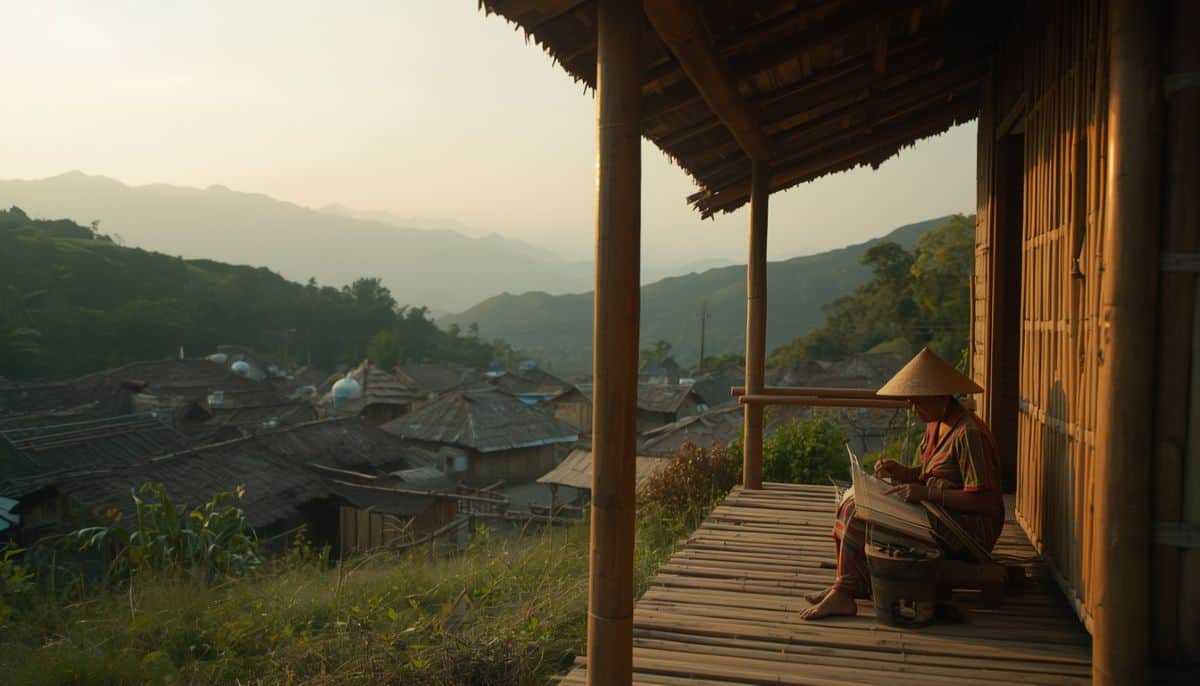
Image generated with Ai
The tragic fire that consumed the Sade Traditional Village in Rembitan Village, Central Lombok District, West Nusa Tenggara Province, on August 22, 2026, destroyed numerous historic buildings and cultural objects, posing an immediate threat to a living repository of Sasak heritage. For cultural travellers, ethical tourists and heritage preservationists tracking Southeast Asian destinations, the disaster poses an urgent question: how can ancient, highly combustible indigenous settlements survive the modern era while remaining open to the world? Emergency disaster response is closely related to the future of cultural tourism governance; thus, those who want to travel sustainably should know about the fast action and holistic recovery mechanism set up by the Indonesian Ministry of Tourism.
While official forensic investigations led by regional police laboratories and local authorities remained active in the weeks following the incident, preliminary assessments indicated that the blaze originated near the densely populated core of the settlement. Because traditional Sasak architectural engineering relies heavily on natural, highly combustible construction materials—such as structural bamboo frames, hardwood support pillars, and woven coconut-fibre thatch roofs—the flames spread rapidly through the interconnected neighbourhood layout.
Advertisement
Official data compiled by regional disaster management agencies and reviewed during ministerial delegation visits revealed that the fire impacted dozens of traditional residential units, numerous handicraft exhibition spaces, traditional rice barns (alang-alang), community gathering pavilions (berugak), and the primary village prayer house. Furthermore, irreplaceable cultural heritage items, including centuries-old palm-leaf manuscripts (lontar), sacred ancestral heirlooms, and specialized traditional backstrap weaving equipment, were severely damaged or reduced to ash. The sudden loss of these physical assets instantly disrupted the daily livelihoods of local residents who rely directly on cultural heritage tourism.
In response to the tragedy, Tourism Minister Widiyanti Putri Wardhana conducted an immediate official on-site inspection of Rembitan Village to coordinate emergency relief and long-term recovery frameworks alongside regency officials, village elders, and community leaders. The ministry’s multi-phased strategy emphasizes a community-led rebuilding process designed to restore both the physical infrastructure and the local tourism economy without erasing historical authenticity.
Advertisement
Advertisement
Immediate humanitarian interventions focused on establishing public community kitchens, delivering comprehensive trauma healing support for displaced families, and deploying emergency response training for local tourism actors and residents. For the subsequent economic recovery phase, plans include providing targeted working capital grants, micro-loans, and replacement weaving tools to local artisans whose workshops were destroyed. Longer-term reconstruction efforts involve drafting an integrated master plan that incorporates modern disaster mitigation safeguards—such as discreetly installed communal light fire extinguishers, designated emergency water reservoirs, and improved spatial spacing between high-risk structures—without compromising the architectural integrity that defines Sade as a premier cultural tourism destination.
Sade is far from an isolated case within the archipelago; Indonesia is dotted with indigenous heritage communities that serve as the fundamental backbone of the nation’s cultural tourism strategy. Villages such as Wae Rebo in Flores, Ratenggaro in Sumba, and Penglipuran in Bali have historically received targeted assistance, preservation grants, and infrastructure upgrades from the tourism ministry to balance visitor accessibility with cultural conservation.
Protecting these living villages directly contributes to sustainable tourism by shifting the focus away from mass commercialization toward community-empowered conservation models. When government bodies invest in fire resilience, structural maintenance, and cultural education programmes, they ensure that tourism revenue flows directly back to the indigenous stewards rather than external operators. This symbiotic relationship preserves intangible cultural heritage—such as ancient backstrap weaving techniques, indigenous architectural knowledge, and oral traditions—while educating global travelers on the importance of respecting and protecting vulnerable local ecosystems.
The reconstruction of Sade Traditional Village marks a significant milestone for the development of community-based tourism in Lombok and the province of West Nusa Tenggara in general. As international tourism recovers and transitions from traditional beach resorts to immersive cultural experiences, the fragility of the heritage infrastructure has emerged as a key theme in policy debates. Regional planners are now working on standard disaster preparedness protocols for all traditional villages in the region.
The Ministry of Tourism aims to fireproof these delicate communities through fire safety education in the course of regular village administration and within the framework of public-private partnerships, funded by tourism levies. Those who visit Sade after the disaster will see a living community in transition, one that respects its ancestral roots but also adopts modern resilience strategies. In the end, the revival of Sade Traditional Village provides an important blueprint for balancing heritage preservation with modern safety standards, ensuring that future generations of global explorers can continue to experience the authentic soul of Sasak culture.
Advertisement
Advertisement
Advertisement













Saturday, September 5, 2026

Friday, September 4, 2026

Saturday, September 5, 2026

Thursday, September 3, 2026

Wednesday, September 2, 2026

Saturday, September 5, 2026

Saturday, September 5, 2026