
UK Rail Powerhouse Rowe Hankins Marks 40 Years as Hidden Smart Technology Behind Safer Journeys Emerges in 2026

Published
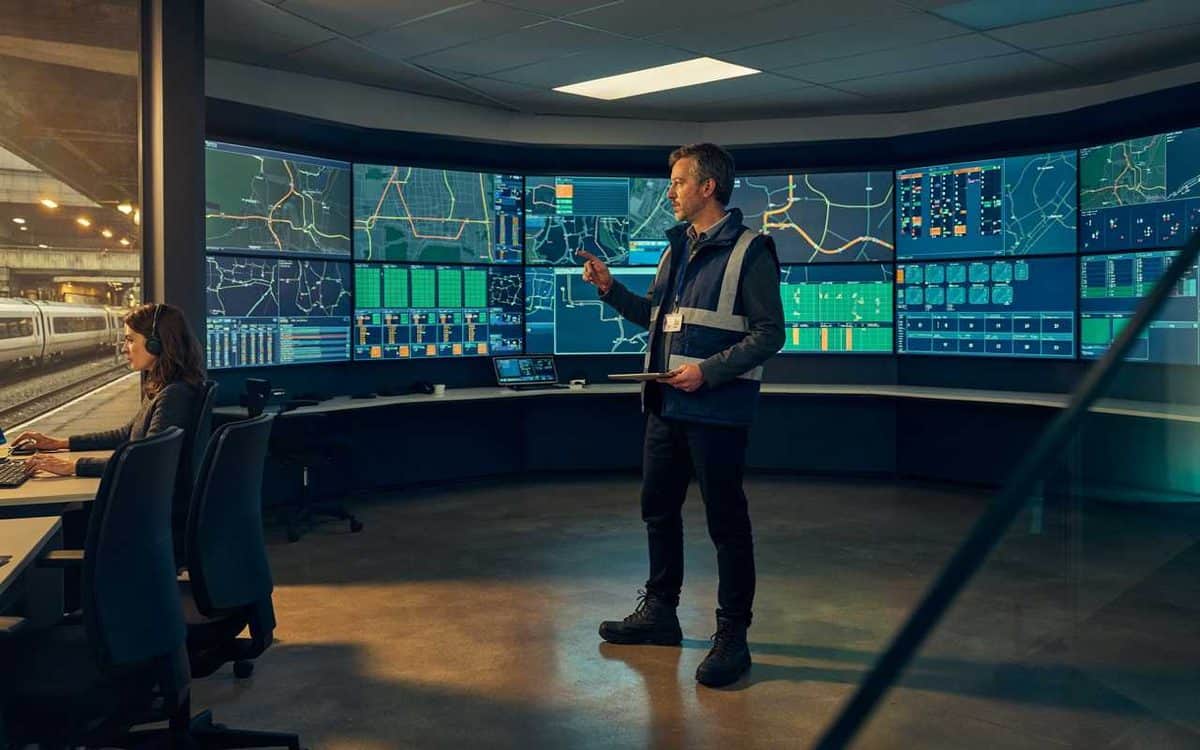
Image generated with Ai
Bury, Lancashire, United Kingdom – Rowe Hankins will be celebrating the company’s 40 years of contributions to rail innovations in 2026 as this is the year when the company marks four decades since it was incorporated in 1986. The significance of this achievement comes at a time when railway firms worldwide are making investments to turn their infrastructures into smart infrastructures. One thing the metamorphosis of the company from being just a distributor to the designer and manufacturer reveals is something that other companies could not see regarding the future of railways – the future is not only about better trains but smart infrastructures as well.
The reason why this event is significant lies in the remarkable engineering success story of a firm that has managed to turn itself from a mere distributor of electromechanical components into a specialist firm offering railway solutions.
Advertisement
Advertisement
What Others Are Missing About the Hidden Technology Powering Modern Rail Networks
The railway industry is often dominated by headlines about high-speed trains, mega infrastructure projects and new passenger services. However, the technology protecting those systems often receives far less attention.
This is where Rowe Hankins has positioned itself.
Advertisement
Advertisement
The company’s journey demonstrates that rail innovation is not only about visible infrastructure. It is also about the invisible systems that monitor speed, detect faults, improve safety and extend asset life.
Advertisement
Advertisement
Founded by engineers Roger Rowe and Toni Hankins, the business began as a distribution agency representing Heinemann electromechanical products. However, the founders identified an opportunity beyond selling components. They focused on understanding customer problems and developing solutions that could address specific railway challenges.
That approach created the foundation for decades of growth.
The company’s early expansion was built through direct selling, technical expertise and organic investment. Instead of relying heavily on external borrowing, Rowe Hankins reinvested into manufacturing capability, workforce development and product innovation.
Advertisement
Advertisement
The result was a gradual shift from supplier to technology partner.
Today, the company operates from its Power House facility in Bury and specialises in safety-critical railway systems, including:
Advertisement
Advertisement
- Speed sensors
- Monitoring systems
- Earth leakage detection technology
- Intelligent wheel flange lubrication systems
- Overspeed protection solutions
- LiDAR-based detection systems
This evolution reflects a wider trend across global rail markets. Operators are increasingly seeking suppliers that can provide not only hardware but also long-term reliability, maintenance support and technology upgrades.
How Did a Small Lancashire Engineering Company Become a Global Rail Technology Partner?
The answer lies in consistency.
Rowe Hankins did not become internationally recognised through one single breakthrough. Instead, its growth came through decades of incremental engineering improvements.
The company established its research and development function in 1998, marking a major turning point. This allowed Rowe Hankins to move beyond representing other manufacturers and begin developing its own technology portfolio.
That change reshaped the company’s identity.
Advertisement
Advertisement
The organisation began designing solutions based on direct customer requirements. Products were created around real operational issues faced by railway operators rather than simply adapting existing technologies.
This customer-led engineering model became one of the company’s strongest advantages.
Over the years, Rowe Hankins expanded its capabilities through several important milestones:
| Year | Major Development | Strategic Impact |
|---|---|---|
| 1986 | Rowe Hankins Components established | Beginning of independent rail engineering journey |
| 1988 | BS 5750 accreditation achieved | Strengthened quality credentials |
| 1990 | New factory constructed | Increased manufacturing capability |
| 1998 | Research and development department established | Shift from distributor to designer |
| 2009 | IRIS accreditation achieved | Improved global rail industry recognition |
| 2011 | Network Rail contract secured for asset monitoring systems | Strengthened UK rail presence |
| 2014 | Facility expanded to 25,000 sq ft | Supported production growth |
| 2015 | Modern Railway Innovations Award and Light Rail Best Supplier recognition | Industry validation |
| 2021 | Employee Ownership Trust established | Created long-term employee investment model |
| 2025 | Manchester Metrolink LiDAR Detection contract secured | Expanded smart detection capability |
| 2026 | 40th anniversary celebrated | Launches next growth chapter |
Why Employee Ownership Could Become Rowe Hankins’ Biggest Competitive Advantage
One of the most distinctive elements of Rowe Hankins’ current strategy is its transition towards employee ownership.
In 2021, Rowe Hankins EOT Trustee Limited was established, becoming the controlling shareholder structure connected with the company’s employee ownership model.
Advertisement
Advertisement
This approach creates a different relationship between employees and business performance.
Instead of viewing staff simply as workers, the model encourages employees to become long-term participants in the company’s future.
For engineering companies operating in highly specialised industries, this approach can be particularly valuable.
Rail technology requires deep technical knowledge. Experience accumulated over decades cannot easily be replaced. Retaining skilled engineers, designers and manufacturing specialists becomes a strategic advantage.
The employee ownership model supports:
Advertisement
Advertisement
- Long-term decision making
- Greater workforce engagement
- Preservation of technical expertise
- Stronger company culture
- Continued investment in innovation
The railway sector is currently facing major challenges, including skills shortages, supply chain pressure and increasing demand for digitalisation. Companies that maintain internal expertise may gain an advantage as operators seek reliable technology partners.
The Smart Rail Race Has Shifted From Speed to Safety and Intelligence
The global railway industry is entering a new phase.
For decades, railway innovation focused heavily on increasing speed, expanding networks and improving passenger capacity. However, the next generation of rail development is increasingly centred on intelligence.
Operators now require systems that can:
- Predict failures before disruption occurs
- Improve maintenance efficiency
- Increase operational safety
- Extend equipment lifespan
- Support automation
This is where technologies such as LiDAR detection and intelligent monitoring systems become increasingly important.
Advertisement
Advertisement
Rowe Hankins’ recent involvement in LiDAR-based detection solutions reflects this shift. The company’s development direction aligns with a wider industry movement towards digital railway management.
Rather than replacing traditional railway engineering, digital technology is enhancing it.
The future railway will depend on a combination of:
- Physical infrastructure
- Sensor technology
- Data analysis
- Predictive maintenance
- Safety monitoring
This creates opportunities for specialist engineering companies that understand both traditional rail systems and emerging digital requirements.
What Makes Rowe Hankins Different From Traditional Rail Suppliers?
The biggest difference is its positioning.
Advertisement
Advertisement
Many suppliers focus on manufacturing individual products. Rowe Hankins promotes a broader engineering partnership approach.
The company’s philosophy is based around designing solutions, supporting systems beyond initial installation and helping operators maintain reliability throughout the asset lifecycle.
This approach matters because railway assets often remain operational for decades.
A component installed today may need support 20 or 30 years later. Suppliers capable of providing long-term technical knowledge become increasingly valuable.
| Traditional Supplier Approach | Rowe Hankins Engineering Approach |
|---|---|
| Product-focused sales | Problem-solving partnerships |
| Short-term supply relationship | Long-term lifecycle support |
| Standardised products | Customer-specific solutions |
| Component delivery | Integrated engineering support |
| Replacement-focused model | Upgrade and refurbishment approach |
The company has stated that it continues supporting and upgrading systems beyond normal end-of-life expectations, reflecting a lifecycle-focused approach.
Advertisement
Advertisement
This philosophy represents the hidden story behind the anniversary. The company’s success is not only measured by years in operation, but by its ability to remain relevant as railway technology changes.
Why The Next Railway Revolution Will Be Built Around Intelligence Rather Than Just Infrastructure
The railway industry is entering a defining period where reliability, automation and predictive technology are becoming as important as new tracks and rolling stock. For companies like Rowe Hankins, the next opportunity is not simply supplying components but helping operators create smarter railway ecosystems.
The company’s 40-year milestone arrives at a time when rail operators globally are under pressure to improve performance while controlling costs. Ageing infrastructure, rising passenger expectations and increasing demand for safer transport systems are forcing the industry to rethink how assets are maintained.
This is where Rowe Hankins’ engineering philosophy becomes increasingly relevant.
The company has developed solutions that focus on preventing failures rather than reacting after disruption occurs. Its portfolio includes speed sensing technology, monitoring systems, intelligent wheel flange lubrication, tram overspeed protection and LiDAR obstacle detection solutions.
Advertisement
Advertisement
The hidden story behind its anniversary is that railway innovation is shifting away from only building bigger networks. The real competition is now about creating rail systems that can think, detect and respond.
For passengers, this could mean fewer delays.
For operators, it could mean lower maintenance costs.
For governments investing in sustainable transport, it could mean more reliable public mobility.
How Does Rowe Hankins Reflect The Future of Sustainable Rail Travel?
Railways are increasingly positioned as a key solution for reducing transport emissions and supporting greener mobility. However, sustainable rail does not depend only on electrification or new trains.
Advertisement
Advertisement
Efficiency matters.
A railway system that requires fewer repairs, reduces component waste and extends equipment lifespan can deliver environmental benefits throughout its lifecycle.
Rowe Hankins’ refurbishment and upgrade approach represents this growing industry trend. Instead of replacing complete systems, railway operators are increasingly looking for ways to modernise existing assets.
This creates a circular engineering model.
| Traditional Rail Upgrade Model | Emerging Smart Rail Model |
|---|---|
| Replace ageing equipment | Upgrade and extend asset lifespan |
| Reactive maintenance | Predictive monitoring |
| Fixed components | Intelligent systems |
| Higher material consumption | More efficient lifecycle management |
| Short-term replacement cycles | Long-term asset optimisation |
The company’s ability to repair, refurbish and support equipment beyond conventional service periods reflects a broader movement towards sustainable infrastructure management.
Advertisement
Advertisement
This approach is particularly important as many rail networks worldwide operate fleets that must remain functional for decades.
The future railway will not only be measured by how fast trains travel.
It will be measured by how intelligently they operate.
What Others Get Wrong About Railway Innovation In 2026
Many observers still associate rail innovation with high-speed trains, futuristic stations or completely new networks.
However, industry specialists know that some of the most important breakthroughs happen behind the scenes.
Advertisement
Advertisement
A train’s reliability depends on thousands of technical decisions.
A single sensor failure can create delays.
A monitoring system can prevent a costly breakdown.
A detection solution can improve passenger safety.
This is why specialist engineering companies are becoming increasingly important.
Advertisement
Advertisement
Rowe Hankins’ transformation demonstrates how smaller technology businesses can influence global transport systems by focusing on highly specialised challenges.
The company’s journey also challenges the assumption that only large multinational corporations drive railway innovation.
Its growth shows that specialist expertise can become a major competitive advantage.
The company currently highlights:
- More than 40 years of engineering experience
- Support across more than 30 countries
- More than one million components in service
- Continuous development of safety-critical railway technology
The lesson for the wider transport industry is clear.
Advertisement
Advertisement
Innovation does not always come from the biggest company.
Sometimes it comes from the specialist supplier solving the problem nobody else wanted to tackle.
Why Bury’s Engineering Story Matters To Global Rail Markets
Bury, Lancashire, may not immediately appear alongside major rail innovation centres such as Berlin, Tokyo or Paris.
Yet Rowe Hankins’ international expansion demonstrates the importance of regional engineering expertise.
The company’s success represents a wider UK manufacturing story: specialist businesses creating globally competitive technology from outside traditional industrial hubs.
Advertisement
Advertisement
Its growth also highlights how local engineering capability can contribute to international transport development.
From its Lancashire base, Rowe Hankins has expanded its influence through partnerships, exports and specialist railway solutions.
The company’s future plans include supporting growing international markets, including expansion activity connected with Asia.
This reflects a wider global trend.
Rail investment is increasing across regions including:
Advertisement
Advertisement
- Asia-Pacific
- Europe
- North America
- The Middle East
Urbanisation is creating demand for safer metro systems, while governments are prioritising rail as a lower-carbon alternative to road and air transport.
Specialist suppliers that can provide reliable technology solutions are likely to benefit from this growth.
The Numbers Behind Four Decades Of Engineering Growth
| Category | Rowe Hankins Milestone |
|---|---|
| Company establishment | 1986 |
| Anniversary celebrated | 40 years in 2026 |
| Main location | Bury, Lancashire, United Kingdom |
| Current facility size | 25,000 sq ft |
| Workforce | 33 employees |
| Countries served | 30+ |
| Components in service | 1 million+ |
| Research and development launched | 1998 |
| Employee ownership transition | 2021 |
| LiDAR detection expansion | 2025 onwards |
These figures show a company that has grown steadily rather than through rapid expansion.
Its development has followed a long-term engineering strategy.
How Smart Sensors Could Change The Passenger Experience
Passengers rarely see railway sensors.
Advertisement
Advertisement
They rarely notice monitoring systems.
They rarely know which technologies prevent disruption.
Yet these systems directly influence their journeys.
A smarter railway can improve:
- Service reliability
- Safety performance
- Maintenance planning
- Network efficiency
- Passenger confidence
For travellers, the biggest benefit is simple: fewer unexpected interruptions.
Advertisement
Advertisement
For railway operators, the advantage is operational visibility.
Digital monitoring allows engineers to identify potential issues before they become major failures.
This represents one of the biggest changes in modern rail.
The railway of the future will not only transport passengers.
It will continuously analyse its own condition.
Advertisement
Advertisement
Editorial Perspective Travel Analytics View Why This Story Matters Beyond Engineering
From a travel analytics perspective, Rowe Hankins’ 40-year milestone represents a much bigger shift happening across global mobility.
Passenger expectations have changed permanently.
Travellers now expect reliability, punctuality and seamless connections. A delayed train is no longer viewed only as an operational inconvenience. It affects business travel, tourism confidence and regional economies.
Rail reliability has become a competitive factor.
Destinations with dependable transport networks attract more visitors because accessibility influences travel decisions.
Advertisement
Advertisement
Tourism growth increasingly depends on transport infrastructure working efficiently.
A visitor arriving in a new city does not separate the railway system from the destination experience. A smooth journey creates confidence. A disrupted journey damages perception.
Therefore, behind every successful tourism market is a strong mobility ecosystem.
Companies developing railway intelligence systems contribute indirectly to tourism growth by helping create more dependable transport networks.
The significance of Rowe Hankins’ story is that future travel will depend not only on where people go, but how confidently they can reach those destinations.
Advertisement
Advertisement
Final Call: The Next 40 Years Could Define A New Era For UK Rail Engineering
For the moment, Rowe Hankins enters a new period with new challenges.
The first four decades were about survival, development, and transformation.
However, the following period will be associated with innovation scale.
The attention of the company to technology partners, project solutions, and detection systems shows that there is a demand for specialist engineering companies in rail development in the future.
There are incredible changes happening in the sector of railways.
Advertisement
Advertisement
Artificial intelligence, sensors, automation, and predictive maintenance are likely to alter the working principles of railways.
Companies having knowledge about railway engineering and innovative technologies are going to enjoy some competitive advantages.
The history of Rowe Hankins, starting from being a small Lancashire company and moving towards becoming a global partner in railway technologies, has proven one fact.
Railway transportation in the future is not just about constructing new trains; the future belongs to the companies providing safety, comfort, and reliability of all trips.
Advertisement
