
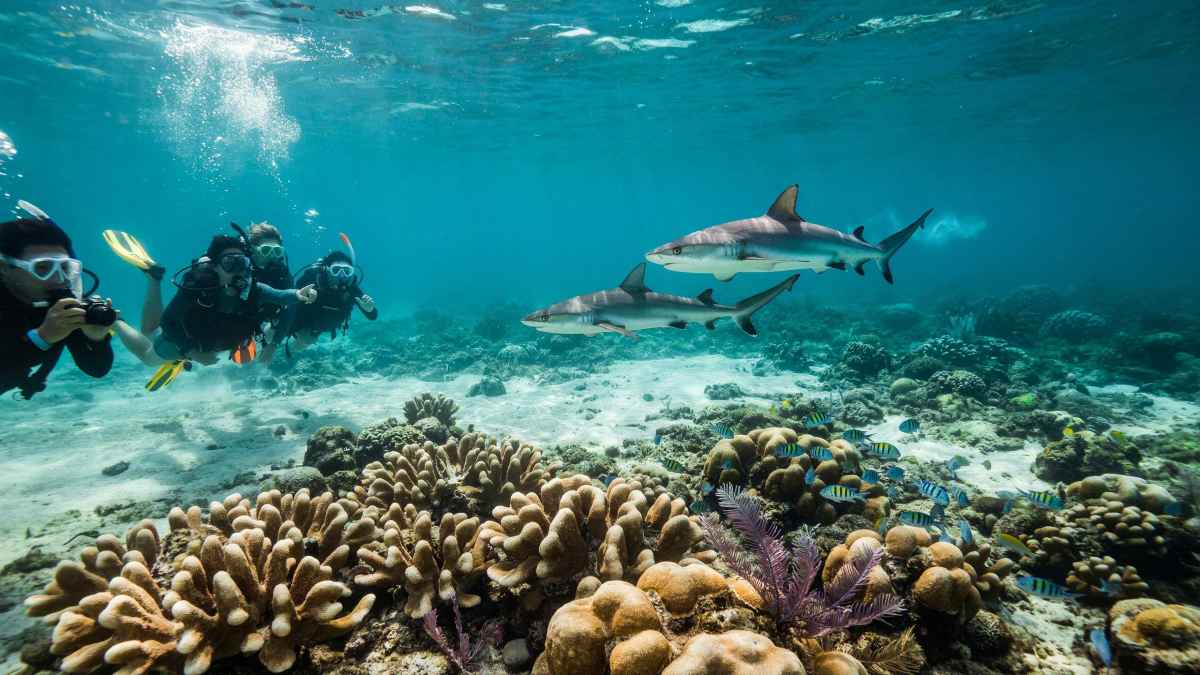
Image generated with Ai
The island of Fuvahmulah will be establishing itself as a unique tourism site within the Maldives with regard to marine life, especially sharks and manta rays, by means of conservation regulations which will come into effect between 2025 and 2026 and control pelagic diving near Fuvahmulah’s manta and shark populations. There will be tighter regulations of visitors regarding the limits of dives, briefings and sanctuary areas. Fuvahmulah is a unique island situated south of the Maldives and close to the equator, unlike other islands in the Maldives, which usually form coral ring formations. The unique oceanic surroundings of Fuvahmulah provide opportunities for diving in deep waters to see tiger sharks, thresher sharks and oceanic manta rays.
Fuvahmulah is a single island rather than a conventional collection of islands surrounding a lagoon. Its position in the open Indian Ocean places the destination close to deep-water environments and drop-offs that attract large pelagic species.
This geography has helped establish the island as a specialist diving destination within the Maldives. Tiger shark encounters are particularly associated with Fuvahmulah, while thresher sharks and oceanic manta rays add to the range of marine life encountered by divers.
The island also contains freshwater wetlands and lakes known locally as kilhis, creating an unusual combination of marine and terrestrial environments within a small equatorial destination.
Advertisement
For travellers, the result is a diving experience focused on large ocean species rather than the shallow coral-reef experiences commonly associated with Maldivian holidays.
The conservation framework introduces carrying-capacity measures intended to control the number of divers using sensitive sites at particular times.
Managing visitor numbers is increasingly important at destinations where marine wildlife encounters have become a major tourism attraction. Concentrated diving activity can increase pressure on dive sites and alter the experience for both visitors and marine species.
By establishing defined capacities, Fuvahmulah’s diving operators can organise excursions around more controlled conditions while reducing the possibility of excessive numbers gathering at individual drop-offs.
The approach also creates a clearer operating framework for local dive cooperatives serving international and domestic visitors.
Mandatory dive briefing certifications form another element of the developing system.
Briefings can prepare visitors for the specific conditions associated with pelagic diving, including appropriate behaviour around large marine animals and procedures for operating within designated conservation areas.
This is particularly relevant for encounters with tiger sharks and other large species. Unlike conventional reef sightseeing, pelagic diving involves interactions with powerful ocean wildlife in deeper and more exposed environments.
A standardised briefing system can therefore give visitors clearer information before entering the water while supporting consistent practices among participating dive operators.
Designated no-chum sanctuary zones are also being established around selected drop-offs and marine areas.
Chumming involves introducing bait or other attractants into the water to encourage marine animals to approach divers. Restricting the practice in sanctuary zones provides areas where marine wildlife encounters are not deliberately stimulated in this way.
The measure forms part of a broader effort to manage how wildlife tourism operates around Fuvahmulah’s pelagic habitats.
For visitors, this means that diving experiences will increasingly take place within clearly defined rules designed around marine conservation rather than unrestricted wildlife interaction.
The regulatory approach also has implications for the island’s tourism economy.
Fuvahmulah has developed a specialist visitor market around diving, with accommodation providers, dive centres, guides and other tourism businesses benefiting from travellers who stay on the island to access its marine sites.
Unlike day-boat excursions from other parts of the Maldives, an island-based diving model encourages visitors to spend nights in Fuvahmulah and use local tourism services.
This creates a connection between marine conservation and the wider visitor economy. Protecting the marine attractions that bring divers to the island can help maintain the destination’s long-term tourism appeal.
The guidelines that are being adopted up until 2025 and 2026 will help to frame Fuvahmulah into a more organised approach towards adventure and marine tourism. The unique combination of deep-sea diving and the availability of rare pelagic species, along with the freshwater kilhis and the equatorial nature of the place, makes the tourism pattern of the place very different from the conventional Maldivian island tourism. For travellers who want to have the experience of shark dives, the location will provide them with places which are hard to come across anywhere else in the Maldives. The new guideline will take that further by framing certain expectations for the visitors regarding their number and the preparation of the divers.
Advertisement
Tags: Fuvahmulah, Fuvahmulah shark diving, Fuvahmulah thresher sharks, Fuvahmulah tiger sharks, Fuvahmulah tourism
Advertisement
Advertisement













Saturday, September 5, 2026

Saturday, September 5, 2026

Saturday, September 5, 2026

Saturday, September 5, 2026

Saturday, September 5, 2026

Thursday, September 3, 2026

Saturday, September 5, 2026

Saturday, September 5, 2026


