
Switzerland Takes Airport Shuttle Automation Further with a New Remote Driving Trial

Updated
Published
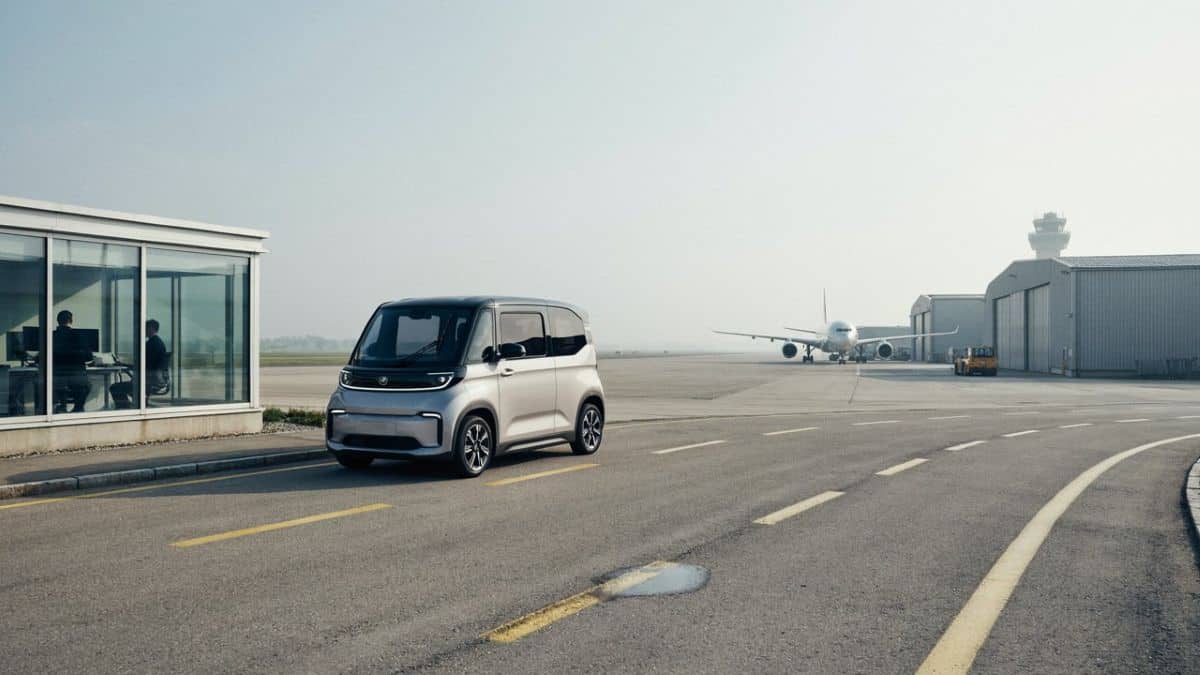
Further advancements in airport shuttle automation are now underway at Zurich Airport where remote driving has been trialled by Swiss. Automated buses take a pre-programmed route within the airside area with the help of trained operators from the control center. Such a development is important since there is a need for the transportation of employees and equipment in airport grounds. However, at this stage, the trial does not provide a chance for passengers to have an automated journey since automated journeys have started without passengers being present on board.
What has changed at Zurich Airport?
Zurich Airport announced on 9 September 2026 that two automated shuttles had begun operating without safety drivers on board. The first fully automated trips took place earlier that month. Remote operators monitor the vehicles from a control room and can intervene if needed. The airport described this as its target Level 4 automation stage.
The milestone followed a gradual test programme. Zurich Airport has worked with technology partner WeRide since March 2025. The buses first operated with a safety driver at the wheel. In May 2026, the project reached a “rear seat” stage, with the safety driver sitting behind the wheel position while a remote cockpit also monitored the journey. The September step moved that safety driver out of the vehicle.
Why does a driverless journey still need people?
“Driverless” can sound as if no person remains involved. Zurich’s project shows why that interpretation can mislead. Airport staff continue to oversee the service, but they do so from a remote cockpit. They watch the shuttle and can provide support if the system needs help.
Advertisement
Advertisement
That distinction matters as airports consider how automation might affect their workforce. Zurich says former safety drivers received training for remote monitoring. The airport has also said that one employee could eventually monitor several buses. That is a possible efficiency gain, not a confirmed staffing result. Remote supervision changes where a worker sits and what the job involves. It does not, by itself, show that airport employees are no longer needed.
Who can use Zurich’s shuttles?
The Zurich service is designed for airport workers with apron access authorisation. The two shuttles can carry up to eight people each. Their route links Gate 101 with the maintenance depot at Gate 130, with stops along the way. The airport says the route does not cross aircraft taxiways.
Advertisement
Advertisement
This contained route is a defining feature of the trial. It allows workers to travel around airport grounds while keeping the test within a set area. It also means the service does not function like a public airport bus. Travellers arriving for flights cannot simply board it. The airport has described the driverless phase as a pilot, not a permanent public transport service. Its announcement said the first Level 4 trips would take place without passengers, with staff use expected after about four weeks of testing.
How does Schiphol’s trial compare?
Amsterdam Schiphol and KLM tested a self-driving bus at Schiphol-Oost from January through the end of July 2026. The project built on earlier study work at Schiphol-Centrum. It aimed to reach a stage where the safety operator no longer rode on board and instead watched from a control room.
The trial included journeys with Schiphol and KLM employees. It also helped the airport study how the bus interacted with passengers, airport surroundings and other road users. Schiphol says remote monitoring brought the project closer to autonomous transport. The airport has described further development as a next step, but its account does not say that the service became a permanent passenger shuttle. This makes Schiphol a useful comparison with Zurich: both airports are testing remote supervision, but their published updates describe trial work rather than open passenger services.
Why is route design central to airport automation?
Airport aprons are busy work areas. Buses, baggage vehicles, aircraft service equipment, staff and aircraft all move through an environment with strict safety requirements. An automated shuttle must respond to the route around it and to activity nearby. Each airport must decide where it can test that capability.
Zurich chose a route that stays away from taxiway crossings. Schiphol’s account also highlights learning how a bus responds to its changing surroundings. These details matter because a successful journey on one route does not prove that a vehicle can handle every apron task. A fixed staff corridor, for instance, poses a different challenge from a route that changes with aircraft parking positions. The most informative coverage will explain how each airport has bounded its trial and what conditions still require human intervention.
Is there a public driverless shuttle in Europe?
Rotterdam The Hague Airport offers a different model. Since August 2025, passengers have been able to use bus 533 between Meijersplein metro station and the airport. The airport says the shuttle is wheelchair-accessible and carries up to 20 passengers, including luggage. It operates alongside the existing bus 33 service.
Advertisement
Advertisement
However, this is a public-road connection between a metro station and the airport, not an airside bus taking passengers between a terminal and aircraft. The Dutch vehicle authority, RDW, says a qualified safety driver remains on board and can take control if needed. It granted temporary national approval under a prototype arrangement, with operation limited to defined areas and conditions. Rotterdam therefore gives travellers a real example of an automated airport link they can use, while showing that public access does not automatically mean an empty driver’s seat.
What is Belgium testing beyond passenger transport?
Brussels Airport has explored more than one use for automation. Its first self-driving electric shuttle trial began in November 2024. The shuttle transported airport staff, carried up to eight people and had a steward on board during that initial test. A December 2025 airport update described a second phase between the terminal and a staff car park.
In August 2026, Brussels announced a separate trial involving an autonomous electric tow tractor. The vehicle transports cargo trailers between warehouses and aprons on four predefined routes. It operates at up to 12 kilometres per hour in autonomous mode, during off-peak periods, with a trained operator on board. It can tow up to four trailers. The contrast is useful: a passenger shuttle and a cargo tractor may both use automated driving, but they serve different airport needs and operate under different test conditions.
What does Frankfurt add to the European picture?
Karsan, the bus manufacturer, reported in June 2026 that its autonomous e-ATAK completed a two-week demonstration at Frankfurt Airport in the preceding months. The company said the demonstration showed how the bus could be used in airport operations. Its release also described later demonstrations at Istanbul Airport with Turkish Airlines, including scenarios for moving shift crews and flight crews.
These examples add to the evidence that suppliers and airport partners are exploring how automated vehicles might fit into airport work. But they need careful labelling. Karsan’s release is a manufacturer announcement. It confirms that demonstrations took place according to the company; it does not establish a permanent Frankfurt service or detail current operating permissions. A demonstration, a supervised trial and a scheduled service are different stages. Reporting those stages accurately helps readers understand how far deployments have progressed.
Will airport automation depend on more than the buses?
Schiphol’s longer-term plans suggest that airports may need systems to coordinate multiple automated vehicles. Its Orchestrating Traffic Information System, or OTIS, is described as a developing concept for managing airside traffic. It could help assign priorities, manage intersections and optimise routes. The airport says the system would exchange information with planning tools, vehicles and monitoring systems.
Advertisement
Advertisement
That wider coordination challenge is important. A shuttle may be able to follow its route, but an airport still has to organise its interaction with other vehicles and changing work zones. Schiphol says it wants to build a complete view of airside activity and is assessing ways to collect and share traffic information. It also acknowledges that limited space and heavy airport traffic make the transition difficult. OTIS is a future enabler in Schiphol’s plans, not evidence that a fully automated airport traffic network already exists.
What role does Europe-wide cooperation play?
Brussels Airport has led Stargate, a European sustainable aviation project involving a consortium of partners. The European Commission’s CORDIS project record lists the initiative’s end date as 31 December 2026. It records an EU contribution of about €24.82 million towards a total project cost of roughly €32.94 million.
Stargate connects Brussels with airports in Athens, Budapest and Toulouse, among other partners. Their work covers different areas. Brussels reported electric shuttle and cargo trials. Athens has studied electrifying airside vehicles. Budapest developed an app to improve vehicle safety and navigation on the apron. Toulouse has worked on sustainable mobility planning. These links create a wider European story, but they do not mean all partner airports operate driverless passenger shuttles. Each project should be described according to its specific purpose.
Could the shuttle trials become permanent?
Zurich’s announcement says its two-bus pilot is planned to run until the end of 2026. The airport and its partners are reviewing whether to continue the project. The experience gathered may also inform future use of other automated vehicles at the airport. That makes the final months of 2026 a useful period to watch for updates.
Brussels’ recent Stargate results offer another clue about what comes after a trial. The airport says some tested technologies have entered daily operations, while others need further development. The announcement describes the wider project’s outcomes; it does not say that the autonomous staff shuttle has become a permanent service. To judge whether the vehicles will remain, look for specific evidence: new operating dates, wider routes, a larger fleet, updated safety arrangements or a published service plan.
What must airports prove before widening use?
A safe route is only one part of a successful service. Airports also need to show that the vehicles can operate reliably, respond to disruptions and fit into daily ground-handling work. They need clear plans for remote support, staff training and passenger assistance. They must also explain what happens if communications fail or a vehicle cannot continue its journey.
Advertisement
Advertisement
The European Union’s ground-handling rules add relevant context. EASA says new regulations cover ground-handling organisations and authority oversight, with the general applicability date set for 27 March 2028. The rules form part of a wider effort to clarify safety responsibilities across airport operations. They are not a blanket approval for autonomous shuttles, nor do they require airports to adopt them. Still, the implementation period gives airports and handlers a reason to document how new technologies fit into their safety systems.
What should travellers expect next?
For most travellers, Europe’s airport shuttle story is not yet about stepping aboard a bus that takes them across the apron without staff support. Zurich’s most advanced pilot serves airport employees. Schiphol’s 2026 test also involved employees. Brussels’ shuttle trials focused on staff, while its newer cargo project moves trailers. Rotterdam offers the clearest public-facing example among these cases, but its safety driver remains on board and the route runs on public roads.
The nearer-term impact may be behind the scenes. Airports are testing whether automated vehicles can move staff and equipment more efficiently within controlled areas. Those trials could inform future decisions about routes, staffing and coordination. Any direct passenger benefit will depend on what airports approve and put into regular service. Travellers should watch for published operating details, rather than assume that a successful demonstration changes the airport journey straight away.
Europe’s next airport transport test is about trust and scale
Another example is that of Switzerland where Zurich Airport has begun a pilot for remote driving of airport shuttles. This involves two vehicles starting out with automated operation being supervised from a remote location. The Schiphol project involved testing of remote supervision while the Brussels and Rotterdam airports extended their pilot projects involving staff and cargo and the public respectively. Each one takes its own route and fulfills its unique purpose. They all have some form of restrictions or requirement of on-board staff. It can thus be said that passenger travel using driverless airside shuttles is far off yet.
Advertisement
