
Netherlands Overtakes Spain and All Other Countries in Becoming Europe’s Flight Stress Hotspot With the Most Nervous Flyer Index in 2026

Published
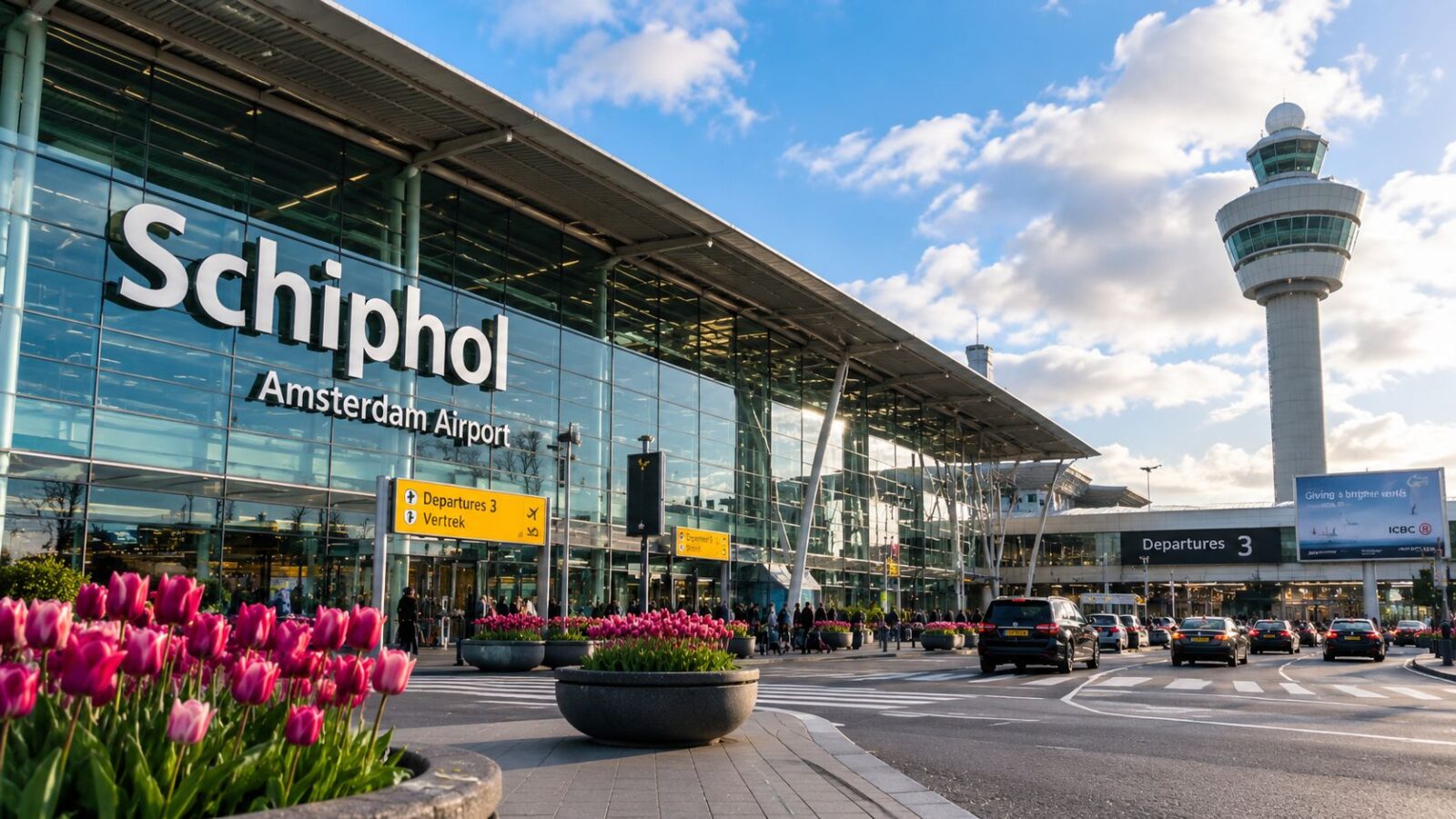
Image generated with Ai
The Netherlands has emerged at the centre of Europe’s highest-ranked flight stress routes in the 2026 Nervous Flyer Index, with Amsterdam Schiphol Airport appearing in both the first- and second-ranked connections. The index, produced by aviation consumer advocacy group AirAdvisor, evaluates how unpredictable a journey may feel to passengers by examining delays, cancellations, weather exposure and flight duration. It does not measure aircraft safety or identify dangerous routes. Amsterdam–Barcelona ranked first with a Nervous Flyer Score of 75.1 out of 100, while London Heathrow–Amsterdam placed second with 63.8. Together, the results put Amsterdam Schiphol at the heart of Europe’s two highest-scoring routes for nervous flyers and underline how a combination of operational disruption and weather exposure can influence passenger confidence even on short-haul journeys.
Amsterdam Barcelona tops Europe despite not leading any single disruption category
Amsterdam–Barcelona recorded the highest overall Nervous Flyer Score at 75.1 out of 100. The route saw 7.02% of flights delayed by more than 60 minutes, while 0.83% were delayed by more than 180 minutes. Its cancellation rate stood at 2.93%, and the average flight duration was 130 minutes. Amsterdam received a weather-exposure score of 7 out of 10, while Barcelona scored 3 out of 10.
Advertisement
Advertisement
Amsterdam Barcelona key figures
| Indicator | Result |
|---|---|
| Nervous Flyer Score | 75.1 out of 100 |
| Delays over 60 minutes | 7.02% |
| Delays over 180 minutes | 0.83% |
| Cancellation rate | 2.93% |
| Amsterdam weather exposure | 7 out of 10 |
| Barcelona weather exposure | 3 out of 10 |
| Average flight duration | 130 minutes |
What makes the route particularly notable is that it did not record the worst result in any individual category. Manchester–Dublin had a higher rate of one-hour and three-hour delays, Heathrow–Amsterdam had a higher cancellation rate, and Madeira had a higher weather-exposure score. Amsterdam–Barcelona nevertheless ranked first because weakness was spread across several categories rather than concentrated in one. This makes the route a useful example of how the index works. A traveller may not face the single worst delay risk, cancellation risk or weather risk, but the combined probability of disruption across several factors can create a more unpredictable overall journey.
Heathrow Amsterdam becomes Europes strongest cancellation story
London Heathrow–Amsterdam ranked second with a score of 63.8. The route recorded a 3.63% rate for delays exceeding 60 minutes and a 0.37% rate for delays longer than 180 minutes. Its most important statistic, however, was the cancellation rate of 3.69%, the highest among the published Top 20 routes. Both London Heathrow and Amsterdam received weather-exposure scores of 7 out of 10.
Advertisement
Advertisement
The route therefore presents a different kind of stress profile from Amsterdam–Barcelona. While the top-ranked route combines several elevated indicators, Heathrow–Amsterdam stands out particularly because of cancellations. For passengers, cancellations usually create more severe disruption than moderate delays because they may require rebooking, overnight accommodation, missed onward connections or a complete change of travel plans.
Why Heathrow Amsterdam ranks so highly
- 3.69% cancellation rate, the highest in the published Top 20
- 3.63% of flights delayed by more than 60 minutes
- 0.37% of flights delayed by more than 180 minutes
- Weather exposure of 7 out of 10 at both Heathrow and Amsterdam
- Nervous Flyer Score of 63.8 out of 100
Amsterdam linked routes perform well above key European averages
The Netherlands angle becomes more striking when the two Amsterdam-linked routes are compared with the wider Top 20 averages. Across Amsterdam–Barcelona and Heathrow–Amsterdam, the average Nervous Flyer Score is 69.45. Their combined average one-hour-plus delay rate is about 5.33%, compared with a Top-20 benchmark of 4.29%. Their average severe-delay rate is about 0.60%, double the Top-20 average of 0.30%. Most significantly, their average cancellation rate is approximately 3.31%, compared with the Top-20 average of 1.35%.
Advertisement
Advertisement
| Indicator | Amsterdam-linked routes | Top 20 average |
|---|---|---|
| 60+ minute delays | 5.33% | 4.29% |
| 180+ minute delays | 0.60% | 0.30% |
| Cancellation rate | 3.31% | 1.35% |
That means the two Amsterdam-linked routes have a cancellation rate around 2.45 times the published Top-20 benchmark. Their severe-delay rate is about 2 times the Top-20 average, while their one-hour-plus delay rate is roughly 24% higher than the wider benchmark.
These figures do not mean that every Amsterdam flight is unusually unreliable, nor do they establish the Netherlands as Europe’s worst-performing aviation system. They do, however, show why Amsterdam appears so prominently in this particular route-level ranking.
Manchester Dublin shows that the worst delays occur elsewhere
Manchester–Dublin ranked third with a Nervous Flyer Score of 63.4, only 0.4 points behind Heathrow–Amsterdam. Yet it recorded the highest delay rates in the entire published ranking. Around 7.51% of flights were delayed by more than 60 minutes, while 0.84% experienced delays exceeding 180 minutes. Its cancellation rate was much lower at 0.81%. Both Manchester and Dublin received weather-exposure scores of 7 out of 10.
This comparison matters because it shows that the Amsterdam routes do not dominate every negative metric. Manchester–Dublin is worse for delay frequency, while Amsterdam-linked routes are pushed higher by the broader balance of cancellations, weather exposure and journey unpredictability.
Lisbon Madeira combines high delays with severe weather exposure
Lisbon–Madeira ranked fourth with a score of 61.4. The route recorded a 7.43% rate for delays of more than 60 minutes and a 0.70% rate for delays exceeding 180 minutes. Its cancellation rate was comparatively low at 0.34%. The biggest distinguishing factor was weather. Madeira received the maximum destination weather-exposure score of 10 out of 10, while Lisbon scored 5 out of 10.
The route therefore highlights a different type of passenger risk. It is less affected by cancellations than Amsterdam-linked services but more exposed to weather-related unpredictability. For travellers, that can still translate into missed connections, delayed arrivals or schedule changes, especially during periods of difficult operating conditions.
Advertisement
Advertisement
Paris Nice completes a top five shaped by different kinds of disruption
Paris Charles de Gaulle–Nice ranked fifth with a score of 60.8. The route recorded a 6.83% rate for delays above 60 minutes, a 0.60% rate for delays over 180 minutes and a cancellation rate of 2.07%. Paris Charles de Gaulle received a weather score of 6 out of 10, while Nice scored 4 out of 10.
Like Amsterdam–Barcelona, the route does not lead any single category. Its position instead reflects a combination of elevated disruption indicators. This reinforces one of the central messages of the index: stressful journeys are not always created by one extreme operational problem. They can also result from several moderately poor indicators occurring together.
Top five most stressful routes in the 2026 index
| Rank | Route | Score | 60+ min delay | 180+ min delay | Cancellation |
|---|---|---|---|---|---|
| 1 | Amsterdam–Barcelona | 75.1 | 7.02% | 0.83% | 2.93% |
| 2 | Heathrow–Amsterdam | 63.8 | 3.63% | 0.37% | 3.69% |
| 3 | Manchester–Dublin | 63.4 | 7.51% | 0.84% | 0.81% |
| 4 | Lisbon–Madeira | 61.4 | 7.43% | 0.70% | 0.34% |
| 5 | Paris CDG–Nice | 60.8 | 6.83% | 0.60% | 2.07% |
Spain appears more widely but Amsterdam occupies the top two positions
The supplied ranking does not support describing the Netherlands as having Europe’s most stressful national flight network because AirAdvisor ranks routes rather than countries. Spain actually appears across more of the Top 20 routes than the Netherlands.
Spanish airports feature in:
- Amsterdam–Barcelona
- Barcelona–Rome Fiumicino
- Madrid–London Heathrow
- Barcelona–Palma de Mallorca
- Düsseldorf–Palma de Mallorca
- Madrid–Lisbon
- Madrid–Tenerife North
Spain therefore appears across 7 routes in the Top 20, while the Netherlands appears in 2. The distinction is important. Spain has broader representation across the ranking, but Amsterdam Schiphol occupies a more concentrated position at the very top.
Country representation in the published Top 20
| Country | Number of routes represented |
|---|---|
| Spain | 7 |
| United Kingdom | 5 |
| Norway | 4 |
| Portugal | 3 |
| Netherlands | 2 |
| France | 2 |
| Italy | 2 |
| Germany | 2 |
| Ireland | 2 |
| Denmark | 2 |
| Sweden | 1 |
The strongest supported conclusion is therefore that the Netherlands sits at the centre of Europe’s two highest-ranked flight stress routes rather than that it overtakes Spain in a formal country-level ranking.
Advertisement
Advertisement
Amsterdam weather exposure adds another layer of uncertainty
Amsterdam receives a weather-exposure score of 7 out of 10 in both of its ranked routes. That is above the published Top-20 weather benchmarks, which stand at 5.55 out of 10 for departure airports and 6.05 out of 10 for destination airports.
This does not make Amsterdam the worst weather airport in the ranking. Norwegian routes record higher combined exposure, while Madeira reaches 10 out of 10 as a destination. However, Amsterdam’s consistent 7 out of 10 score becomes more significant when combined with its higher-than-average cancellation and delay rates. The airport therefore acts as a recurring source of operational uncertainty within the index, even though weather alone does not explain its position.
Norway leads the weather exposure category
The highest combined weather score belongs to Oslo–Bergen, with a total of 16 out of 20. Oslo scores 7 out of 10 and Bergen 9 out of 10. Lisbon–Madeira and Oslo–Stavanger each record combined weather exposure of 15 out of 20, while Oslo–Trondheim also reaches 15 out of 20.
Highest combined weather exposure
- Oslo–Bergen: 16 out of 20
- Lisbon–Madeira: 15 out of 20
- Oslo–Stavanger: 15 out of 20
- Oslo–Trondheim: 15 out of 20
- Madeira individual destination score: 10 out of 10
This matters because it prevents an overly simplistic reading of the Amsterdam data. Amsterdam is central to the highest-ranked overall routes, but it does not dominate weather exposure.
How the Nervous Flyer Index is calculated
The index gives the greatest weight to operational disruption. Cancellations account for 25% of the total score, while delays of more than 180 minutes account for 20% and delays of more than 60 minutes account for 15%.
| Factor | Weight |
|---|---|
| Cancellations | 25% |
| Delays of 180+ minutes | 20% |
| Delays of 60+ minutes | 15% |
| Departure weather | 15% |
| Destination weather | 15% |
| Flight duration | 10% |
Together, delay and cancellation metrics make up 60% of the index. Weather contributes 30%, while journey duration contributes the remaining 10%.
Advertisement
Advertisement
AirAdvisor analysed operational performance from September 2025 through August 2026. It initially examined 30 major European routes but excluded 4 because of incomplete data, leaving 26 routes in the analysis. The published ranking highlights the Top 20.
What the data means for travellers
For travellers using Amsterdam Schiphol, the figures suggest a greater need for flexibility on certain heavily used short-haul routes. Amsterdam–Barcelona combines elevated one-hour delays, severe delays and cancellations, while Heathrow–Amsterdam stands out because of its unusually high cancellation rate.
Travellers using these routes may want to:
- Allow extra time between connections
- Avoid very tight onward schedules
- Check airline updates before leaving for the airport
- Keep accommodation and onward transport plans flexible where possible
- Distinguish between delays, cancellations and weather-related disruption
At the same time, the data should not be interpreted as a safety warning. The index measures predictability and operational stress, not aircraft reliability, airline safety or accident risk.
Latest position
The 2026 Nervous Flyer Index places Amsterdam–Barcelona first with 75.1 points and Heathrow–Amsterdam second with 63.8, making Amsterdam Schiphol the only airport appearing in both of Europe’s two highest-scoring routes in the published ranking. Spain is represented more widely across the Top 20, Manchester–Dublin leads the delay categories with 7.51% of flights delayed more than 60 minutes and 0.84% delayed more than 180 minutes, while Madeira records the strongest destination weather exposure at 10 out of 10.
Netherlands overtakes Spain and all other countries in becoming Europe’s flight stress hotspot with the most Nervous Flyer Index exposure in 2026, as Amsterdam features in the two highest-ranked routes.
The broader picture is therefore one of different stress factors affecting different parts of the European network. Amsterdam stands out because its routes combine several of those pressures at once.
Advertisement
