
Iceland Moves Towards Ice Cave Season as Revised Safety Guidance Reshapes Winter Travel and Adventure Access

Published
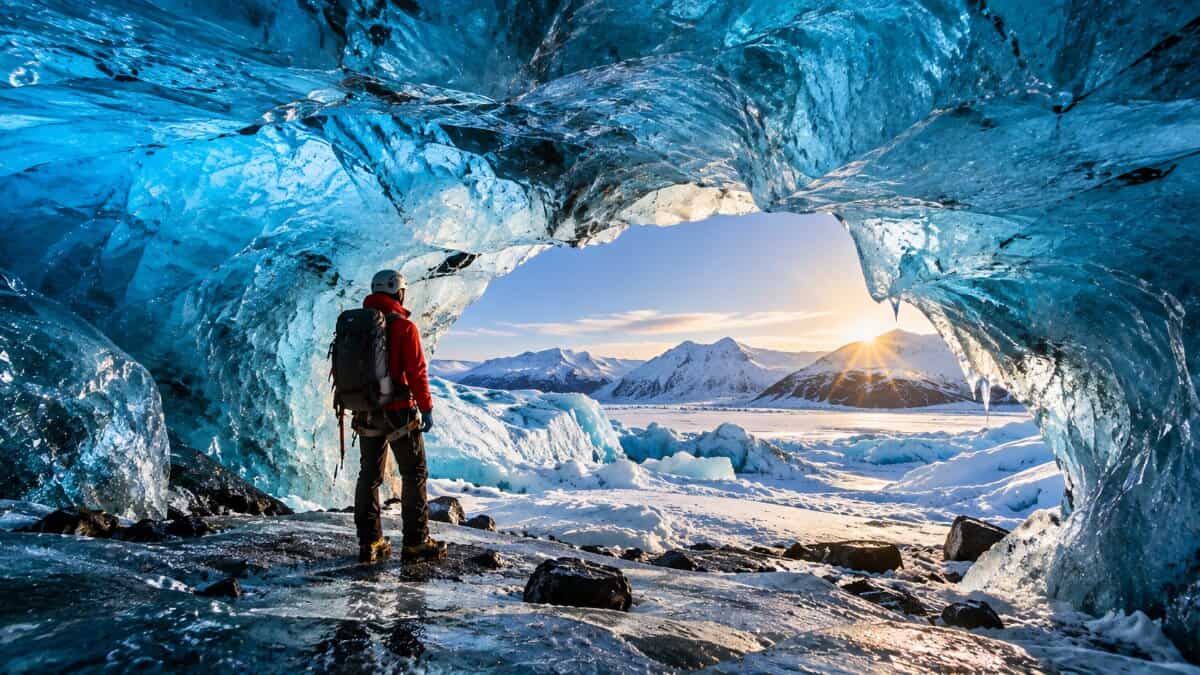
Image generated with Ai
Iceland is approaching its 2026–27 natural ice-cave season under a significantly tighter adventure-travel operating environment. Revised national safety guidance became effective in September, travel sellers must verify that operators have appropriate safety plans, a new tourism incident-reporting system is active, glacier businesses at Vatnajökull remain subject to formal commercial agreements, and temporary works are affecting access at Jökulsárlón. For travellers, this means winter ice-cave holidays increasingly depend on operator compliance, real-time glacier conditions and flexible itineraries rather than guaranteed access to one particular frozen chamber.
Iceland’s Ice-Cave Season Is Not a Fixed October Opening
The first issue travellers need to understand is timing.
According to Visit Iceland, the country’s official travel guide operated by Business Iceland, Iceland does not have one fixed nationwide date when every natural ice cave becomes accessible. Temperature, weather and glacier conditions determine when individual formations can safely be explored.
The official guidance states that natural ice-cave exploration typically extends from November through May. Meltwater creates many glacier channels during warmer months before lower temperatures make suitable formations available for winter exploration.
Advertisement
Advertisement
That distinction is particularly important on 3 October 2026. Travellers may already encounter commercial products marketed around Iceland’s winter glacier season, but the existence of a booking does not establish that every natural cave is open or that a specific chamber will remain accessible when the traveller arrives.
For agents, tour operators and wholesalers, the safer commercial approach is therefore to sell a guided glacier or ice-cave experience subject to conditions, rather than guarantee entrance into one photographed cave.
Advertisement
Advertisement
That is becoming increasingly important as Iceland strengthens the formal safety infrastructure surrounding adventure tourism.
Revised September Rules Put Ice-Cave Safety Back at the Centre
The most significant national development came on 2 September 2026.
According to the Icelandic Tourist Board, an independent authority under Iceland’s Ministry of Industries, revised guidelines and activity checklists were introduced for tourism safety plans. Icelandic law already requires businesses conducting organised tours to prepare a safety plan for every type of trip they operate. The September revision updated the practical material used by companies and regulators.
The revised framework covers risk assessment, operating procedures, staff qualifications and training, safety equipment, information given to participants and emergency procedures.
Ice caves receive specific attention. The Tourist Board maintains a dedicated checklist for ice caves and ice formations, alongside separate guidance for year-round glacier hiking, outlet-glacier walks, winter mountain activities and other adventure products. These checklists are also used when the authority reviews company safety plans.
This makes the approaching winter notable. The 2026–27 ice-cave season will be the first full natural cave season following the September update.
Advertisement
Advertisement
| Development | Official position | Why it matters for winter adventure travel |
|---|---|---|
| Safety-plan revision | Icelandic Tourist Board updated its guidance and checklists on 2 September 2026. | Operators enter the winter season with newly revised supervisory material. |
| Ice-cave-specific checks | A dedicated checklist exists for ice caves and ice formations. | Natural cave tours are treated as specialist adventure activities rather than ordinary sightseeing. |
| Four-part safety framework | Plans include risk assessment, operating procedures, contingency planning and incident reporting. | Safety management extends from prevention to emergency response and post-incident learning. |
| Regular review | Plans must be updated regularly and following accidents, incidents or near accidents. | Changing glacier conditions should feed directly into operational decisions. |
| Regulatory enforcement | Daily fines may range from ISK 50,000 to ISK 500,000 for failures to meet applicable requirements. | Compliance carries direct commercial consequences for tourism businesses. |
The Overlooked B2B Issue Is the Travel Seller’s Responsibility
The most important uncovered angle for the international travel trade sits deeper inside Iceland’s safety rules.
According to the Icelandic Tourist Board, businesses that sell or market tours operated by another company are responsible for ensuring that the underlying operator has a safety plan. Agents reselling tours must verify that the companies actually conducting those activities maintain the necessary plans.
This has particular relevance to ice-cave tourism because many international visitors buy Iceland excursions through travel agencies, destination management companies, online intermediaries or package organisers rather than directly from the glacier operator.
The requirement therefore shifts safety due diligence beyond the guide standing on the ice.
For a B2B seller, simply identifying an attractive cave product, confirming availability and adding it to an itinerary is not the entire compliance picture. The underlying operating supplier and its safety planning matter as well.
Safety plans must remain available in both Icelandic and English. The Tourist Board can request them during supervision, following notifications or after incidents and accidents.
Advertisement
Advertisement
Why This Changes the Commercial Logic of Ice-Cave Packages
The practical implication is that Iceland’s ice-cave market increasingly rewards flexibility over certainty.
A natural cave is changing inventory. Meltwater, freezing, calving, ice deformation, access routes and surrounding terrain can alter what can safely be offered. The commercially robust product is therefore not a promise that travellers will enter exactly the formation appearing in an advertisement months earlier.
It is a professionally managed winter glacier experience capable of adapting to the conditions encountered on the day.
For travel businesses, that changes product design. Flexible cave substitution, alternative glacier activities, realistic cancellation provisions and supplier verification become part of protecting the traveller and the booking.
For consumers, it changes how value should be understood. The value is increasingly in expert access, professional risk assessment and the ability to adjust safely when the glacier changes, rather than simply reaching one particular blue chamber.
That distinction could become increasingly important across climate-sensitive adventure tourism worldwide.
Advertisement
Advertisement
Iceland’s Incident Guard Adds a New Data Layer for 2026–27
The coming ice-cave season is also the first following the launch of Iceland’s Incident Guard.
The Icelandic Tourist Board introduced the system on 16 June 2026 to standardise the recording of accidents, incidents and near misses across tourism businesses. Companies manage their own reporting data and can use it to identify patterns and emerging risks. The Ministry of Industries funded the platform, while the Tourist Board manages it.
Its relevance intensified immediately before the winter season.
On 18 September, the Tourist Board announced further operator training, including an English-language session scheduled for 1 October 2026. The authority describes Iceland’s wider tourism sector as comprising around 4,000 companies and nearly 35,000 employees, serving close to three million visitors annually.
For glacier businesses, near-miss information can be particularly valuable because deteriorating routes or unstable ice may show warning signs before a serious event occurs.
The system does not make glaciers predictable. It does, however, create another mechanism through which operational experience can influence future risk assessment.
Advertisement
Advertisement
New Sólheimajökull Safety Council Shows How Glacier Management Is Evolving
A second development arrived on 18 September 2026, only weeks before Iceland’s winter adventure transition.
According to the Icelandic Tourist Board, tourism companies operating at Sólheimajökull formally established a professional council focused on safety. The platform grew from consultations initiated after changes at the glacier created concerns about operating conditions. Its purpose includes information sharing, cooperation and preventative safety work among companies active in the area.
This is particularly significant because the Icelandic Meteorological Office had already documented substantial physical changes there in July.
A new lagoon had formed east of the glacier tongue. An ice ridge providing access had thinned and become unstable. Rockfall risk affected parts of the southeastern approach, while operators suspended some trips as safer routes were assessed.
The Meteorological Office also recorded that conditions at the glacier margin could change substantially from one day to another.
Sólheimajökull is not being presented here as evidence that the same conditions apply to every Icelandic ice cave. Instead, it demonstrates a wider reality confronting Iceland’s glacier-adventure sector: access itself can change as quickly as the attraction.
Advertisement
Advertisement
Vatnajökull Ice-Cave Businesses Remain Inside a Formal Access System
Vatnajökull remains one of Iceland’s most important glacier-tourism landscapes.
According to Vatnajökull National Park, commercial agreements for ice-cave tours and glacier walks currently cover Breiðamerkurjökull east and west of Jökulsárlón, Falljökull/Virkisjökull and Skeiðarárjökull.
The current agreements run from 1 October 2025 until 30 September 2027.
The approaching 2026–27 winter is therefore the second season operating within this two-year contract period.
This framework matters because commercial adventure activity inside a protected landscape is not equivalent to unrestricted public access. National-park management places commercial glacier experiences inside a system that combines business agreements, nature conservation, visitor management and safety oversight.
That gives travellers another useful booking question: whether the company physically conducting the excursion is authorised to operate in the relevant location.
Advertisement
Advertisement
Jökulsárlón Access Is Already Changing This Week
There is also a much more immediate issue affecting travellers as of 3 October 2026.
Vatnajökull National Park has closed the main parking area at Jökulsárlón from 2 October through 7 October for construction works.
Alternative parking remains available at Eystri-Fellsfjara and Vestri-Fellsfjara, with temporary toilet facilities provided at both. Visitors joining glacier excursions or lagoon boat trips are being advised to allow additional time because they may need to walk farther between parking and departure points.
The park is carrying out the works to improve visitor facilities.
| Jökulsárlón issue on 3 October | Current status | Booking implication |
|---|---|---|
| Main parking | Closed until 7 October. | Normal arrival assumptions should not be used. |
| Alternative parking | Eystri-Fellsfjara and Vestri-Fellsfjara remain available. | Travellers may face additional walking time. |
| Glacier tours | Visitors are advised to arrive earlier. | Transfers should include a larger operational buffer. |
| Reduced mobility | On-site staff can assist where possible. | Accessibility requirements should be communicated before arrival. |
| Infrastructure objective | Works are designed to improve visitor facilities and experience. | The short disruption forms part of longer-term destination management. |
Latest Tourism Data Shows Why South Iceland Capacity Matters
The safety and infrastructure changes are occurring in one of Iceland’s busiest tourism regions.
According to Statistics Iceland’s latest accommodation release, published on 30 September 2026, Iceland recorded approximately 653,000 hotel overnight stays in August. Foreign travellers accounted for about 607,000, or 93 per cent of the total.
Advertisement
Advertisement
South Iceland recorded the country’s highest hotel-room occupancy at 93.5 per cent during August. The region had 55 operating hotels and 3,223 rooms.
Across every registered accommodation category, Iceland recorded approximately 1.549 million overnight stays during August, up 3.3 per cent year on year.
The Icelandic Tourist Board’s 2025 annual tourism summary provides further context. Around 2.27 million foreign passengers departed through Keflavík during 2025, while its visitor survey found that approximately 79 per cent of international travellers visited South Iceland.
These numbers do not measure ice-cave demand directly. They demonstrate why infrastructure, professional guiding and visitor-flow management around South Iceland’s glacier corridor carry national tourism importance.
Glacier Retreat Is Turning Safety Into a Moving Operational Target
Physical change remains the underlying challenge.
The Icelandic Meteorological Office attributes evolving glacier-margin conditions to ongoing retreat in a warming climate. Expanding marginal lagoons, unstable newly exposed terrain and altered access can directly affect glacier travel.
Advertisement
Advertisement
Breiðamerkurjökull provides another illustration.
Vatnajökull National Park records that the outlet glacier is retreating and thinning because of negative surface mass balance while also losing ice through calving into Jökulsárlón. Calving currently accounts for approximately one-third of Breiðamerkurjökull’s mass loss.
This means change is not merely a climate-policy issue sitting behind tourism.
It affects route selection, guide decisions, access infrastructure, cave formation and the commercial lifespan of individual adventure products.
A photograph can remain online for years. The glacier photographed in it does not remain unchanged.
What Travel Agents and Tour Operators Need to Do Now
- Do not advertise 1 October as Iceland’s universal natural ice-cave opening date. Official destination guidance describes a weather-dependent season that typically runs from November through May.
- Verify the underlying supplier’s safety planning before resale. Icelandic Tourist Board guidance specifically places this responsibility on agents marketing another operator’s tours.
- Check whether the operating company is authorised for the relevant national-park location. Vatnajökull’s current agreements cover defined glacier areas through 30 September 2027.
- Avoid guaranteeing one named cave or exact formation months ahead. Natural ice structures and access routes can change as conditions develop.
- Build alternative activities into packages. Glacier walks, other suitable ice formations or revised routes can protect an itinerary when one access point becomes unsafe.
- Reconfirm meeting points and arrival instructions shortly before departure. Jökulsárlón’s 2–7 October parking closure demonstrates how local infrastructure changes can immediately affect tour logistics.
- Allow suppliers to cancel or modify activities for safety reasons without commercial pressure. Glacier conditions can change rapidly, as the Meteorological Office documented at Sólheimajökull.
- Keep customers informed about physical demands, equipment and environmental conditions. Iceland’s revised framework explicitly addresses participant information, guide competence and safety equipment.
Iceland’s Winter Adventure Model Is Moving Beyond the Blue-Ice Photograph
The strategic development surrounding Iceland’s 2026–27 ice-cave season is therefore larger than the seasonal return of spectacular blue ice.
Advertisement
Advertisement
The country is moving towards a model in which glacier adventure travel is increasingly supported by formal supplier safety plans, specialist activity checklists, national incident reporting, operator cooperation, regulated national-park access and continuing visitor-infrastructure investment.
For international travel sellers, the most consequential element may be the least visible to the traveller: safety verification is not solely the responsibility of the company leading the group across the glacier. Iceland’s framework places responsibility on resellers as well.
For travellers, that should ultimately favour better-designed products. The strongest winter itineraries will be those capable of changing with Iceland’s glaciers rather than promising that nature will conform to a brochure.
For the global adventure-travel sector, Iceland’s evolving model offers a wider lesson. As climate-sensitive landscapes change, the future of high-value nature tourism may depend less on guaranteeing a particular natural formation and more on professional guiding, live risk assessment, resilient infrastructure and transparent operational flexibility.
That is the emerging story behind Iceland’s approaching ice-cave winter: the attraction remains extraordinary, but the management of access is becoming just as important as the ice itself.
Advertisement
