
Uruguay Opens Heritage Weekend Nationwide as Cultural Travel Opportunities Reach Regional Destinations

Published
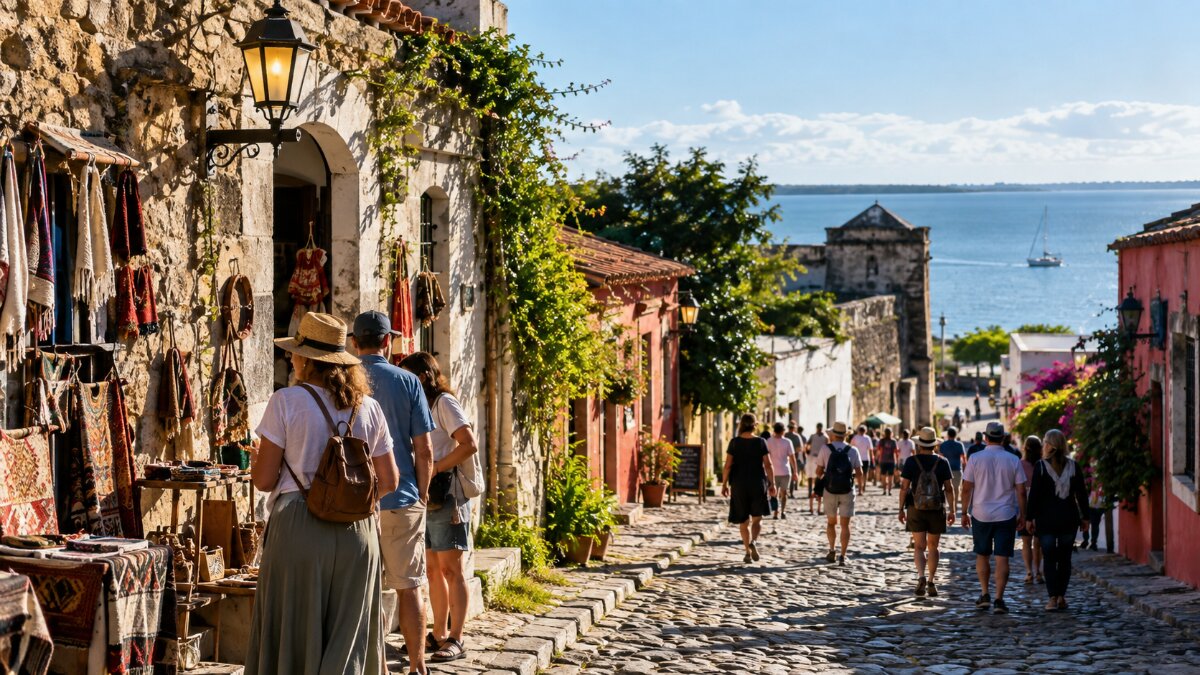
Image generated with Ai
Uruguay’s 32nd Día del Patrimonio is opening a nationwide cultural travel window on 3 and 4 October, with more than 560 activities spread across 263 localities. The latest official programme goes beyond a conventional heritage celebration: free public access, seven cultural regions and programming outside established tourism centres create a practical opportunity for travellers to explore more of the country. For the travel trade, the significant development is not simply the number of events, but how the weekend can broaden itinerary design and distribute visitor attention across Uruguay.
Uruguay Heritage Weekend Moves From Cultural Celebration To Nationwide Travel Opportunity
Uruguay is entering one of its most geographically extensive cultural weekends of 2026, with the Ministry of Education and Culture confirming that Día del Patrimonio will run nationwide on Saturday 3 and Sunday 4 October.
Advertisement
Advertisement
According to the latest Ministry update published on 2 October, the programme contains more than 560 activities across 263 localities. The 2026 edition centres on Indigenous roots, linking archaeological heritage, historical memory, contemporary communities and cultural identity.
The scale matters for tourism because participation is not confined to the country’s most established visitor centres. An earlier Presidency briefing recorded about 560 participating heritage spaces and said 253 localities outside the metropolitan area, in addition to places in Montevideo and Canelones, were involved.
Advertisement
Advertisement
The figures describe slightly different measures rather than necessarily conflicting totals. The Presidency counted participating spaces and localities beyond the metropolitan zone, while the latest Ministry communication reports activities and 263 localities nationally.
That geographical distinction is central to the travel story.
Advertisement
Advertisement
| Official 2026 programme indicator | Verified position as of 3 October | Travel significance |
|---|---|---|
| Event dates | 3–4 October 2026 | Creates a concentrated two-day cultural travel window |
| Edition | 32nd national edition | Establishes the event as a mature national heritage institution |
| Programme scale | More than 560 activities | Gives visitors substantial itinerary choice |
| Geographic reach | 263 localities nationally in the latest MEC update | Supports travel beyond a single metropolitan destination |
| Earlier territorial breakdown | 253 localities outside the metropolitan area, plus Montevideo and Canelones participation | Shows how heavily the programme extends into interior Uruguay |
| Admission | Registered activities are required to be free to the visiting public | Reduces attraction-entry cost barriers |
| Cultural organisation | Seven programme regions | Makes geographically structured trip planning easier |
| Official opening | Tacuarembó, 3 October at 10:00 | Places the ceremonial start outside the capital |
| Official closing | Palacio Legislativo in Montevideo, 4 October at 17:00 | Creates a national opening-to-capital closing structure |
The New Travel Angle Is Visitor Dispersal Rather Than Another Heritage Events List
The strongest unexplored travel angle lies in the programme’s spatial architecture.
Uruguay’s official Heritage Weekend guide does not organise the country simply as one long list of attractions. It divides activities into seven cultural regions: Montevideo, Canelones, Centre, Southwest, Littoral, North and East. Within those areas, activities are further organised by neighbourhood, micoregion, department or locality.
Advertisement
Advertisement
For tourism planners, that effectively turns a cultural programme into a temporary national destination inventory.
Instead of requiring a visitor to begin with a famous attraction and work outward, the guide allows itinerary creation at regional level. That distinction could be particularly useful for domestic travellers, neighbouring-market visitors, specialist cultural operators and small groups seeking experiences away from the country’s best-known coastal circuits.
This does not mean official data already demonstrate that Heritage Weekend has shifted hotel occupancy, spending or visitor flows into smaller localities. No such 2026 outcome data were available from the government as of 3 October.
The information gain is therefore analytical rather than statistical: the programme provides the infrastructure for dispersal, but its actual economic effect will only be measurable after visitors travel.
Advertisement
Advertisement
Free Entry Changes The Economics Of A Short Cultural Break
The Ministry’s participation rules require Heritage Weekend proposals to provide free admission to the visiting public. Activities may include routes, exhibitions, performances, community heritage experiences and other public-facing programmes.
That matters because attraction cost is removed from one part of the weekend budget.
Transport, accommodation, food and ancillary purchases remain traveller expenses, but free cultural admission can make regional itinerary extensions easier to package. A visitor already in Uruguay can add a heritage stop without another attraction fee, while travel agents can use the weekend as an experiential layer around existing accommodation and transport products.
It may also change what constitutes an attraction.
The official programme includes public institutions, private organisations and organised community groups. That creates temporary visitor experiences in spaces whose principal function may not normally be tourism. The official MEC calendar, for example, describes an open event at the Instituto de Investigaciones Biológicas Clemente Estable as an opportunity to discover the institute from inside.
This gives Heritage Weekend a different product profile from conventional museum tourism.
Advertisement
Advertisement
Uruguay’s Tourism Economy Makes Regional Cultural Distribution More Relevant In 2026
The heritage programme arrives against a sizeable tourism backdrop.
Uruguay received 3.6 million visitors in 2025, up 8% from 2024, while tourism receipts reached approximately US$2.04 billion, an increase of 16.6%. Argentina accounted for 2,403,720 arrivals and Brazil for 489,677.
During the first half of 2026, approximately 1.2 million Argentina-resident visitors entered Uruguay. They represented about 66% of inbound tourism for that period and generated close to US$719 million in receipts.
An official Congress of Intendants record places total tourism receipts during the first half of 2026 at approximately US$1.191 billion and records around 122,000 tourism jobs in 2025.
| Tourism indicator | Latest relevant official figure | Why it matters for Heritage Weekend |
|---|---|---|
| International visitors in 2025 | 3.6 million | Provides a large potential visitor base for cultural add-ons |
| Tourism receipts in 2025 | US$2.04 billion | Shows tourism’s economic significance |
| Argentina-resident visitors, H1 2026 | About 1.2 million | Highlights the importance of nearby short-break markets |
| Argentine share of H1 inbound tourism | 66% | Supports regional-market itinerary opportunities |
| H1 2026 tourism receipts | About US$1.191 billion | Places the cultural weekend within a substantial visitor economy |
| Tourism employment in 2025 | Around 122,000 jobs | Links regional visitor distribution with local economic opportunity |
These numbers do not measure Heritage Weekend itself. They establish the wider commercial environment into which the event is entering.
Heritage Tourism Fits Uruguay’s Wider Shift Towards Regionalisation
The geographic structure of Día del Patrimonio becomes more significant when compared with Uruguay’s longer-term tourism policy.
Advertisement
Advertisement
According to the Ministry of Tourism’s National Tourism Plan 2030, territorial tourism management, regionalisation, sustainability, diversification and stronger local institutions form part of the country’s strategic framework. The plan specifically envisages movement from regionalisation and deconcentration towards deeper decentralisation of tourism resources and decision-making.
The 2026 policy direction remains relevant. An official Congress of Intendants record states that Tourism Ministry planning presented this year uses regionalisation as a central instrument for territorial organisation and local tourism development, including a proposal structured around six tourism regions.
Heritage Weekend is an Education and Culture Ministry programme, not an implementation mechanism for the tourism regionalisation plan. The two should therefore not be presented as formally linked.
However, their geographic logic is complementary.
One builds cultural participation across the national territory. The other seeks tourism development that is less concentrated geographically.
That overlap is precisely why Heritage Weekend deserves scrutiny as a travel-industry story rather than only a cultural diary item.
Advertisement
Advertisement
A Separate 2026 Infrastructure Programme Adds Another Important Signal
A further policy development strengthens that interpretation.
On 29 September, just days before Heritage Weekend, Uruguay’s Ministry of Tourism opened its 2026 Tourism Infrastructure Projects call. The programme supports projects intended to improve visitor experiences while valuing cultural heritage, local identity, sustainability, inclusion, accessibility, innovation and community participation. It also explicitly covers tangible and intangible cultural heritage and local sustainable development.
There is no official evidence that this infrastructure call was created specifically for Heritage Weekend.
Yet taken together, the two initiatives reveal an important supply-side opportunity. Heritage Weekend exposes travellers to a geographically broad catalogue of cultural assets. Infrastructure investment can help destinations convert suitable assets into more durable visitor products over time.
| Current government initiative | Verified purpose | B2B travel interpretation |
|---|---|---|
| Día del Patrimonio 2026 | Nationwide free cultural participation across hundreds of activities | Immediate product-discovery opportunity |
| Tourism Infrastructure Projects 2026 | Support heritage, identity, accessibility, sustainability and local development | Potential pathway to strengthen destination readiness |
| National Tourism Plan 2030 | Regionalisation, diversification and territorial tourism management | Long-term framework for wider visitor distribution |
| 2026 regionalisation approach | Six proposed tourism regions and stronger local management | Supports multi-region product development |
Indigenous Heritage Gives The 2026 Programme A Distinctive Tourism Narrative
The 2026 edition also differs substantially from a generic open-house weekend.
Its thematic framework centres on Indigenous roots across the past, present and future, with official materials connecting the programme to archaeology, anthropology, historical research, cultural memory, heritage preservation and contemporary Indigenous communities.
Advertisement
Advertisement
That creates scope for deeper cultural interpretation.
For tour operators, the opportunity is not to reduce Indigenous identity to a decorative tourism product. The stronger approach is to use official programming and recognised heritage institutions to provide historical context, distinguish archaeological evidence from popular mythology and recognise living community perspectives.
That distinction is particularly important for international visitors who may arrive with limited knowledge of Uruguay beyond coastal tourism, football, wine or urban culture.
Heritage Weekend therefore introduces another potential layer to the destination narrative: a national history extending far beyond the conventional image of modern Uruguay.
What Travellers Need To Know On 3 And 4 October
The official programme is already live, and the Ministry’s digital guide should be the principal planning tool. Activities are categorised geographically, while individual listings provide dates, operating periods and, where applicable, accessibility information.
The programme begins officially in Tacuarembó on Saturday morning at the Museo del Indio y del Gaucho and concludes in Montevideo on Sunday afternoon at the Palacio Legislativo.
Advertisement
Advertisement
Those locations reinforce the national character of the weekend: the opening takes place in Uruguay’s interior, while the conclusion returns to the capital.
The event’s short duration also means visitors should not treat the national list as a conventional year-round attractions directory. Many experiences are scheduled specifically for this weekend and operating hours vary.
Critical Takeaways For Travel Agents And Tour Operators
- Use the latest official guide rather than static itineraries. Activity times and operating periods differ by location.
- Build regional clusters instead of attempting excessive cross-country movement. The seven-region programme structure makes concentrated itineraries more practical.
- Do not assume Heritage Weekend access continues after 4 October. The programme is specifically scheduled for 3–4 October.
- Separate free admission from total trip cost. Registered activities are free, but transport, accommodation, meals and other traveller expenses remain separate.
- Check accessibility at listing level. Individual programme entries can contain site-specific accessibility information.
- Avoid overselling tourism impacts before data exist. There are no verified 2026 figures yet showing how many Heritage Weekend visitors travelled between regions, stayed overnight or spent locally.
- Treat Indigenous heritage with contextual accuracy. Operators should follow official programme interpretation and avoid simplifying living cultures into stereotyped experiences.
- Watch interior destinations after the weekend. The strongest commercial intelligence may come from identifying which temporary cultural experiences demonstrate potential for permanent tourism products.
Uruguay’s Heritage Weekend Could Become A Test Of How Cultural Tourism Spreads Beyond Traditional Hubs
The most important travel story emerging from Uruguay on 3 October is therefore larger than access to hundreds of heritage venues.
The country has temporarily assembled more than 560 cultural activities across 263 localities, made registered participation free to visitors and organised the offer through a regional framework. At the same time, national tourism policy continues to emphasise territorial development, diversification and regionalisation, while a fresh infrastructure call specifically recognises cultural heritage and local identity as tourism-development assets.
The outcome should not be overstated. Heritage Weekend has not yet proved that visitors will spend more, stay longer or travel deeper into interior Uruguay.
What it has created is something immediately valuable to the travel sector: a two-day, countrywide experiment in turning dispersed cultural assets into discoverable visitor experiences.
If operators, destinations and policymakers can identify which of those experiences generate sustained traveller interest after 4 October, Uruguay’s 2026 Heritage Weekend may have significance well beyond a single cultural celebration.
Advertisement
