
Asian Cruise Tourism Enters a New Era as South Korea, Japan and More Countires Adopt Pier Slot Bidding Systems to Stop Mega Cruise Ship Port Chaos

Updated
Published
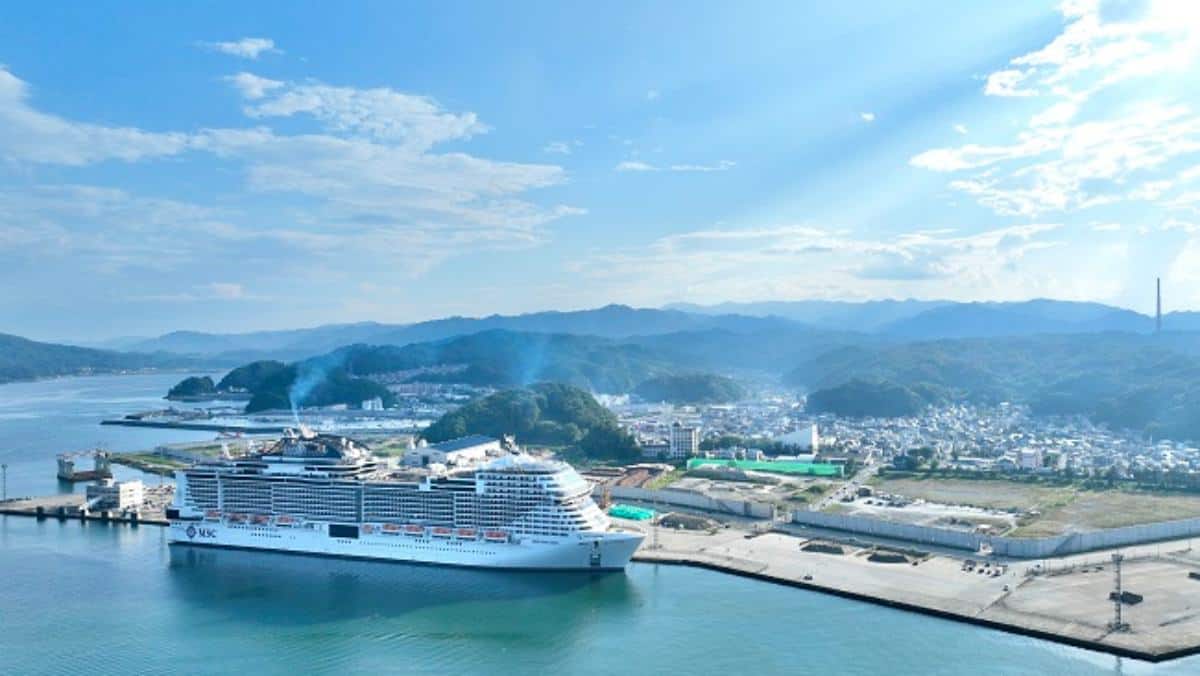
With the influx of massive cruise ships into the popular ports of Asian harbors, there is a need for the authorities to redesign existing timetables so as not to create chaos at the shore. The high numbers of passengers per day have saturated transportation systems in South Korea, Japan, Thailand, and Malaysia, thus necessitating the need to introduce an automated system where cruise ships must bid for slots for docking times and landing permits. Through this structural change, it becomes mandatory for the cruise ships to shift focus from static to dynamic maritime logistics.
The Regional Demand Surge: Mega-Ships Squeezing Asian Port Capacities
The maritime tourism market across Asia is experiencing an unprecedented surge in passenger volumes, pushing port infrastructure to its operational limits. Driven by expanding middle-class populations and strong post-pandemic recovery, regional passenger throughput has surpassed three million guests annually. In response to this demand, global cruise operators are deploying their largest flagship vessels to Asian waters. Mega-ships such as Royal Caribbean’s Quantum-class and Icon-class liners, alongside MSC Cruises’ World-class vessels, regularly transport between 5,000 and 7,000 passengers per call.
Advertisement
Advertisement
When these ultra-large vessels berth at regional destinations, they discharge thousands of day-trippers into local transportation networks within brief morning windows. The resulting surge creates severe urban traffic jams, overwhelms local bus networks, and strains public amenities at high-density heritage corridors. This operational reality mirrors challenges previously seen across European maritime hubs, where destinations like Santorini, Mykonos, Venice, and Dubrovnik implemented strict daily passenger disembarkation caps and steep port entry taxes to curb overtourism.
To prevent similar paralysis in Asian coastal hubs, port authorities are shifting away from static, long-term berth planning. Traditionally, cruise lines booked berths years in advance using first-come, first-served protocols or fixed annual schedules. Today, harbour administrators are transitioning to dynamic, slot-based maritime logistics. Under this model, vessel arrival times, gangway disembarkation clearance, and land-side excursion dispatches are tightly regulated as a single, unified operational process.
Advertisement
Advertisement
| Operational Dimension | Legacy Static Berthing Model | Dynamic Slot-Based Logistics Model |
| Berth Allocation Protocol | Annual static scheduling; first-come, first-served | Dynamic digital pier slot bidding systems[cite: 4] |
| Tariff Architecture | Fixed, uniform port usage fees per vessel GRT | Tiered pricing based on peak vs off-peak demand |
| Passenger Disembarkation | Open-door gangway disembarkation upon clearance | Staggered shore excursion disembarkations[cite: 8, 9] |
| Land-Side Coordination | Independent excursion bus dispatching | Cruise cap micro-ticketing 2–3 hour windows |
| Environmental Compliance | Standard marine environmental reporting | Shore power mandates & green pier scoring |
The financial consequences of uncoordinated arrivals extend to vessel economics. Research from the International Maritime Organization (IMO) Global Industry Alliance shows that merchant and passenger vessels spend up to 9% of their total voyage time waiting at anchor due to port berth queues. This unproductive idling burns auxiliary fuel, generates avoidable greenhouse gas emissions, and disrupts downstream port itineraries. By replacing static schedules with real-time digital allocation platforms, port authorities aim to eliminate anchorage delays while forcing cruise lines to align vessel arrivals with municipal transport capacity.
Mechanics of Pier Slot Bidding Systems and Tiered Port Tariffs
To distribute quay demand evenly throughout the day, port authorities across East and Southeast Asia are deploying automated digital berth-allocation platforms powered by modern Terminal Operating Systems (TOS). These platforms replace flat port usage fees with market-driven, variable tariff structures. Under dynamic pier slot bidding systems, port managers monetise landing windows based on local traffic conditions and land-side network capacity.
Advertisement
Advertisement
Peak morning arrival windows—typically between 06:00 and 08:30—command premium tariffs or require competitive bidding among cruise operators. Morning slots are highly prized by cruise lines because they allow operators to sell full-day shore excursions, maximising tour revenue and guest satisfaction. Conversely, shoulder and afternoon landing windows (11:00 to 15:00) are offered at discounted rates or with reduced facility charges to incentivise lines to accept off-peak berths.
| Landing Window Tier | Time Period | Tariff Level | Operational Incentive & Strategic Impact |
| Peak Morning Slot | 06:00 – 08:30 | Premium Tariff / Competitive Bid | Maximises tour length and revenue; incurs highest port costs. |
| Shoulder Morning Slot | 08:30 – 11:00 | Standard Rate | Balances reasonable excursion duration with manageable quay fees. |
| Afternoon Slot | 11:00 – 15:00 | Discounted Rate / Off-Peak Credit | Target for shorter half-day tours; reduces operational costs. |
| Evening / Night Slot | 15:00 – 20:00 | Reduced Facility Usage Charge | Promotes night-economy dining; incurs minimal transit congestion. |
This tiered financial model alters itinerary planning economics. A cruise line securing a prime morning berth must weigh higher port fees against expected shore excursion sales. If a vessel accepts a discounted afternoon landing window, its shore excursion team must compress tour schedules into shorter timeframes. This operational dynamic forces cruise operators to run real-time financial algorithms, balancing slot bidding costs directly against onboard excursion margins.
Onshore Micro-Ticketing and Municipal Transit Synchronization
Allocating a berthing slot to a cruise ship addresses only the maritime component of port congestion. The primary land-side challenge occurs when thousands of passengers attempt to leave the terminal during the first hour after docking. Without intervention, this sudden surge paralyzes local taxi ranks, public transport routes, and tour bus parking zones.
To address this issue, municipal transit departments and port authorities are introducing cruise cap micro-ticketing frameworks. Micro-ticketing breaks down daily disembarkation into strict 2-to-3-hour land entry passes issued to shore excursion operators, independent bus drivers, and local transit providers.
- Vessel Arrival & Customs Approval
- TOS confirms the landing window and validates gangway connection.
- Digital Pass Generation
- The onboard app assigns staggered 15-minute gangway departure passes.
- Controlled Gangway Release
- Passengers scan RFID or biometric passes before exiting the ship.
- Phased Bus Yard Entry
- Tour coaches enter terminal loading zones only during assigned 30-minute windows.
- Synchronised Heritage Site Arrival
- Micro-tickets stagger visitor arrivals at urban heritage sites.
These micro-ticketing platforms coordinate staggered shore excursion disembarkations directly with municipal traffic management systems. Rather than allowing 80 tour coaches to exit the port main gate simultaneously at 08:30, micro-ticketing schedules coach departures in phased 15-minute waves. This continuous flow prevents traffic congestion on city roads and prevents visitor overcrowding at major cultural sites, such as George Town in Penang or Shuri Castle in Okinawa.

Onboard Digital Integration: App-Based Gangway Management
To align shipboard passenger movements with land-side transit slots, cruise operators are turning to onboard digital integration. Major lines, including Royal Caribbean and MSC Cruises, have replaced traditional open-door disembarkations with automated queuing systems integrated into their passenger mobile apps.
Advertisement
Advertisement
Guests are no longer permitted to gather freely in public foyers near the gangway. Instead, passengers must reserve digital departure passes through the ship’s smartphone app prior to arrival. The software allocates 15-minute gangway departure passes based on the passenger’s shore excursion booking time, loyalty status, or independent travel plans.
These shipboard digital platforms maintain a real-time data link with the port authority’s terminal operating system. If traffic congestion builds up at the terminal exit or immigration hall, port control sends an automated pause signal to the ship’s digital system. The onboard software immediately pauses gangway pass activations, holding the next wave of passengers in shipboard lounges or staterooms until terminal queues clear. This automated feedback loop prevents crowded conditions inside terminal buildings and ensures a steady, controlled passenger flow onto the quay.
Hotspots Under Pressure: Regional Updates Across Asian Destinations
- South Korea (Jeju Island & Busan)
- Onboard immigration pre-clearance is used en route to reduce terminal queues.
- Extended overnight terminal operating hours are provided at Busan.
- Regional cruise ports, including Masan and Saemangeum, are being expanded to diversify cruise calls.
- Japan (Okinawa, Ishigaki & Miyakojima)
- Port slot allocations are linked directly to regional tour coach fleet capacity.
- The MLIT one-stop cruise promotion window coordinates local agency approvals [cite: 15].
- Strict disembarkation caps are enforced during periods of local driver shortages.
- Thailand (Phuket & Koh Samui)
- The Marine Department is evaluating timed shore-entry slots for excursion buses.
- Dedicated passenger transfer piers are planned for southern ports [cite: 18].
- Environmental monitoring is conducted around high-density offshore tender anchorages [cite: 18, 19].
- Malaysia (Penang Swettenham Pier)
- An RM100+ million terminal expansion is planned to support a 688-metre berth capable of handling two mega-ships.
- Daily schedule assessments by the Penang Port Commission are intended to streamline CIQ flows.
- Dedicated landside logistics zones and heritage transit corridors are being developed.
South Korea: Biometric Pre-Clearance and Extended Terminal Operations
South Korea’s maritime tourism industry is experiencing rapid growth. Data from the Ministry of Oceans and Fisheries (MOF) shows that international cruise visitor volume reached 810,000 in 2024—a threefold increase from 273,000 in 2023. That growth continued through 2026, with official projections exceeding 1.8 million guests across more than 950 vessel calls. Diplomatic friction between China and Japan prompted several operators to reroute itineraries to Korean ports, with Chinese nationals making up 45.1% of all cruise visitors during peak months.
This rapid influx placed significant operational pressure on Jeju Port disembarkation facilities and the Busan Port International Terminal. Jeju alone welcomed 640,000 cruise visitors in 2024 across 274 ship calls. Meanwhile, Busan recorded 208 calls in 2025, with scheduled calls increasing further in 2026.
| Metric / Indicator | 2023 Official Data | 2024 Official Data | 2025 Official Data | 2026 Projected Target |
| Total Cruise Passengers | 273,000 guests | 810,000 guests | 1,000,000+ guests | 1,800,000+ guests |
| Total Vessel Calls | 203 calls | 414 calls | 588 calls | 950+ calls |
| Jeju Port Visitors | 101,000 guests | 640,000 guests | 322 calls | 348+ scheduled calls |
| Busan Port Calls | 105 calls | 118 calls | 208 calls | 420+ scheduled calls |
To eliminate multi-hour processing delays in terminal immigration halls, the MOF introduced onboard immigration pre-clearance frameworks. Under this system, Korean immigration officials board vessels at their previous port of call or complete biometric facial-recognition checks while the vessel is en route. When the ship docks, passengers step directly onto the quay without waiting in traditional border control queues. Furthermore, Busan Port Authority expanded operating hours at its passenger terminal to accommodate overnight berthing, encouraging cruise lines to offer late-night disembarkation and evening city tours.
Japan: Transport Bottlenecks and Bus-Linked Berth Allocation
Japan’s cruise market has rebounded strongly, with international ship calls doubling to 1,854 in 2023 and national targets set to attract over 2,000 calls and 2.5 million passengers. However, this rapid recovery exposed severe transport infrastructure constraints across southern island gateways, particularly in Okinawa, Ishigaki, and Miyakojima.
Advertisement
Advertisement
Islands like Ishigaki routinely host mega-vessels such as MSC Bellissima, Diamond Princess, and Costa Serena. The main operational constraint at these remote ports is not terminal berth space, but a nationwide shortage of tour buses and licensed drivers.
In response, the Ministry of Land, Infrastructure, Transport and Tourism (MLIT) updated its port call management protocols. Port slot scheduling in southern island ports is now directly linked to regional coach bus availability metrics. If local transportation fleets cannot accommodate a vessel’s passenger volume, port authorities reject simultaneous mega-ship berthing applications or impose strict passenger landing caps. This bus-linked reservation policy forces cruise operators to secure charter transport commitments before applying for berthing slots.
Thailand: High-Density Tender Ports and Marine Conservation
Thailand’s island destinations—Phuket and Koh Samui—present unique logistical challenges because they operate primarily as offshore tender ports. Large cruise vessels anchor several miles off the coast and transfer passengers to shore using small tender boats that dock at Nathon Pier in Koh Samui.
Tender operations create natural disembarkation bottlenecks. A typical tender boat carries 150 to 300 passengers per 20-minute trip, leading to long queues during peak disembarkation windows. On multi-ship days, thousands of day-trippers congregate at narrow pier heads, causing traffic congestion on coastal roads and straining local public services.
To address these vulnerabilities, the Marine Department of Thailand is evaluating timed shore-entry slots for excursion buses and conducting studies to build dedicated passenger transfer piers. By regulating the number of excursion coaches permitted near tender landing points each hour, authorities aim to reduce vehicle idling emissions, ease road traffic, and protect delicate coral ecosystems from tender anchor damage and heavy marine boat traffic.
Malaysia: Swettenham Pier Expansion and Heritage Corridor Control
Penang is one of Southeast Asia’s fastest-growing cruise destinations. The Swettenham Pier Cruise Terminal (SPCT), located adjacent to the UNESCO World Heritage area of George Town, handled 679,809 cruise passengers in 2025. Demand surged further in early 2026: during the first quarter, SPCT welcomed 372,903 cruise passengers—a 39.55% increase over the same period in 2025—across 201 vessel calls. Overall, the Penang Port Commission (PPC) projects a 47% annual growth in cruise passenger throughput for 2026.
Advertisement
Advertisement
| Penang SPCT Performance Metric | Q1 2025 Official Figure | Q1 2026 Official Figure | Percentage Change |
| Total Vessel Calls | 46 calls | 201 calls | +336.95% |
| Total Passenger Throughput | 267,221 passengers | 372,903 passengers | +39.55% |
| Passenger Origin Diversity | Regional markets | 83 countries & territories | Significant expansion |
To manage this passenger traffic without paralyzing George Town’s narrow historic streets, Penang Port completed an RM100+ million (~USD 24 million) terminal expansion. The main berth was extended to 688 metres, allowing SPCT to dock two mega-vessels simultaneously alongside two smaller coastal ships.
Led by PPC Chairman Datuk Yeoh Soon Hin, port administrators conduct daily schedule assessments to manage quay traffic and streamline Customs, Immigration, and Quarantine (CIQ) workflows. Furthermore, landside urban plans prioritize dedicated tour bus parking zones, pedestrian walkways, and micro-ticketing transit corridors to distribute tour groups evenly across Penang’s cultural and commercial districts.

Digital Maritime Logistics Infrastructure and Green Pier Mandates
Port authorities across East and Southeast Asia are upgrading their Vessel Traffic Management Systems (VTMS) to link berth reservation databases directly to municipal transport platforms. This integrated maritime logistics infrastructure allows harbour master offices, terminal operators, and municipal transit agencies to view real-time vessel locations and passenger disembarkation metrics on unified operational dashboards.
At the same time, slot allocation priority is increasingly linked to environmental compliance. As coastal cities enforce stricter decarbonisation targets, port authorities are establishing shore power mandates. Onshore Power Supply (OPS), or cold-ironing, allows cruise ships to plug into shoreside electricity while docked, enabling them to shut down their auxiliary diesel engines and eliminate localized emissions of sulfur dioxide ($SO_2$), nitrogen oxides ($NO_x$), and particulate matter ($PM_{2.5}$).
According to data from the Cruise Lines International Association (CLIA), 46% of the global cruise fleet (120 vessels) is equipped to connect to shore power, with that figure projected to reach 72% (over 210 ships) by 2028. Ports across Asia are building these environmental metrics directly into their slot allocation algorithms.
| Eco-Scoring Evaluation Factor | Operational Weight | Strategic Incentive & Priority Level |
| Shore Power (OPS) Capability | 40% Evaluation Weight | Priority access to peak morning arrival slots. |
| Tier III Engine / LNG Fueling | 30% Evaluation Weight | Reduced port facility usage fees and surcharges. |
| Advance Passenger Data Sharing | 20% Evaluation Weight | Fast-track customs and immigration clearance. |
| Off-Peak Departure Commitment | 10% Evaluation Weight | Preferred berthing status during multi-vessel calls. |
Under these eco-scoring systems, vessels capable of connecting to clean shoreside electricity receive priority status in dynamic slot bidding and qualify for lower port facility fees. Older vessels operating on heavy fuel oil are assigned to shoulder or off-peak landing windows. This regulatory approach leverages port slot access to encourage cruise lines to modernize their fleets.
Advertisement
Advertisement
Future Outlook: Strategic Implications for Cruise Operators
The advent of pier slot bidding, micro-ticketing, and green pier policies signals a permanent change to the way that maritime tourism operates. Although such policies safeguard local infrastructure and city residents, they are also a source of complications to cruise line companies.
The cruise companies have an increase in port costs during the peak docking times along with investments to upgrade to the shore power connection and mobile applications. Furthermore, the 2-3 hours allocated for on-shore excursions reduce the guests’ opportunities to spend money in the local businesses.
Moving forward, however, long-term success is going to necessitate greater cooperation among the relevant parties: port authorities, municipal transit systems, and cruise companies. Creating multi-port corridors where there is digital scheduling throughout South Korea, Japan, Thailand, and Malaysia would allow for coordinated slot allocation practices along key Asian cruise routes. Instead of allowing unplanned disembarking processes to occur, cruise shipping can be made sustainable through technological coordination at Asian ports.
The fast-growing trend of marine tourism in Asia underscores the immediate need for a shift in the world from unregulated passenger loads to highly controlled port logistics. With the rising impact of mega cruise liners on local transport infrastructure and historical landmarks, regional port administrators have managed to implement efficient bidding for pier slots, compulsory green power shore connections, and micro-ticketing onshore. Such combined policy measures ensure efficient management of fragile environments of popular destinations in South Korea, Japan, Thailand, and Malaysia, without compromising performance. Cruise liners, which adopt advanced digital gangway and environmentally friendly fleet technology, will gain sustainable regional market access.
Advertisement
