
Singapore Medical Tourism Advances With Precision Oncology and Proton Therapy

Published
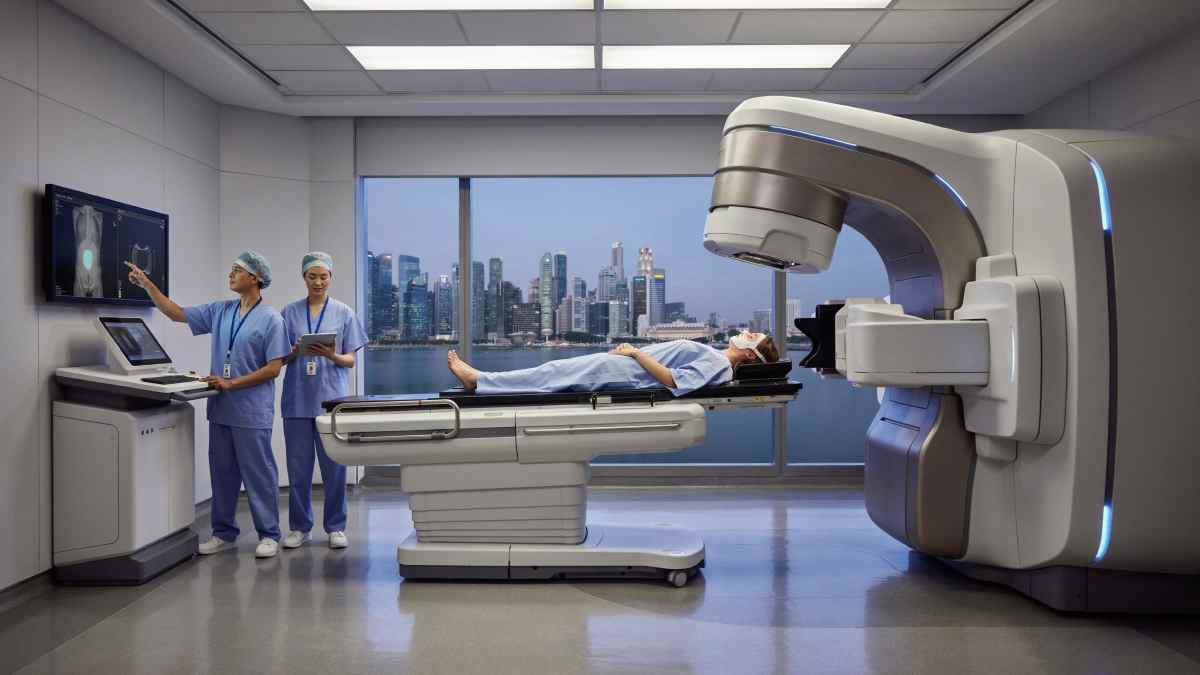
Image generated with Ai
Singapore has become a major destination for medical tourism due to the creation of a healthcare hub focused on specialised cancer care, precision medicine, cell therapy, proton therapy, and genetic testing in Singapore. The National Cancer Centre Singapore (NCCS) offers sophisticated cancer treatments through proton therapy, immunotherapy, and cell therapy, while the other private hospitals and fertility clinics offer specialised care for foreign patients. Medical tourism in Singapore is mainly focused on providing access to speciality healthcare rather than patient numbers. Singapore’s Ministry of Health has announced that the country remains open to overseas patients while also saying that the government does not aim at promoting medical tourism as a strategy for healthcare delivery.
Singapore Builds Around Complex Cancer Care
The NCCS is Singapore’s national speciality centre for tertiary cancer care and provides medical oncology, surgical oncology, radiation therapy, imaging, rehabilitation and palliative care. Its integrated model allows international patients to access multiple oncology disciplines through a single specialist institution.
For overseas visitors, the centre also operates a dedicated Patient Liaison Service that assists international referring physicians, non-Singapore residents and corporate medical enquiries. This provides a formal channel for arranging specialist consultations and referrals before travelling to Singapore.
Proton Therapy Adds Another Medical Travel Option
One of Singapore’s most specialised cancer treatment facilities is the Goh Cheng Liang Proton Therapy Centre at NCCS. It is the only public healthcare institution in Singapore offering proton therapy, an advanced form of radiation treatment designed to target tumours while reducing exposure to surrounding healthy tissue.
Advertisement
Advertisement
The centre uses pencil-beam scanning technology, allowing radiation oncologists to adjust beam intensity and target treatment areas with high precision. NCCS states that proton therapy can be considered for selected cancers, including certain brain, head and neck, paediatric and other tumours under Ministry of Health-approved indications.
Advertisement
Advertisement
Treatment schedules vary according to the cancer and treatment plan. NCCS notes that a course can range from several weeks, with an average of around 30 treatment sessions for some patients.
Cell Therapy Moves From Research Into Clinical Care
Singapore has also developed significant expertise in cell and gene therapy. NCCS offers CAR-T cell therapy as part of its advanced immunotherapy services, while Singapore’s research infrastructure supports clinical trials and development programmes involving cellular therapies.
CAR-T treatment involves collecting a patient’s T cells, modifying them in a laboratory and returning the engineered cells to the patient. NCCS explains that the process can take several weeks and is currently used for selected blood cancers, with other applications being investigated through clinical trials.
Singapore has also built manufacturing and research capabilities around cell and gene therapy. The Advanced Cell Therapy and Research Institute Singapore has been established to support development and manufacturing, including work involving CAR-T and other cellular treatments.
Precision Medicine Supports Cancer Treatment
Precision oncology is another part of Singapore’s healthcare infrastructure. NCCS conducts research into biomarkers, tumour biology, immunotherapy and cellular therapies, including the use of genomic and cellular information to identify treatment strategies.
Advertisement
Advertisement
A major Singapore-led phase III T-cell therapy trial for advanced nasopharyngeal cancer involved 330 patients across 23 sites in Singapore, Malaysia, Thailand, Taiwan and the United States. The trial demonstrated Singapore’s ability to coordinate large-scale international cell-therapy research, although the study did not show an overall survival benefit for the full patient population.
Genetic Testing Adds Another Medical Travel Segment
Singapore’s healthcare system also regulates pre-implantation genetic testing for selected genetic conditions. The Ministry of Health lists approved providers for pre-implantation genetic testing for monogenic or single-gene defects and chromosomal structural rearrangements.
Approved providers include public institutions such as KK Women’s and Children’s Hospital, Singapore General Hospital and National University Hospital, alongside private fertility centres including Virtus Fertility Centre and Mount Elizabeth facilities.
For international patients, this creates another specialist healthcare pathway combining fertility treatment, genetic counselling, laboratory testing and assisted reproduction.
Key Stats
- 4 treatment gantries: The Goh Cheng Liang Proton Therapy Centre operates four proton therapy treatment gantries.
- S$50 million: The proton therapy centre received a S$50 million gift from the Goh Foundation.
- 330 patients: Singapore-led VANCE phase III T-cell therapy trial.
- 2026: Singapore continues to welcome overseas patients while maintaining a healthcare-focused rather than medical-tourism-promotion approach.
Author’s Point of View
Singapore’s medical travel ecosystem is increasingly connected to specialist treatment rather than conventional wellness tourism. Oncology, proton therapy, cell therapy, clinical research and regulated genetic testing create several distinct reasons for international patients to seek care in the country.
Advertisement
Advertisement
The infrastructure also supports patients who require repeated hospital visits. Dedicated international-patient liaison services, specialist hospitals and Singapore’s compact urban transport network allow medical appointments to be combined with accommodation and other practical travel arrangements.
Travel Details for Medical Visitors
The Changi Airport of Singapore is the main international airport, providing direct connections to the city’s road and MRT infrastructure. Large healthcare areas like Novena, Orchard and central areas are all easily reachable by taxi, private transportation and public transport from the airport. Patients travelling for complicated treatment should get their referrals to the hospitals and get confirmation from the hospital about admission before booking any flight and accommodation. The time for treatment can greatly differ depending on its type, especially in cases of radiotherapy, oncological programs and cell-based therapies. Accommodation for families of patients can be found in large quantities of serviced apartments and hotels near the medical districts of Singapore. Still, both accommodation and entertainment plans should be designed in accordance with the patient’s clinical needs and schedule. The medical travel industry in Singapore in 2026 is focused on specialization, regulated treatment protocols and research-driven healthcare. From proton therapy and CAR-T programs to precision oncology and genetic tests, there is plenty of complex medical services available to international patients in Singapore.
Advertisement
