

Qatar Continues to Struggle as Travel Disruption Persists in Doha, Affecting Hamad International Airport with Hundreds of Flight Cancellations by Qatar Airways, Gulf Air, Saudia, Malaysia Airlines and others

Published
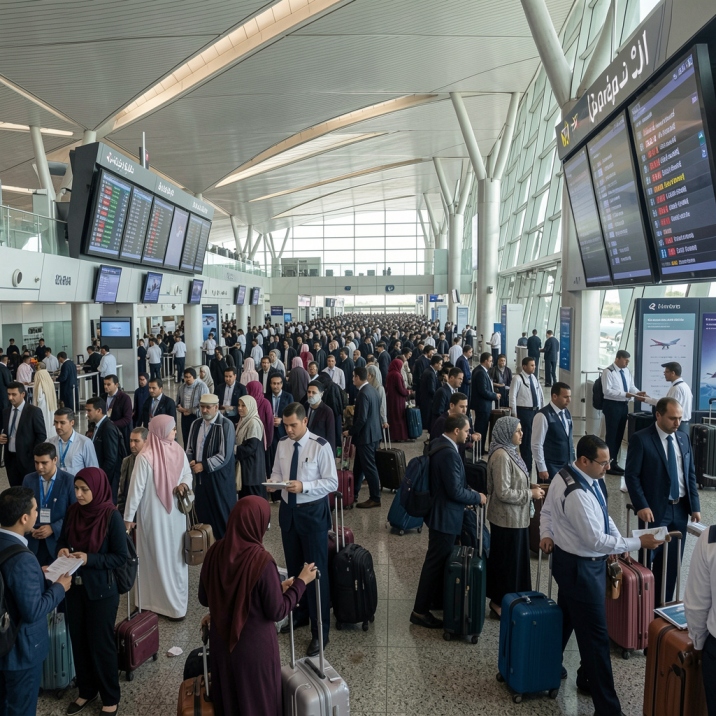
As the Middle East continues to feel the repercussions of the ongoing 2026 Iran conflict, travel across the region has been significantly disrupted. One of the most affected locations is Hamad International Airport in Doha, Qatar, where major airlines are experiencing widespread cancellations and delays. Qatar Airways, Gulf Air, Saudia, Malaysia Airlines and others have all been forced to adjust their schedules in response to airspace closures prompted by the escalating political and military situation in the region. With 285 flights cancelled and 14 delayed, passengers are facing significant challenges as they try to navigate through one of the busiest hubs in the Middle East.
Major Airport Affected
Hamad International Airport (DOH) is Qatar’s primary gateway for both international and domestic travel. As a key transit point for passengers travelling to and from the Middle East, Europe, Asia and beyond, the airport handles thousands of flights each day. However, recent events tied to the Iran conflict have severely impacted its operations, with the airport seeing a significant uptick in cancellations and delays.
Advertisement
Advertisement
Today alone, the airport recorded a total of 285 flight cancellations and 14 delays. These disruptions come amid a wave of airspace closures that have been enforced by several countries in the region. The closures have been put in place for safety reasons due to the escalating conflict between Iran and multiple regional powers, including the United States. As a result, major airlines such as Qatar Airways, which operates a substantial portion of flights from Hamad International, have been forced to suspend numerous services to ensure the safety of passengers and aircraft.
Impacted Airlines
| Airline | Cancelled | Cancelled (%) | Delayed | Delayed (%) |
|---|---|---|---|---|
| Qatar Airways | 257 | 41% | 14 | 2% |
| Gulf Air | 8 | 100% | 0 | 0% |
| Saudia | 6 | 100% | 0 | 0% |
| Malaysia Airlines | 4 | 100% | 0 | 0% |
| Egypt Air | 3 | 75% | 0 | 0% |
| Royal Air Maroc | 2 | 100% | 0 | 0% |
| Virgin Australia | 2 | 50% | 0 | 0% |
| US-Bangla Airlines | 2 | 100% | 0 | 0% |
| XiamenAir | 1 | 50% | 0 | 0% |
The scale of disruption is not limited to just one airline. Qatar Airways, the flagship carrier of Qatar, has been particularly affected, with 257 cancellations and 14 delays recorded for the day. This represents a significant percentage of the airline’s scheduled flights, further exacerbating the travel woes faced by passengers. Other carriers, including Gulf Air, Saudia, Malaysia Airlines, Egypt Air and Royal Air Maroc, have also seen their operations impacted by the crisis, resulting in flight suspensions and delays.
Advertisement
Advertisement
The cancellations are largely a result of the airspace restrictions imposed by several Middle Eastern nations. Qatar Airways, for instance, has had to ground flights or reroute aircraft due to the closure of large portions of airspace. Meanwhile, airlines such as Gulf Air and Saudia have also experienced similar disruptions, with all of their scheduled flights being cancelled for the day. Other airlines, including Malaysia Airlines and Egypt Air, have seen cancellations at a reduced rate but still remain significantly impacted by the airspace restrictions.
Advertisement
Advertisement
Probable Impact on Tourism
The ongoing travel disruptions in Doha are likely to have long-term consequences for the tourism sector in Qatar and the broader Middle East region. As air travel becomes more unpredictable, travellers may reconsider plans to visit the area, leading to a potential decrease in international tourism to Qatar. Hamad International Airport, a hub for global travel, has long been a key entry point for visitors coming to the country for leisure, business and events. With flights being cancelled or delayed at high rates, the airport’s capacity to serve tourists will be diminished and this could dampen the region’s reputation as a reliable travel destination.
Qatar has been making concerted efforts to boost its tourism sector in recent years, capitalising on its status as the host of the 2022 FIFA World Cup. However, the current situation—combined with the political instability in the region—could lead to a setback for the country’s tourism ambitions. The disruptions at Hamad International Airport have already demonstrated the fragility of the region’s air transport network and this may lead potential visitors to reconsider their travel plans until the situation stabilises.
Advertisement
Advertisement
The Qatar Tourism Authority will likely be monitoring the developments closely, as tourism plays a key role in the country’s economy. While the crisis is ongoing, it is crucial for stakeholders in the tourism industry to manage the expectations of travellers and ensure they are kept informed of the situation. However, if the conflict persists and travel disruptions continue, the short-term impact on future tourism could be significant.
What Affected Passengers Can Do Now
For passengers currently affected by the travel disruptions in Doha, it is essential to stay informed and flexible. Airlines, including Qatar Airways, have been working to provide support to passengers impacted by cancellations and delays. However, given the scale of the disruptions, passengers are advised to take proactive steps to minimise the impact on their travel plans.
First, travellers should contact their airline directly to confirm the status of their flights and to discuss rebooking options. Many airlines are offering alternative flight options, but availability may be limited due to the ongoing airspace restrictions. It is also advisable to monitor flight statuses regularly, as the situation can change rapidly.
For those who are already at Hamad International Airport, it is recommended to approach the airline’s customer service desk for guidance. Passengers may be entitled to compensation, depending on the length of the delay and the airline’s policies. In some cases, airlines may provide accommodations or meal vouchers for affected passengers.
Advertisement
Advertisement
Finally, for those planning future travel to Doha, it is advised to check with airlines about the potential for further disruptions. While the situation remains fluid, travellers should stay up to date on developments in the region and be prepared for potential changes to their travel itineraries.
-The information provided is sourced from FlightAware.
Advertisement
