

New York Gets a Digital Swamp as MoMA Rebuilds Berlin’s Lost Wetlands With Unreal Engine Technology

Updated
Published
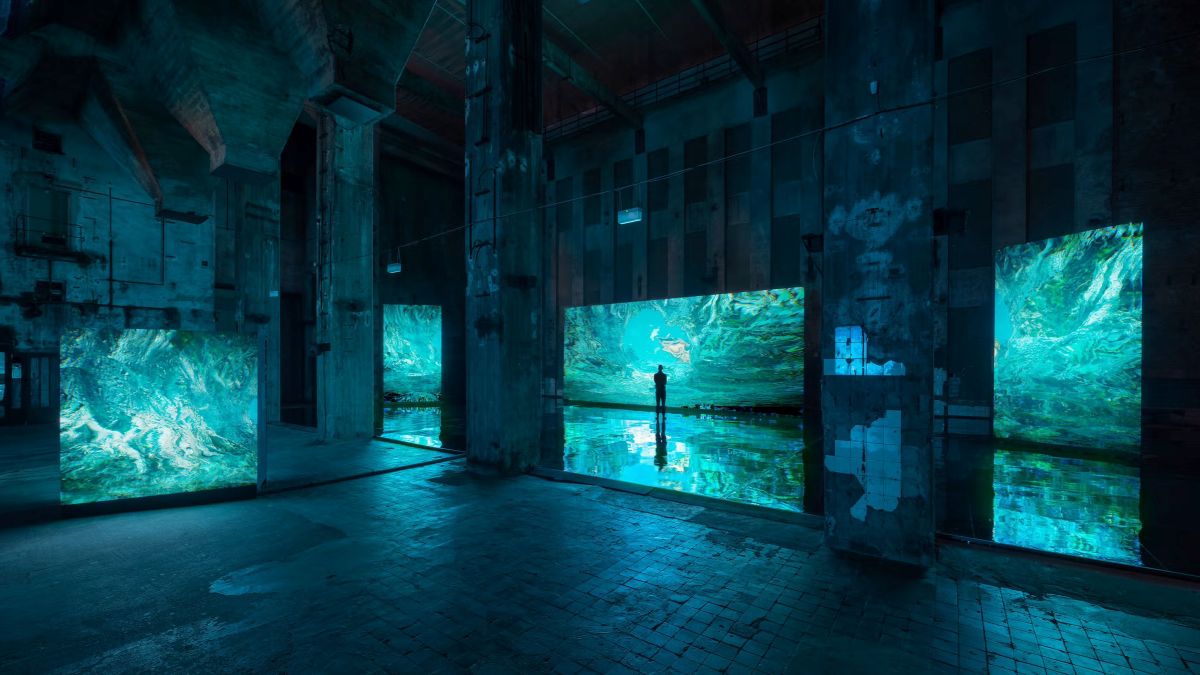
Image Credit: Jakobsteen
New York Gets a Digital Swamp as MoMA Rebuilds Berlin’s Lost Wetlands With Unreal Engine Technology bringing ecological memory, contemporary art and advanced digital tools together inside one of America’s best-known museums. Jakob Kudsk Steensen: Wetland opens on 12 October 2026 and continues until 7 March 2027 at the Museum of Modern Art’s Agnes Gund Garden Lobby. Its centrepiece, Berl-Berl, reconstructs parts of Berlin’s vanished wetland ecology through detailed field research, environmental recordings and advanced visual technology. Rather than showing visitors a conventional film, the installation generates an evolving digital landscape. This approach makes the exhibition both an artistic experience and an exploration of how technology can preserve ecological memory.
What Makes MoMA’s Digital Swamp Different From a Conventional Exhibition?
Berl-Berl is designed as a continuously changing environment rather than a fixed video presentation. MoMA describes the work as a real-time simulation combining moving images and sound, allowing the virtual wetland to evolve rather than repeat an identical sequence. The artwork began in 2021 and remains an ongoing project. Its unusual title is linked to “Berl”, an old Slavic term associated with swamp and commonly connected with the name Berlin. The installation combines ecological observations with Sorbian and Slavic mythology, songs, museum specimens and environmental recordings. Visitors therefore encounter an interpretation of nature shaped by scientific research, cultural memory and digital experimentation.
How Does Cutting-Edge Technology Recreate the Lost Wetland?
The digital landscape relies on macro photogrammetry, 3D scanning and real-time game-engine technology. Photogrammetry allows physical objects to be reconstructed digitally from large numbers of detailed photographs, while scanning captures the shapes of plants, rocks and other environmental material. These assets are then assembled inside a computer-generated ecosystem.
Advertisement
Advertisement
Steensen photographed some natural objects hundreds or even thousands of times before turning them into three-dimensional forms. The project also uses Unreal Engine, technology widely associated with modern video-game production. This allows plants, water, light and other environmental elements to exist inside a responsive digital space rather than a simple pre-rendered animation.
How Much Real Nature Went Into Creating Berl-Berl?
Despite its digital appearance, the project is deeply rooted in real landscapes. Steensen spent months conducting fieldwork across wetlands in Berlin and Brandenburg, documenting plants, mud, roots, insects and surviving marsh environments.
Advertisement
Advertisement
He also collaborated with the Museum für Naturkunde Berlin, drawing on scientific collections containing local fauna, geological material and plant specimens. These resources were incorporated into the visual and acoustic elements of the virtual swamp.
The original Berlin installation was substantial, occupying roughly 1,500 square metres at Halle am Berghain in 2021. That presentation ran from 10 July to 26 September. MoMA’s version uses its Hyundai Card Digital Wall, adapting the same evolving artwork for a different architectural setting.
Why Does Sound Matter as Much as the Visual Technology?
Sound plays a central role in making the installation immersive. Steensen collaborated with sound composer Matt McCorkle and musician Arca, blending environmental recordings, civilisation and ecosystem sounds into the work.
Recordings gathered from real wetlands were transformed into rhythms and layered compositions. Arca’s voice was combined with natural sounds, including amphibian recordings, while the project also draws on historic songs connected with navigating wetlands and preserving stories.
This combination creates a multisensory environment rather than a purely visual spectacle. Visitors are encouraged to experience the installation as an ecological atmosphere. The soundscape reinforces the central idea that landscapes contain memories, histories and cultural associations that can disappear when cities expand over natural environments.
Why Is Berlin’s Lost Wetland History Important?
The ecological background gives Berl-Berl much of its meaning. Berlin developed within a glacial valley formed more than 10,000 years ago, where extensive wetland environments once existed. Large areas were gradually drained, particularly from the 1700s onward, as urban development expanded.
Advertisement
Advertisement
The installation digitally revisits those largely erased ecosystems. Rather than presenting nature as something distant from cities, it reminds viewers that major urban centres were built over pre-existing ecological systems.
That message becomes particularly relevant in New York, another dense global city transformed by centuries of construction. By presenting Berlin’s lost wetlands at MoMA, Steensen invites visitors to consider what natural environments may lie beneath modern streets, buildings and infrastructure.
What Should Visitors Know Before Seeing Wetland?
| Detail | Official information |
|---|---|
| Exhibition | Jakob Kudsk Steensen: Wetland |
| Main artwork | Berl-Berl |
| Opening | 12 October 2026 |
| Closing | 7 March 2027 |
| Venue | MoMA, New York |
| Location | Floor 1, Agnes Gund Garden Lobby |
| Artwork launched | 2021, ongoing |
| Original Berlin installation | About 1,500 sq m |
| Core technologies | Photogrammetry, 3D scanning, game engine |
| Digital platform | Unreal Engine |
| Scientific collaborator | Museum für Naturkunde Berlin |
| Musical collaborator | Arca |
These figures show that Wetland combines contemporary digital production with extensive ecological research and institutional collaboration.
Tickets and admission
MoMA’s general admission ticket currently costs $30 for adults, $22 for seniors aged 65+, and $17 for full-time students with ID, including international students. Admission is free for children aged 16 and under and for MoMA members. Visitors with disabilities pay $22, while an accompanying care partner enters free.
General admission includes all galleries and special exhibitions, the Sculpture Garden when weather permits, same-day film screenings with a separate film ticket, hands-on spaces such as the Crown Creativity Lab and Heyman Family Art Lab, free checkroom access, Wi-Fi and audio guides on visitors’ own devices.
Advance online purchase is recommended because it guarantees entry. A limited number of tickets are available on site on a first-come, first-served basis. Tickets cannot normally be transferred, refunded or exchanged, but visitors may leave and re-enter MoMA on the same day if they retain their ticket.
Advertisement
Advertisement
Locations, opening hours and admission
The main Museum of Modern Art is located at 11 West 53 Street, Manhattan, New York, NY 10019. The main public entrance is on 53rd Street between Fifth and Sixth avenues.
MoMA is open:
- Monday–Thursday: 10:30 a.m.–5:30 p.m.
- Friday: 10:30 a.m.–8:30 p.m.
- Saturday–Sunday: 10:30 a.m.–5:30 p.m.
The Museum is closed on Thanksgiving and Christmas, and galleries generally close around 15 minutes before the building closes.
On Saturday and Sunday mornings, selected galleries are reserved for members and their guests from 9:30 to 10:30 a.m.
New York State residents can also receive free admission on Friday evenings from 5:30 to 8:30 p.m. through UNIQLO Friday Nights, but advance reservations and proof of residency are required.
Advertisement
Advertisement
MoMA’s second location, MoMA PS1, is at 22-25 Jackson Avenue in Queens and currently offers free admission for everyone.
Map, audio and visitor guide
MoMA offers a free digital visitor guide through Bloomberg Connects. It contains an interactive museum map, audio content, self-guided tours, collection highlights and recommendations on where to begin. The guide is available in 40 languages. The
Visitors can also listen to MoMA audio playlists directly through their own phones. MoMA recommends bringing headphones for better sound quality.
Paper maps are no longer the primary navigation method. Visitors can download a digital map or scan QR codes around the museum. Large digital screens in the lobby and beside elevators also show current exhibitions, gallery locations and amenities.
Where to start inside MoMA
MoMA publishes official itineraries for visitors who may feel overwhelmed by the scale of the collection.
The museum specifically offers itineraries for people who:
Advertisement
Advertisement
- have limited time;
- are visiting with children;
- want to see major modern-art highlights;
- want drawing or writing activities;
- have visited previously and want something different.
The “Unmissables” itinerary is designed for visitors who want to experience key moments in modern art in a shorter visit, while the family itinerary focuses on child-friendly galleries and activities.
Visitor guidelines and policies
MoMA requires all bags to be inspected when visitors arrive. The museum can refuse entry to prohibited objects or require certain items to be checked.
Important restrictions include:
- no luggage or objects larger than 11 × 17 × 5 inches;
- no large umbrellas;
- no outside food or drinks, except sealed items or those required for family or medical reasons;
- no selfie sticks, tripods or monopods;
- no drones;
- no weapons or hazardous materials;
- no recreational scooters, skateboards or similar equipment;
- no coloured pencils, crayons or markers in galleries — pencils only for drawing;
- no smoking or vaping anywhere on MoMA property.
Children aged 12 and under must be accompanied by an adult. Service animals are permitted, but ordinary pets are not.
Visitors may not touch artwork unless signage specifically identifies a work as interactive.
Photography, sketching and practical tips
Still photography and video are generally permitted for personal, non-commercial use, unless a gallery or artwork states otherwise. Flash photography, tripods and camera extension poles are prohibited.
Advertisement
Advertisement
Visitors can sketch and take notes, but MoMA allows only pencils, and sketchbooks should be no larger than 8.5 × 11 inches.
Backpacks are allowed, but visitors should wear them on the front or carry them at their side to reduce the risk of contacting artworks.
The museum warns that entrance queues can be longer during mornings and rainy days, making advance ticket booking particularly useful.
Accessibility and amenities
MoMA is wheelchair accessible, and visitors can request a wheelchair. Wheelchair-accessible restrooms and baby-changing facilities are available on every floor. All-gender restrooms are located on Floors 1, 3W, 5 and T1. Baby strollers are permitted, although they cannot be used on escalators.
MoMA also has multiple dining choices, ranging from a coffee bar and casual cafés to The Modern, its two-Michelin-starred restaurant. Museum admission is required for Café 2, Terrace Café and Espresso Bar, but dining at The Modern and Modern Bar Room does not require a museum ticket.
Best practical advice for visitors seeing Wetland
For visitors planning to see Jakob Kudsk Steensen: Wetland, the simplest approach is to buy admission online, enter through West 53rd Street, use the free digital guide for navigation and bring headphones if you want to explore MoMA’s accompanying audio resources.
Advertisement
Advertisement
Because general admission covers special exhibitions, there is no separate exhibition ticket required for Wetland under MoMA’s current admission policy. General admission already covers all galleries and special exhibitions.
The Wetland installation itself is scheduled for the Agnes Gund Garden Lobby on Floor 1, making it relatively easy to incorporate into a wider visit to the museum.
Conclusion: Why Could MoMA’s Digital Swamp Become a Major New York Attraction?
MoMA’s digital swamp stands out because it transforms environmental history into an immersive cultural experience. The cause is the disappearance of historic wetlands beneath expanding cities. The answer is a technology-driven reconstruction built from field research, museum specimens, environmental sound and sophisticated digital modelling. The reason it matters is its ability to connect visitors emotionally with landscapes they can no longer physically experience. From 12 October 2026 to 7 March 2027, New York audiences will encounter a continuously changing virtual ecosystem that demonstrates how contemporary art can combine science, memory and advanced technology to rethink humanity’s relationship with nature.
Suggested Comment From Anup Keshan, Founder and Editor-in-Chief of Travel And Tour World
“MoMA’s Wetland exhibition demonstrates how digital technology can create entirely new reasons for travellers to engage with museums and cultural destinations. By combining ecological research, immersive sound, 3D scanning and real-time visual technology, Berl-Berl offers visitors more than a conventional gallery experience. It connects art, science, history and environmental awareness within one installation. For New York tourism, exhibitions of this kind can strengthen the city’s position as a destination where cultural institutions continuously experiment with new ways of storytelling. The project also shows how museums can use innovation to help visitors understand landscapes and histories that have largely disappeared.”
Image Credit: Jakobsteen
Advertisement
