
JFK vs Boston Logan: How Two US Airports Connect Travellers to Europe, Asia and the Middle East

Published
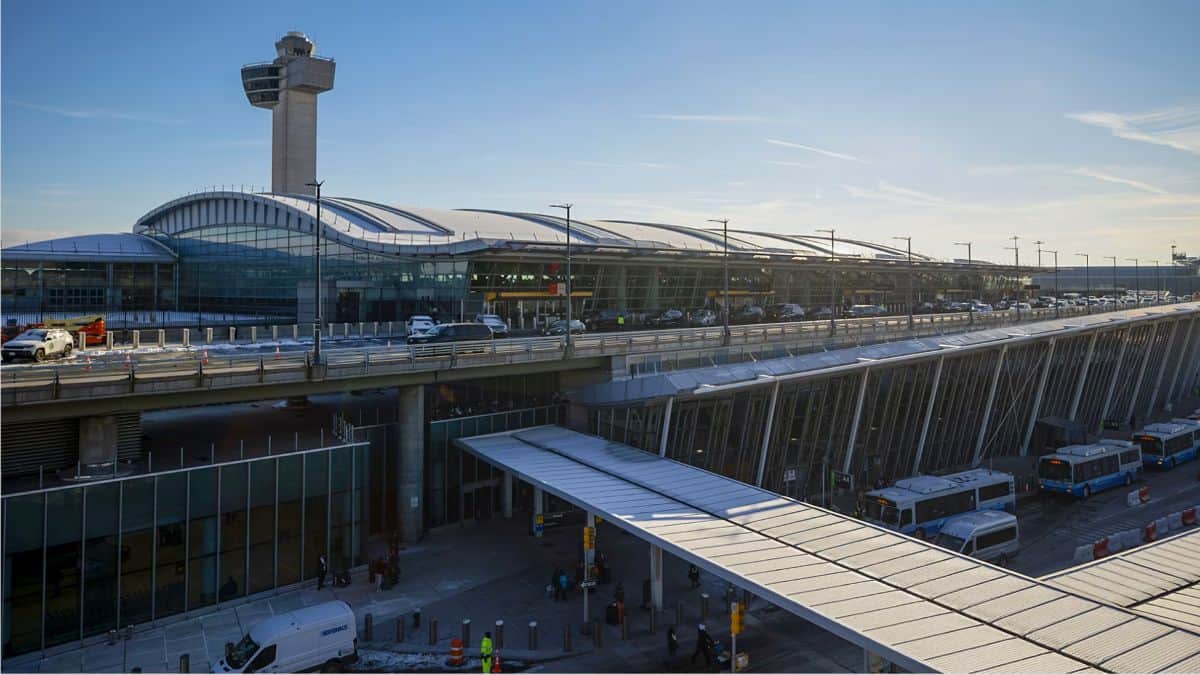
New York and Boston are strengthening two very different gateways to international travel, with JFK handling 34.53 million international passengers in 2025. Boston Logan recorded about 10 million international passengers in fiscal 2025, yet its overseas network remains heavily concentrated across Europe and the Caribbean. JFK handled 62.63 million total passengers, while Logan reached about 43.9 million. The difference extends beyond passenger volumes, however, because each airport serves a distinct economic and geographic catchment. JFK offers a vast multi-continent network, while Logan channels New England’s international demand through a particularly strong transatlantic system. Their expanding terminals, airline portfolios and ground connections are also changing how travellers access these gateways.
Two Gateways With Different Global DNA
The headline numbers reveal the scale of the difference, but they do not tell the whole story. JFK processed 62.63 million passengers in calendar 2025, including 34.53 million international passengers. International travellers therefore represented about 55.1% of JFK’s total traffic, an unusually high proportion for a major US airport.
Boston Logan handled approximately 43.9 million passengers during fiscal 2025, up 4.8% from 41.8 million in fiscal 2024. International passengers accounted for about 10 million, or 22.9% of Logan’s traffic, after rising 11.8% year on year.
| Measure | JFK | Boston Logan |
|---|---|---|
| Reporting period | Calendar 2025 | Fiscal 2025 |
| Total passengers | 62.63 million | 43.9 million |
| International passengers | 34.53 million | About 10 million |
| International share | About 55.1% | 22.9% |
| Current international network | Multi-continent | 60+ nonstop international destinations |
| Primary international strength | Broad global reach | Europe and transatlantic markets |
The distinction matters for travellers. JFK operates as a global-scale gateway, while Logan performs a more regionally concentrated international role for Boston and wider New England.
Advertisement
Advertisement
That does not make Logan a minor international airport. Massport describes it as New England’s global gateway, with more than 40 airlines serving over 100 domestic and international destinations.
The Geography Behind the Passenger Numbers
JFK’s current arrival database reveals an unusually broad geographic footprint. Its international markets span Europe, Africa, the Middle East, Asia, Latin America, Canada and the Caribbean.
Advertisement
Advertisement
The airport lists direct markets including London, Paris, Madrid, Rome, Frankfurt, Dubai, Doha, Riyadh, Mumbai, Delhi, Tokyo, Seoul, Singapore, Hong Kong and Johannesburg. Caribbean and Latin American links extend across destinations such as Jamaica, Barbados, the Dominican Republic, Trinidad and Tobago, Colombia, Brazil, Costa Rica and Panama.
Logan’s network has a different geographic signature. Its international traffic is strongly transatlantic, reflecting Boston’s historic links with Europe and its business, academic and tourism relationships across the Atlantic.
| Logan International Traffic, FY2025 | Share |
|---|---|
| Europe | 51.0% |
| Bermuda and Caribbean | 20.5% |
| Canada | 7.9% |
| Middle East | 7.6% |
| Central and South America | 7.2% |
| Trans-Pacific | 5.4% |
The figures reveal an important travel pattern. More than half of Logan’s international passenger traffic involved Europe, while JFK distributes its global traffic across a much wider collection of regions.
Europe Remains Boston’s International Engine
For travellers heading from New England to Europe, Logan’s network has considerable depth. The airport’s international portfolio includes major European centres such as London, Paris, Dublin, Amsterdam, Frankfurt, Madrid, Rome, Lisbon, Istanbul and Zurich.
This concentration reflects Boston’s economic profile. The region has major technology, education, healthcare, financial and research industries with extensive European links. Consequently, international service does not depend solely on leisure demand.
JFK also possesses formidable European breadth, but its advantage lies in scale and diversity. Its airline roster includes British Airways, Air France, Lufthansa, Iberia, Virgin Atlantic, Aer Lingus, KLM, SWISS, TAP Air Portugal, Finnair, ITA Airways and several other European operators.
Advertisement
Advertisement
For travellers, this translates into a crucial difference: JFK offers a much broader choice of global onward markets, while Logan’s European proposition remains particularly prominent within its international portfolio.
Gulf Connections Open Wider Horizons
The Middle East provides another useful contrast. JFK’s airline ecosystem includes Emirates, Etihad, Qatar Airways, Saudi Arabian Airlines, Gulf Air and other carriers serving markets across the region.
JFK’s 2025 carrier data show Emirates carried about 848,900 passengers, Qatar Airways about 588,600, and Turkish Airlines about 659,800. These figures demonstrate how significant long-haul international carriers have become within New York’s aviation system.
Logan’s Middle Eastern traffic is smaller in proportion. The region represented 7.6% of Logan’s international passengers in fiscal 2025.
The practical consequence is important for long-haul travellers. JFK provides a wider collection of nonstop options towards the Gulf and onward connections into South Asia, Africa and Asia-Pacific. Logan still offers meaningful Middle Eastern connectivity, but its international traffic remains more heavily weighted towards Europe and nearby markets.
Asia Tests the Depth of Each Network
Asia provides perhaps the clearest measure of long-haul network depth. JFK’s current destination listings include Tokyo, Seoul, Shanghai, Beijing, Hong Kong, Singapore, Taipei, Mumbai, Delhi and Manila, alongside additional Asian markets.
Advertisement
Advertisement
That network matters for passengers travelling from the wider New York region because nonstop service reduces dependence on European or Middle Eastern connecting hubs. It also gives airlines access to one of the world’s largest concentrations of international business and diaspora demand.
Boston also maintains significant Asian connectivity. Its network serves major markets across East Asia and South Asia, although the scale is more limited than JFK’s wider international footprint.
For travellers, the most useful metric is therefore not simply the number of Asian destinations. Frequency, airline choice and nonstop availability can matter more than a raw destination count, particularly for business travellers and passengers planning time-sensitive journeys.
The Caribbean Adds a Different Dimension
The Caribbean is another area where the two airports perform important but distinct roles. JFK’s network reaches a wide collection of island markets, including Jamaica, Barbados, Grenada, Antigua and Barbuda, St Lucia, Trinidad and Tobago, the Dominican Republic, the Bahamas and the Turks and Caicos.
These routes serve several overlapping markets. Leisure travellers form one segment, while diaspora travel and family visits provide another important source of demand.
At Logan, the Caribbean and Bermuda accounted for 20.5% of international passenger traffic in fiscal 2025. That makes the region one of the airport’s most significant international markets after Europe.
Advertisement
Advertisement
This is particularly relevant for seasonal travel. Travellers from New England can access numerous Caribbean destinations without travelling through New York, while JFK provides an even broader selection for the enormous New York metropolitan market.
Airlines Reveal the Real Competitive Structure
The airline composition makes JFK’s scale even clearer. Delta carried 18.54 million passengers at JFK in 2025, including 6.14 million international passengers. JetBlue followed with 14.52 million total passengers and 5.83 million international passengers.
American Airlines handled 7.44 million passengers, while British Airways, Avianca and Virgin Atlantic were among the largest international operators. The top 20 carriers collectively accounted for about 86.1% of JFK’s passenger traffic.
| Major JFK Carrier | Total Passengers, 2025 |
|---|---|
| Delta Air Lines | 18.54 million |
| JetBlue Airways | 14.52 million |
| American Airlines | 7.44 million |
| British Airways | 1.30 million |
| Avianca | 1.21 million |
| Virgin Atlantic | 1.09 million |
| Air France | 1.02 million |
| Emirates | 848,900 |
| Turkish Airlines | 659,800 |
| Qatar Airways | 588,600 |
Logan has its own powerful airline structure, with Delta and JetBlue particularly important to the airport. During fiscal 2025, six low-cost and ultra-low-cost carriers collectively handled 35.7% of Logan’s passengers.
The difference is revealing. JFK combines huge US airline operations with a deep international-carrier ecosystem, while Logan combines strong domestic airline activity with a particularly mature transatlantic marketplace.
Domestic Feed Makes Global Routes Possible
International networks depend heavily on passengers arriving from elsewhere. Logan’s 2024 passenger markets show this clearly, with Florida accounting for 18.9%, the New York market 5.1%, Washington DC 5.0%, Chicago 4.9% and San Francisco 4.3%.
Advertisement
Advertisement
Those figures demonstrate Logan’s role within a broader domestic network. A passenger from Florida or Chicago can feed Boston’s international services without originating in Massachusetts.
JFK benefits from an equally broad catchment, although its New York metropolitan base provides enormous local demand. Its relationship with LaGuardia and Newark also creates a complicated three-airport system that does not exist in the same form in Boston.
For travellers, that means airport selection can depend on more than the destination. The best gateway may be the airport offering the most practical combination of nonstop service, domestic access and schedule compatibility.
Getting There Changes the Travel Equation
Ground accessibility gives Logan an interesting advantage in practical terms. Passengers can reach the airport through the MBTA Blue Line, Silver Line, Logan Express, road transport and water connections.
The Silver Line SL1 provides direct service to Logan’s terminals, while transfers to the Red Line at South Station are free. Massport also operates free shuttle buses linking the terminals with Airport Station and other airport facilities.
JFK uses a different model. Its AirTrain connects every passenger terminal with Jamaica and Howard Beach, where travellers can connect with the New York City Subway and Long Island Rail Road.
Advertisement
Advertisement
| Ground Access | JFK | Boston Logan |
|---|---|---|
| Airport rail system | AirTrain JFK | MBTA connections |
| Major rail link | LIRR at Jamaica | MBTA Blue Line and Red Line connections |
| Direct terminal public transport | AirTrain | Silver Line SL1 |
| Terminal shuttle | AirTrain | Free Massport shuttle |
| Current access issue | Major redevelopment works | Roadway and terminal works |
| Notable innovation | AirTrain network | Framingham Remote Terminal |
JFK currently advises passengers to allow significantly more time because of airport construction. Its AirTrain costs $8.75 for a single ride to or from Jamaica or Howard Beach, although terminal-to-terminal AirTrain travel remains free.
Boston is pursuing a different experiment. In June 2026, Massport launched a Remote Terminal at Framingham, allowing eligible Delta and JetBlue passengers to check in, drop bags and clear TSA screening before taking a secure bus directly to the post-security airport area.
By July, the pilot had reached 10,000 passengers and was extended into 2027. The service costs $9 for adults and forms part of Logan’s broader effort to shift more passengers towards high-occupancy transport.
Terminals Are Becoming Strategic Assets
Infrastructure could reshape the comparison over the next several years. JFK is in the middle of a $19 billion transformation, combining privately financed terminal projects with major public infrastructure investment.
The New Terminal One carries a reported $9.5 billion development cost. Terminal 6 represents another $4.2 billion investment, while Terminal 4 and Terminal 8 have already undergone major expansion.
The Port Authority says the first new gates at Terminals 1 and 6 are scheduled to open in 2026. The wider redevelopment also includes a redesigned roadway network and plans to transform the AirTrain system.
Advertisement
Advertisement
The New Terminal One is planned to reach 23 gates when complete. Its development also includes more than 300,000 square feet of retail, dining and lounge space.
Logan is not standing still. Massport continues terminal, roadway and passenger-access projects while developing alternative ways of reaching the airport.
The result is a broader shift in airport strategy. Modern gateways are competing through passenger experience, ground access and terminal efficiency as much as through route counts.
What Travellers Should Take From This
The comparison becomes most useful when viewed through the traveller’s own itinerary. A passenger heading from Boston to London has a different set of considerations from someone travelling from New England to Tokyo or Dubai.
| Traveller Need | JFK | Boston Logan |
|---|---|---|
| Broadest global network | Extensive | More concentrated |
| Europe | Extensive | Particularly strong |
| Middle East | Extensive | Significant |
| Asia | Extensive | Selective but significant |
| Caribbean | Extensive | Strong |
| Domestic connections | Very broad | Very broad |
| Public transport | AirTrain plus NYC network | MBTA plus Logan Express |
| Airport redevelopment | Major transformation underway | Ongoing upgrades |
The lesson is not that one airport universally serves travellers better. Instead, network geography should shape the airport decision.
A passenger living near Boston may save considerable time by using Logan for Europe. A traveller seeking a particular Asian, African or Caribbean nonstop may find JFK’s wider network more relevant.
Advertisement
Advertisement
Two Airports, Two Global Gateways
JFK and Logan demonstrate how international aviation reflects the character of the cities behind the runways. JFK’s 2025 figures show an airport where international passengers constitute more than half of total traffic, supported by a remarkably diverse collection of airlines and continents. Logan, meanwhile, has built a more concentrated international profile, with Europe accounting for 51% of its overseas passenger traffic.
The next phase will be shaped by infrastructure as much as aviation demand. JFK’s multibillion-dollar reconstruction is creating new international capacity, while Logan is experimenting with remote processing and alternative access. For travellers, these changes could gradually alter how they choose gateways, connect across regions and plan international journeys.
The most revealing difference is therefore structural rather than numerical. New York offers an expansive global aviation ecosystem, while Boston provides a concentrated international gateway with exceptional transatlantic depth. Both are becoming more consequential to America’s international travel map, but each reaches the world through a distinctly different network.
Advertisement
