
Norway And Other European Nations Now Unlock Great New Opportunities In The Autumn Active Travel

Published
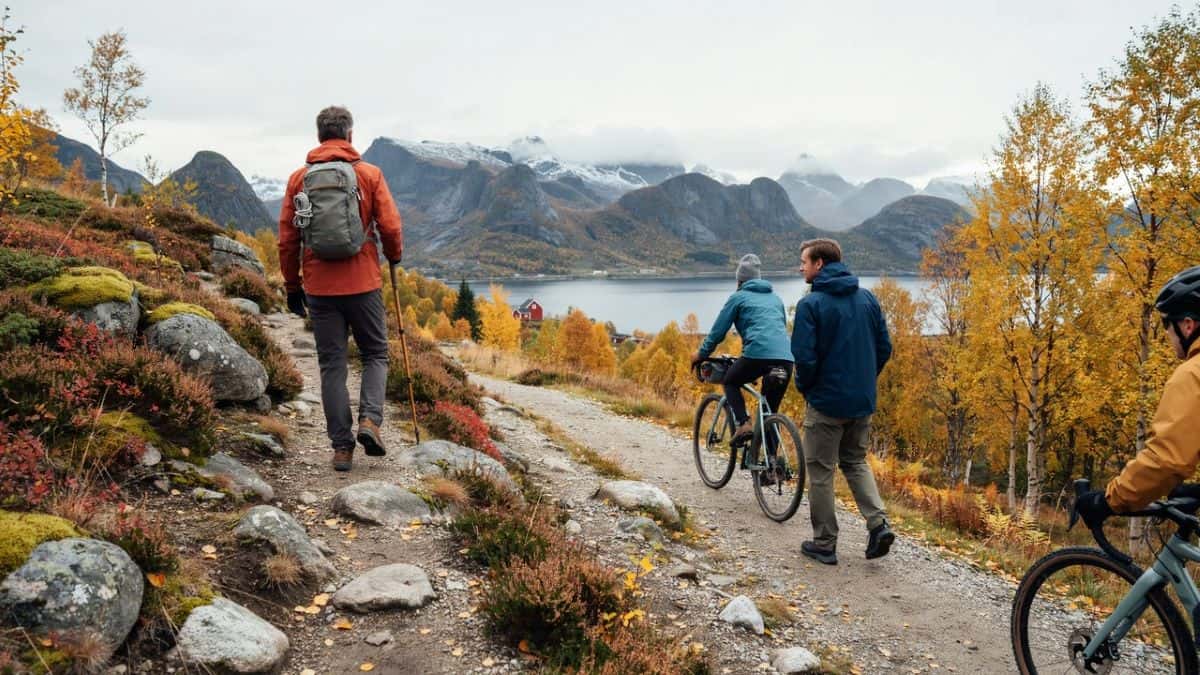
Image generated with Ai
Norway, Finland, Sweden, Iceland and other European destinations feature in rising autumn active travel and holiday demand, with Backroads reporting booking growth above 30 percent for biking, hiking, walking and multi-adventure trips compared with 2023.
Norway’s inclusion in an expanding autumn programme forms part of broader Active Travel demand across Europe. Backroads reports that reservations for September-to-November holidays have increased by more than 30 percent since 2023. Its expanded 2026 and 2027 offering covers Norway, Finland, Sweden, Iceland, Croatia, Italy, Portugal, Greece and Spain. Biking, hiking, walking, northern-lights experiences and multi-adventure trips feature across the portfolio. The company has not released country-specific growth rates. Nevertheless, the expansion highlights how organised outdoor holidays could attract tourism activity beyond Europe’s heavily concentrated summer season.
Advertisement
Advertisement
Key Figures Behind the Autumn Booking Increase
The announcement provides a company-level measure of advance reservations. It does not measure completed visits, national arrivals, tourism expenditure or the performance of the entire European adventure market.
- Booking increase: More than 30 percent.
- Comparison period: Autumn reservations compared with 2023.
- Season covered: September through November.
- Expanded departures: Autumn 2026 and 2027.
- European destinations: Norway, Finland, Sweden, Iceland, Croatia, Italy, Portugal, Greece and Spain.
- Additional regions: New England, the Carolinas, Quebec, Tasmania and New Zealand’s South Island.
- Holiday categories: Biking, hiking, walking and multi-adventure trips.
- Source: Backroads’ internal reservation data, published on 26 August 2026.
- Important limitation: No individual country received a separate booking-growth figure.
Reservations represent places booked with an operator. They differ from official visitor arrivals, accommodation nights and tourism receipts. Those measures should not be combined or presented as interchangeable evidence.
Advertisement
Advertisement
European Autumn Active Travel Comparison
| Country | Reported booking change | Activities covered | Relevant autumn detail |
|---|---|---|---|
| Norway | Included within the combined increase exceeding 30%; no separate rate published | Northern-lights and multi-adventure experiences | Featured in the operator’s Northern European autumn portfolio |
| Finland | Included within the combined trend; no country-specific rate | Northern-lights experiences and nature-based activities | Visit Finland identifies aurora viewing and autumn foliage as seasonal products |
| Sweden | Included within the combined trend; no country-specific rate | Northern-lights and outdoor experiences | Part of the expanded Nordic autumn selection |
| Iceland | Included within the combined trend; no country-specific rate | Northern-lights and multi-adventure travel | Autumn demand remains weather and daylight dependent |
| Croatia | Included within the combined trend; no country-specific rate | Biking, hiking and multi-adventure holidays | Luxury programmes extend into a highly seasonal tourism market |
| Italy | Included within the combined trend; no country-specific rate | Biking, hiking, walking and private trips | Appears across luxury and small-group categories |
| Portugal | Included within the combined trend; no country-specific rate | Biking, hiking and multi-adventure trips | Luxury outdoor holidays feature outside peak summer |
| Greece | Included within the combined trend; no country-specific rate | Private small-group active holidays | Autumn programmes enter another strongly seasonal market |
| Spain | Included within the combined trend; no country-specific rate | Walking, hiking and private trips | Featured among private small-group departures |
The table does not assign the overall increase to individual destinations. Backroads has not disclosed how bookings were divided between countries, activities or departure months.
Advertisement
Advertisement
Where Europe’s Autumn Active Holidays Are Taking Place
The expanded Active Travel programme covers two broad European travel zones. Northern Europe features Norway, Finland, Sweden and Iceland, with itineraries centred on outdoor exploration and northern-lights experiences. Southern Europe includes Croatia, Italy, Portugal, Greece and Spain, where biking, hiking, walking and multi-adventure activities are combined with cultural experiences and, on selected programmes, luxury accommodation.
Autumn operating conditions vary substantially between these areas. Mediterranean destinations can retain Active Travel activity after the summer peak, while Nordic programmes operate with shorter daylight hours and changing weather. Travellers should consider seasonal transport, trail access, temperature and itinerary difficulty. The booking report does not provide a common operating schedule for every destination, so departure dates must be checked individually.
Norway Features in the Nordic Autumn Expansion
Norway appears among the Northern European destinations included in Backroads’ autumn Active Travel programme. The operator groups the country with Finland, Sweden and Iceland for northern-lights and nature-focused experiences between September and November. However, it has not published a Norway-specific booking increase, reservation total or comparison showing whether Norway grew faster than the other featured destinations.
Advertisement
Advertisement
Norway’s importance lies in its position within the expanded Nordic portfolio, giving travellers another option as summer daylight recedes and aurora-viewing conditions emerge. Additional departures may support guides, accommodation providers and transport operators beyond summer. However, reservations alone cannot establish the economic effect. Completed visitor numbers and tourism spending would require separate official data.
Finland Connects Autumn Colour With Aurora Tourism
Finland is included within the combined booking increase rather than receiving an individual growth rate. Backroads features the country within its Northern European collection, while Visit Finland identifies northern-light viewing and ruska among its established autumn products. Ruska refers to the period when changing leaves transform Finland’s forests with seasonal colour.
Advertisement
Advertisement
Visit Finland also promotes nature, sauna, culinary and cultural experiences that can complement organised walking and Active Travel programmes. Eurostat found that July and August accounted for 24.1 percent of Finland’s accommodation nights in 2025, showing less summer dependence than many southern destinations. That figure does not measure Backroads bookings, but it demonstrates Finland’s ability to attract visitors across summer, autumn and winter.
Croatia Uses Active Holidays to Extend a Highly Seasonal Market
Croatia features within the operator’s luxury biking, hiking and multi-adventure portfolio, with selected Active Travel itineraries combining outdoor exploration, cultural experiences and higher-end accommodation. No separate Croatian booking increase has been published, meaning the destination forms part of the combined autumn growth reported across the company’s wider international programme.
Official statistics show why autumn demand could matter to Croatia. Eurostat found that July and August generated 54.5 percent of its 2025 tourist-accommodation nights, while August demand was 41.1 times higher than January. Autumn programmes could help hotels, restaurants, guides and transport providers operate beyond summer, although one operator’s future reservations cannot prove a national extension of Croatia’s tourism season.
Italy, Portugal, Greece and Spain Expand Southern European Choice
Italy and Portugal feature among the luxury autumn programmes, combining biking, walking, hiking or multiple activities with accommodation and destination experiences. Italy also appears alongside Greece and Spain in private small-group programmes. Families and friends can reserve selected itineraries exclusively, with potential savings available for eligible groups containing fewer than 12 travellers. The company has not released separate growth figures for luxury holidays, private departures or individual countries.
Greece demonstrates the wider importance of extending travel beyond summer. Eurostat found that July and August accounted for 41.6 percent of Greek accommodation nights in 2025, while its busiest month recorded 20.5 times more nights than its quietest. Autumn departures may create additional tourism opportunities, but confirmed effects require completed-trip, accommodation and expenditure data. Italy, Portugal and Spain remain portfolio destinations rather than independently verified drivers of the overall increase.
Advertisement
Advertisement
Which Types of Active Holidays Are Attracting Bookings?
The reported increase covers biking, hiking, walking and multi-adventure trips within the expanded 2026 and 2027 Active Travel programme. Cycling holidays vary by distance, surface, elevation and difficulty, while walking and hiking itineraries range from relaxed routes to more demanding terrain. Travellers should examine activity levels and determine whether equipment, electric bicycles, vehicle assistance or alternative routes are available.
Multi-adventure holidays combine several activities within one departure, depending on the destination. Northern-lights itineraries form a seasonal Nordic category, although aurora visibility depends on darkness, solar activity, cloud cover and weather. Luxury and private holidays describe service formats rather than activities. Backroads has not published category-specific growth rates, so the evidence does not establish which product is growing fastest.
How the Autumn Booking Trend Developed
Backroads released its booking report on 26 August 2026, stating that autumn reservations had increased by more than 30 percent compared with 2023. The figures cover departures between September and November and prompted the company to add biking, hiking, walking and multi-adventure options for autumn 2026 and 2027. The operator associated the season with potentially milder conditions, fewer visitors, easier access to prominent sites and closer interaction with local communities, although it did not publish survey evidence identifying travellers’ primary motivations.
The company had previously expanded shoulder-season departures in 2021 amid rising interest in North American holidays beyond summer. However, the latest percentage should not be treated as a continuation of those earlier figures because the comparison periods and product selections differ. Eurostat provides broader context, reporting that July and August generated 31.1 percent of European Union accommodation nights in 2025, including 501 million nights in August and 460 million in July.
What Active Travel Growth Could Mean for European Tourism
Additional autumn Active Travel departures could support hotels, guides, restaurants, equipment providers and local transport businesses beyond the summer peak. Outdoor itineraries may also direct visitors towards villages, islands, rural regions and smaller coastal communities. The OECD’s 2026 tourism assessment reports that governments increasingly seek to distribute visitors across different destinations and seasons, using activities such as hiking and cycling to encourage more balanced tourism.
Advertisement
Advertisement
These benefits remain potential implications rather than confirmed outcomes from the Backroads announcement. Advance reservations do not prove that every journey will take place, and the booking increase does not establish higher visitor spending. The company has not published revenue, average booking value or local expenditure figures. Official tourism boards and statistical agencies would need to report wider growth before the development could be described as a Europe-wide market surge.
What Happens Next for Autumn Active Travel?
The next stage covers departures scheduled between September and November 2026, followed by expanded programmes during the corresponding period in 2027. Travellers should monitor verified dates, availability, activity requirements and seasonal transport. Nordic itineraries may involve colder temperatures, reduced daylight and rapidly changing weather, while Southern European routes may still face heat, storms or wildfire disruption. Aurora viewing and autumn foliage also depend on natural conditions and cannot be guaranteed.
Cross-border programmes require checks covering passports, visas and any applicable electronic authorisations, as the announcement introduces no immigration-policy change. Future booking reports may show whether demand continues into 2027, while official accommodation and arrival statistics will reveal whether reservations become completed trips. Norway and the other European destinations must be assessed separately when country-level data becomes available because the present increase remains a combined company measure.
Frequently Asked Questions
What does the autumn booking increase of more than 30 percent measure?
It measures the increase in Backroads’ reservations for trips operating between September and November compared with 2023.
The figure does not measure national visitor arrivals, completed holidays, accommodation nights or the whole European tourism market.
Advertisement
Advertisement
Which European countries are included in the figures?
The expanded portfolio includes Norway, Finland, Sweden, Iceland, Croatia, Italy, Portugal, Greece and Spain.
The company has not published an individual booking-growth rate for any of these countries.
Which activities are covered by the booking report?
The announcement covers biking, hiking, walking and multi-adventure trips. It also highlights northern-lights experiences, luxury holidays and private departures.
Luxury and private trips describe programme formats rather than distinct physical activities, and no category-specific growth rates were released.
What should travellers check before booking an autumn active holiday?
Travellers should review departure dates, activity difficulty, equipment, transport, weather, insurance and cancellation conditions.
Advertisement
Advertisement
International visitors must also verify current passport, visa, border and electronic-authorisation requirements through official sources.
Does the increase represent the whole European tourism market?
No. The percentage comes from one operator’s reservation data across several destinations and travel categories.
Broader conclusions would require official arrivals, accommodation, completed-trip and tourism-expenditure statistics from national or international authorities.
Advertisement
