
Dubai High Speed Rail Plans Could Transform Everyday Journeys to Abu Dhabi

Updated
Published
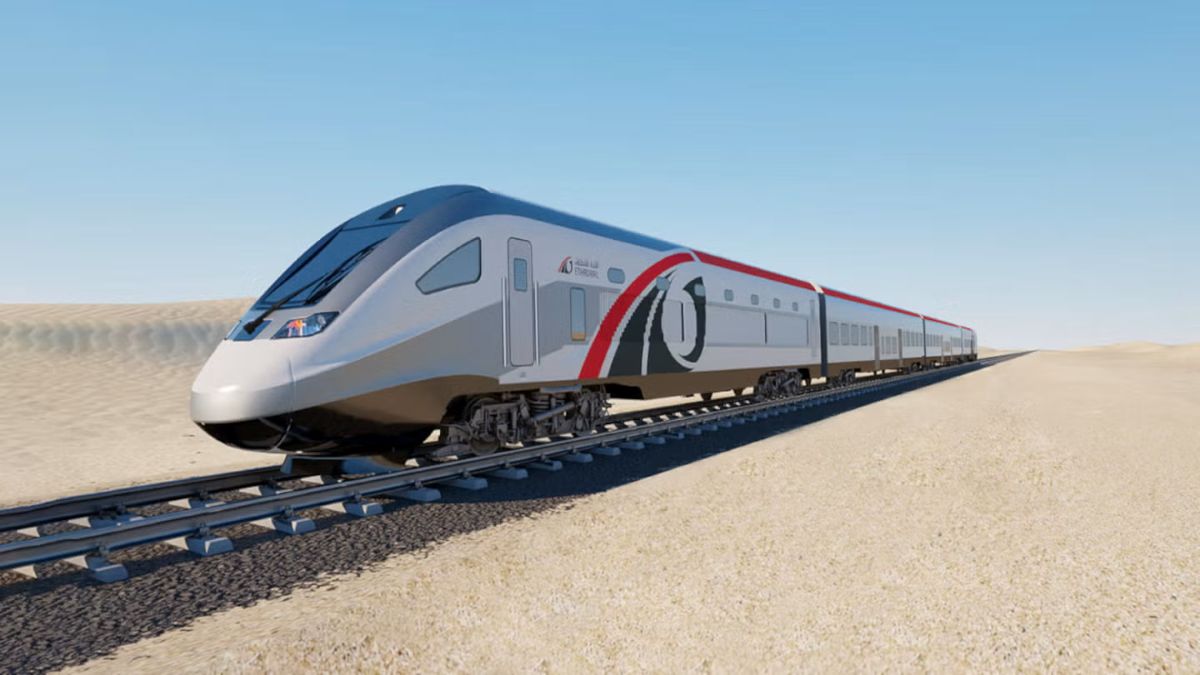
The future rail targets in the UAE include twenty-one million trips per year inter-emirates trips originating from Dubai and Abu Dhabi. The future rail targets demonstrate the importance of Etihad Rail for travel. Those travellers who make use of the conventional network will be in a position to travel to Abu Dhabi through Dubai within 30 minutes. The people residing in Dubai will find a convenient way to travel to Abu Dhabi for work purposes, pleasure and even for meeting their flights. Those travellers who are making use of the conventional network will be able to access the national passenger rail services by September 30th, 2026.
Dubai Train Station Opens a New Chapter for Passenger Travel
The confirmed September opening is for Dubai Train Station at Jumeirah Golf Estates. Etihad Rail announced that the station will open on 30 September 2026, alongside Al Dhaid Train Station.
This is a major step for travellers. It brings Dubai into the first phase of the UAE’s scheduled national passenger railway. The station will serve the conventional Etihad Rail network. This is the railway designed to connect communities and cities across the country.
Etihad Rail had already clarified the Dubai location in February 2026. During a trial passenger journey from Dubai to Fujairah, the company said its initial passenger routes would connect Abu Dhabi through Mohamed bin Zayed City to Dubai at Jumeirah Golf Estates. The route would then continue towards Fujairah’s Al Hilal City station.
Advertisement
Advertisement
This makes Jumeirah Golf Estates the clearest and most important Dubai passenger location in the present rollout. It is the first Dubai station with a confirmed opening date in official material.
The station should still be described carefully. As of the research cut-off of 15 September 2026, it had not opened. It was in a pre-opening stage. Travellers should not treat it as operational until Etihad Rail confirms the commercial launch and booking details.
Advertisement
Advertisement
The official wording also matters. Primary Etihad Rail announcements use the name Dubai Train Station and identify its location as Jumeirah Golf Estates. Other names may circulate online, but the official sources reviewed do not formally apply those names. For accurate travel reporting, the safest wording remains: Dubai Train Station at Jumeirah Golf Estates.
Dubai Is Joining an Existing UAE Passenger Network
The Dubai opening is important, but it is not the beginning of passenger rail in the UAE.
Etihad Rail’s first scheduled national passenger service began on 30 June 2026. The first service left Fujairah at 05:34 and arrived at Mohamed bin Zayed City in Abu Dhabi at 07:19. This created the first operational passenger link on the national rail network.
That detail changes the story. Dubai is joining an expanding system. It is not opening the country’s first passenger station.
The national rollout is planned in phases. After Dubai and Al Dhaid open on 30 September, Etihad Rail’s published schedule lists Liwa and Zayed City for 30 November 2026. The remaining Al Dhafra stations are planned for 30 December 2026. Sharjah is listed for 30 March 2027.
For travellers, this phased plan matters. It suggests a future where rail can link more parts of the UAE in a simple way. Visitors may be able to combine city stays, beach breaks, mountain trips and cultural visits without depending only on cars or domestic flights.
Advertisement
Advertisement
Etihad Rail says its passenger trains can operate at speeds of up to 200 km/h. This is not the same as the separate high-speed project between Abu Dhabi and Dubai. The national service is a conventional passenger railway. It forms one layer of the country’s growing transport network.
Meydan Emerges as Dubai’s Second Etihad Rail Connection Point
The next important Dubai location is Meydan.
Dubai’s Roads and Transport Authority confirmed on 22 April 2026 that the planned Dubai Metro Gold Line will link with Etihad Rail at two locations: Meydan and Jumeirah Golf Estates.
This makes Meydan a confirmed future Etihad Rail integration point within Dubai. It is not simply a possible idea. It appears in RTA’s official rail-planning announcement.
However, travellers and publishers should avoid claiming more than the evidence allows.
RTA has not published a formal Etihad Rail station name such as “Meydan Station”. It has also not provided exact station coordinates. Most importantly, it has not announced an Etihad Rail passenger opening date for Meydan.
Advertisement
Advertisement
The correct description is therefore: a future Etihad Rail connection or interchange at Meydan, with the final official station name and opening date still unspecified.
The Dubai Metro Gold Line itself is scheduled to open on 9 September 2032. However, that date belongs to the Metro project. It does not confirm when an Etihad Rail facility at Meydan will open. The two projects connect, but they do not share the same announced delivery timetable.
This distinction is vital. A Metro opening date should not be presented as an Etihad Rail opening date. Doing so would mislead travellers, investors and the travel trade.
Meydan’s role is still powerful. It points to a more joined-up Dubai. It suggests that the city wants future passengers to move between Metro services and the national rail system more easily. That could make rail travel more useful for visitors staying in central Dubai, business travellers, commuters and residents.
Al Maktoum Airport Area Targets the High Speed Rail Future
The third Dubai location sits near Al Maktoum International Airport. This is part of a separate and ambitious railway story.
In January 2025, Etihad Rail announced a dedicated high-speed train project connecting Abu Dhabi and Dubai. The planned service will be fully electrified. It is designed to reach speeds of up to 350 km/h and reduce travel time between the two emirates to around 30 minutes.
Advertisement
Advertisement
The official announcement marked a bold shift in UAE transport planning. The national passenger railway focuses on wider connections across the Emirates. The high-speed line will focus on a fast Abu Dhabi–Dubai journey.
The high-speed network will include six strategically located stations. In Dubai, the official project information identifies stations near Al Maktoum International Airport and Al Jaddaf.
The Al Maktoum station area could become especially important because of the airport’s wider expansion. Dubai Government said in June 2026 that the first phase of Al Maktoum International Airport development remains on course to begin operations in 2032.
However, the airport date and the rail date must not be mixed together. The 2032 target is for the airport’s first phase. It is not an official opening date for the high-speed Etihad Rail station.
Etihad Rail has not announced the formal name of the station near Al Maktoum International Airport. It has not published its exact coordinates. It has also not announced when the high-speed passenger service will begin.
The correct status is in development.
Advertisement
Advertisement
For travel, the idea remains highly significant. A high-speed stop near a growing airport could eventually strengthen travel between Dubai, Abu Dhabi and international gateways. It could offer a new choice for visitors who want a quicker ground connection between the UAE’s two biggest aviation and tourism centres.
Al Jaddaf Could Become a Key High Speed Gateway
The fourth known Dubai Etihad Rail-linked passenger location is near Al Jaddaf.
The Jaddaf area is one of the Dubai station locations on the future Abu Dhabi–Dubai high-speed network. This creates a striking contrast with the Al Maktoum Airport area. One future high-speed location sits close to Dubai’s expanding southern airport zone. The other sits much closer to established urban areas.
Al Jaddaf already has strategic value in Dubai’s wider transport geography. It sits near major roads, waterways and existing urban rail infrastructure. A future high-speed rail presence in the area could create a stronger link between Dubai’s inner districts and Abu Dhabi.
Still, the present facts must remain clear.
Etihad Rail has not given the station a formal public name. “Al Jaddaf” identifies an area, not necessarily the station’s final brand. Exact coordinates have not been published in the reviewed official material. No commercial opening date has been confirmed.
Advertisement
Advertisement
The correct description is: a planned high-speed passenger station near Al Jaddaf, Dubai.
This is not a conventional Etihad Rail station opening this September. It belongs to the future high-speed system. It should not be placed on the same service timetable as the Jumeirah Golf Estates station.
Etihad Rail’s current high-speed project information says the network is being developed. The January 2025 announcement confirmed that designs had been approved and tenders for project contracts had been issued. But no passenger launch year has been released.
That means travel businesses should watch the project closely without selling it as a finished transport product. The station is a future opportunity, not yet a bookable rail stop.
Dubai’s Rail Story Has Two Different Layers
Dubai’s four known Etihad Rail-linked locations do not represent four stations on one railway line.
This is the key point.
Advertisement
Advertisement
Jumeirah Golf Estates belongs to the national conventional Etihad Rail passenger network. It is scheduled to open on 30 September 2026.
Meydan is a future Dubai point where the Metro Gold Line is expected to integrate with Etihad Rail. The precise Etihad Rail delivery date remains unannounced.
Al Maktoum International Airport area and Al Jaddaf area belong to the separate Abu Dhabi–Dubai high-speed rail project. They are planned high-speed passenger locations, not September 2026 conventional-network stops.
This creates two strong railway layers.
The first layer is the national passenger network. It links the UAE through conventional rail services.
The second layer is the high-speed Abu Dhabi–Dubai corridor. It is planned as a faster, electrified inter-emirate route.
Advertisement
Advertisement
The distinction matters because each system has different speeds, routes, stations and delivery dates. The national network can operate at up to 200 km/h. The high-speed line is planned for up to 350 km/h.
Dubai is therefore not simply gaining “four stations”. It is being positioned as a rail city with connections across the UAE and a future rapid link to Abu Dhabi.
Freight Must Not Be Confused With Passenger Stations
Dubai also has a major Etihad Rail freight story. But freight facilities should not be mixed with these four passenger locations.
Etihad Rail has announced a separate freight terminal at Dubai Industrial City. The facility covers 5.5 million square feet and is designed for a capacity of five million tonnes.
This is a logistics project. It is different from the passenger station at Jumeirah Golf Estates, the future Meydan interchange, and the planned high-speed locations near Al Maktoum International Airport and Al Jaddaf.
The difference is simple. Freight rail moves goods. Passenger rail moves people.
Advertisement
Advertisement
For travel reporting, that difference protects accuracy. Dubai Industrial City should not be described as one of Dubai’s passenger Etihad Rail stations unless official plans later confirm a passenger role.
What Travellers Should Know Before Making Plans
The rail expansion creates excitement, but travellers should plan with care.
The only Dubai Etihad Rail passenger opening date confirmed in the reviewed official sources is 30 September 2026 for Dubai Train Station at Jumeirah Golf Estates.
Travellers should wait for Etihad Rail’s official booking information, fares, journey times, luggage rules and station-access guidance before relying on the service. A station opening announcement does not always provide every practical travel detail at once.
Meydan is a future connection point. Its opening date is not yet official. The two high-speed locations near Al Maktoum International Airport and Al Jaddaf are also future projects. They should not be treated as available travel options today.
Visitors should also note that present Dubai rail maps show current transport infrastructure. They do not act as final station maps for every future Etihad Rail project.
Dubai’s Rail Map Is Becoming Far More Ambitious
The future of rail transport in UAE has been estimated to cater to at least twenty one million long-distance Dubai and Abu Dhabi travelers per annum. However, this is the estimated number of passengers traveling via the rail route. This does not include the number of current rail transport users of the route. The only area where there is an estimated rail opening date is Jumeirah Golf Estates in the year 2026. The rest of the places including Meydan, Al Maktoum International Airport, and Al Jaddaf are still in future plans. Travelers need to be cautious before making their bookings since the advantages of having a railway line connecting the two cities are evident.
Advertisement
