
China Establishes Itself As A Leading Global Destination Delivering Record Revenue Impacting Travel In Xinjiang

Published
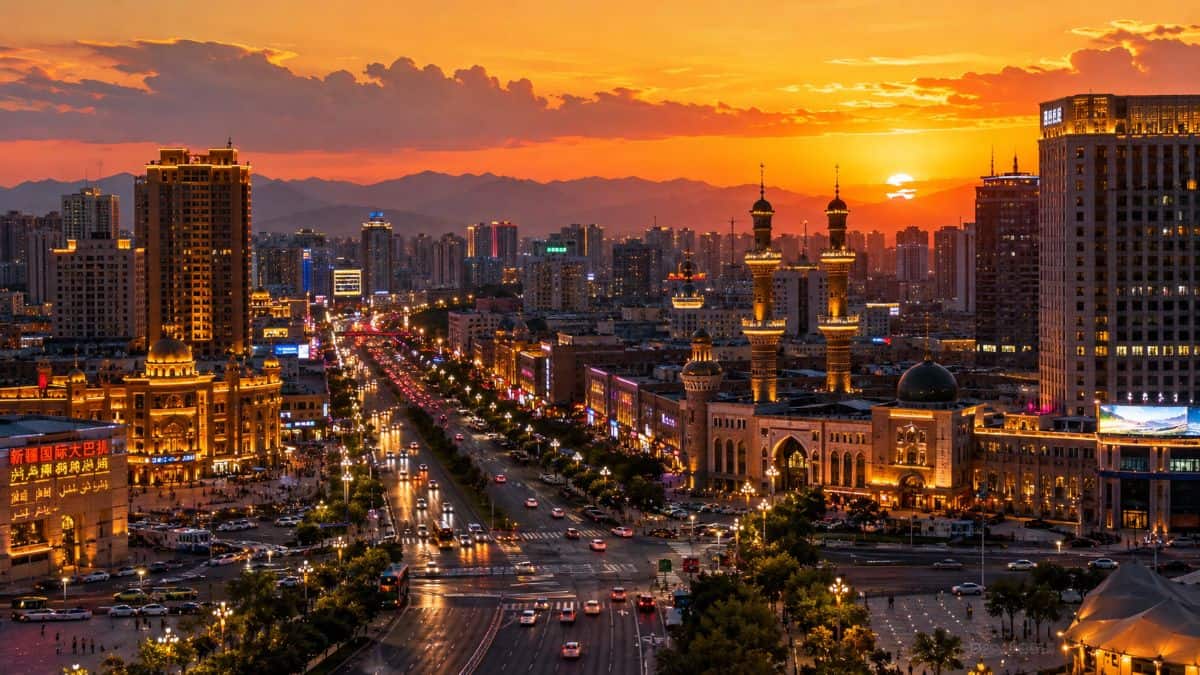
Seeing the horizon for the first time is a jaw dropping moment for many around the world. Xinjiang has a unique combination of desert mixed with snow capped mountains, which brings a lovely scent of newly baked pastries and fir trees through the air. Xinjiang is a varied region filled with some of the world’s most amazing scenery. Xinjiang was once a small part of an old central Asia trade route, but looks to be well behind it now. In 2025 there were 323 million visits recorded, which proves how popular Xinjiang is an there is a great deal of reward from the investment of this region. At almost a land locked position, your idea of getting away from it all in a peaceful travel destination won’t get much better than Xinjiang with its stunning grasslands, lakes and Gobi Desert.
Expanding Winter Sports Infrastructure and Eco-Ski Tourism in the Altai Mountains
Advertisement
Advertisement
The Altai Mountains in northern Xinjiang have gained global recognition as one of the historic cradles of human ski culture, renowned for exceptionally light powder snow and prolonged winter seasons. Significant capital investments have transformed rural valleys like Hemu and Koktokay into world-class winter sports resorts equipped with modern cable systems, snowmaking infrastructure, and luxury alpine lodges. These structural developments effectively convert a seasonal summer destination into a lucrative, year-round tourism ecosystem.
This expansion alters international travel patterns during traditional off-peak months by capturing market share from established European and North American ski destinations. Global winter sports enthusiasts and professional athletic teams are increasingly scheduling multi-week training and leisure trips to Asia’s northern snow belts. Furthermore, the integration of indigenous skiing heritage with high-capacity resort management provides a unique selling proposition that drives long-distance international flight bookings throughout the winter quarter.
Advertisement
Advertisement
Preservation of Intangible Cultural Heritage and Ethno-Tourism Supply Chains
The cultural landscape across historic desert oases such as Kashgar and Turpan is defined by vibrant centuries-old bazaars, traditional mud-brick architecture, complex irrigation systems, and expressive folk arts like the Uyghur Muqam. Commercial frameworks have increasingly prioritized the sustainable integration of intangible heritage into high-yield ethno-tourism models. Local craft production, culinary traditions, and performance arts are systematically preserved through municipal heritage protection initiatives and dedicated cultural centers.
Advertisement
Advertisement
From a global hospitality perspective, the preservation of living cultural heritage drives strong demand for specialized boutique accommodations, curated historical walking tours, and authentic regional experiences. Long-distance travelers prioritize destinations offering immersive, place-based storytelling over generic resort stays. This structural focus on local heritage directly funds community-level micro-enterprises, ensuring that tourism revenues actively support living traditions and regional artisans.
Modernization of Regional Transport Networks and High-Speed Highway Infrastructure
Advertisement
Advertisement
Navigating vast geographic distances across China’s far west has been transformed by massive public engineering achievements. Modern transport networks now include dozens of regional feeder airports, bullet train connections, and extensive highway corridors such as paved expressways cutting through the harsh terrain of the Taklamakan Desert. These engineering marvels dramatically reduce transit times between distant oasis cities, alpine meadows, and high-altitude mountain ranges.
For international travel planners, drastically reduced transit times allow for the creation of compact, high-efficiency travel packages. Expeditions that once required weeks of rugged overland transit can now be completed comfortably within days. Increased transport accessibility lowers logistical friction for aging demographics and luxury travelers, enabling global tour providers to sell comprehensive regional circuits that cover multiple distinct ecosystems in a single itinerary.
Emergence of Astro-Tourism and Wilderness Photography Across High-Altitude Ecosystems
The expansive, sparsely populated terrains of the Pamir Plateau and the Gobi Desert offer some of the clearest night skies and lowest light pollution levels in Eurasia. Recognized as premier locations for celestial observation, these high-altitude plateaus and desert basins are emerging as focal points for international astro-tourism, specialized wilderness photography, and dark-sky wilderness preservation.
Advertisement
Advertisement
This trend taps into a rapidly growing global market of niche travelers seeking remote, unpolluted environments. Industry providers are responding by establishing specialized high-altitude observatories, glamping eco-lodges, and night-sky photography workshops tailored to affluent, gear-intensive adventurers. By diversifying away from traditional sightseeing, destination managers can attract high-spending international clientele focused on scientific, astronomical, and eco-adventure pursuits.
Sustainable Heritage Preservation and Eco-Tourism Balance in Fragile Aquatic Ecosystems
High-altitude ecological sanctuaries such as Kanas Lake and Sayram Lake feature delicate subalpine forests, glacial runoff basins, and rare biodiversity requiring strict environmental oversight. To balance the influx of tens of millions of annual visitors with delicate ecological limits, regional authorities have integrated these aquatic landscapes into national park management frameworks. Strict access controls, electric shuttle fleets, and digital visitor tracking systems mitigate environmental degradation across sensitive zones.
This rigorous management approach serves as a critical benchmark for global eco-tourism operations in high-capacity wilderness areas. By implementing controlled access corridors and waste management infrastructure, fragile alpine environments remain pristine despite high visitor volumes. For global conservationists and eco-conscious travelers, these sustainable practices ensure long-term site viability while demonstrating how large-scale economic development can co-exist with strict natural resource preservation.
Comprehensive Economic Maturation and Large-Scale Job Generation Across Regional Communities
Beyond remarkable numerical growth, the systematic enlargement of the hospitality framework functions as a critical pillar for long-term social stability and local economic empowerment. Recent operational assessments indicate that the expanding market footprint supported over 1 million jobs across diverse commercial sectors. These livelihoods encompass direct service roles such as professional wilderness guiding, luxury hospitality management, transport logistics, and localized artisanal production across both urban hubs and rural settlements.
Advertisement
Advertisement
From an international commercial perspective, this vast employment generation fundamentally elevates service quality standards for incoming foreign visitors. A highly skilled and steady workforce guarantees enhanced safety management, multilingual assistance, and smoother itinerary execution throughout Xinjiang. Ultimately, these structural labor enhancements ensure that cultural traditions and natural assets remain protected while staying fully accessible to future generations of international explorers.
Groundbreaking Financial Yields and Historical Visitor Records Set During Recent Seasons
During the 2025 calendar year, regional administrative documentation recorded monumental milestones across all major performance indicators. The area recorded an astonishing 323 million tourist visits, representing a notable 8% year-on-year increase relative to previous operational cycles. Simultaneously, comprehensive sectoral earnings reached 370 billion yuan (equivalent to roughly $53.04 billion), reflecting a solid 8.4% year-on-year growth in overall economic yield.
This extraordinary financial performance signals a fundamental realignment in traveler preferences toward immersive, nature-focused destinations. Commercial entities within the international travel trade view these figures as strong justification for expanding long-haul flight connectivity and premium lodging facilities throughout Asia. As total visitor spending accelerates, global distribution networks continue to refine their regional offerings to cater to high-yield international clientele.
How Xinjiang’s Exceptionally Diverse Terrain Shapes Global Travel Patterns
The unique physical geography of Xinjiang positions it among the most comprehensive eco-tourism hubs worldwide, boasting eight major categories of natural features. Travelers traversing the area encounter majestic snow-capped mountains, expansive reaches of the Gobi Desert, sweeping grasslands, and crystal-clear alpine lakes. This remarkable concentration includes virtually every natural environment defined within China’s official national evaluation framework, excluding only marine landscapes.
Advertisement
Advertisement
For global travel planners, this structural diversity permits the creation of highly efficient, single-destination itineraries. Voyages that previously required visiting multiple countries across different continents can now be executed seamlessly within one continuous geographic zone. Consequently, global tour operations are restructuring their itineraries to encourage extended stays, directly driving demand for long-distance transport networks, bespoke overland guides, and specialized hospitality services.
Cross-Border Silk Road Transit Corridors and Central Asian Overland Trade Mobility
Xinjiang occupies a strategic geographical position in Central Eurasia, sharing land borders with eight sovereign nations, including Kazakhstan, Kyrgyzstan, Pakistan, and Tajikistan. The systematic development of border transport infrastructure such as high-speed railway linkages, expanded dry ports like Khorgos, and modernized mountain passes along the Karakoram Highway is fundamentally reshaping overland travel routes. These strategic investments position the region as a primary overland gateway, linking East Asian departure hubs directly with neighboring Central Asian destinations.
For global tour operators and expedition planners, this heightened connectivity unlocks multi-country Silk Road itineraries that were previously logistically prohibitive. Cross-border transit permits, streamlined customs processing, and upgraded highway corridors allow international travelers to seamlessly journey through alpine passes and historical trading posts. Consequently, regional transport providers and hospitality ventures along border transit hubs are experiencing an influx of long-haul overland adventurers seeking continuous multi-destination voyages.
A Journey That Leaves an Mark on the Soul
There is something so magical around the Gobi Desert sunset, where sunset light reflects across the rippled sands. The soft wind blowing through the mountain pines to the crystal clear lakes also lends to the magic. Beyond the economic statistics and financial targets, the soul of the tourism revival of Xinjiang is best represented by the bonds created from traveling the ancient trade routes. The essence is found in the smiles of the local hosts as they serve tea, the appreciation of wonderment at the star-studded skies of the Pamir, and the generationally preserved arts and crafts.
While more and more travelers seek out depth, grounding, and wonder in their travels, this area makes a strong case for why we travel at all. Though the new and improved roads and transport will allow millions more travel each year, the journeys of the soul remain the same – A call to south down, take a deep breath and appreciate the beauty of the world that has stood the test of time.
Advertisement
