
Botswana Transforms Chobe River Travel with a Solar Powered Wildlife Cruise

Published
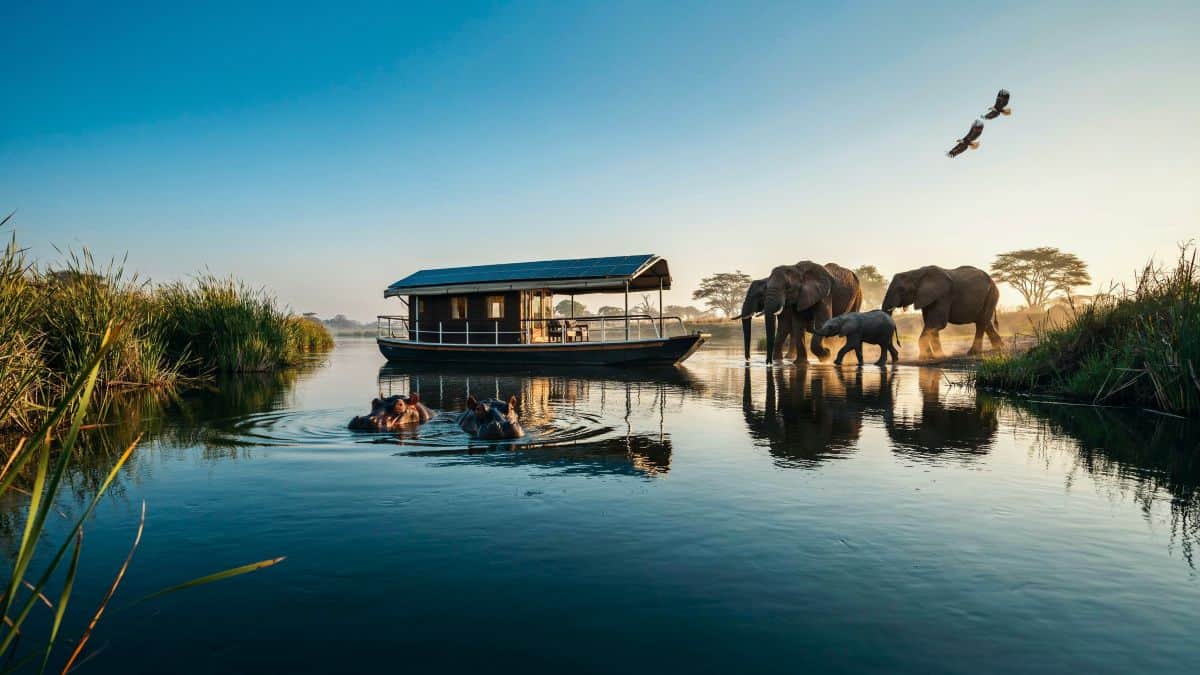
In Botswana, the experience of traveling along the Chobe River gets a boost with a solar-powered wildlife cruise by putting the Pangolin Voyager at the center of a relaxing safari journey. This boat relies on the power of electric engines and the energy from the sun to navigate from one point to another along the river. This means that the visitors have the opportunity to watch the animals from the boat on the Chobe River. There is time on the water for photography tours. The boat also allows for a relaxed way of traveling that enables guests to listen to the sounds of nature.
A powerful new chapter for Botswana and Namibia travel
The Chobe River forms a natural border between Botswana and Namibia. It is one of southern Africa’s great safari waterways. On one bank sits Chobe National Park in Botswana. On the other side lies Namibia’s Caprivi region.
Advertisement
Advertisement
This setting gives travellers a rare cross-border wildlife experience. They can sleep on the river. They can watch animals come to drink. They can join early morning and late afternoon boat trips. They can see the landscape change with the light.
The Pangolin Voyager adds a new layer to this well-known safari setting. It was built in Namibia and operates on the Chobe River beside Botswana’s famous national park. This gives the story a strong African connection from start to finish.
Advertisement
Advertisement
The vessel took nearly two years to create. It was made in Windhoek, Namibia, before being assembled near the Zambezi River and moved to the Chobe. The houseboat is based on the Namibian side of the river. Chobe National Park is directly opposite.
This is not simply a tourism product. It is an example of how travel businesses can use solar power and electric systems in remote places. The vessel aims to reduce engine noise during wildlife viewing. It also reduces the need for traditional generators while guests stay on board.
Advertisement
Advertisement
For travellers, this means a slower and more peaceful safari. For the wider tourism industry, it shows that clean energy can work in a real African tourism operation.
The solar-powered Pangolin Voyager changes the river experience
The Pangolin Voyager is designed as a floating wildlife lodge. It has five cabins. Each cabin has an en-suite bathroom, air conditioning and wide windows. The rooms can be arranged with double or twin beds.
The boat can accommodate up to ten guests. Hosted safari groups are usually smaller. The operator lists groups of no more than eight clients on some photography-focused departures. This keeps the experience small and personal.
The heart of the vessel is its solar and electric system. Solar panels on the roof collect energy from the sun. This electricity can power much of the houseboat and its movement on the river.
The vessel uses four RAD 40 electric drives. Two sit at the front and two sit at the rear. These motors move the trimaran between river moorings at around four to five kilometres per hour.
At this gentle speed, the houseboat can travel quietly and without propulsion emissions. The operator says solar energy feeds directly into the electric drives during daytime cruising.
Advertisement
Advertisement
This matters because the Chobe River is not an ordinary waterway. It is a wildlife-rich place. Loud engines can change the feel of a safari. They can make it harder for guests to hear birds, water movement and animal calls. They can also disturb wildlife.
A quieter boat cannot promise that animals will always come closer. Wildlife behaviour depends on many things, including weather, water levels, time of day and human activity. But a lower-noise boat can create a calmer viewing setting.
The Pangolin Voyager also has a separate eight-seat electric photography boat. It has rotating seats and camera mounts. This small boat takes guests out in the early morning and later in the day, when the light is often best for wildlife photography.
The photography boat recharges from the main houseboat. This creates a linked system where solar-supported electric technology helps both accommodation and river excursions.
The greener claim has a clear and honest limit
The Pangolin Voyager offers a strong clean-energy story. However, the details need to remain clear.
The houseboat is nearly fully electric. Its engines are electric. Solar panels can provide electricity for the vessel. The boat can use this energy to travel between its mooring sites during the day.
Advertisement
Advertisement
But the houseboat does not run without any fuel use at all. The operator says gas is still used for cooking and for heating shower water.
This means the vessel should be described carefully. It is a solar-powered houseboat with electric propulsion. It is not accurate to call the whole experience fully zero-carbon. It is also not accurate to say every part of life on board is powered only by the sun.
This honest point makes the story stronger. Sustainable travel needs facts, not broad claims. A cleaner journey does not have to be perfect to matter.
The move away from petrol or diesel propulsion during river cruising can still make a real difference. Electric motors remove direct exhaust emissions from the boat’s movement. Solar power can reduce the need for conventional onboard electricity generation. Lower engine noise can also improve the safari atmosphere.
The Pangolin Voyager shows that greener tourism is often built step by step. It does not need to wait for one perfect technology. It can begin with changes that work today.
Chobe National Park makes this a major wildlife tourism story
The Pangolin Voyager operates beside Chobe National Park, one of Botswana’s best-known wildlife areas. The Botswana Tourism Organisation says the park covers about 11,700 square kilometres. Its landscapes include floodplains, swamps, woodland and riverfront habitats.
Advertisement
Advertisement
The Chobe River is the park’s northern boundary. It gives animals a vital water source. It also gives travellers a different way to see the park.
The riverfront is especially famous for elephants and Cape buffalo. During the dry winter months, large herds often gather near the water. Visitors may see elephants drinking, bathing and crossing between riverbank areas.
The park also supports hippos, crocodiles, giraffes, antelope, monkeys and many bird species. Botswana Tourism Organisation says more than 460 bird species have been recorded in Chobe National Park.
This is why boat travel has a strong place in the local tourism economy. River cruises allow visitors to view animals from the water. They can watch birds on the banks. They can see hippos and crocodiles in areas that may be harder to reach by road.
The value of the Pangolin Voyager lies in how it blends this natural setting with a smaller and quieter travel model. It does not bring hundreds of people into the river at one time. It works as a small floating lodge and photography safari platform.
That approach fits the needs of travellers who want more time in nature. It also suits people who want to avoid large crowds and noisy mass-tourism settings.
Advertisement
Advertisement
March 2026 research gives electric boats fresh importance
The story gained added weight in 2026 through research on underwater boat noise.
A peer-reviewed study published in the Journal of the Acoustical Society of America compared two similar boats. One used a conventional internal combustion outboard engine. The other used an electric outboard.
The study found that the electric boat had lower underwater noise across the tested speed range. At four knots, the electric vessel recorded a broadband source level 43 decibels lower than the conventional boat.
The gap became smaller at higher speeds. At 20 knots, the difference was 10 decibels. This happened because faster movement can create cavitation. Cavitation occurs when bubbles form and collapse around propellers. It can create underwater noise even when a boat uses electric propulsion.
The research gives an important lesson. Electric boats can be quieter, especially at slower speeds. But electric power does not remove every form of noise. Speed, propeller design and motor design still matter.
This point is especially relevant for safari tourism. Wildlife cruises often move slowly. They stop often. They travel close to sensitive riverbanks. In these conditions, lower-noise propulsion can be useful.
Advertisement
Advertisement
A March 2026 update from RAD Propulsion said the research work extended to vessels operating on the Chobe River. The update identified Pangolin Voyager and an electric photography boat as commercial craft using the RAD system in the area.
The update said comparisons took place between the RAD-powered hotel boat and houseboats from other operators. It reported a significant reduction in underwater noise from the electric propulsion system.
This gives the Chobe story a fresh 2026 news hook. The vessel is not only a solar-powered travel product. It is also part of a wider conversation about quieter boating in sensitive wildlife waters.
Quieter water travel may improve the safari feeling
Wildlife travellers often want silence. They want to hear an elephant splash in the river. They want to listen to fish eagles. They want to hear hippos call after dark.
Traditional boat engines can make these moments harder to enjoy. Noise and vibration can also affect photography. A quiet boat can help photographers keep cameras steady. It can help guides speak more softly. It can create a calmer mood.
The Pangolin Voyager’s electric photo boat is designed around this idea. Guests can go out at first light and before sunset. The boat has camera mounts and rotating seats. These features help visitors follow animals without changing position too often.
Advertisement
Advertisement
The operator says the electric system allows trips without the usual engine noise and vibration. That is useful for photography, but it should not be treated as a guarantee of close wildlife encounters. Wild animals remain free. A quiet boat can reduce disturbance, but it cannot control nature.
The deeper value is the visitor experience. A slow electric boat makes the journey part of the safari. The river is no longer only a route between stops. It becomes a place to watch, listen and wait.
This is a powerful tourism idea. It replaces speed with attention. It gives travellers more reason to enjoy the water itself.
The experience includes both Botswana and Namibia
The Chobe River makes the Pangolin Voyager a cross-border travel story. The boat is based on the Namibian side. Chobe National Park is on the Botswana side. Guests can travel through a landscape shaped by both countries.
This gives travel planners a useful regional product. A Chobe itinerary can connect with Kasane in Botswana. It can also link with Victoria Falls, the Okavango Delta, Zimbabwe, Zambia and Namibia’s wider safari areas.
The published Pangolin itinerary includes three nights on the houseboat and three nights at the Pangolin Chobe Hotel. It includes twice-daily game activities, photography support, meals and drinks. The operator lists a 2026 price of US$5,495 per person for the package, with a separate single supplement.
Advertisement
Advertisement
Travellers should check the latest dates and prices before booking. The river programme can change because water conditions matter. The vessel uses three mooring points, but high or low water can affect access.
This is normal for nature tourism. It also adds a sense of adventure. The river decides part of the journey.
The product may appeal most to people who enjoy wildlife, photography and small-group travel. It is not a large entertainment cruise. It is a slow safari stay shaped by nature and light.
The vessel received a 2026 award nomination
Pangolin Voyager gained more attention in August 2026 after being named a nominee for Africa’s Best River Cruise Ship at the World Cruise Awards.
The nomination came about one year after the new vessel entered service. The awards list placed Pangolin Voyager alongside established river cruise brands and Nile vessels.
The nomination is a current news point. But it must be described correctly. It is a nomination, not a confirmed victory. The official awards page says voting has closed.
Advertisement
Advertisement
The recognition still matters for the travel sector. It shows that a small solar-powered safari houseboat has entered a wider African river-cruise conversation. It also shows that travellers and industry groups are paying more attention to intimate wildlife products.
The vessel stands apart from a standard river cruise in Egypt or Europe. It does not focus on city sightseeing, large dining rooms or major ports. Its appeal comes from wildlife, photography, solar power and a quieter river setting.
This makes it a useful example of how African cruising can take many forms. River travel does not always mean a large vessel. It can also mean a small floating lodge in a national-park landscape.
Africa’s cruise future may become smaller and quieter
The Pangolin Voyager does not prove that every African cruise operation will soon use solar power. Large ships need much more energy. Ocean vessels face different technical needs. Long journeys also create different challenges.
Still, the Chobe model offers a clear lesson. Smaller vessels travelling at lower speed may have more options for electric propulsion and solar energy.
The idea can be especially useful in lakes, rivers, lagoons and protected wildlife areas. These places often need slower operations. They may benefit from reduced engine noise. They may also attract travellers who want a more nature-led experience.
Advertisement
Advertisement
Africa has many waterways where tourism and conservation must work together. The Chobe River is one example. The Nile, Lake Kariba, the Okavango waterways and Indian Ocean island routes all show how water travel supports visitor economies.
Each place needs its own plan. A vessel that works on Chobe may not work on the open sea. But the core idea is clear. Cleaner energy, quieter movement and smaller guest groups can add value in sensitive destinations.
The future of tourism will not depend only on bigger hotels or more flights. It will also depend on better ways to move through places that travellers come to protect and enjoy.
What travellers should know before planning a Chobe river safari
Namibia and Botswana are the countries where green safari tours of the Chobe River have been arranged by Pangolin Voyager. The vessel is small in size and works on solar energy. It allows tourists to feel closer to nature as well as move silently at the river ports using electricity and solar energy. In addition to this, tourists have the chance to take up photo safaris and see elephants, birds, and other animals in the river. Nevertheless, this tour mission is accomplished honestly since fuel is needed for cooking and heating water.
Advertisement
