
Canada Freight Movement Stays on Track as CPKC Manages IBEW Strike With Contingency Plans

Updated
Published
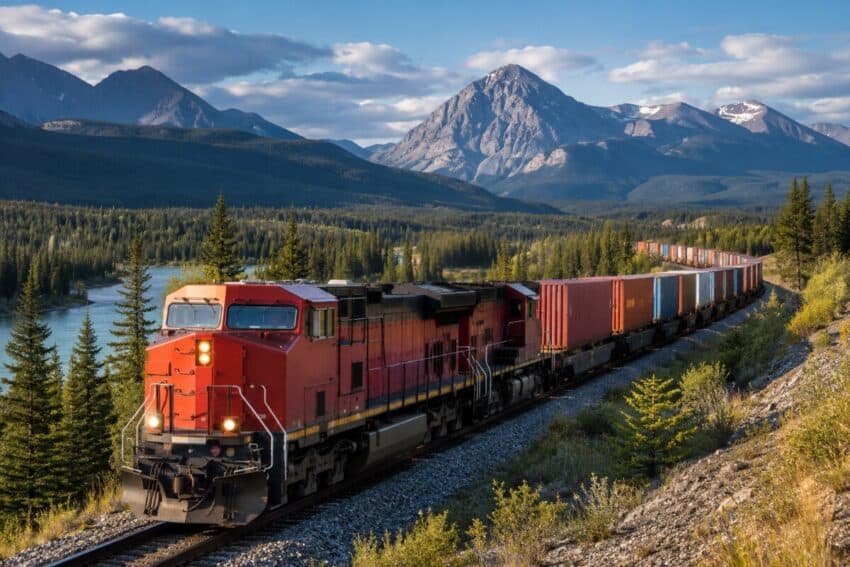
Image generated with Ai
Canada rail operations remained active after Canadian Pacific Kansas City, widely known as CPKC, said it had put contingency plans into action during a strike by Signals and Communications employees represented by the International Brotherhood of Electrical Workers Canadian Signals and Communications System Council No. 11.
The labour action began at 08:00 Mountain Daylight Time on 31 May 2026 after the union rejected the company’s latest contract offers. CPKC said safe and efficient rail service had continued across Canada. The development is important because CPKC forms a major part of Canada’s freight rail network and supports movement of goods across the country and into wider North American trade routes.
Advertisement
Advertisement
The strike involves nearly 300 Signals and Communications employees. These workers support railway signalling and communications systems across the CPKC network. Their work is closely tied to rail safety, operating reliability, and the smooth movement of trains over long distances.
Why the CPKC IBEW Strike Matters for Canada
The CPKC IBEW strike matters because rail is not a small transport story in Canada. It is a national supply chain issue. Canada depends on railways to move bulk goods, container traffic, agriculture products, natural resources, manufactured items, and cross-border freight.
Advertisement
Advertisement
Transport Canada describes rail as a critical part of the national transport system. It serves nearly every part of the Canadian economy. It connects domestic producers with the United States and international markets through coastal ports. That gives this dispute a wider business and logistics impact, even though CPKC has said operations are continuing.
The strike also comes at a time when the rail sector remains central to national freight movement. Statistics Canada reported that Canadian rail transportation operating revenues reached 20.9 billion Canadian dollars in 2023. Freight revenues accounted for most of that activity. Total freight tonnage moved by rail also reached 325.6 million tonnes in 2023, the highest level since 2019.
Advertisement
Advertisement
For shippers, ports, manufacturers, farmers, exporters, and logistics planners, the key message is continuity. CPKC says operations are being maintained. However, the labour dispute remains important because Signals and Communications employees perform specialised work that supports railway infrastructure.
Key Facts on the Canada CPKC Strike
| Category | Confirmed Detail |
|---|---|
| Main country | Canada |
| Company involved | Canadian Pacific Kansas City |
| Common company name | CPKC |
| Union involved | IBEW Canadian Signals and Communications System Council No. 11 |
| Worker group | Signals and Communications employees |
| Approximate workers involved | Nearly 300 |
| Strike start time | 08:00 Mountain Daylight Time |
| Strike start date | 31 May 2026 |
| Company position | Rail operations continue under contingency plans |
| Union position | Workers withdrew services after no negotiated settlement |
| Main issues raised by union | Wages, expenses, retention, recruitment, work-life balance |
| Main public impact | Freight rail continuity, rail safety systems, Canadian supply chain monitoring |
CPKC Says Safe Rail Service Has Continued
CPKC said it implemented contingency plans to maintain railway operations across Canada after the union rejected its latest contract offers. The company also stated that safe and efficient rail service had continued.
Advertisement
Advertisement
This is the central news point. Canada’s rail network has not stopped under the company’s current operational plan. The company had also said before the strike that it had prepared measures to continue serving customers and the Canadian economy if a work stoppage occurred.
CPKC’s position is that it has made proposals with wage and benefit increases that it considers consistent with other collective agreements across Canada. The company also continues to favour binding arbitration as a path to end the strike.
For customers, this means CPKC is presenting the dispute as a labour issue that has not halted national railway operations. For workers, the dispute remains tied to unresolved workplace and compensation concerns.
IBEW Workers Raise Pay, Retention and Work-Life Concerns
The union said its members lawfully withdrew services after the 72-hour strike notice expired and no agreement was reached. IBEW System Council No. 11 said the affected workers operate across Canada, from Vancouver to Montréal.
Advertisement
Advertisement
The union described Signals and Communications work as highly skilled and safety-sensitive. These employees install, maintain, test, and repair railway signalling and communications systems across the CPKC network.
The union also said members had backed strike action with a 96% strike mandate vote. Its stated concerns include wages, employee expenses, extensive on-call duties, demanding schedules, recruitment challenges, retention problems, and work-life balance.
This makes the dispute more than a simple wage matter. It also points to pressure inside a specialised railway workforce. The union has linked the dispute to the ability to keep experienced employees in the Signals and Communications department.
Labour Process Behind the Canada Rail Strike
Canada’s federal labour framework sets steps before a legal strike or lockout can occur. These steps include notice to bargain, conciliation, a cooling-off period, a strike vote, maintenance of activities requirements, and a 72-hour notice.
The IBEW strike at CPKC followed a 72-hour strike notice. The union also stated that federally mandated conciliation and mediation processes had been completed before the strike began.
This matters because federally regulated transport disputes can affect national supply chains. Rail is a high-impact sector. When labour talks fail, both employers and unions must work within federal labour rules before a legal work stoppage can begin.
Advertisement
Advertisement
In this case, both sides are presenting different parts of the same dispute. CPKC is focusing on continuity of rail operations and its contract offers. IBEW is focusing on member concerns and unresolved bargaining issues.
Canada Rail Freight Remains a Major Economic Backbone
| Rail Indicator | Latest Confirmed Context |
| Canadian rail operating revenues | 20.9 billion Canadian dollars in 2023 |
| Rail freight revenues | 18.8 billion Canadian dollars in 2023 |
| Freight share of rail operating revenue | 90.1% in 2023 |
| Total rail freight tonnage | 325.6 million tonnes in 2023 |
| Key rail freight role | Heavy bulk goods and container traffic over long distances |
| Main Class I freight railways in Canada | Canadian National and Canadian Pacific |
| CPKC network position | Single-line rail link across Canada, the United States, and Mexico |
The scale of Canada’s rail economy explains why this story has national importance. Rail is closely connected to food movement, energy supply chains, manufacturing output, resource exports, retail distribution, and port activity.
Transport Canada notes that Canada’s rail system moves freight to and from the United States and international markets through coastal ports. It also supports passenger lines across the country. The freight sector focuses on heavy commodities and container traffic across long distances.
CPKC is especially important because it is the first single-line railway linking Canada, the United States, and Mexico. Its network provides access to major ports from Vancouver and Atlantic Canada to the Gulf Coast and Lázaro Cárdenas in Mexico.
That cross-border position gives the Canada CPKC strike a wider North American trade angle.
What This Means for Shippers and Travellers
For freight customers, the current message is that CPKC rail operations are continuing. Businesses using CPKC should still monitor company updates, shipment notices, and service communications.
Advertisement
Advertisement
For ports and exporters, the focus will remain on network reliability. Any extended labour dispute can create concern in planning, even when operations continue. The most important issue is whether contingency plans remain strong enough if the strike continues.
For travellers, the direct impact appears more limited because this dispute is centred on CPKC Signals and Communications employees, not a passenger airline or airport system. However, rail infrastructure and national supply chains can still affect wider travel and tourism indirectly. Tourism businesses depend on goods, supplies, food, retail products, and event logistics that often move through national freight networks.
Hotels, restaurants, event operators, cruise ports, tour suppliers, and regional businesses all depend on smooth logistics. If rail pressure grows, the effects can move beyond rail yards and into local economies.
Canada Rail Strike Watch Points
| Stakeholder | What to Monitor |
| Freight customers | CPKC service alerts and shipment updates |
| Exporters | Port access, inland rail movement, and commodity flow |
| Manufacturers | Delivery timelines and inventory planning |
| Agriculture sector | Grain, canola, potash, and bulk commodity movement |
| Tourism businesses | Supply deliveries for hotels, events, ports, and restaurants |
| Travellers | Any secondary disruption tied to supply chain or rail-linked services |
| Labour observers | Bargaining progress and possible arbitration movement |
Conclusion
Canada’s rail network remains under close watch as CPKC maintains operations during the IBEW Signals and Communications strike. The company says contingency plans are keeping rail service moving, while the union says workers withdrew services after unresolved concerns over wages, expenses, retention, and work-life balance.
For Canada, this is not only a labour story. It is a supply chain story. Rail connects farms, factories, ports, retailers, exporters, tourism businesses, and cross-border markets. As talks remain the key path forward, the main question is whether operational continuity can hold while both sides search for a settlement.
Advertisement
