
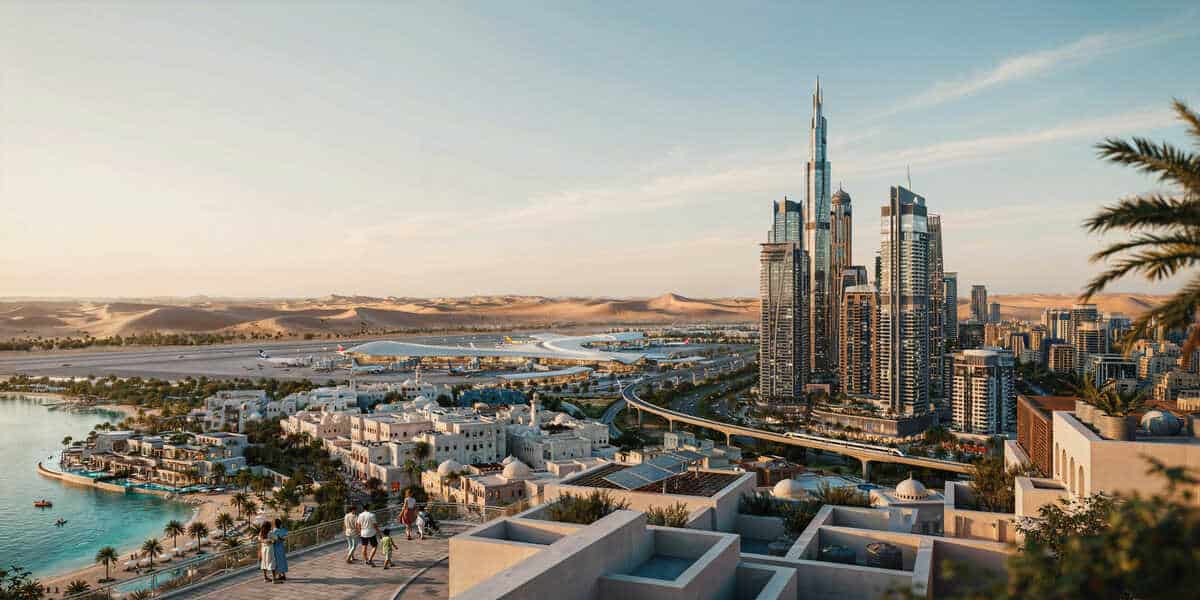
Image generated with Ai
Middle East is one of the strongest performing regions within Travel and Tourism. The region is increasingly the world’s fastest growing travel market by 2036, with countries in the Middle East heavily investing in the development of new and better connectivity networks, both domestically and internationally, an advanced and comprehensive tourism services and products, and luxury travel experiences. While the region currently faces many challenges, the relatively recent shift away from reliance on oil, in combination with the other investment growth drivers, will enable the region to realize its long-term goal of domestic and international tourism and Travel leadership.
Despite facing temporary challenges, the Middle East is building a new tourism era led by Saudi Arabia, the UAE, Oman, and Qatar. With billions being invested in infrastructure, luxury experiences, cultural destinations, and global aviation links, the region is moving towards becoming a major force in international travel. The latest outlook shows that short-term disruption cannot slow the long-term ambition of a region determined to redefine global tourism.
The Middle East tourism industry is entering a historic new era. Despite facing short-term challenges in 2026, the region is expected to become the world’s fastest-growing Travel & Tourism market over the next decade. New forecasts from the World Travel & Tourism Council (WTTC) reveal that temporary disruption will not stop the Middle East from achieving long-term tourism success.
The region is preparing for a powerful comeback driven by massive investment, improved connectivity, luxury tourism growth, cultural experiences, and ambitious national development plans. Saudi Arabia, the United Arab Emirates, Oman, and Qatar are leading this transformation as they reshape the Middle East into one of the most influential tourism destinations on the planet.
Advertisement
Advertisement
According to WTTC’s Economic Impact Research, the Middle East Travel & Tourism sector is expected to experience a temporary decline in 2026 due to geopolitical challenges affecting travel flows and aviation networks. However, the same research highlights a much stronger future, with the region projected to grow faster than any other global tourism market between 2026 and 2036.
By 2036, Middle East Travel & Tourism GDP is expected to reach $605 billion, creating a new chapter in global tourism growth.
The Middle East tourism sector is currently experiencing a period of uncertainty. WTTC forecasts that the region’s Travel & Tourism GDP will decline by 14.5% in 2026, falling from $386 billion in 2025 to $330 billion.
The slowdown is linked to geopolitical disruptions that have affected air routes, international travel confidence, and visitor movements across the region.
Advertisement
Advertisement
However, this decline is expected to be temporary. The Middle East continues to maintain some of the strongest tourism foundations in the world.
The region remains a critical global aviation hub, connecting travellers between Asia, Europe, and Africa. Around 14% of international passengers worldwide travel through Middle Eastern aviation networks. This means one in every seven international travellers depends on the region’s airports and airlines.
This strong connectivity gives the Middle East a major advantage. Once stability improves, travel demand is expected to recover quickly.
The region’s governments and tourism authorities are already preparing for future growth through infrastructure development, destination expansion, and investment programmes.
The biggest message from WTTC’s forecast is clear: the Middle East’s tourism future remains exceptionally strong.
Between 2026 and 2036, the region’s Travel & Tourism sector is expected to expand at an annual growth rate of 6.3%. This will make the Middle East the fastest-growing tourism region in the world.
The sector is projected to reach $605 billion by 2036, reflecting the impact of major tourism strategies and economic diversification plans.
The transformation is being driven by four major tourism markets:
Together, these countries generated $272 billion in Travel & Tourism GDP in 2025. By 2036, their combined tourism economies are expected to reach $435 billion.
This represents more than $163 billion in additional economic value.
The growth shows how Gulf countries are moving beyond traditional economic models. Tourism is becoming a central part of national development strategies, creating jobs, attracting investment, and strengthening international connections.
Saudi Arabia has become the biggest tourism transformation story in the Middle East.
The Kingdom is using tourism as a key pillar of Vision 2030, a national strategy designed to diversify the economy and create new industries beyond oil.
WTTC identifies Saudi Arabia as one of the strongest tourism growth markets in the region. Travel & Tourism contributes 14.1% of the country’s GDP, while international visitor spending is expected to more than double over the next decade.
Saudi Arabia is investing billions into tourism infrastructure and new visitor experiences.
The country is developing:
Destinations such as AlUla and major coastal developments are changing the global image of Saudi Arabia and attracting travellers searching for unique experiences.
The Kingdom also recorded strong growth in Travel & Tourism investment. WTTC reported that tourism investment increased by 19.4% in 2025, supported by government reforms, private-sector participation, and large-scale development projects.
Saudi Arabia’s tourism strategy represents one of the largest destination transformations in modern travel history.
The United Arab Emirates remains one of the most successful tourism markets in the Middle East.
The country has built a globally recognised tourism ecosystem based on world-class airports, international airlines, luxury hotels, business events, and entertainment attractions.
WTTC estimates that Travel & Tourism contributes 11.9% of the UAE’s GDP and supports 13.6% of total employment.
The UAE also benefits from nearly $57 billion in international visitor spending, highlighting its strong global appeal.
Dubai and Abu Dhabi continue to attract millions of visitors through their combination of:
The UAE Government’s Tourism Strategy 2031 aims to strengthen the country’s position as one of the world’s leading tourism destinations.
The strategy focuses on increasing tourism’s economic contribution, attracting investment, improving visitor experiences, and expanding global competitiveness.
The UAE has already demonstrated how long-term planning and infrastructure investment can transform tourism into a major economic force.
Oman is building a different tourism identity within the Gulf region.
While some destinations focus heavily on luxury and urban attractions, Oman is developing tourism around authenticity, nature, culture, and heritage.
WTTC forecasts that Oman’s Travel & Tourism economy will grow from $7.9 billion to $12 billion by 2036.
The country’s tourism strengths include:
Oman’s approach focuses on sustainable destination development. It aims to attract travellers who want meaningful experiences rather than only large-scale tourism.
Investment in infrastructure and visitor services is helping Oman become an increasingly attractive international destination.
The country’s growth shows that the future of Middle East tourism will not depend on one single model. Different destinations will attract different types of travellers.
Qatar has emerged as another important player in Middle East tourism growth.
The country has strengthened its international profile through aviation, hospitality, major events, and modern infrastructure.
WTTC highlights Qatar’s strong tourism contribution, with visitor spending accounting for 94.1% of total services exports.
Tourism has become a major part of Qatar’s economic development strategy.
The country benefits from:
Qatar continues to use its global connectivity and modern facilities to attract visitors from around the world.
Its tourism development demonstrates how smaller markets can achieve global influence through focused investment and strategic planning.
Investment remains the biggest factor supporting the Middle East’s tourism expansion.
Governments across the region are investing heavily in airports, hotels, attractions, transportation systems, and digital tourism solutions.
These investments are creating destinations designed for the future traveller.
The Middle East is targeting multiple tourism segments, including:
Tourism is no longer viewed only as a visitor industry. It is becoming a powerful economic development tool.
The sector creates employment, encourages foreign investment, supports local businesses, and strengthens global connections.
The region is building tourism ecosystems that combine modern infrastructure with cultural heritage and unique experiences.
WTTC research highlights that tourism destinations often recover strongly after periods of disruption.
Successful recovery depends on effective government policies, cooperation between public and private sectors, clear communication, and continued investment.
The Middle East has shown resilience during previous global challenges.
The current difficulties affecting travel flows are expected to create temporary pressure rather than permanent damage.
The region’s strong infrastructure, investment pipeline, and long-term tourism strategies provide a solid foundation for recovery.
The Middle East is preparing for one of the biggest tourism transformations in the world.
Although 2026 may bring short-term challenges, the region’s long-term outlook remains highly positive.
Saudi Arabia, the UAE, Oman, and Qatar are leading a new tourism era based on investment, innovation, connectivity, and destination development.
By 2036, the Middle East is expected to become the world’s fastest-growing Travel & Tourism region, proving that strategic vision and sustained investment can turn challenges into opportunities.
The region’s tourism story is no longer only about recovery. It is about building a powerful global travel empire for the future.
The Middle East tourism story is entering a defining moment. While the region may face temporary challenges, its long-term direction remains remarkably strong. The combination of ambitious government strategies, record investment, world-class infrastructure, and unique travel experiences is creating a new era for tourism across the region.
Saudi Arabia, the UAE, Oman, and Qatar are not simply rebuilding tourism; they are reshaping how the world views the Middle East as a travel destination. From luxury resorts and cultural landmarks to advanced airports and unforgettable experiences, the region is creating opportunities for travellers and businesses alike.
Middle East Travel and Tourism growth is set to accelerate as Saudi Arabia, the UAE, Oman, and Qatar invest heavily in infrastructure, connectivity, and destination development to drive the region’s rise as the world’s fastest-growing tourism market by 2036. Despite short-term challenges, the region’s ambitious tourism plans and strong economic vision are creating a powerful foundation for long-term global travel leadership.
The journey ahead will require resilience, cooperation, and continued focus on sustainable growth. But with strong foundations already in place, the Middle East is positioned to emerge as one of the most influential forces in global tourism. By 2036, the region’s transformation could stand as one of the greatest tourism success stories of the modern era.
Advertisement
Tags: Gulf tourism investment, Middle East tourism growth, Middle East travel industry, Travel and Tourism forecast 2036, Travel News
Advertisement
Advertisement













Saturday, September 5, 2026

Friday, September 4, 2026
Saturday, September 5, 2026

Saturday, September 5, 2026

Thursday, September 3, 2026

Wednesday, September 2, 2026

Saturday, September 5, 2026
Saturday, September 5, 2026


