
Buenos Aires Sets the Pace for Santiago and Bogotá as Summer Holiday Travel Costs Trigger a South American City-Break Showdown

Published
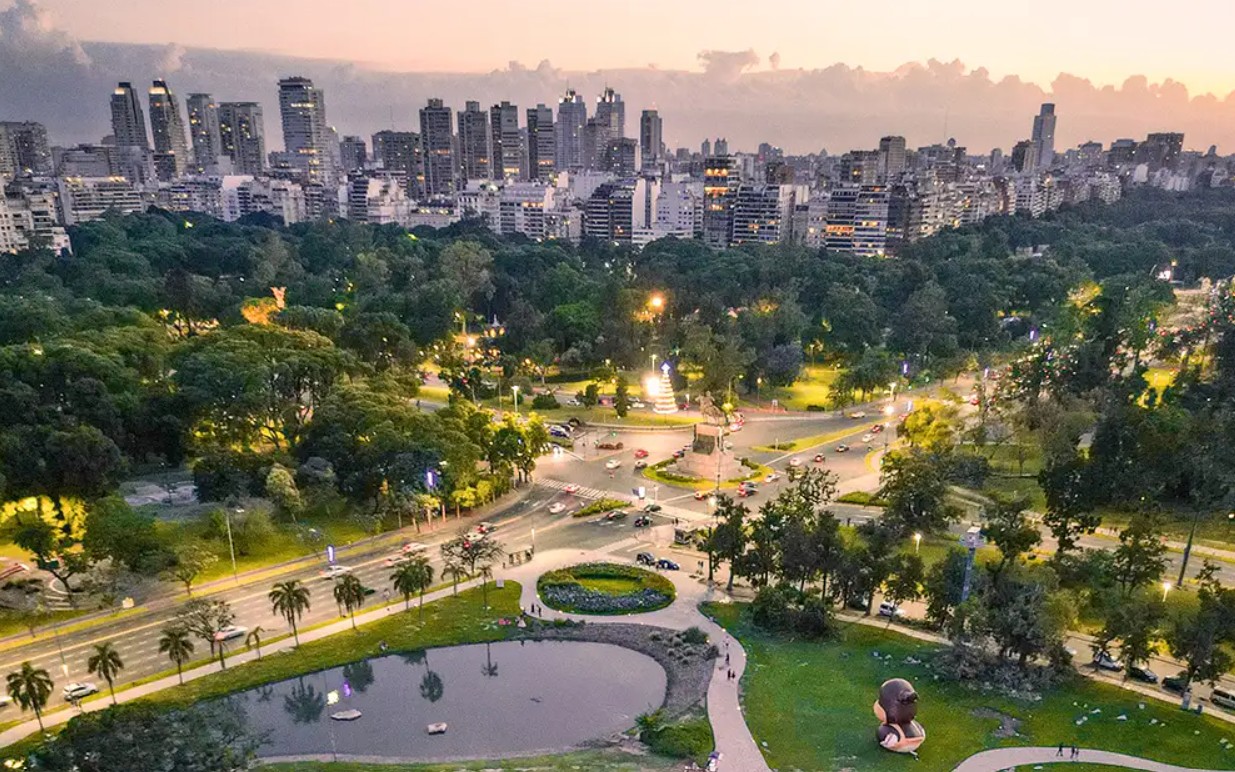
Planning a South American getaway in 2026 requires understanding the shifting economic landscape across major destinations. With South American city-break travel costs 2026 fluctuating wildly due to currency shifts, tourism policy updates, and regional inflation, budget planning has never been more critical. Buenos Aires currently sets the pace as an incredibly affordable hub, while Santiago faces declining regional arrivals and Bogotá surges with impressive tourism growth rates. This comprehensive analysis uses official government data to explore the latest economic implications, industry impacts, and future outlooks for travellers navigating these vibrant capitals. Discover exactly where your holiday travel budget goes furthest.
Background: The New Economic Reality of South American Tourism
The tourism sector across Latin America has undergone a significant recalibration following post-pandemic economic shocks, currency realignments, and shifting geopolitical realities. As of October 2026, the South American city-break travel costs 2026 reflect a broader macroeconomic shift.
The World Travel & Tourism Council (WTTC) projects that Travel & Tourism GDP across Central and South America will expand by 4.1% by the end of 2026, surpassing global averages. However, the economic reality on the ground for travellers and local businesses remains deeply fragmented. While the South American tourism market is projected to swell to a valuation of over USD 117 Billion in 2026, the distribution of these inbound tourism revenues is heavily skewed by foreign exchange rates, local inflation, and targeted government interventions.
In this environment, three major hubs—Buenos Aires, Santiago, and Bogotá—have emerged as case studies in how macroeconomic policy directly influences the tourism industry and everyday travel costs.
Advertisement
Advertisement
Latest Official Developments & Government Announcements
Argentina’s Pro-Tourism Economic Adjustments
Argentina’s government has actively positioned tourism as a critical pillar for foreign currency acquisition. Following sustained economic overhauls throughout 2024 and 2025, the Argentine Secretariat of Tourism, Environment, and Sports (Turismo, Ambiente y Deportes) has confirmed historic inbound tourist numbers. Earlier in 2026, official data recorded peak hotel occupancies nationwide, reaching up to 90% in select districts and sustaining heavy footfall in the capital.
For the average international tourist, this has cemented Buenos Aires as arguably the most competitive city-break destination globally. Favourable exchange rates empower tourists to experience high-end luxury at a fraction of Northern Hemisphere prices.
Advertisement
Advertisement
Chile’s Demographic Shift in Tourism
Across the Andes, Santiago is navigating a distinctly different scenario. The Chilean National Tourism Service (SERNATUR), through its Tourism Statistics Information System (SIET), reported a complex demographic pivot as of August 2026. Chile recorded 344,937 foreign tourist arrivals in August 2026, representing a 19.5% year-on-year drop.
Crucially, this decline is almost exclusively attributed to a massive 57.5% reduction in Argentine visitors, whose weakened purchasing power has priced them out of the Chilean market. Conversely, Brazil has officially overtaken Argentina as the primary source market for Chile, with long-haul markets like Europe, North America, and Asia experiencing a combined 12.3% growth. The Undersecretariat of Tourism anticipates closing 2026 with roughly 5 to 5.2 million total international arrivals.
Colombia’s Structural Policy for 2026
In Bogotá, the Ministry of Commerce, Industry, and Tourism (MINCIT) continues to implement the Política de Turismo 2022 – 2026. This strategic framework focuses heavily on sustainable tourism, reindustrialisation, and strengthening domestic infrastructure to support inbound growth. Colombia is officially projected by industry intelligence to register the steepest Compound Annual Growth Rate (CAGR) in the region at 9.03% leading into 2031, heavily driven by strong government promotion and enhanced air connectivity.
Statistics: Breaking Down South American City-Break Travel Costs 2026
To understand how these macroeconomic trends impact the consumer, one must examine the daily financial requirements for travellers. Below is the verified data reflecting the South American city-break travel costs 2026.
Buenos Aires: The Value Proposition
As of mid-to-late 2026, Buenos Aires operates on three distinct budgetary tiers that offer unprecedented value:
- Budget / Backpacker: US$25 to US$55 per day. This covers a hostel dorm bed (US$9–$18), local transport (under US$3 daily using a SUBE card), and affordable local meals like empanadas or *menú del día* (US$8–$18).
- Mid-Range: US$54 to US$160 per day. This facilitates private boutique hotel rooms, traditional parrilla dinners with local Malbec wine, and paid cultural tours.
- Luxury: US$180 to US$300+ per day. At this tier, travellers access 5-star accommodations, private transfers, and fine-dining tasting menus that would easily cost triple in London or New York.
The single largest expense remains international airfare, with round-trip flights from major global hubs into Ezeiza International Airport ranging heavily depending on the season.
Advertisement
Advertisement
Santiago: Stabilised Pricing but Higher Baselines
Santiago remains a stronger economy with a relatively stable currency, meaning travel costs are notably higher than in Argentina.
- Accommodation in Santiago requires a higher baseline, with mid-range hotels often starting closer to US$80–$120 per night.
- Dining out is aligned with standard Western pricing; a mid-range restaurant meal often exceeds US$25–$35 per person.
- Official statistics show that while local operators have faced reduced overall demand, prices have not correspondingly dropped.
Bogotá: The Emerging Middle Ground
Bogotá presents a balanced financial landscape. Thanks to MINCIT’s initiatives and the expansion of low-cost carriers across the region, Bogotá serves as a highly competitive mid-range option. It avoids the hyper-inflationary complexities of Argentina while generally undercutting the higher living costs of Santiago.
Policy Implications and Industry Impact
Infrastructure and Aviation Expansion
The aviation sector is radically altering South American city-break travel costs 2026. According to official regional assessments, network carriers and low-cost airlines are aggressively expanding intra-regional leisure traffic. The deployment of new short-haul routes and improved border automation (like eGates) is reducing friction and stimulating budget-conscious segments. This directly benefits Bogotá and Buenos Aires by lowering the barrier to entry for weekend city breaks.
The Shift Towards High-Yield Tourism
Governments are adapting their marketing to target higher-yield tourists. SERNATUR in Chile is compensating for the loss of budget-conscious regional tourists by courting Brazilian travellers (who flock to ski resorts and spend more per capita) alongside North American and European visitors.
In Argentina, the government is leaning into digital nomad visas and promoting its status as a premier, cost-effective hub. The WTTC and UN Tourism have both highlighted that despite global geopolitical uncertainties, domestic and inbound tourism in South America remains a vital economic lifeline, sustaining communities far beyond the immediate hospitality sector.
Economic Implications for the Public and Businesses
The disparity in South American city-break travel costs 2026 creates a complex environment for local populations.
Advertisement
Advertisement
- Argentina: While tourists revel in the affordability, local businesses must constantly adjust pricing in pesos to keep up with inflation. The influx of foreign currency is a boon for the national treasury, but it places pressure on local housing markets in highly sought-after neighbourhoods like Palermo and Recoleta.
- Chile: The Chilean hospitality sector is grappling with the 19.1% YTD drop in arrivals. Ski resorts and luxury operators remain insulated thanks to Brazilian influxes, but mid-tier businesses that historically relied on cross-border Argentine shoppers are feeling the pinch.
- Colombia: Steady, government-backed growth provides a more predictable environment for business investment. The Política de Turismo 2022 – 2026 is actively creating jobs, formalising the tourism workforce, and attempting to decentralise tourism away from overcrowded hotspots to ensure the public benefits from the economic windfall.
Expert and Official Statements
Recent global assessments confirm these regional trajectories. The UN Tourism World Tourism Barometer noted a cautious but positive outlook for late 2026. While South America saw a slight dip in arrivals earlier in the year, structural improvements are paving the way for a strong Q4.
Furthermore, Chile’s Undersecretary of Tourism, María Paz Lagos, officially addressed the demographic shifts, noting that the decline in arrivals is heavily concentrated in the Argentine market, while arrivals from the rest of the world rose by 3.4%. In Argentina, government officials have proudly touted recent national holidays as generating a “historic record of tourists” moving through domestic and international channels.
Future Outlook
Looking towards 2027 and beyond, South American city-break travel costs 2026 will act as the baseline for a newly highly competitive market.
- Buenos Aires will likely maintain its crown as the budget-friendly capital, though any sudden stabilisation of its currency could rapidly close the pricing gap.
- Santiago must continue to diversify its marketing efforts globally, ensuring its high-quality infrastructure and safety standards justify the premium cost.
- Bogotá is on track to become the region’s most balanced and accessible hub, driven by robust governmental foresight and soaring aviation connectivity.
For the international traveller, the ultimate decision relies on aligning their budget with these macroeconomic realities, ensuring that every dollar, peso, or peso spent contributes to a rich, culturally immersive, and financially sensible holiday.
Advertisement
