

South Asia’s 90 Million Passenger Offshore Airport in Mumbai Reveals What Others Are Missing in Mega Port–Aviation Integration Strategy

Published
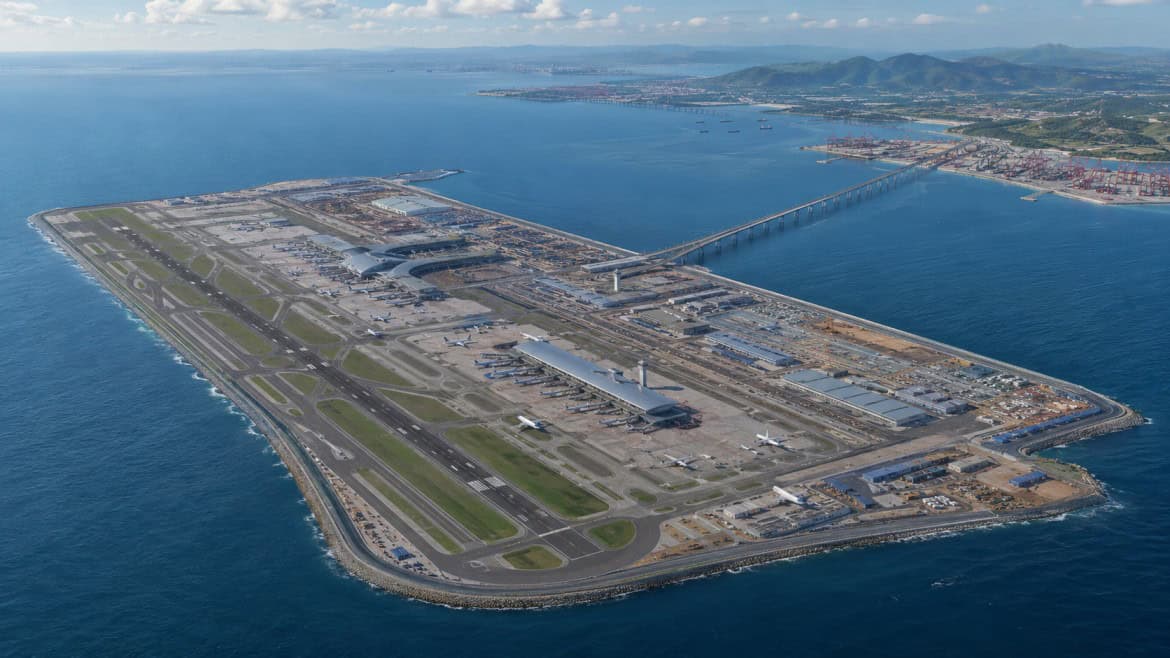
Mumbai, India’s ambitious offshore airport project in Palghar district is moving into a decisive planning phase, with authorities advancing a 90 million passenger capacity aviation hub to be built on reclaimed land in the Arabian Sea. The site near Kore Beach is being positioned as a long-term solution to ease pressure on the existing Mumbai air network and reshape regional aviation flows. As of July 2026, the Detailed Project Report (DPR) stage is underway, determining engineering viability, environmental impact, and funding structure. This development directly affects airlines, cargo operators, logistics networks, and millions of passengers across the Mumbai Metropolitan Region, where demand is already outpacing infrastructure capacity.
The Offshore Aviation Blueprint Near Palghar
The proposed facility near Palghar is designed as India’s first large-scale offshore airport built on reclaimed land in the Arabian Sea. Positioned close to Kore Beach, the airport introduces a rare engineering model where aviation infrastructure extends beyond traditional land constraints.
Advertisement
Advertisement
The blueprint includes two long-haul capable runways, high-capacity terminals, and dedicated cargo infrastructure. Unlike conventional airport expansions, this project is designed to function as an independent aviation island, reducing dependency on land acquisition in densely populated coastal Maharashtra.
Its proximity to the proposed sea link and western coastal corridors positions it as a future gateway for both passenger and freight movement. The design also reflects a shift toward marine-engineered infrastructure, where coastal geography is actively reshaped to accommodate long-term mobility demand rather than constrained by it.
Advertisement
Advertisement
Why Mumbai’s Aviation Pressure Is Reaching Breaking Point
The existing aviation system around Mumbai is under sustained strain. Passenger demand continues to surge while runway and terminal expansion options remain limited due to urban density.
Chhatrapati Shivaji Maharaj International Airport operates at near-maximum capacity during peak hours, creating slot congestion and limiting new airline growth. Even with the upcoming Navi Mumbai International Airport, projections show that long-term demand will still exceed available capacity in the broader metropolitan region.
Advertisement
Advertisement
The offshore airport concept directly addresses this structural imbalance. Instead of incremental upgrades, it introduces a parallel aviation ecosystem capable of absorbing future demand spikes. This is particularly critical for international carriers, express logistics operators, and time-sensitive cargo networks that depend on Mumbai as a primary gateway.
The 90 Million Passenger Vision and Cargo Economy Shift
At full scale, the offshore airport is expected to handle nearly 90 million passengers annually along with around 3 million metric tonnes of cargo. This positions it among the largest planned aviation projects in Asia.
The scale is not only about passenger movement but also about redefining cargo economics in western India. High-volume freight operations could shift from congested urban terminals to a purpose-built offshore logistics zone.
Key expected outcomes include:
- Decongestion of Mumbai’s existing airports
- Expansion of long-haul international connectivity
- Dedicated cargo processing zones
- Reduced turnaround time for freight operations
- Increased airline slot availability across the region
This transformation signals a shift from single-airport dependency to a multi-node aviation ecosystem serving one of the fastest-growing urban corridors in the world.
Multimodal Connectivity: Rail, Road, Sea, and Air Integration
The project is being designed as a fully integrated transport hub rather than a standalone airport. It is expected to connect with multiple national infrastructure corridors, including high-speed rail and freight systems.
Advertisement
Advertisement
Planned integrations include:
- Mumbai–Ahmedabad High-Speed Rail Corridor
- Dedicated Freight Corridor
- Mumbai–Ahmedabad National Highway
- Vadhavan Port
A proposed extension of the Uttan–Virar Sea Link is also being evaluated to provide direct airport access. This multimodal approach is designed to reduce transit time between air, rail, and maritime nodes, creating a continuous logistics loop across western India.
The Port–Airport Convergence Economy
The most significant shift lies in the integration between aviation and maritime infrastructure. By aligning the offshore airport with Vadhavan Port, Maharashtra is effectively building a dual-node global trade gateway.
This model moves beyond conventional airport planning. Instead of treating ports and airports as separate systems, the strategy merges them into a single logistics ecosystem. Cargo arriving by sea can transition directly into air freight corridors, and vice versa, without entering congested urban zones.
This convergence creates a high-efficiency export-import loop that could redefine India’s western trade belt. Industrial clusters in Maharashtra and Gujarat stand to benefit from reduced logistics friction, faster clearance cycles, and improved global competitiveness.
What Others Are Missing in India’s Aviation Expansion Story
Most global aviation expansion narratives focus on runway additions or terminal upgrades. The Palghar offshore airport signals a different trajectory entirely.
Advertisement
Advertisement
What is often overlooked includes:
- Land scarcity in mega coastal cities like Mumbai
- The long-term limitations of incremental airport expansion
- The rising importance of port–airport integration
- Climate-resilient infrastructure design over reclaimed land
- The shift toward distributed aviation hubs instead of single megacentres
This project reframes infrastructure not as isolated assets but as interconnected economic ecosystems. It also introduces a resilience layer, where offshore construction reduces urban pressure while expanding operational flexibility for future demand shocks.
The Palghar offshore airport represents more than an aviation project. It marks a structural rethinking of how mega cities like Mumbai will manage mobility, trade, and logistics over the next several decades. With a 90 million passenger capacity, integrated freight systems, and deep alignment with maritime infrastructure, it positions western India for a new global role.
As the DPR phase progresses, stakeholders across aviation, shipping, and infrastructure sectors will be watching closely. The decisions taken now will define whether this becomes a blueprint for future coastal megacities or remains a bold experiment in offshore engineering.
The next phase will determine scale, sustainability, and investment direction. For India’s aviation ecosystem, the stakes are now decisively high.
Call to Action: Stay updated as this project develops—because Mumbai’s offshore aviation leap may soon reshape how the world understands mega-city connectivity.
Advertisement
