
Vande Bharat: What Travellers Need to Know About the New 16-Hour Bengaluru-Mumbai Route

Published
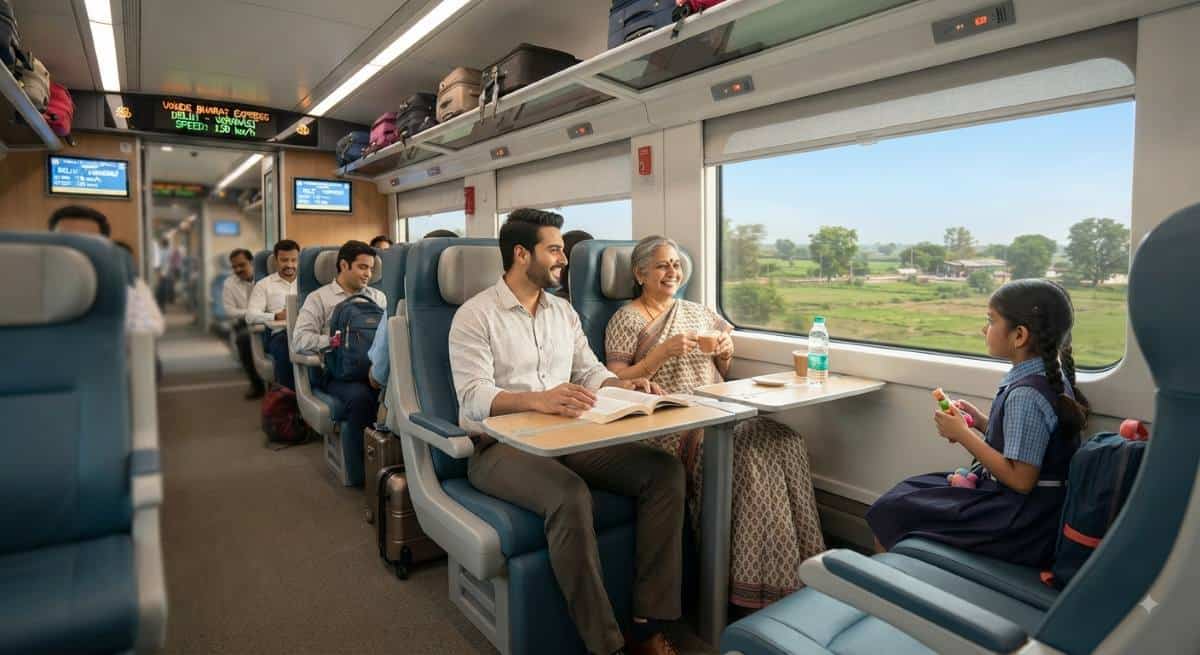
Image generated with Ai
The landscape of long-distance transport is changing. Modern infrastructure is transforming how people move. Central to this evolution is the Vande Bharat sleeper train. This project redefines the passenger experience on high-demand corridors.
As national networks modernize, a new 16-hour overnight ride has been announced. It connects Bengaluru and Mumbai seamlessly. Managed by the South Western Railway, the initiative uses advanced trainsets. These units are built locally in Bengaluru under the Integral Coach Factory framework.
Advertisement
Advertisement
Practical Information for Commuters
- Terminal Options: Authorities are currently evaluating two major stations in Bengaluru as the starting point for the service, which include KSR Bengaluru and Sir M. Visvesvaraya Terminal (SMVT) Bengaluru.
- Maintenance Operations: Primary maintenance for the high-speed rakes will be completely localized at these specific terminal locations to ensure optimal operational readiness.
- Fare Structure: The projected fare for 3AC coaches is expected to hover around Rs 3,000, and this pricing will be inclusive of onboard catering services.
Background and Context
Those alternative paths were ultimately sidelined due to longer distances and existing speed restrictions.
Legacy trains like the Udyan Express take nearly 24 hours to complete the trip.
Advertisement
Advertisement
The newly selected route spans a distance of 1,137 kilometers.
Advertisement
Advertisement
The track is fully electrified and double-tracked to support high-speed operations.
Alternative routes via Hubballi were evaluated by various stakeholders.
Impact on Travellers
For the modern traveler, journey quality is improving rapidly, as travel time drops from 24 hours down to roughly 16 hours.
Regional Connectivity: The route serves key urban centers within the Kalyana Karnataka region, specifically including Raichur, Yadgir, and Kalaburagi.
Coach Configuration: The train features 16 total coaches, which include 11 units of 3AC, 4 units of 2AC, and 1 unit of 1AC.
Advertisement
Advertisement
Onboard Catering: Onboard meals are included as part of the travel service.
Affordable Pricing: Fares remain competitive compared to standard air travel options.
Enhanced Convenience: Passengers can enjoy comfortable overnight transit and arrive at their destinations fully rested.
Industry Insights and Regional Connections
Safety Assessments: Rigorous safety evaluations and speed trials are conducted by the Research Designs and Standards Organisation (RDSO).
Indigenous Manufacturing: The Make in India framework actively drives domestic manufacturing excellence across the sector.
Advertisement
Advertisement
Production Coordination: Seamless coordination between the Bengaluru-based BEML and the Chennai-based Integral Coach Factory (ICF) ensures top-tier production standards.
Track Engineering: The railway tracks are engineered to safely support high-speed operations up to 130 km/h.
Comparison with Previous Policies
New Standards: This strategic shift establishes a remarkable benchmark for long-distance transit and rail travel across India.
Incremental Approach: Older modernization strategies primarily focused on making incremental upgrades to legacy rolling stock rather than deploying dedicated high-speed units.
Corridor Bottlenecks: Previous efforts to improve the Mumbai corridor were frequently hindered by severe infrastructure bottlenecks.
Advertisement
Advertisement
Data-Driven Planning: By prioritizing a direct, 1,137-kilometer electrified path, authorities demonstrate a modern shift toward data-driven route planning.
Operational Efficiency: Speed and overall operational efficiency now supersede the limitations previously imposed by legacy infrastructure.
Advertisement
