
Lisbon Teams Up With Évora and More as Hidden Gems of Portugal Take Centre Stage for Unforgettable Cultural Escapes and Ultimate Holiday Magic!

Published
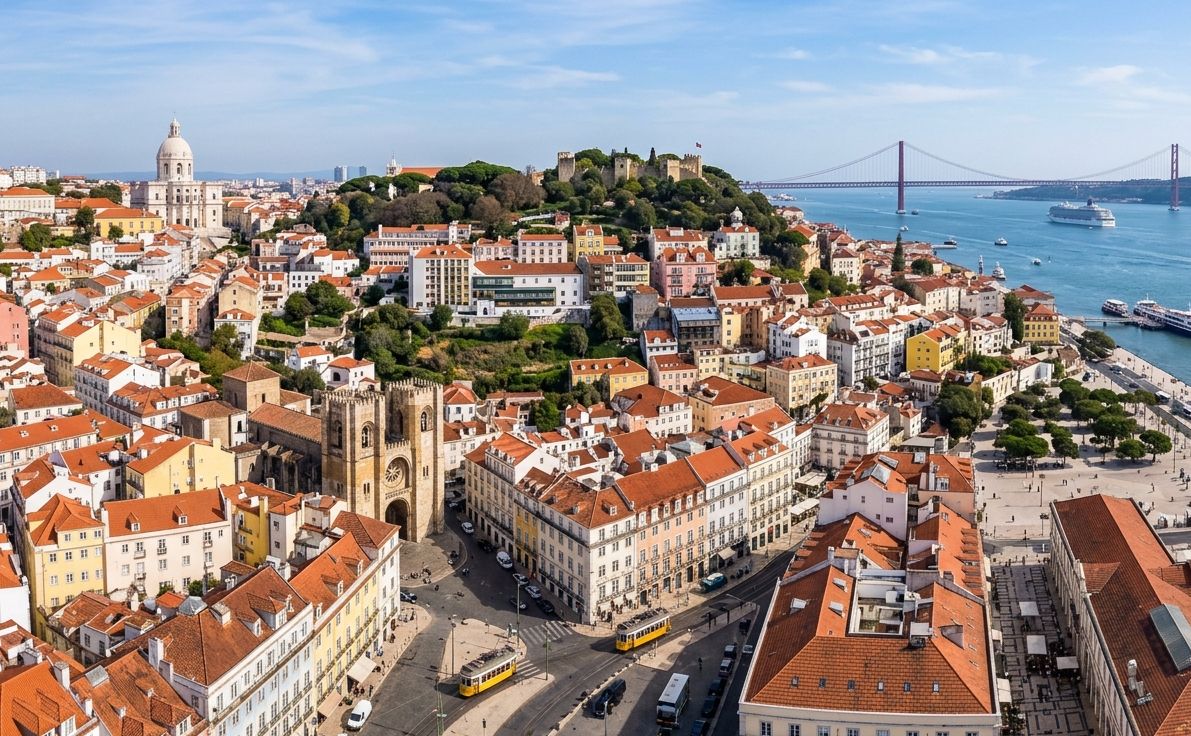
Lisbon Teams Up With Évora and more as the hidden gems of Portugal take centre stage for unforgettable cultural escapes and ultimate holiday magic. From historic streets to remarkable monuments, Portugal invites global travellers to discover experiences beyond its famous capital. Moreover, Évora, Tomar, Aveiro, Bragança, Viana do Castelo and Castelo Branco bring distinctive heritage, regional cuisine and captivating landscapes to every journey. These hidden gems make cultural escapes more rewarding, while Portugal’s diverse destinations promise unforgettable holiday magic. Travel And Tour World explores how Lisbon teams up with these remarkable places, urging readers to discover Portugal’s extraordinary attractions and plan their next adventure.
Beyond Lisbon, Porto and the Algarve: Six Underrated Portuguese Cities to Explore After Lisbon’s Double Tourism Honour
Lisbon’s recognition at the 2026 World Travel Awards offers an opportunity to look beyond Portugal’s best-known holiday destinations. Travellers can discover medieval towns, UNESCO-listed monuments, Atlantic coastlines, mountain landscapes and regional food traditions by extending their journeys into less-visited parts of the country.
Portugal’s tourism sector recorded 32.5 million guests and 82 million overnight stays in 2025, according to Turismo de Portugal’s annual tourism report. Tourism revenue reached €29.1 billion, while international visitors accounted for 69.5% of overnight stays.
These national figures explain why exploring alternative destinations matters. Portugal offers a much wider range of experiences than its busiest urban and coastal centres alone. However, a smaller city should not automatically be described as undiscovered or untouched. The six destinations below are better understood as alternatives for travellers seeking a different pace, distinctive heritage and regional experiences.
Advertisement
Advertisement
A note on the statistics: Portugal’s official tourism data distinguish between guests (people recorded at tourist accommodation), overnight stays (nights spent at that accommodation), and day visitors. These measures are not interchangeable. The national five-year comparison below uses published official figures where available. Municipality-level annual figures for the six cities require extraction from Statistics Portugal’s historical dataset; unverified city totals are not invented or presented as official statistics.
Portugal tourism statistics: Five-year national comparison
The national data show a clear recovery from the pandemic-affected travel market of 2021, followed by continued expansion through 2025. The table separates accommodation performance from broader tourism receipts because these indicators measure different economic activities.
Advertisement
Advertisement
| Year | Guests at tourist accommodation | Overnight stays | Annual overnight-stay change | Key interpretation |
|---|---|---|---|---|
| 2021 | 14.54 million | 37.46 million | +45.2% | Recovery continued, but demand remained far below pre-pandemic levels |
| 2022 | Approx. 26.5 million | 69.7 million | +86.7% | International travel returned strongly |
| 2023 | 30.0 million | 77.15 million | +10.7% | Guest and overnight-stay records exceeded 2019 levels |
| 2024 | 31.6 million | 80.3 million | +4.0% | Tourism demand continued to expand |
| 2025 | 32.5 million | 82.0 million | +2.1% | New national records, with more moderate overnight-stay growth |
Sources: Turismo de Portugal and Statistics Portugal. Values are rounded; 2025 figures are from the official annual tourism publication.
Portugal’s tourist accommodation overnight stays, 2021–2025
Advertisement
Advertisement
Annual overnight stays in millions, showing the recovery and subsequent growth.
30 million45 million60 million75 million90 million20212022202320242025
What the five-year comparison tells travellers and tourism businesses
- 2021 to 2022: Overnight stays increased by approximately 86.1% when calculated from the rounded totals above. The official 2022 report records an 86.7% increase using its underlying statistical series. The difference reflects rounding and published-series precision.
- 2022 to 2023: Overnight stays expanded by around 7.5 million, reflecting the continuing return of international travel.
- 2023 to 2024: Portugal added approximately 3.1 million overnight stays.
- 2024 to 2025: The country added another 1.7 million overnight stays, taking the total to 82 million.
- The broader lesson: Demand is still expanding nationally, but the rate of growth has moderated. Alternative destinations can help travellers build itineraries beyond the busiest tourist hubs.
The national figures cannot tell us exactly how many people visited any individual city. For that, Statistics Portugal provides a municipality-level series covering guests and overnight stays.
Detailed tourism revenue and accommodation data
Tourism generates income through hotels, guesthouses, restaurants, transport, attractions, retail and other visitor services. However, the monetary figures reported by different agencies must be compared carefully.
Advertisement
Advertisement
| Indicator | 2021 | 2022 | 2023 | 2024 | 2025 |
|---|---|---|---|---|---|
| Tourist accommodation guests | 14.54m | Approx. 26.5m | 30.0m | 31.6m | 32.5m |
| Tourist accommodation overnight stays | 37.46m | 69.7m | 77.15m | 80.3m | 82.0m |
| Accommodation-sector total revenue | Not listed here | €5.014bn | Approx. €6.0bn | €6.669bn | €7.133bn |
| Accommodation room revenue | Not listed here | €3.808bn | Approx. €4.6bn | €5.128bn | €5.472bn |
| Broader tourism receipts | Not listed here | Not listed here | €25.14bn | €27.65bn | €29.1bn |
Sources: Turismo de Portugal, Statistics Portugal and Banco de Portugal. Revenue figures are rounded where appropriate. Accommodation-sector revenue is not the same measure as national tourism receipts; unavailable figures are intentionally left blank.
International visitors and seasonality
Portugal’s international visitor market remains central to tourism demand. In 2025, non-residents accounted for 69.5% of accommodation overnight stays. Europe supplied 73.5% of foreign overnight stays, with the United Kingdom, Germany, the United States, Spain and France among the leading markets.
The figures have practical implications for itinerary planning:
- Travellers from Europe can often combine Lisbon with regional cities using rail, bus or rental cars.
- Visitors arriving from farther away may benefit from a longer trip that includes several destinations rather than a brief city break.
- Shoulder-season travel can offer a different atmosphere, although actual weather, attraction schedules and accommodation prices vary by destination.
- Inland destinations may be particularly attractive to visitors who want heritage, food, walking routes and smaller-city experiences rather than a beach-focused holiday.
Six underrated Portuguese destinations worth adding to your itinerary
These are editorial recommendations based on heritage, scenery, regional culture and trip-planning potential—not an official ranking of Portugal’s least-visited cities.
1. Évora: A historic Alentejo city for Roman ruins and regional cuisine
Évora is an excellent choice for travellers who want to explore Portugal’s historic interior. Located in the Alentejo region, the city combines Roman remains, medieval streets, whitewashed houses and a food culture shaped by the surrounding countryside. Its historic centre is a UNESCO World Heritage Site, making it especially appealing to visitors interested in architecture and history. The Roman Temple, often associated with the city’s ancient identity, is a natural starting point. Travellers can then explore Évora Cathedral, the central square and the Chapel of Bones. The latter is a memorable stop, although its subject matter may not suit every visitor. Évora is also a practical base for discovering Alentejo’s vineyards, olive groves and rural landscapes. Regional dishes include açorda alentejana, a traditional bread-based preparation, and migas served with meat or vegetables. Local restaurants are the best places to ask about seasonal specialities. For accommodation, visitors can compare historic-centre guesthouses, small hotels and rural stays outside the city. Those who want to avoid driving can reach Évora by intercity bus or train, checking current timetables before departure. A two-night stay gives enough time for the main sights and a relaxed meal, while an additional day allows a vineyard or countryside excursion. The destination is best for culture-focused travellers, couples and visitors who want to understand Portugal beyond its Atlantic coast. Its value lies in combining heritage and everyday regional life without requiring a packed sightseeing schedule.
What to do and where to visit
Advertisement
Advertisement
- Explore the Roman Temple and Évora’s historic centre.
- Visit Évora Cathedral and the Chapel of Bones.
- Walk the old streets and browse local craft shops.
- Consider an organised Alentejo countryside or vineyard excursion.
What to eat
Try açorda alentejana, migas, regional cheeses, olive oil and Alentejo wines where appropriate.
Where to stay and eat
Choose a guesthouse or small hotel inside the historic centre for walkability. For dining, look for established Alentejo restaurants near the central streets and ask about seasonal dishes rather than relying solely on tourist menus.
Suggested stay: Two nights, with a third night if including a countryside excursion.
2. Tomar: Templar history, river walks and quiet cultural discoveries
Tomar offers a distinctive experience for visitors interested in medieval history, religious architecture and Portugal’s Templar legacy. Its principal attraction is the Convent of Christ, a UNESCO World Heritage Site closely associated with the history of the Knights Templar and the Order of Christ. The complex includes historic cloisters, monumental architecture and the famous Charola, a round church linked to the site’s medieval origins. Travellers should allow several hours for the visit rather than treating it as a quick photo stop. Below the hill, Tomar’s historic centre offers a gentler pace, with pedestrian streets, cafés, shops and the Nabão River running through the town. The Mata Nacional dos Sete Montes woodland area provides another option for a walk between cultural visits. Local food is an important part of the experience, with regional sweets and traditional Portuguese dishes appearing on restaurant menus. Tomar also works well as part of a wider Central Portugal route that includes Coimbra or other heritage destinations. Portugal’s official tourism information highlights the Convent of Christ among the region’s major UNESCO-listed attractions.
Advertisement
Advertisement
Visitors can arrive by rail or road, but should verify connections and attraction opening hours before travelling. A central guesthouse makes it easy to walk between the main sights and restaurants. Two nights are ideal for travellers who prefer an unhurried visit; one night can work for those combining Tomar with another nearby destination. Its appeal comes from a strong historical identity, a walkable centre and the opportunity to spend time in a smaller Portuguese town.
What to do and where to visit
- Spend time at the Convent of Christ and Tomar Castle.
- Explore the historic centre and riverside.
- Walk through Mata Nacional dos Sete Montes.
- Browse local shops and cafés around the main squares.
What to eat
Look for regional sweets, traditional Portuguese soups, grilled fish and meat dishes. Ask restaurants which local specialities are prepared in season.
Where to stay and eat
Stay near the historic centre or the river for convenient walking access. Choose local restaurants around the central streets, checking recent opening times before dinner.
Advertisement
Advertisement
Suggested stay: One or two nights; two nights are better for a relaxed heritage-focused visit.
3. Viana do Castelo: Atlantic scenery, heritage and northern Portuguese food
Viana do Castelo is a compelling northern destination for travellers who want coastal scenery without making their entire holiday about beach resorts. Set near the mouth of the Lima River, the city combines a historic centre, maritime connections and access to Atlantic beaches. The hilltop Sanctuary of Santa Luzia is one of its best-known landmarks, offering expansive views across the city, river and coastline. Visitors can explore the old streets before taking time to discover the waterfront and nearby beaches. The destination also reflects the cultural identity of northern Portugal through traditional crafts, regional celebrations and local cuisine. Seafood is a natural choice on the coast, while northern Portuguese dishes and Vinho Verde provide further opportunities to explore regional flavours. Travellers should check beach conditions and local safety advice before swimming, as Atlantic waters can be cold and currents can be strong. Viana do Castelo is suitable for a two- or three-night stay, particularly for visitors travelling between Porto and other northern destinations. Rail connections make it possible to reach the city without hiring a car, while a vehicle provides more flexibility for exploring nearby villages and coastal areas. For accommodation, compare centrally located hotels and guesthouses with properties closer to the coast. A central base is generally convenient for sightseeing and restaurants; a coastal stay may suit visitors prioritising sea views and outdoor activities. Official Portuguese tourism information presents northern Portugal as a region with a mix of heritage, traditional settlements and natural landscapes.
What to do and where to visit
- Visit the Sanctuary of Santa Luzia for panoramic views.
- Explore the historic centre and its traditional architecture.
- Walk along the riverfront and visit nearby Atlantic beaches.
- Look for local crafts and seasonal cultural events.
What to eat
Try freshly prepared seafood, grilled fish, northern Portuguese specialities and regional Vinho Verde for travellers who drink alcohol.
Where to stay and eat
Advertisement
Advertisement
Stay in the historic centre for easy access to restaurants and transport. Coastal accommodation suits visitors who prefer a beach-oriented trip. Check current menus, seasonal opening hours and public transport before finalising plans.
Suggested stay: Two nights for the city and coastline; three nights for a slower northern Portugal itinerary.
4. Bragança: A medieval stronghold beside the Montesinho mountains
Bragança is a strong choice for travellers who want to discover Portugal’s far northeastern corner. The city has a medieval citadel, a castle, historic religious buildings and access to the landscapes of Montesinho Natural Park. Its walled historic core preserves a distinctive atmosphere, with the castle and the Domus Municipalis among the main sights. The official Visit Portugal destination guide also highlights the Military Museum, the Abade de Baçal Museum and the Graça Morais Contemporary Art Centre.
visitportugal.com These attractions give visitors a varied itinerary that combines regional history, military heritage and art. Outside the city, the mountains and traditional villages provide opportunities for walking, photography and rural exploration. Rio de Onor is especially interesting because the village extends across the Portugal–Spain border. Travellers should plan transport carefully: Bragança is farther from Portugal’s principal coastal gateways, and reaching rural attractions can be easier with a car or organised excursion. Local cuisine reflects the region’s colder inland climate and agricultural traditions. Visitors can look for smoked meats, regional sausages, hearty soups, bread and seasonal mountain dishes. The February Feira do Fumeiro in nearby Vinhais is a relevant food event to investigate, but travellers should confirm dates before building a trip around it. Accommodation ranges from small hotels and guesthouses to rural properties outside the city. Two nights allow time for the citadel and museums; three or four nights are preferable if exploring the natural park. Bragança suits history enthusiasts, hikers and travellers who prefer smaller regional centres to busy urban destinations.
What to do and where to visit
- Explore Bragança Castle and the medieval citadel.
- Visit the Domus Municipalis and Military Museum.
- Discover the Abade de Baçal Museum and Graça Morais Contemporary Art Centre.
- Plan a day trip into Montesinho Natural Park or to Rio de Onor.
What to eat
Advertisement
Advertisement
Look for regional smoked meats, sausages, hearty soups, local bread and seasonal dishes. Ask restaurants about regional products and traditional preparations.
Where to stay and eat
A guesthouse or hotel near the citadel is convenient for walking between attractions. Rural accommodation can work well for visitors planning several days outdoors. Check transport arrangements before choosing a property outside the city.
Suggested stay: Two nights for Bragança; three or four nights if exploring Montesinho.
5. Castelo Branco: Gardens, crafts and the landscapes of inland Portugal
Castelo Branco offers a different perspective on Portugal’s central interior. Rather than focusing on beach tourism or major metropolitan attractions, visitors can explore historic streets, landscaped gardens, regional crafts and the surrounding countryside. One of the city’s most distinctive attractions is the Jardim do Paço Episcopal, known for its formal layout, ornamental features and sculptural details. The garden is a worthwhile stop for travellers interested in historic landscaping and photography. Visitors can also explore the city’s museum collections, churches and central squares, allowing time to understand the region’s cultural identity. Traditional Castelo Branco embroidery is another important part of its heritage, making local craft displays and shops interesting stops for travellers looking for meaningful souvenirs. The wider Centro de Portugal region includes historic settlements, mountain scenery, traditional villages and architectural heritage.
Castelo Branco can therefore serve as a base for a broader inland itinerary, although rural excursions may require advance transport planning. Local dining offers opportunities to try regional cheeses, olive oil, traditional soups and meat dishes. Travellers should ask restaurants which products come from the surrounding region. Accommodation options include central hotels and guesthouses, with rural properties available farther afield. Rail and road connections can be useful for reaching the city, but visitors should check current schedules and onward transport before booking. Two nights are enough for the main city sights; three nights create space for a countryside excursion. Castelo Branco suits travellers who enjoy gardens, local culture, quieter city breaks and discovering areas that receive less international attention than Portugal’s largest destinations.
Advertisement
Advertisement
What to do and where to visit
- Explore the Jardim do Paço Episcopal.
- Visit local museums, churches and historic streets.
- Look for Castelo Branco embroidery and regional crafts.
- Use the city as a starting point for inland villages and countryside.
What to eat
Sample regional cheeses, olive oil, soups and traditional meat dishes. Ask for seasonal specialities and local products rather than assuming every restaurant serves the same regional menu.
Where to stay and eat
Choose a centrally located guesthouse or hotel to keep city attractions within easy reach. For dinner, compare restaurants around the centre and check current opening hours. If staying outside the city, arrange transport in advance.
Suggested stay: Two nights, or three with a countryside excursion.
Advertisement
Advertisement
Aveiro: Canals, coastal villages and Portuguese sweet traditions
Aveiro is a useful option for travellers who want a compact city break with access to Portugal’s Atlantic coast. Often associated with its canals and colourful moliceiro boats, the city offers a combination of waterfront walks, historic architecture, museums and regional food traditions. Its compact centre makes it suitable for visitors who prefer to explore on foot, although boat tours can offer another perspective on the canals. Travellers can browse local shops, stop at cafés and discover the city’s traditional sweet, ovos moles, which is closely associated with Aveiro’s culinary identity. The nearby coastal settlement of Costa Nova is known for its striped houses and seaside atmosphere. It is a natural addition to a trip for visitors interested in photography, coastal walks and local seafood. Official Portuguese tourism information describes Aveiro as a destination between the Ria and the sea, highlighting the region’s relationship with waterways and coastal settlements.
Travellers can reach Aveiro by train from major Portuguese cities, but should check current services before departure. Staying near the centre provides easy access to canals, restaurants and transport. Visitors who prefer a beach-focused stay can compare accommodation closer to the coast, taking seasonal conditions into account. One or two nights suit a short break, while three nights provide time to explore Aveiro, Costa Nova and nearby coastal areas. The destination is particularly suitable for couples, families and travellers seeking an accessible introduction to central Portugal’s coastal culture without committing to a longer resort holiday.
What to do and where to visit
- Walk along Aveiro’s canals and explore the historic centre.
- Consider a moliceiro boat tour.
- Visit Costa Nova to see its distinctive striped houses.
- Explore the Ria de Aveiro landscape and nearby coastal communities.
What to eat
Try ovos moles, fresh seafood, grilled fish and other regional Portuguese dishes. Ask local cafés about traditional sweets and restaurants about the day’s seafood selection.
Where to stay and eat
Advertisement
Advertisement
A central hotel or guesthouse makes it easy to explore on foot. Choose coastal accommodation if beach access is the priority. Compare restaurant menus and seasonal opening times before making evening plans.
Suggested stay: One or two nights; three nights for a broader coastal itinerary.
Comparative table: Six destinations at a glance
| Destination | Main attraction | Best for | Recommended stay | Suggested travel style |
|---|---|---|---|---|
| Évora | Roman Temple and UNESCO-listed historic centre | History, architecture, food and wine | 2–3 nights | Walking and countryside excursions |
| Tomar | Convent of Christ and Templar heritage | Medieval history and cultural tourism | 1–2 nights | Heritage-focused city break |
| Viana do Castelo | Santa Luzia sanctuary and Atlantic coast | Coastal scenery, culture and seafood | 2–3 nights | City and beach combination |
| Bragança | Medieval citadel and Montesinho Natural Park | Hiking, heritage and rural culture | 2–4 nights | Inland exploration |
| Castelo Branco | Episcopal Palace gardens and regional crafts | Gardens, culture and quiet city breaks | 2–3 nights | City sightseeing and day trips |
| Aveiro | Canals, moliceiro boats and Costa Nova | Couples, families and coastal exploration | 1–3 nights | City and seaside combination |
Suggested stays are itinerary recommendations, not official tourism statistics. Attraction details are supported by Portugal’s official tourism information.
Five-year visitor statistics for the six destinations: What the official data can establish
The most reliable way to compare these cities is to use the municipal tourism series maintained by Statistics Portugal (INE) and Turismo de Portugal. The official database distinguishes between guests and overnight stays and provides historical municipality data for 2016–2024. Current-year municipal data are also available separately.
The official pages retrieved for this article do not expose all six cities’ annual figures in a static table. Therefore, I cannot responsibly fill in exact 2021–2025 totals for each city without extracting and validating the underlying municipal dataset. The following table identifies the correct comparison period and the statistical position.
| Destination | 2021 | 2022 | 2023 | 2024 | 2025 | Official data source |
|---|---|---|---|---|---|---|
| Évora | Requires municipal extraction | Requires municipal extraction | Requires municipal extraction | Requires municipal extraction | Requires current-year extraction | INE / TravelBI |
| Tomar | Requires municipal extraction | Requires municipal extraction | Requires municipal extraction | Requires municipal extraction | Requires current-year extraction | INE / TravelBI |
| Viana do Castelo | Requires municipal extraction | Requires municipal extraction | Requires municipal extraction | Requires municipal extraction | Requires current-year extraction | INE / TravelBI |
| Bragança | Requires municipal extraction | Requires municipal extraction | Requires municipal extraction | Requires municipal extraction | Requires current-year extraction | INE / TravelBI |
| Castelo Branco | Requires municipal extraction | Requires municipal extraction | Requires municipal extraction | Requires municipal extraction | Requires current-year extraction | INE / TravelBI |
| Aveiro | Requires municipal extraction | Requires municipal extraction | Requires municipal extraction | Requires municipal extraction | Requires current-year extraction | INE / TravelBI |
Official dataset: Overnight Stays by Municipality — Turismo de Portugal. The dashboard includes monthly guest and overnight-stay trends based on INE’s accommodation survey. The historical series covers 2016–2024; 2025 data are handled through the current-year dataset.
Advertisement
Advertisement
How to interpret the city-by-city data correctly
For a publishable five-year comparison, extract these indicators for every municipality:
| Indicator | What it measures | Why it matters |
|---|---|---|
| Guests | People recorded at tourist accommodation | Measures accommodation demand |
| Overnight stays | Total nights spent in tourist accommodation | Indicates the scale and duration of overnight tourism |
| Resident overnight stays | Nights spent by domestic visitors | Shows domestic tourism demand |
| Non-resident overnight stays | Nights spent by international visitors | Shows international tourism demand |
| Average stay | Overnight stays divided by guests | Helps distinguish short visits from longer holidays |
| Accommodation revenue | Revenue generated by tourist accommodation | Adds an economic perspective |
| Year-on-year change | Percentage difference from the previous year | Shows whether demand expanded or contracted |
These measures must use consistent definitions and geographic boundaries. Day visitors, hotel guests and all accommodation guests should not be combined into one total. Small municipalities can also have incomplete or confidential values for some indicators.
A detailed 10-day itinerary linking Lisbon with six alternative destinations
This route is designed for travellers arriving in Lisbon who want to discover more of Portugal without rushing through every destination. It includes all six cities, although Bragança requires a longer inland journey.
| Day | Destination | Recommended activities | Overnight base |
|---|---|---|---|
| 1 | Lisbon | Explore the historic centre, Alfama and riverside | Lisbon |
| 2 | Évora | Visit the Roman Temple, cathedral and historic centre | Évora |
| 3 | Castelo Branco | Explore the Episcopal Palace gardens and local heritage | Castelo Branco |
| 4 | Tomar | Visit the Convent of Christ and walk beside the river | Tomar |
| 5 | Aveiro | Explore the canals, central streets and local food | Aveiro |
| 6 | Aveiro and Costa Nova | Enjoy the coast, striped houses and seafood | Aveiro |
| 7 | Viana do Castelo | Visit Santa Luzia and explore the historic centre | Viana do Castelo |
| 8 | Bragança | Travel inland and explore the medieval citadel | Bragança |
| 9 | Bragança and Montesinho | Discover the natural park or a traditional village | Bragança |
| 10 | Return journey | Travel towards Porto or Lisbon, depending on departure arrangements | Departure city or airport hotel |
This itinerary is ambitious. Travellers using public transport should check connections carefully, especially for Bragança and rural excursions. A rental car can provide more flexibility, but driving times, parking and road conditions should be checked before travel. A more relaxed 12–14-day trip would allow longer stays and fewer travel days.
Travel planning budget: How to estimate the cost
Exact costs depend on season, booking dates, accommodation category and transport choices. The table below is a planning framework, not a quotation or verified live price list.
| Budget category | What to include | How to plan |
|---|---|---|
| Accommodation | Hotels, guesthouses or rural stays | Compare total costs for the full stay, including taxes |
| Intercity transport | Trains, buses or rental car | Check fares and schedules for each leg |
| Local transport | Metro, buses, taxis and transfers | Allow extra for rural excursions |
| Food | Breakfast, lunch, dinner and snacks | Mix cafés, local restaurants and occasional special meals |
| Attractions | Museum admissions, monuments and guided visits | Check official opening hours and ticket prices |
| Activities | Boat trips, walking tours or countryside excursions | Book ahead where required |
| Contingency | Weather disruptions and unplanned expenses | Keep a flexible reserve |
For a cost-conscious trip, prioritise public transport where connections are practical and select accommodation near the main attractions. For rural experiences, compare the cost of a rental car with an organised day trip before deciding.
Advertisement
Advertisement
Final travel advice: How to experience more of Portugal
Lisbon’s two European tourism honours provide a timely reason to explore Portugal beyond its capital. The national tourism figures demonstrate the country’s strong visitor demand, while the six destinations above offer different ways to experience its historic towns, regional cuisine, coastal landscapes and inland heritage.
Évora and Tomar are particularly rewarding for history enthusiasts. Viana do Castelo and Aveiro combine urban culture with Atlantic scenery. Bragança offers access to a distinctive northeastern landscape, while Castelo Branco provides a quieter introduction to central Portugal.
The most effective strategy is to choose destinations that complement one another rather than trying to see everything in a single trip. Allow enough time for regional food, local museums, walks and unexpected discoveries.
For a data-led extension article, the remaining essential step is to extract the annual INE municipality figures for each of the six cities. Those verified figures would support a true year-by-year comparison of guests, overnight stays, domestic and international demand, and percentage changes. Until that extraction is completed, presenting invented city totals would undermine the accuracy of the article.
Conclusion
In conclusion, Lisbon teams up with Évora and more remarkable destinations as Portugal’s hidden gems take centre stage for unforgettable cultural escapes and ultimate holiday magic. From Évora’s ancient heritage to Tomar’s Templar history, Aveiro’s picturesque canals, Bragança’s medieval charm, Viana do Castelo’s Atlantic scenery and Castelo Branco’s historic gardens, each destination offers travellers a distinctive Portuguese experience. Moreover, these lesser-known places encourage visitors to explore beyond the familiar tourist trail and discover authentic regional cuisine, fascinating traditions and beautiful landscapes. Travel And Tour World invites global travellers to explore these extraordinary destinations, create memorable itineraries and experience Portugal’s diverse cultural treasures on their next European holiday.
Advertisement
