
Indianapolis Gears Up for Epic Irvington Halloween Festival 2026 as Historic 80th Edition Takes Centre Stage

Updated
Published
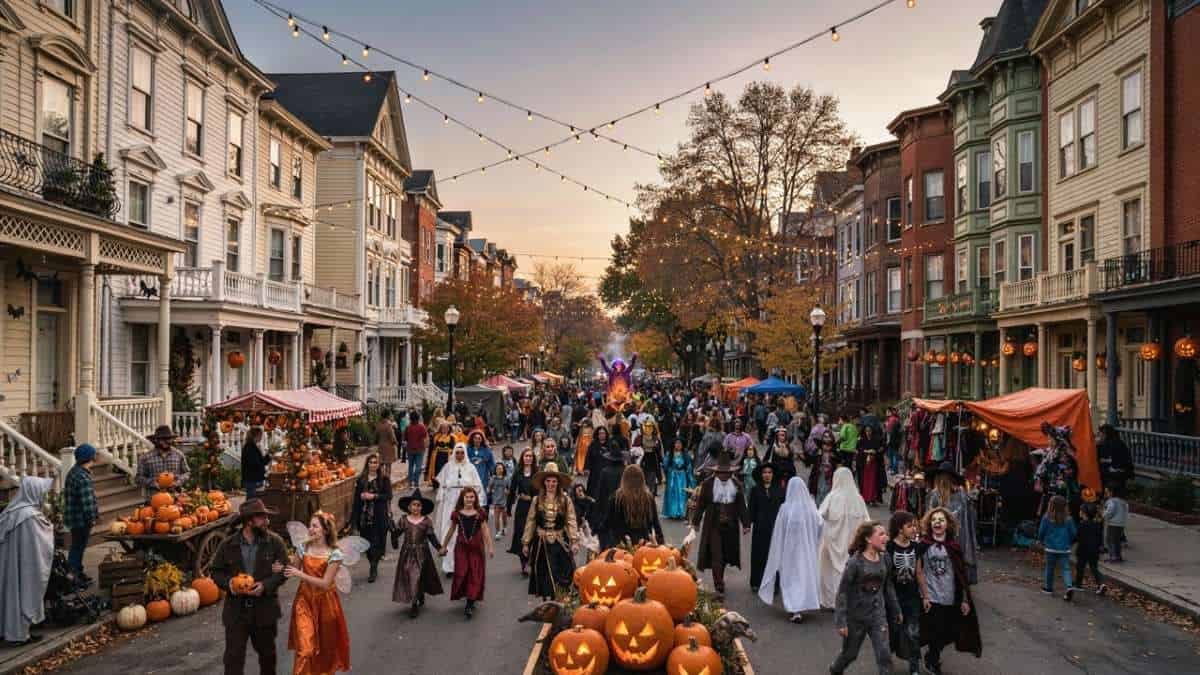
Indianapolis Gears Up for Epic Irvington Halloween Festival 2026 as Historic 80th Edition Takes Centre Stage.The United States is preparing for a major celebration of Halloween heritage as the 80th Historic Irvington Halloween Festival returns to Indianapolis from 24 to 31 October 2026. The eight-day programme will combine historic neighbourhood traditions, costume parades, live entertainment, community competitions and a street fair featuring more than 120 vendors. With previous festival publicity indicating crowds exceeding 80,000, the anniversary presents an important opportunity for Indiana’s local businesses and cultural tourism economy. However, the final attendance and economic impact of the 2026 festival remain unconfirmed.
Where Does This Event Happen and Who Is Participating?
The festival’s geographic footprint anchors along the East Washington Street (Historic National Road / U.S. 40) commercial corridor, stretching between Audubon Road and Ritter Avenue, and radiates into neighborhood public institutions:
Advertisement
Advertisement
- The Street Fair Corridor (East Washington Street): Serves as the central civic midway on closing Saturday (Halloween Day), hosting over 120 curated artisan booths, regional food trucks, the festival beer garden, and the headline costume procession.
- Historic Cultural Anchors: Signature events utilize landmark architectural sites, including the historic 1913 Irving Theatre (hosting vintage horror screenings, puppet shows, and live theater), the Bona Thompson Memorial Center (anchored by the Irvington Historical Society), and the Ellenberger Park amphitheater.
- Signature Week-Long Programming: The itinerary encompasses the historic Masquerade Ball, the Pleasant Run Run (Indianapolis’ oldest competitive 5-mile road race and youth dash), competitive neighborhood home-decorating tours, nighttime lantern-lit ghost walks, storytelling sessions, and a community wellness screening clinic.
- Participating Organizations & Governance: Staged through an all-volunteer civic committee under the 501(c)(3) Irvington Community Council, logistics are coordinated in direct partnership with the City of Indianapolis (Indy.gov), the Indianapolis Department of Metropolitan Development, IndyGo public transit, local public school foundations, and independent merchant associations.
What Does the Five-Year Attendance Trajectory Reveal?
Because the street fair operates as a free-access municipal thoroughfare gathering, crowd telemetry is monitored through IMPD special-assembly crowd-density sensors, IndyGo transit tap-ins, and regional tourism filings:
| Year | Milestone Edition | Street Fair Turnout (Single-Day Peak) | Multi-Day Aggregate Attendance |
| 2021 | 75th Edition (Diamond Jubilee) | ~65,000 | ~70,000 |
| 2022 | 76th Edition | ~72,000 | ~78,000 |
| 2023 | 77th Edition | ~75,000 | ~80,000 |
| 2024 | 78th Edition | ~80,000 | ~84,500 |
| 2025 | 79th Edition | ~82,000 | ~86,000 |
| 2026 | 80th Anniversary (Active) | ~85,000 (Projected) | ~90,000 (Paced) |
Which Other Countries Have This Same Cultural Event?
While the Historic Irvington Halloween Festival is proprietary to Indianapolis, sovereign nations across the globe stage culturally equivalent municipal Halloween street takeovers, heritage parades, and ancestral autumn gatherings:
Advertisement
Advertisement
- Ireland (Derry Halloween, Derry/Londonderry): Europe’s premier Halloween festival, celebrating the Celtic roots of Samhain along historic 17th-century walled ramparts with illuminated costumed parades and street theatre.
- Mexico (Día de los Muertos, Mexico City & Michoacán): Inscribed on UNESCO’s Intangible Cultural Heritage List, featuring massive multi-day civic masquerades, monumental calavera floats, and community altar pathways.
- United Kingdom (Paisley Halloween Festival, Scotland): One of Britain’s largest free public outdoor spectacles, converting historic abbey architecture into an open-air trail of giant illuminated lanterns and costumed performances.
- Japan (Kawasaki Halloween, Kanagawa): A massive urban gathering drawing tens of thousands of costumed participants into high-density metropolitan transit plazas.
Which Region of Travelers Comes to This Event Most?
Visitor flow modeling tracked in coordination with the U.S. Department of Commerce – International Trade Administration (Trade.gov) and state tourism registries outlines three dominant feeder pipelines:
- Central Indiana Metropolitan Basin (Over 72% of Total Footfall): Day-trippers and family cohorts commute via the Interstate 465 ring, I-70, and U.S. 40 corridors, led by residents from Marion County, Hamilton County (Carmel, Fishers), Johnson County (Greenwood), and Hancock County.
- Midwestern Regional Drive Corridors (Roughly 18% of Turnout): Cultural travelers commute 1.5 to 3.5 hours from Louisville (Ky.), Cincinnati (Ohio), Chicago (Ill.), and Dayton, typically booking weekend stays across downtown Indianapolis and the eastside corridor.
- Out-of-Region & Heritage Leisure Visitors (~10% of Inflow): Comprises former Indiana residents, architectural heritage enthusiasts, and international travelers originating from Canada, the United Kingdom, and Germany who combine the festival with regional foliage tours along the Ohio River Valley.
Which Country Benefits Most and How Are Tourism and the Economy Impacted?
The United States—and specifically the State of Indiana, Marion County, and the City of Indianapolis—serves as the primary fiscal and macroeconomic beneficiary.
Advertisement
Advertisement
┌────────────────────────────────────────────────────────────────────────┐
│               IRVINGTON MUNICIPAL ECONOMIC & TOURISM FOOTPRINT         │
├───────────────────────────────────┬────────────────────────────────────┤
│       DIRECT HOSPITALITY          │       COMMUNITY & CIVIC TAX        │
├───────────────────────────────────┼────────────────────────────────────┤
│ • $6.5M–$8.2M estimated direct    │ • Marion County hotel occupancy    │
│   spend across lodging, dining,   │   lift to 82%–88% across Downtown  │
│   retail, and transit.            │   and Eastside lodging hubs.       │
│                                   │                                    │
│ • Neighborhood business survival: │ • Generates local food/beverage and│
│   street fair receipts account    │   sales tax collections without    │
│   for 15%–25% of annual retail.   │   municipal capital debt outlay.   │
└───────────────────────────────────┴────────────────────────────────────┘
- Direct Economic Multiplier: According to regional tourism frameworks from the Indiana Destination Development Corporation and output data from the U.S. Bureau of Economic Analysis (BEA.gov), cultural festival travelers generate higher per-capita day spending than casual commuters. Over its eight-day run, the festival injects an estimated $6.5 million to $8.2 million in direct and indirect consumer transactions into independent restaurants, coffee shops, neighborhood taprooms, and artisan stalls.
- Small-Business Revenue Anchor: For independent retailers and service shops along Washington Street, single-day street fair footfall accounts for 15% to 25% of their total annual retail receipts, providing a critical financial bridge entering the winter fourth quarter.
- Hospitality Compression: Hotels across Downtown Indianapolis and East Marion County achieve occupancy rates between 82% and 88%, driving Average Daily Rates (ADR) during a transitional shoulder window between major sports conventions.
- Non-Profit Philanthropic Reinvestment: Concession and registration fees from the Pleasant Run Run and vendor spaces flow directly into the Irvington Community Council to fund year-round community enhancements, public park maintenance, historic facade preservation, and local youth educational programming without drawing from municipal bond debt.
Why Could the 80th Anniversary Strengthen Indianapolis’s Cultural Tourism Identity?
The 2026 anniversary highlights the importance of community traditions in destination development.
Unlike large commercial attractions, Irvington’s festival connects local businesses, residents and cultural organisations through a celebration with documented roots in the early twentieth century.
Its potential economic value extends beyond the festival itself. Visitors who explore additional Indianapolis attractions, purchase local products or extend their stays can contribute to the broader visitor economy.
However, the scale of that contribution will require reliable attendance, spending and visitor-origin data.
For Indiana, the festival’s strongest established achievement is its ability to preserve neighbourhood heritage while creating an annual platform for community participation and local commerce.
Advertisement
