
Hundreds of Passengers Left Waiting at Jakarta-Soekarno-Hatta International Airport After Batik Air, Citilink, Garuda Indonesia, Lion Air, and Other Carriers Withdraw 22 Flights from Schedule and Report 136 Delays, Impacting Connections Across Indonesia, India, Singapore, Thailand, Brunei, and More—Everything You Should Know Before Heading to the Airport

Published
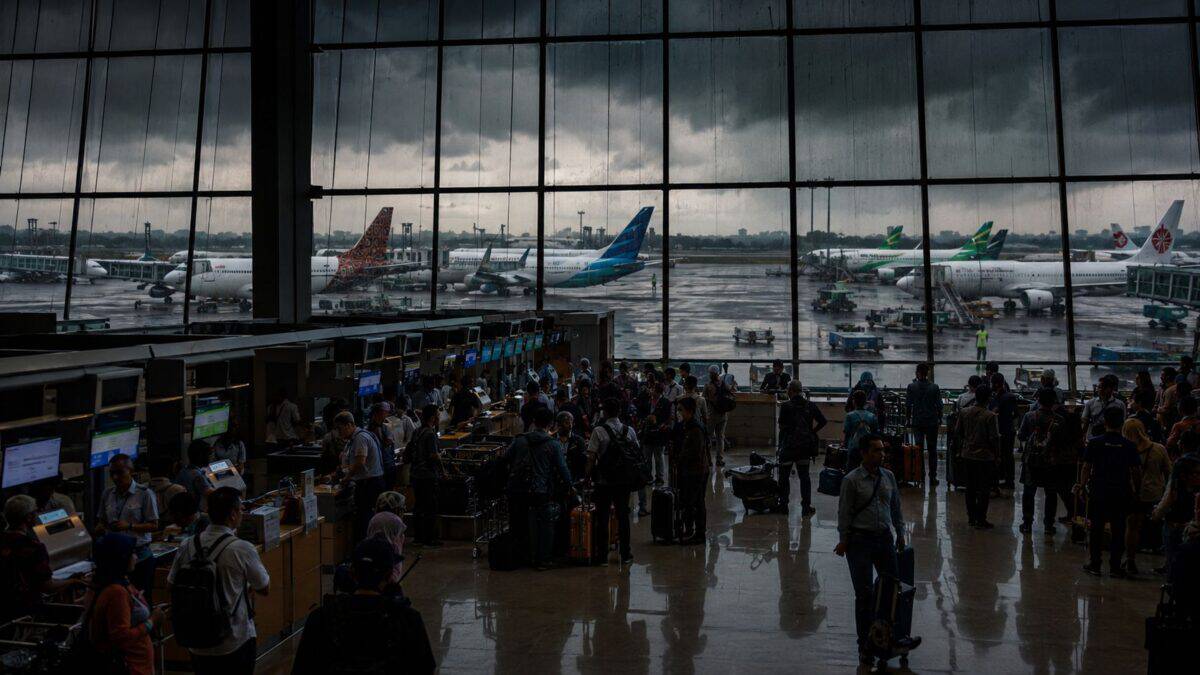
Today, July 1, 2026, Jakarta-Soekarno-Hatta International Airport (CGK) is experiencing significant operational disruption after 22 flights were cancelled and 136 flights delayed within, into, or out of Indonesia’s busiest aviation hub. The disruptions are affecting domestic and international passengers alike, with Indonesia’s largest carriers bearing the majority of operational setbacks.
According to today’s operational data, Batik Air accounts for the overwhelming majority of cancellations, while several airlines—including Citilink, Garuda Indonesia, Super Air Jet, Indonesia AirAsia, Sriwijaya Air, and TransNusa—are reporting notable delays across their networks. Although the overall cancellation rate remains relatively modest compared with the airport’s daily traffic volume, the widespread delays indicate a broader operational challenge extending across multiple airlines and flight schedules.
Advertisement
Advertisement
For thousands of travelers beginning holidays, business trips, or international connections through Jakarta, the combination of cancellations and delays has resulted in longer airport waiting times, missed onward connections, schedule uncertainty, and additional travel expenses.
Jakarta-Soekarno-Hatta International Airport Today’s Flight Disruption Overview
Overall operational performance today:
Advertisement
Advertisement
| Category | Flights |
|---|---|
| Total Cancelled Flights | 22 |
| Total Delayed Flights | 136 |
While cancellations directly impact a limited number of flights, the much larger volume of delayed services demonstrates that airlines are largely attempting to maintain operations despite ongoing operational constraints.
Airline-by-Airline Operational Performance at Jakarta-Soekarno-Hatta International Airport
| Airline | Cancelled | Cancellation % | Delayed | Delay % |
|---|---|---|---|---|
| Batik Air | 17 | 8% | 31 | 15% |
| Citilink | 2 | 1% | 28 | 16% |
| Garuda Indonesia | 2 | 1% | 16 | 8% |
| Lion Air | 1 | 1% | 8 | 8% |
| AirAsia | 0 | 0% | 1 | 8% |
| China Airlines | 0 | 0% | 1 | 50% |
| IndiGo | 0 | 0% | 1 | 50% |
| My Indo Airlines | 0 | 0% | 1 | 16% |
| Pelita Air Service P.t. | 0 | 0% | 5 | 9% |
| Qatar Airways | 0 | 0% | 1 | 16% |
| Royal Brunei | 0 | 0% | 2 | 100% |
| Singapore Airlines | 0 | 0% | 1 | 5% |
| Super Air Jet | 0 | 0% | 20 | 15% |
| Sriwijaya Air | 0 | 0% | 4 | 19% |
| Scoot | 0 | 0% | 1 | 10% |
| Thai Airways | 0 | 0% | 1 | 25% |
| TransNusa | 0 | 0% | 5 | 13% |
| Emirates | 0 | 0% | 1 | 25% |
| VietJet Air | 0 | 0% | 1 | 25% |
| Indonesia AirAsia | 0 | 0% | 7 | 20% |
The airline statistics reveal a highly concentrated cancellation pattern. Batik Air alone accounts for 17 of the airport’s 22 cancellations, representing nearly 77% of all cancelled flights today. This indicates that while disruptions are affecting multiple operators, the majority of outright schedule cancellations are concentrated within a single carrier’s operations.
Advertisement
Advertisement
Citilink and Garuda Indonesia each recorded two cancellations, while Lion Air reported one cancelled service. Every other airline maintained its scheduled flights despite experiencing varying levels of delay.
On the delay side, Batik Air again leads with 31 delayed flights, followed closely by Citilink (28) and Super Air Jet (20). Garuda Indonesia’s 16 delayed services suggest that Indonesia’s national carrier is also facing moderate operational challenges, though considerably fewer outright cancellations.
Several smaller operators show high delay percentages despite low flight volumes. For example, Royal Brunei’s 100% delay rate indicates both of its scheduled services were delayed, while China Airlines and IndiGo each posted a 50% delay rate based on limited daily operations.
Overall, the data illustrates that today’s disruption is primarily delay-driven rather than cancellation-driven, reflecting airlines’ efforts to keep aircraft moving despite operational obstacles.
Why So Many Flights Are Being Cancelled and Delayed Today
Large-scale airport disruptions rarely stem from a single cause. Aviation experts generally point to multiple overlapping operational factors.
Possible contributing factors include:
Advertisement
Advertisement
- Seasonal weather disturbances affecting aircraft sequencing and arrival spacing.
- Thunderstorms, heavy rainfall, or reduced visibility around Jakarta during peak operating periods.
- Air traffic congestion caused by one of Southeast Asia’s busiest airport systems.
- Aircraft rotation delays, where late-arriving aircraft create knock-on disruptions throughout the day.
- Crew scheduling limitations following earlier delays.
- Maintenance inspections or unexpected technical issues.
- High passenger demand placing pressure on airport infrastructure.
- Congestion across regional airspace affecting international arrivals and departures.
Weather deserves particular attention. Jakarta frequently experiences tropical weather conditions capable of reducing runway efficiency. Even brief periods of intense rainfall can lower airport arrival rates, forcing aircraft into holding patterns and creating cascading delays across the network.
Unlike cancellations, delays often propagate throughout the day. A single aircraft arriving an hour late may subsequently operate three or four delayed flights before returning to schedule, multiplying disruption across the airline’s network.
How Delay Cascades Affect the Entire Airport Network
Modern airline scheduling relies on tightly coordinated aircraft utilization. An aircraft completing six sectors daily has little room for recovery when early delays occur.
As delays accumulate:
- Gates remain occupied longer than scheduled.
- Ground handling teams must work compressed turnaround windows.
- Connecting passengers require rebooking assistance.
- Crews approach regulated duty time limits.
- Aircraft rotations become increasingly difficult to recover before the end of the operating day.
This explains why today’s 136 delays extend across many different airlines instead of remaining isolated to one carrier.
What Guests Get: Immediate Passenger Ramifications
Passengers travelling today should prepare for several operational consequences.
Advertisement
Advertisement
Missed Connecting Flights
Domestic-to-international and international-to-domestic connections may become increasingly difficult to complete. Travelers with short layovers should immediately contact their airline regarding alternative itineraries.
Extended Airport Waiting Times
Longer boarding delays and revised departure estimates can significantly increase time spent inside terminals, particularly during peak afternoon departure waves.
Rebooking Challenges
Cancelled passengers may compete for limited seats on later departures, particularly on high-demand domestic routes serving Bali, Surabaya, Medan, Makassar, and Yogyakarta.
Additional Personal Expenses
Some travelers may incur unexpected costs for meals, transportation, accommodation, or airport services while awaiting revised travel arrangements.
Holiday and Business Schedule Disruption
Family vacations, conferences, corporate meetings, cruises, and international tours may all be affected when flight schedules change unexpectedly.
Understanding Passenger Refund and Compensation Rights
Passengers affected by cancellations should begin by confirming whether their disruption qualifies for a refund, rebooking, or alternative assistance under the airline’s conditions of carriage and applicable Indonesian aviation regulations.
Advertisement
Advertisement
Travelers should:
- Contact their airline before leaving the airport whenever possible.
- Request written confirmation of the cancellation or lengthy delay.
- Keep boarding passes and booking confirmations.
- Save receipts for reasonable expenses incurred because of the disruption.
- Review whether travel insurance covers missed connections, accommodation, meals, or trip interruption.
- Monitor official airline communications rather than relying solely on airport departure boards.
- Ask specifically whether a full refund, travel voucher, or free rebooking is available.
Each airline maintains different policies depending on the cause of disruption, ticket type, and applicable regulations, making direct communication essential.
Indonesia’s Tourism Gateway Faces Operational Pressure
Jakarta serves as one of Indonesia’s principal international gateways, linking travelers to destinations including Bali, Lombok, Labuan Bajo, Yogyakarta, Komodo National Park, Raja Ampat, and numerous business centres.
Although a single day’s disruption is unlikely to significantly reduce visitor arrivals, repeated operational instability can influence traveler confidence, particularly among international tourists planning multi-city itineraries.
Tour operators often build tight schedules around domestic connections. Delays in Jakarta can therefore affect hotels, cruises, guided excursions, ferry connections, and domestic tourism services throughout the country.
Business travelers are similarly affected, particularly those attending regional conferences or corporate events where timing is critical.
Advertisement
Advertisement
The Economic Ripple Beyond the Airport Terminal
Flight disruptions create economic consequences extending well beyond airlines themselves.
Airports experience reduced operational efficiency, while retailers inside terminals may see fluctuating customer flows. Ground transportation providers must adjust to irregular passenger arrivals, and hotels near the airport may experience unexpected demand from stranded travelers.
Airlines also face substantial additional costs through:
- Passenger accommodation.
- Meal vouchers.
- Crew repositioning.
- Aircraft rescheduling.
- Fuel burn during airborne holding.
- Operational overtime.
- Customer service staffing.
Even when cancellations remain limited, widespread delays can generate significant financial pressure across the aviation ecosystem.
Operational Recovery Will Depend on Network Stability
The encouraging aspect of today’s data is that relatively few airlines have resorted to large-scale cancellations. Most operators appear to be prioritising delay management rather than removing flights from schedules altogether.
If weather conditions improve and aircraft rotations stabilise later in the day, airlines may gradually recover portions of their planned schedules. However, passengers on evening departures should continue monitoring flight status closely, as delays often propagate into late-night operations.
Advertisement
Advertisement
FAQ Jakarta-Soekarno-Hatta International Airport Flight Cancellations 2026
Why were 22 flights cancelled today?
Today’s cancellations appear to reflect operational challenges affecting several airlines, with Batik Air accounting for the majority of cancelled services.
Which airline experienced the highest number of cancellations?
Batik Air recorded 17 cancellations, the highest among all airlines operating today.
How many flights were delayed?
A total of 136 flights have been delayed within, into, or out of Jakarta-Soekarno-Hatta International Airport.
Which airline had the most delayed flights?
Batik Air reported 31 delayed flights, followed by Citilink with 28 and Super Air Jet with 20.
Should passengers arrive at the airport as planned?
Yes. Unless your airline has specifically cancelled your flight, passengers should continue checking official flight updates before departing for the airport.
Can passengers request refunds?
Eligibility depends on airline policy, ticket conditions, and the reason for the disruption. Travelers should contact their airline directly for available options.
Advertisement
Advertisement
Guidance for Travelers Flying Through Jakarta-Soekarno-Hatta International Airport Over the Coming Days
Passengers scheduled to travel through Jakarta in the coming days should monitor airline notifications frequently and allow additional time for airport procedures. Arriving early, keeping travel documents readily available, maintaining flexible onward travel plans, and checking flight status several times before departure can help minimise disruption. Travelers with connecting itineraries should pay particular attention to minimum connection times and consider contacting their airline proactively if delays begin to develop.
Author’s Thoughts
Today’s operational picture at Jakarta-Soekarno-Hatta International Airport is a reminder that aviation disruptions are rarely defined only by cancellations. While 22 cancelled flights will undoubtedly inconvenience hundreds of passengers, the far greater story lies in the 136 delayed services that ripple across thousands of travel plans. Seeing one airline shoulder most of the cancellations while many others continue flying—albeit behind schedule—suggests that the airport system is under strain rather than in complete breakdown. As an aviation observer, I believe transparent communication from airlines and timely assistance at the airport remain just as important as restoring flight schedules. Travelers can often cope with delays when they receive clear information, but uncertainty is what creates the greatest frustration.
Advertisement
