

Netherlands Airport Bus Disruption Could Make October Departures More Difficult

Published
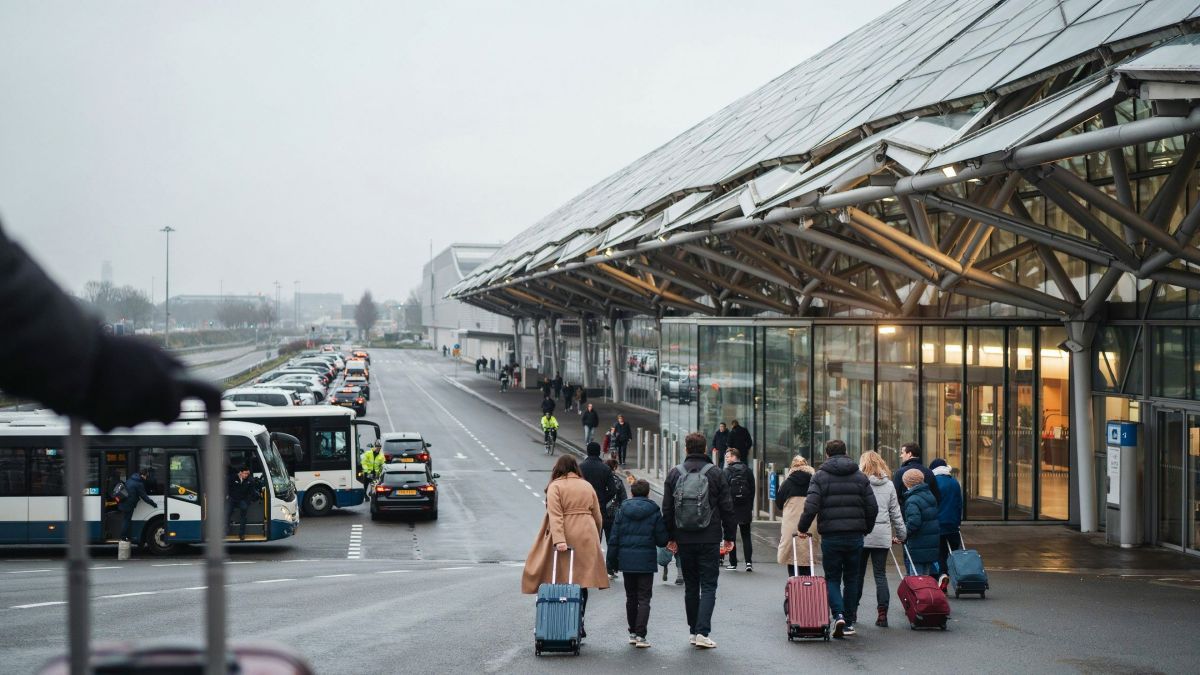
The Netherlands travel is faced with a difficult October because of an airport alert that affects the travel process even before many people get to the airport. It is important to understand that transport problems in a particular region may affect one’s journey, and in the case of airlines, they can also affect the schedule for the flight. It is necessary to ensure that the travel process undergoes an evaluation as opposed to focusing on the state of the flights alone. More time has to be allocated in order to do that.
Schiphol’s Big Warning Starts Before the Airport Terminal
Europe’s latest travel pressure point is not a cancelled flight. It is the road and the bus journey before the airport. Amsterdam Schiphol has warned that a nationwide regional transport strike may affect bus services to and from the airport from 04:00 on Wednesday, 14 October, until 04:00 on Thursday, 15 October, local time.
Advertisement
Advertisement
This matters because many passengers plan only as far as their boarding pass. They check the flight number. They check the gate. But they may not check whether they can reach the terminal at all.
Schiphol says regional buses may be disrupted or cancelled. The airport has not announced a closure. It has not said that flights will stop because of the transport action. Trains will continue to run. Metro, tram and city bus services will also remain available.
Advertisement
Advertisement
Yet the warning has a clear message for travellers. More people may switch to cars and taxis. That can mean busier roads, longer taxi queues and slower journeys around one of Europe’s biggest airport gateways.
The impact may be especially difficult for families with bags, travellers with early flights, people with reduced mobility and visitors who do not know Amsterdam’s transport network. A train may still run. But it may not serve every hotel, suburb or town in the same way as an airport bus.
Advertisement
Advertisement
The practical lesson is simple. A flight can remain fully scheduled while the journey to it becomes uncertain. Travellers should check their transport provider shortly before leaving, allow extra time and keep a back-up route ready.
Netherlands Travellers Must Think Beyond the Departure Board
The Schiphol warning creates a strong travel lesson. Airport disruption does not always begin inside the airport. It can begin at a bus stop, on a road or in a long taxi line.
Advertisement
Advertisement
The airport has advised travellers to plan in advance and use current transport information. It has also warned motorists to leave early because heavier road traffic is likely. Taxi waiting times may also rise as demand increases.
This is not a small detail. Missing a flight because an airport bus does not arrive can be just as damaging as a flight cancellation. A traveller may lose a hotel night, miss a cruise departure, lose a pre-booked attraction slot or arrive too late for a business meeting.
The Netherlands warning is therefore a story about the first mile of travel. The airport may be open. Security may be running. The aircraft may be ready. But the passenger still needs a reliable route to the terminal.
Travellers should not assume that a taxi is an instant solution. When many passengers make the same choice at once, cars become scarce and roads slow down. A good plan is to check train options, identify the correct airport station route and leave earlier than usual.
Advertisement
Advertisement
For those being dropped off or collected, passengers should use the designated parking and drop-off areas. The central message is clear: make the journey plan before the travel day becomes stressful.
Italy easyJet Strike Creates a Different Threat in the Sky
Italy brings the next stage of the European travel alert. A national industrial action involving easyJet Airlines Limited flight crew is planned for 16 October. The action is scheduled to run from 00:00 until 23:59.
This is an airline workforce dispute. It is not an all-airline shutdown. It does not mean every flight from Italy will be cancelled. It also does not mean every easyJet route across Europe will be affected.
That difference is vital. Travel disruption headlines can create panic when they use broad language. Italy is not closing its airspace. All airlines are not stopping. But passengers with an easyJet booking involving Italy should take the warning seriously.
A 24-hour crew strike can affect flight schedules, crew availability, aircraft rotations and the timing of later flights. Even when a flight operates, it may leave late or arrive late. A delay on one route can move across the network as aircraft and crew work through the day.
Passengers should check the airline’s app, email notices and live flight status. They should not rely only on a flight search website or an old booking confirmation. The planned strike does not provide a final cancellation total. That picture can change close to departure.
Advertisement
Advertisement
For holidaymakers, the impact can reach far beyond the airport. A late arrival can affect a hotel check-in, a ferry connection, car-hire collection, a tour reservation or a family reunion. The safest approach is to keep all booking details available and know which parts of the trip can be changed.
Protected Flights Could Keep Key Italy Island Routes Moving
Italy’s aviation arrangements for the easyJet strike give travellers a rare and useful level of detail.
Protected departure periods are listed from 07:00 to 10:00 and from 18:00 to 21:00. The arrangements also identify several routes that are protected during the action. They include Naples–Olbia, Olbia–Naples, Milan Malpensa–Lampedusa and Lampedusa–Milan Malpensa.
The list also includes an intercontinental departure from Milan Malpensa to Sharm el-Sheikh. Extra flights may also operate if staffing levels allow.
These protections matter because islands depend heavily on air links. A flight to Olbia or Lampedusa is not just a holiday service. It can connect residents, workers, families and visitors with the mainland. Protecting selected flights helps limit isolation during a national disruption.
But travellers must read the word “protected” carefully. It does not mean “guaranteed on time”. It does not mean that a passenger should stop checking their booking. It means the service is covered by the strike arrangements and has a stronger basis to operate.
Advertisement
Advertisement
Passengers should confirm their individual flight directly with the airline. They should also allow extra time at the airport. A protected flight may still face queues, late inbound aircraft or other operational problems.
The bigger story is powerful. During disruption, not every service carries the same importance. Italy’s protected-flight system shows how aviation authorities can seek to keep vital links open while industrial action takes place.
Passenger Rights Change When the Cause of Disruption Changes
A delayed or cancelled flight feels the same to a tired passenger. But the legal result can be different. This is where many travellers get confused.
European passenger-rights rules separate a strike by an airline’s own staff from a strike outside the airline’s control. An internal airline staff strike is generally not treated as an extraordinary circumstance. An external event may be treated differently, but the airline must show that the event caused the problem and that it could not have avoided the disruption through reasonable steps.
This means passengers should not assume that every strike leads to the same compensation outcome. A cabin-crew dispute at an airline and an air traffic control failure are not automatically treated in the same way.
There is also an important difference between compensation and care. Compensation is a payment that may be due in certain cases. Care can include meals, refreshments, hotel accommodation and communication support when passengers are stranded. Rerouting means an airline helps get a passenger to the destination. A refund returns the money for an unused flight.
Advertisement
Advertisement
These are separate rights. They should not be mixed together.
For Italy’s easyJet strike, passengers should keep records of every notice, rebooking offer and expense. Each case depends on its facts. The right action is to ask the airline what it is providing, save written evidence and avoid accepting a choice without understanding what it ends.
The United Kingdom Shows Why Recovery Can Take Longer Than the Fault
The UK offers a clear lesson in why disruption can keep spreading even after a technical problem is fixed. On 21 September, a technical issue at the NATS Prestwick centre in Scotland affected flights, mainly at northern UK airports. Other airports also reported disruption.
The fault was fixed. But knock-on effects continued. Aircraft, crews and passengers do not instantly return to the right place when a network problem ends.
A plane may have landed at the wrong time. A crew may have reached its legal duty limit. A connecting passenger may have missed the next flight. Airport stands and gates may be occupied by late aircraft. One technical failure can therefore create a chain of problems across many services.
The disruption was likely to count as an extraordinary circumstance under passenger-rights rules. This meant passengers were unlikely to receive compensation for delays or cancellations directly caused by the incident. However, airlines still had a duty to look after affected passengers. They were expected to provide care, information and the choice of refund or rerouting for cancellations.
Advertisement
Advertisement
This is the key traveller message. No compensation does not mean no support. An airline may still need to provide meals, refreshments and accommodation that fit the length of the delay. If the airline does not provide reasonable assistance, passengers should keep itemised receipts for necessary spending.
The September NATS event is background, not a current active failure. Its value is as a warning: the moment an operational issue is fixed is not always the moment a journey becomes normal again.
Europe’s Aviation Network Is Pressured but Still Operating
The wider European picture is not one of total aviation shutdown. The latest network data gives a more balanced view.
For the week from 21 to 27 September, Europe averaged 35,279 flights each day. That was 2.9% higher than the equivalent week in 2025. Arrival punctuality was 77.0%. Departure punctuality was 71.7%. Both measures improved compared with the same week a year earlier.
En-route air traffic flow-management delays were 39% lower than in the comparable 2025 period.
These figures show a busy but functioning European network. They do not remove the risk for an individual traveller. A passenger can still face a missed connection or a delayed flight even when the overall picture improves.
Advertisement
Advertisement
Air traffic control capacity and staffing accounted for 78% of en-route flow-management delay minutes during the week. This does not mean that staffing caused 78% of every passenger delay in Europe. It refers to one specific category of network delay.
That distinction matters. Data should explain disruption, not exaggerate it. Europe has major operational pressure. But the official figures do not support a claim that European travel is collapsing.
For travellers, the smart response is preparation. Check the live situation. Keep time between connections. Build flexibility into rail, hotel and car-hire plans. A strong network still has weak points when traffic is high.
Refund, Rerouting and Care Are Three Different Choices
When a flight is cancelled, a rushed decision can make a bad day worse. Covered passengers generally have a choice between a refund, rerouting at the earliest opportunity or travelling later on a suitable date, subject to availability.
The most important warning is this: choosing a refund ends the right to rerouting and care linked to that cancelled booking. A refund may be right for someone cancelling a whole trip. It may be the wrong move for a passenger who still needs to reach a wedding, holiday, cruise or urgent meeting.
Travellers should pause before pressing the refund button. Ask one simple question: do I want my money back, or do I still need to travel?
Advertisement
Advertisement
If travel remains essential, rerouting may have greater value than reimbursement. If the airline cannot provide suitable support, passengers may need to make reasonable arrangements themselves. Travellers should keep receipts and avoid excessive costs.
This is especially important during widespread disruption. Hotel prices can rise. Seats on other flights can disappear. Taxis can cost more. Travellers who keep evidence in one folder or on their phone are in a stronger position when asking for reimbursement later.
One Journey Still Has Too Many Separate Risks
The Europe travel route finds itself under new threats, thanks to a new Netherlands airport access warning, alongside an easyJet strike in Italy that puts October trips in peril through several directions. This Europe travel warning highlights why travelers have to do more than just considering the flight number when traveling. A bus delay might affect access to the airport. A staff strike may affect the planned flight service. A technical problem might cause delays even after being fixed. Thus, travelers need to consider every aspect, not only getting on board.
Advertisement
