
US Tightens Visa Rules for Birth Tourism Networks, Raising New Travel Scrutiny

Published
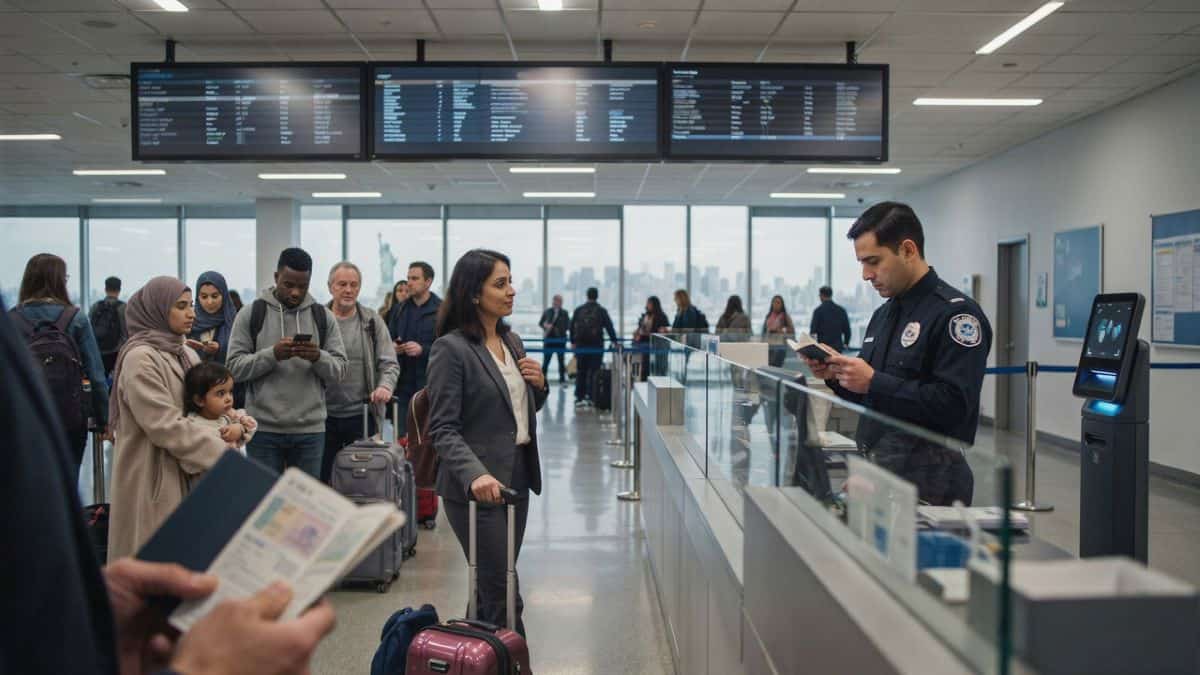
Image generated with Ai
For travellers planning a trip to the United States, a new visa announcement from Washington, D.C., is drawing attention to one particular type of travel: commercial birth tourism. The U.S. Department of State has announced a new visa restriction policy aimed at people who knowingly engage in or facilitate commercial birth tourism, including operators of birth-tourism networks, visa intermediaries accused of facilitating fraud and certain medical providers.
The announcement does not introduce a blanket visa ban for pregnant travellers or ordinary international visitors. Instead, it adds another layer to the U.S. government’s existing efforts to prevent people from using visitor visas primarily to travel to America to give birth for the purpose of obtaining U.S. citizenship for their child.
Advertisement
Advertisement
U.S. Targets Commercial Birth Tourism Networks
Secretary of State Marco Rubio announced the new policy on September 23, 2026, under Section 212(a)(3)(C) of the Immigration and Nationality Act.
According to the State Department, the measure is directed at individuals who knowingly participate in, support or facilitate commercial birth tourism. The department specifically identified owners, operators and managers of commercial birth-tourism networks, visa “fixers” who coach applicants to commit fraud, foreign medical providers who knowingly facilitate the activity and other individuals who enable such operations. Certain family members may also be covered by the restrictions.
Advertisement
Advertisement
The department said commercial networks have marketed arrangements in which foreign nationals travel to the United States to give birth primarily so their children can obtain U.S. citizenship. It also alleged that some operators coach applicants to provide false information during the visa process and charge substantial fees for arranging such trips. These are allegations made by the U.S. government rather than independently established findings about every birth-tourism business.
Advertisement
Advertisement
Birth Tourism Was Already Restricted Under U.S. Visa Rules
The latest announcement does not represent the first U.S. restriction on birth tourism.
The State Department amended its B-visa regulations in January 2020 to address what it described as birth tourism. Under that rule, consular officers are instructed to deny a B-visa application when they have reason to believe the applicant’s primary purpose for travelling to the United States is to give birth in order to obtain U.S. citizenship for the child.
The current visitor-visa guidance continues to make the distinction clear. Tourism, vacations, visiting relatives and friends, and medical treatment are listed among permitted B-2 purposes. However, the State Department explicitly states that travelling primarily to give birth in the United States to obtain citizenship for a child is not permissible on a visitor visa.
Pregnant Travellers Are Not Facing a Blanket Travel Ban
For international travellers, one of the most important aspects of the announcement is what it does not say.
The policy does not establish a general prohibition on pregnant foreign nationals entering the United States. Pregnancy by itself is not identified as the basis for the new restriction.
Advertisement
Advertisement
Instead, the focus is on the purpose of travel and on individuals or organisations involved in commercial birth-tourism arrangements. The State Department continues to list medical treatment as an allowable B-2 travel purpose, subject to the applicable visa requirements.
For travellers, that distinction matters. A person visiting the United States for tourism or legitimate medical treatment should not automatically interpret the new announcement as a new ban on their travel simply because they are pregnant.
Travel Agencies and Visa Intermediaries Face Greater Attention
The announcement could have a more direct effect on businesses operating around international travel.
Commercial birth-tourism arrangements can involve several travel-related services, including visa assistance, accommodation, transportation and medical arrangements. The new policy specifically identifies facilitators and intermediaries as potential targets where they knowingly participate in the activity.
This means travel businesses that operate in this area could face greater scrutiny if their services are connected to fraudulent visa applications or commercial birth-tourism schemes.
Advertisement
Advertisement
The warning is particularly relevant to intermediaries that advise travellers on what to disclose to U.S. consular officials. The State Department’s existing visa framework requires applicants to establish their eligibility and to use the visa for activities consistent with the terms of admission.
U.S. Visa Screening Is Expanding Beyond Birth Tourism
The birth-tourism announcement arrives as Washington is also expanding other forms of visa screening.
On September 18, the State Department announced that, effective October 1, 2026, online-presence review would be expanded to additional nonimmigrant visa categories, including I visas for foreign media representatives and TN and TD visas for certain USMCA professionals and their dependents. Applicants in these categories have been instructed to make their social-media profiles public or open to facilitate the review.
The department has already applied online-presence review to several other visa categories, including certain student, exchange visitor and employment-related visas.
For international travellers, the wider message is that U.S. visa processing is placing increased emphasis on eligibility, travel purpose and information available during screening.
Advertisement
Advertisement
What the New Policy Means for U.S. Tourists
For someone planning a conventional holiday in New York, Los Angeles, Orlando, Miami or San Francisco, the September 23 announcement does not introduce a new general tourist-visa restriction.
Travellers should still follow the existing B-1/B-2 requirements and be prepared to demonstrate the purpose of their visit and their eligibility for the visa category they are seeking.
The State Department’s visitor guidance continues to distinguish legitimate tourism and medical travel from activities that are not permitted under a visitor visa.
The practical lesson for travellers is simple: applications and travel plans should accurately reflect the actual purpose of the trip. Misrepresenting the purpose of travel can create significantly greater immigration and visa complications than simply complying with the applicable rules.
New Visa Policy Adds Another Layer to U.S. Travel Scrutiny
The latest announcement therefore represents a targeted expansion rather than a broad closure of America’s borders to a particular group of tourists.
Advertisement
Advertisement
The U.S. government is specifically moving against commercial birth-tourism networks and people it says knowingly facilitate the practice, while existing rules continue to govern individual visitor-visa applications.
For travellers, the bigger story may be the direction of U.S. visa policy more broadly. With additional screening measures being introduced across several visa categories, international visitors can expect the purpose and circumstances of their travel to remain an important part of the visa process.
For anyone planning a holiday in the United States, that does not mean cancelling the suitcase and changing the itinerary. It does mean making sure the reason for the journey is genuine, the visa category matches the trip, and the information provided during the application process is accurate.
Advertisement
