
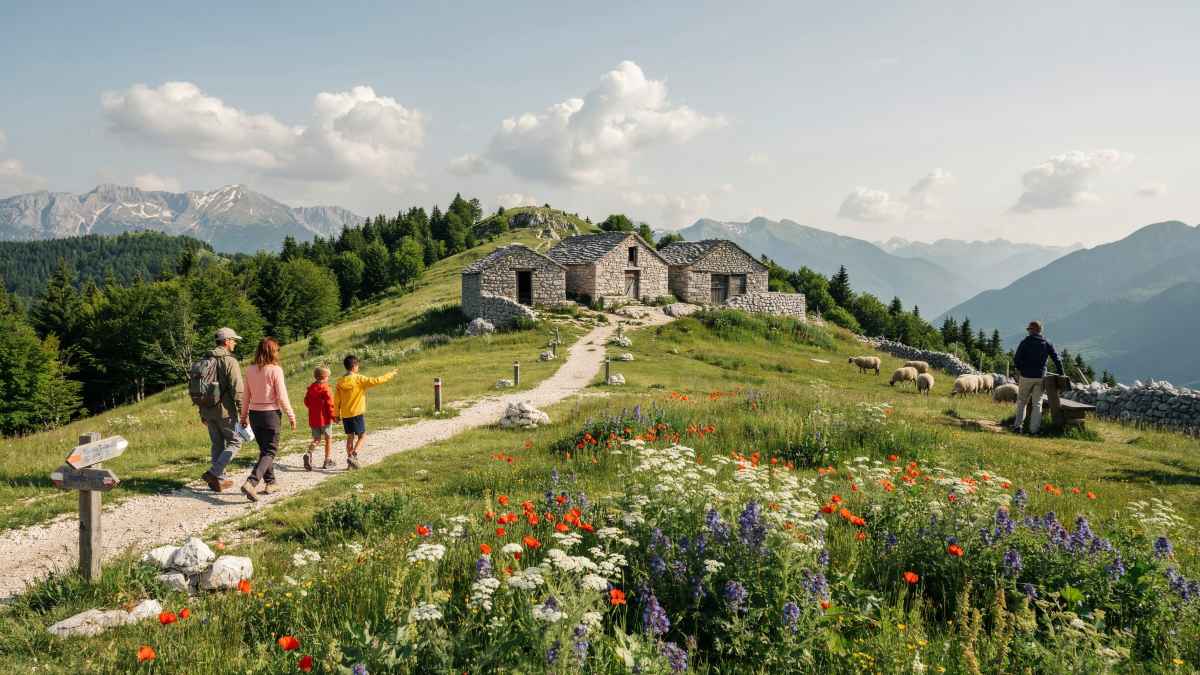
Image generated with Ai
The network of Katun Roads in Montenegro is expanding in the northern mountain ranges of the country by providing a trail system connecting the seasonal shepherds’ katun settlements and the country’s coastal area on the Adriatic Sea. In a project that will take many years, the development connects katuns, or traditional shepherds’ houses, in the mountain ranges of Bjelasica, Sinjajevina, and Prokletije. Over 60 shepherds’ households at high altitudes are provided with access to solar energy, water and standardised guest accommodation, making it possible for tourists to spend time with mountain pastoral people. The Katun Roads trail system consists of 500 kilometres long route called The Great Highlands.
The Katun Roads network follows landscapes historically used by shepherd communities during seasonal livestock movements.
The katuns represent an important part of Montenegro’s rural heritage, with families traditionally moving livestock to high-altitude summer pastures. Tourism development around these settlements provides visitors with access to landscapes and traditions that remain connected to pastoral activity.
For travellers, the network offers a way to explore northern Montenegro through multi-day journeys rather than concentrating exclusively on the country’s coastal destinations.
Advertisement
Routes across Bjelasica, Sinjajevina and Prokletije can introduce visitors to high-altitude valleys, mountain pastures and remote settlements while creating connections between different sections of the wider trail system.
The Great Highlands trail network provides a substantial route system for active travellers.
Hikers can use the connected trails for long-distance walking through Montenegro’s mountain landscapes, while gravel cyclists can incorporate rural roads and mountain tracks into multi-day expeditions.
The scale of the network also allows visitors to create itineraries based around different levels of activity and available time. Shorter excursions can focus on individual katuns, while longer journeys can connect several pastoral settlements.
Advertisement
Advertisement
This gives northern Montenegro a broader adventure tourism product beyond individual mountain attractions.
More than 60 pastoral households participating in the network have received infrastructure improvements including solar power and potable water access.
These upgrades support guest accommodation in locations where conventional utility infrastructure can be difficult to provide. Solar energy is particularly suited to remote mountain settlements, allowing households to offer basic visitor services without requiring extensive grid connections.
Standardised guest facilities also provide a more predictable experience for travellers undertaking longer routes.
The approach connects tourism development with the existing pastoral landscape rather than requiring the creation of large-scale accommodation infrastructure in remote areas.
Local food provides another component of the Katun Roads experience.
Travellers following the network can encounter traditional mountain products including artisan kajmak and lisnati, a layered cheese associated with regional pastoral food traditions.
These products connect visitors with the agricultural activities taking place around the katuns. Food experiences can form part of overnight stays or visits to pastoral households, giving travellers an opportunity to experience local gastronomy alongside hiking and cycling.
The combination of accommodation, food and outdoor activities creates a tourism experience centred on the everyday character of Montenegro’s highlands.
Bjelasica provides one of the principal mountain environments within the network.
Its combination of high-altitude terrain, forests and open pasture creates varied conditions for hiking and cycling. The range also connects visitors with rural communities and traditional landscapes that form part of northern Montenegro’s tourism offer.
Katun-based stays give travellers an alternative to conventional hotels and allow longer journeys through the mountain interior.
The network also reaches across Sinjajevina, a broad highland area known for its extensive pastoral landscapes.
Further east, the Prokletije mountains add steeper and more dramatic terrain to the wider tourism network. Together, the three mountain areas create a geographically diverse route system covering different landscapes and rural environments.
This diversity allows the Great Highlands network to appeal to both long-distance hikers and cyclists looking for varied terrain.
Katun Roads Project is expanding the realm of Montenegrin tourism beyond the usual coastal route via towns like Budva and Kotor. While the shores of the Adriatic continue to be an important part of the Montenegro tourism industry, this network creates more opportunities for tourists to explore other places and spend the night in villages. Therefore, the development brings the traditional pastoral families straight into the tourism industry while keeping them connected to their mountain lifestyle. In addition, the development of the network creates an altogether new way for travellers to get acquainted with Montenegro via trekking, gravel biking, sleeping in the mountains, eating local food, and exploring the pastoral way of life.
Advertisement
Tags: Bjelasica, Bjelasica mountain tourism, Great Highlands Montenegro, Katun Roads, Katun Roads Montenegro
Advertisement
Advertisement













Saturday, September 5, 2026

Saturday, September 5, 2026
Saturday, September 5, 2026
Saturday, September 5, 2026

Saturday, September 5, 2026

Saturday, September 5, 2026
Saturday, September 5, 2026

Saturday, September 5, 2026



