
Japan Doubles Domestic Airline Fuel Support From September 3 as International Flight Subsidies End

Published
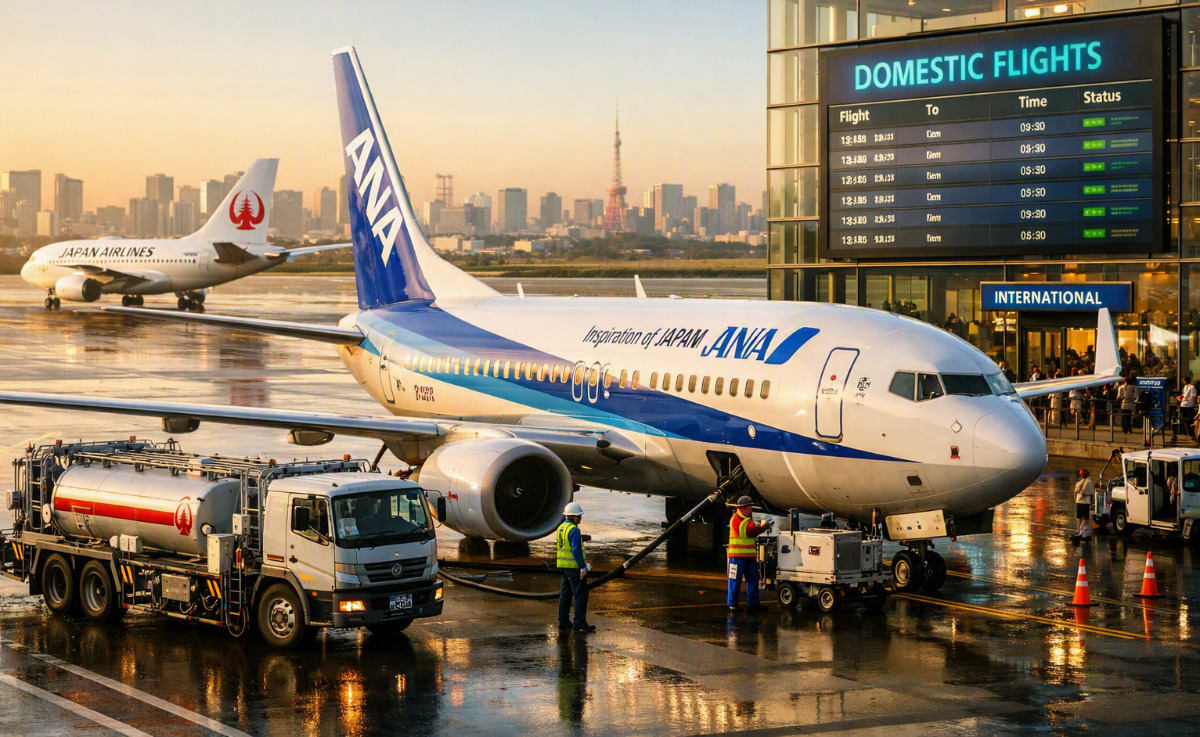
There has been an increment in the fuel subsidy in Japan for domestic airlines, whereby the subsidy rate has been increased to 80 percent of the gasoline subsidy benchmark of the government and aviation fuel reduction to ¥20.9 per litre starting from September 3, 2026. On the other hand, there has been an end of subsidy support for aviation fuel in international flights as the government intervenes in domestic air connectivity.
The policy affects travelers since fuel is the most expensive and volatile operating cost in aviation. The subsidy does not necessarily have to decrease the price of tickets since it can decrease the pressure on airlines operating domestic routes in Japan.
The Ministry of Economy, Trade and Industry of Japan is the implementing body for the policy through the fuel price mitigation programme. The programme is aimed at cushioning consumers from sudden increases in energy prices. This is done through the subsidies given to refineries and importers of fuel rather than the passengers directly.
Japan Doubles Domestic Aviation Fuel Support
Until the latest revision, Japan’s aviation fuel subsidy was set at 40% of the level provided for gasoline. Under the new approach, domestic aviation fuel receives support equal to 80% of the gasoline subsidy level, effectively doubling the rate applied to domestic airline fuel.
Advertisement
Advertisement
The revised support came into effect on September 3, alongside higher price-reduction support for several petroleum products. The official programme lists an aviation-fuel support amount of ¥20.9 per litre, while gasoline, diesel, kerosene and heavy fuel oil are each supported at ¥26.2 per litre.
Domestic aviation-fuel subsidy: old versus new
| Measure | Previous approach | From September 3, 2026 |
|---|---|---|
| Aviation-fuel subsidy rate | 40% of gasoline subsidy | 80% of gasoline subsidy |
| Domestic aviation-fuel support | Lower rate under earlier formula | ¥20.9 per litre |
| Gasoline subsidy reference | Government-set benchmark | ¥26.2 per litre |
| International aviation fuel | Covered under the previous support structure | Support ended |
| Intended policy focus | Broad fuel-price mitigation | Greater support for domestic aviation operations |
The increase does not mean that every airline will receive the same financial impact. The benefit will depend on the volume of eligible fuel bought for domestic operations, each carrier’s route network, fuel contracts and the way individual airlines manage procurement and hedging.
Advertisement
Advertisement
Current Fuel Support Rates in Japan
Japan’s aviation-fuel decision forms part of a wider fuel-price programme that applies to several petroleum products. From September 3, the government’s published price-reduction levels show a higher rate for ground-transport and heating fuels than for aviation fuel, even after the aviation subsidy increase.
Government fuel-price support from September 3
| Fuel product | Support amount | Notes |
|---|---|---|
| Gasoline | ¥26.2 per litre | Government reference subsidy level |
| Diesel | ¥26.2 per litre | Matches gasoline support amount |
| Kerosene | ¥26.2 per litre | Matches gasoline support amount |
| Heavy fuel oil | ¥26.2 per litre | Matches gasoline support amount |
| Aviation fuel | ¥20.9 per litre | Domestic aviation-fuel support |
| Aviation-fuel procurement adjustment | ¥2.8 per litre | September 2026 adjustment component |
The ¥20.9-per-litre figure represents approximately 80% of the ¥26.2 gasoline benchmark. This is a substantial increase from the earlier 40% formula but still leaves aviation fuel supported at a lower nominal level than gasoline, diesel, kerosene and heavy fuel oil.
Advertisement
Advertisement
For airlines, the practical importance is that the subsidy reduces a component of their wholesale fuel cost. It does not eliminate the effect of global jet-fuel prices, exchange-rate movements or broader operating expenses.
Why This Matters
Japan depends on domestic aviation for more than business travel between its largest cities. Airlines connect major hubs with Hokkaido, Kyushu, Okinawa, regional prefectures and remote islands where rail links may be unavailable, slow or impractical.
A larger Japan domestic airline fuel subsidy can therefore help carriers manage cost increases at a time when aviation fuel prices have been affected by wider energy-market uncertainty, including disruption risks linked to instability in the Middle East.
The government has indicated that emergency fuel-price support may be adjusted based on regional developments, fuel-price movements and the sustainability of public funding. The increase in domestic aviation support shows that the government considers internal air routes strategically important to national and regional connectivity.
Advertisement
Advertisement
Possible effects for domestic travellers
- Airlines may face less pressure to raise fares solely because of fuel costs.
- Domestic route networks may be more resilient during periods of elevated jet-fuel prices.
- Services to smaller regional airports could receive indirect operational support.
- Island and remote-area links may benefit because aviation is often a necessary transport service.
- Airlines may have more scope to maintain schedules, although no airline has announced a blanket capacity guarantee linked to this measure.
- Travellers could see more stable fares than they might under an unmitigated fuel-price shock, though this will vary by route and airline.
The key point for passengers is that a fuel subsidy can improve airline economics without creating an immediate or guaranteed airfare discount. Ticket prices will still be determined by booking demand, seasonality, route competition, fuel hedging, airport charges, staffing costs and an airline’s own pricing strategy.
What Has Changed for International Flights
The government has ended subsidies for aviation fuel used on international flights while expanding support for domestic services. The change reflects the view that airlines operating overseas services have increasingly used fuel surcharges to recover higher jet-fuel costs from passengers.
International passengers should not interpret the policy as proof that every ticket will become more expensive. Airlines often calculate fuel surcharges using historical fuel-price averages, exchange-rate data and defined surcharge bands. As a result, changes in government support can affect fares with a delay and in different ways across carriers.
Domestic and international aviation support compared
| Travel category | Fuel subsidy status from September 3 | Likely passenger relevance |
|---|---|---|
| Domestic flights within Japan | Subsidy rate increased to 80% of gasoline benchmark | May ease airline fuel-cost pressure; fares are not automatically reduced |
| International flights departing or arriving in Japan | Aviation-fuel subsidy support ended | Airlines may rely more heavily on their own fare and surcharge structures |
| Regional and remote-island domestic operations | Covered by domestic fuel-support framework | Potentially important where air service is a critical connection |
| International routes with published fuel surcharges | Depends on each airline’s pricing formula | Travellers should check the surcharge applicable on ticket-issue date |
For overseas travellers, the most reliable approach is to review the final fare breakdown before payment, including any fuel surcharge, taxes and carrier-imposed charges. A lower base fare does not always mean a lower total ticket price.
JAL’s International Fuel Surcharge Shows the Complexity
Japan Airlines and Japan Transocean Air offer a recent example of how fuel-price support and international surcharge calculations can overlap. For tickets issued from September 1 through October 31, 2026, the airlines applied their Zone O fuel-surcharge level rather than the higher Zone P level that would normally have applied under the relevant conditions.
The airlines said the decision reflected the impact of the government’s emergency mitigation measures responding to the Middle East situation. The surcharge was based on a two-month average assessment of Singapore kerosene prices and exchange rates, not solely on the spot fuel price at the time of ticket purchase.
Advertisement
Advertisement
JAL and JTA fuel surcharge amounts for Japan-origin itineraries
| Route group | One-way surcharge for tickets issued Sep. 1–Oct. 31, 2026 |
|---|---|
| Japan–South Korea / Russian Far East / Okinawa–Taipei or Kaohsiung | ¥5,900 |
| Japan–East Asia excluding South Korea and Mongolia | ¥12,400 |
| Japan–Guam, Palau, Philippines, Vietnam, Mongolia, Irkutsk | ¥17,500 |
| Japan–Thailand, Malaysia, Singapore and other specified South-East Asia routes | ¥29,000 |
| Japan–Hawaii, India, Indonesia and other applicable route groups | ¥37,000 |
| Japan–North America, Europe, Middle East and Oceania | ¥50,000 |
The long-haul ¥50,000 one-way surcharge for Japan–North America, Europe, Middle East and Oceania itineraries was lower than the ¥53,000 amount associated with the otherwise applicable Zone P level. The comparison demonstrates that support measures can affect airline charges, but airline decisions, ticketing periods and route groups remain decisive.
Travellers should also note that fuel surcharges are generally based on the date the ticket is issued, rather than the date of travel. Booking before or after a new surcharge period begins can therefore affect the total cost of the same flight.
How Japan’s Fuel Support Programme Works
Japan’s fuel-price mitigation policy is aimed at reducing sharp price swings across petroleum products. Rather than offering a passenger rebate, the government provides support to oil refiners and importers to reduce wholesale prices for eligible fuels.
This distinction matters because travellers are unlikely to see a separate line item called a “government fuel subsidy” when booking. The effect, if any, appears indirectly through an airline’s operating costs and subsequent commercial decisions.
What the programme does and does not do
| What it does | What it does not do |
|---|---|
| Supports lower wholesale fuel costs for eligible products | Guarantee lower airfares |
| Gives domestic airlines a larger aviation-fuel cost buffer | Require airlines to pass savings directly to passengers |
| Helps cushion sudden fuel-price increases | Fix international fuel surcharges across all airlines |
| Supports domestic aviation fuel from September 3 | Cover international aviation fuel under the revised policy |
| May help preserve regional air connectivity | Replace airline fare rules, booking restrictions or route economics |
The value of the programme will depend on whether high global fuel costs persist and how much of the benefit airlines use to absorb expenses, protect route profitability, preserve schedules or compete on fares.
Aviation Fuel Tax Relief Adds Another Layer
The fuel subsidy is separate from Japan’s aviation-fuel tax, another major element of airline operating costs. The Ministry of Land, Infrastructure, Transport and Tourism has reportedly decided to seek a delay to a scheduled tax increase in fiscal 2027, citing higher fuel prices associated with Middle East developments.
Advertisement
Advertisement
The standard aviation-fuel tax rate had been reduced during the pandemic and is currently ¥15,000 per kilolitre for fiscal 2025 and fiscal 2026. Without further action, it is scheduled to rise to ¥18,000 per kilolitre in fiscal 2027.
Aviation-fuel tax rates under the proposed continuation
| Route category | Standard statutory rate | Current/reported preferred rate | Fiscal 2027 position sought by transport ministry |
|---|---|---|---|
| Most domestic routes | ¥26,000 per kilolitre | ¥15,000 per kilolitre | Maintain ¥15,000 per kilolitre |
| Okinawa routes | ¥13,000 per kilolitre | ¥7,500 per kilolitre | Maintain ¥7,500 per kilolitre |
| Specified remote-island routes | ¥19,500 per kilolitre | ¥11,250 per kilolitre | Maintain ¥11,250 per kilolitre |
This policy discussion is particularly relevant for Okinawa and remote-island routes, where the cost of maintaining regular air services can be higher and where airline connections are important for tourism, local mobility, healthcare access and cargo movements.
What Travellers Should Know
The domestic aviation-fuel subsidy is a sector-support measure rather than a consumer promotion. Travellers should use it as context when following fare trends, but they should continue booking based on the total price, schedule, conditions and reliability of the carrier.
Before Booking Domestic Flights in Japan
- Check the final ticket price rather than assuming that the subsidy will create a specific airfare reduction.
- Compare fares across full-service airlines and low-cost carriers on major domestic routes.
- Book in advance for Golden Week, New Year, Obon and other busy domestic travel periods, when demand can influence fares more strongly than fuel-cost changes.
- Review baggage allowance, seat-selection charges, cancellation terms and change fees before purchasing a low headline fare.
- Check the airline’s official website for schedule revisions, especially when travelling to regional airports or islands with fewer daily flights.
- Allow flexibility where possible, as travelling at less popular times can still matter more to price than the fuel subsidy itself.
- Check official airline notices for route-specific fuel surcharges if purchasing international tickets.
The most meaningful benefit may be improved cost stability for airlines, rather than a highly visible price cut for passengers. If carriers use the additional support to maintain capacity or reduce the need for fare increases, travellers could benefit indirectly through more stable and competitive domestic options.
Frequently Asked Questions
When did Japan raise the domestic aviation-fuel subsidy?
The revised subsidy took effect on September 3, 2026. The official support amount for aviation fuel was set at ¥20.9 per litre.
How much is Japan’s domestic airline fuel subsidy now?
The support level is ¥20.9 per litre. It represents 80% of the ¥26.2-per-litre gasoline subsidy benchmark that applies from September 3.
Advertisement
Advertisement
What was the previous aviation fuel subsidy rate?
Aviation fuel had been supported at 40% of the gasoline subsidy amount. The domestic rate was increased to 80%, doubling the relative subsidy rate.
Does the policy mean domestic airfares will fall?
No automatic fare cut has been announced. The subsidy can reduce airline fuel-cost pressure, but airlines independently set ticket prices based on demand, competition, capacity, operating costs and their own commercial strategy.
Are international flights included in the higher subsidy?
No. The revised policy ends government fuel subsidy support for international aviation fuel while increasing support for domestic flights.
How can international travellers check fuel surcharge costs?
Passengers should check the airline’s official fare and surcharge table before purchasing. For many airlines, the applicable surcharge is determined by the date the ticket is issued and can change on a fixed monthly or two-monthly cycle.
Closing Update
The move by Japan to raise the aviation fuel subsidy within the country from ¥20.9 per litre would ensure that airlines have a higher cushion in case of fluctuations in fuel prices, with domestic connectivity being the focus in the most recent response to aviation cost issues.
From the point of view of the domestic traveller, the effect would be an indirect one since there could be higher price stability, less likelihood of higher prices resulting from fuel and better support for airline networks. From the point of view of the international traveller, the removal of the fuel subsidy means that the policies of individual airlines regarding charges become even more critical.
Advertisement
