
US Aligns with Germany and Others as Brazil Cyclone Threatens Travel Across Major Tourism Hubs

Published
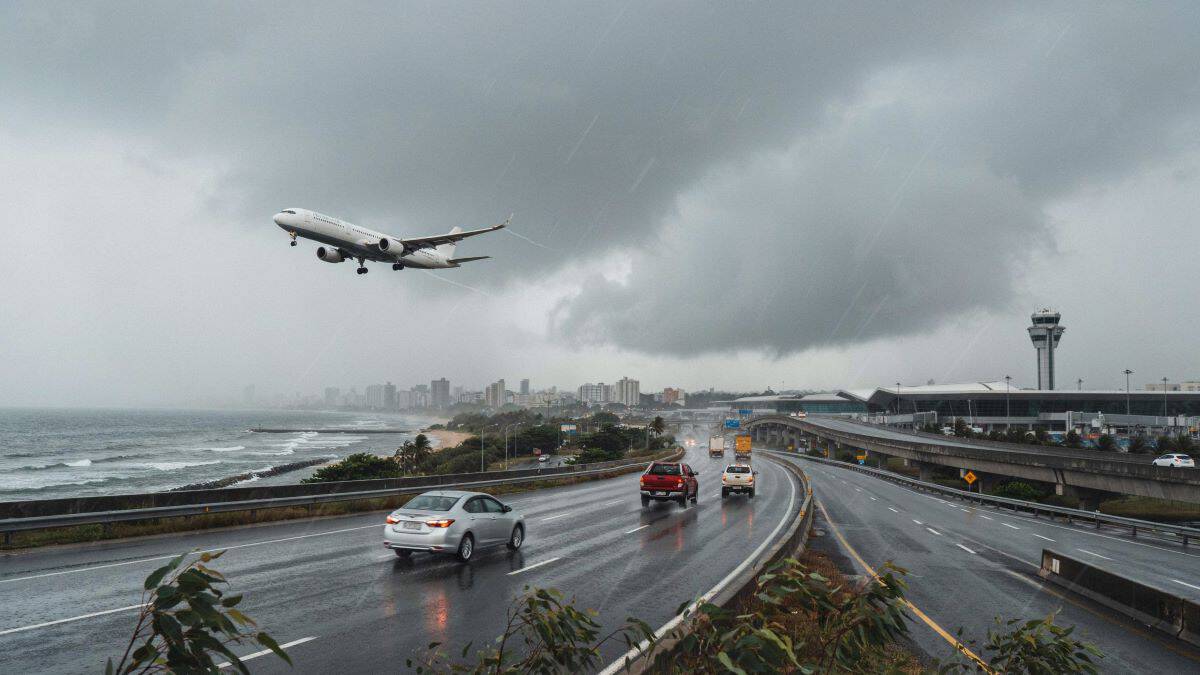
Image generated with Ai
US aligns with Germany, Argentina, Chile and others as Brazil cyclone threatens travel across major tourism hubs, with severe storms risking flights, roads and border journeys while key source markets face disruption across southern Brazil. Thus, this extra-tropical cyclone is creating a serious travel challenge across one of South America’s busiest tourism regions, with severe thunderstorms, flooding risk, damaging winds and rough coastal conditions threatening journeys across southern Brazil. The impact reaches international travellers from the United States, Germany, Argentina, Chile, Portugal and neighbouring Paraguay because Brazil’s southern airports and border corridors are carrying record or near-record volumes. Therefore, the critical point for visitors is clear: this is not a nationwide tourism shutdown. The greater threat is disruption spreading through flights, road transfers, border crossings, coastal activities and connecting journeys as unstable weather moves across the South and towards parts of south-eastern Brazil.
Brazil Cyclone Travel Risk Extends Far Beyond the Storm Centre
INMET’s latest outlook says the formation of an extra-tropical cyclone off Brazil’s southern coast is intensifying instability across the South and parts of the Centre-West and Southeast on 11 and 12 September. The build-up to the system had already prompted INMET to issue its highest red “great danger” warning for severe storms across parts of Paraná, Santa Catarina, southern Mato Grosso do Sul and extreme north-western Rio Grande do Sul.
Advertisement
Advertisement
The danger is not limited to the cyclone itself.
INMET says severe storms in this environment can produce hail, intense downdrafts or microbursts and, in isolated locations, even tornadoes.
Advertisement
Advertisement
For travellers, that creates several different risks at once:
- delayed or rerouted flights;
- flooded or obstructed roads;
- slower airport transfers;
- disrupted cross-border coach journeys;
- suspended outdoor activities;
- dangerous coastal and marine conditions.
This is why simply checking whether an airport is “open” does not tell the full story.
Advertisement
Advertisement
Rio Grande do Sul Storms Put Road and Air Journeys Under Pressure
Rio Grande do Sul faces some of the most extreme conditions.
The state Civil Defence warned that storms during the early hours and morning of 11 September could bring large hail, intense rainfall and wind gusts above 90 km/h across areas including the North-West, Missões, North, North-East, West, Serra and central regions.
Rainfall totals between 10 and 11 September could locally exceed 150 mm in northern parts of the state.
That amount of rainfall matters after the thunderstorms themselves have moved away.
Flooded streets, fast-rising streams, debris and saturated ground can continue affecting travellers driving between airports, hotels and regional destinations.
Author analysis: the most underestimated traveller risk may therefore be the journey after landing. A flight can arrive normally while the final road transfer becomes slower or unsafe.
Advertisement
Advertisement
Santa Catarina Cyclone Forecast Raises Florianópolis and Coastal Travel Risk
Santa Catarina combines a growing international aviation market with major coastal tourism.
Epagri/Ciram forecasts widespread storms on 11 September, with heavy rain, strong winds, lightning, hail and isolated severe thunderstorms. Gusts around the South Coast and Greater Florianópolis may reach 50–70 km/h.
Marine forecasts add another important dimension. Waters between Chuí and Laguna face gusts around 70–80 km/h, with wave peaks of roughly 2–3 metres and a risk of rough seas as the cyclone intensifies. Some forecasts indicate wave peaks approaching 3.5 metres on 12 September.
That directly affects travellers considering:
- boating or fishing trips;
- small-vessel excursions;
- exposed beaches;
- waterfront activities;
- coastal road itineraries.
In practical terms, a traveller may keep a valid hotel reservation and an operating flight while still needing to change the day’s tourism plans.
Southern Brazil Airports Face Severe Weather During Record Travel Growth
The cyclone is arriving when southern Brazilian aviation is exceptionally busy.
Advertisement
Advertisement
Brazil’s Ministry of Ports and Airports says more than 8.1 million passengers boarded flights across the South between January and July 2026, up 8.2% from the same period of 2025.
International boardings climbed even faster, rising 15.9% to 650,300.
The first six months of 2026 had already produced the highest first-half passenger movement in the South since ANAC’s series began in 2000, with nearly 6.95 million passengers, 9% more than a year earlier.
| Major southern airport | July 2026 passenger movement cited by government |
|---|---|
| Porto Alegre | 658,700 |
| Curitiba | 504,100 |
| Florianópolis | 306,100 |
| Foz do Iguaçu | 247,800 |
| Navegantes | 195,200 |
Florianópolis also led southern Brazil in international passenger movement during July.
This makes weather disruption more consequential. A brief delay at one busy airport can affect aircraft rotations and onward connections elsewhere in Brazil.
Foz do Iguaçu Becomes a Critical Brazil Tourism Watchpoint
Foz do Iguaçu deserves special attention because its tourism system depends on both aviation and international road traffic.
Advertisement
Advertisement
Paraná received 456,129 foreign tourists during the first four months of 2026, representing around 10% of Brazil’s international arrivals during that period. Paraguay contributed around 204,000 visitors, or 44%, while Argentina supplied more than 134,000, or 29%.
Even more revealing, official state data show that 97% of Paraná’s international arrivals during the first two months of 2026 entered by land.
That gives Foz do Iguaçu a very different risk profile from an air-dominated destination.
Travel analysis: in Paraná, severe weather can disrupt tourism even without a single cancelled flight. Road visibility, border approaches, coach timetables and attraction access can become the decisive issues.
US, Germany and Other Source Markets Have Direct Stakes in Brazil Tourism
Brazil welcomed a record 3.74 million international visitors across all transport modes during the first quarter of 2026. Of these, 2.33 million arrived by air, an increase of 19.4% year on year.
The leading source markets show why weather disruption in Brazil has a broad international reach.
Advertisement
Advertisement
| Source market | Q1 2026 arrivals to Brazil |
|---|---|
| Argentina | 780,578 |
| Chile | 316,252 |
| United States | 213,401 |
| Portugal | 113,765 |
| Germany | 74,409 |
Argentina has the largest numerical exposure, followed by Chile and the United States. Portugal and Germany give the story a significant European dimension.
The US and Germany do not “align” through a common travel policy. Their connection lies in their shared importance as major source markets whose visitors rely heavily on Brazil’s aviation and tourism infrastructure.
That distinction keeps the headline traveller-focused without suggesting coordinated government action.
São Paulo and Rio Can Turn Southern Weather Into a Wider Flight Problem
The storm’s direct focus is southern Brazil, but long-haul travellers need to think beyond the immediate warning zone.
São Paulo and Rio de Janeiro are Brazil’s dominant international gateways. During the first quarter of 2026, São Paulo recorded 855,191 international arrivals and Rio de Janeiro 843,615. Santa Catarina exceeded 328,000.
The South-East aviation system is also enormous, handling 37 million passengers from January through July 2026, up 3.1%.
Advertisement
Advertisement
This creates a less visible connection effect.
A traveller from New York, Miami, Frankfurt or Lisbon may land in São Paulo before continuing to Curitiba, Florianópolis, Porto Alegre or Foz do Iguaçu. Weather disruption farther south can delay the inbound aircraft needed for that next sector, alter crew schedules or compress connection times.
The lesson is simple: check the entire booking, not only the first flight.
Brazil Cyclone Does Not Mean Airports Are Automatically Closed
This is one of the most important points for travellers.
Severe weather alerts are not the same as airport-closure notices.
Official forecasts confirm potentially dangerous storms, hail, heavy rain, strong winds and difficult coastal conditions. They do not establish a blanket closure of Porto Alegre, Curitiba, Florianópolis, Foz do Iguaçu or Brazil’s national aviation network.
Advertisement
Advertisement
Travellers should therefore avoid cancelling journeys solely because the word “cyclone” appears in a headline.
The more useful response is flexible planning. Check airline status before leaving for the airport. Watch INMET and state Civil Defence information. Confirm highway and border conditions. Recheck tours involving waterfalls, beaches, boats or exposed outdoor areas.
Why Brazil’s Cyclone Matters More in a Record Tourism Year
The final issue is scale.
Southern Brazil is carrying record aviation demand. Paraná is receiving hundreds of thousands of international visitors. Brazil as a whole is attracting record foreign arrivals. Argentina, Chile, the United States, Portugal and Germany are all important source markets, while Paraguay plays an exceptional role in southern land tourism.
That makes this cyclone more than a short-lived weather event.
Its real tourism significance lies in how Brazil’s growing travel network reacts under pressure.
Advertisement
Advertisement
For visitors, the smartest strategy is not panic. It is awareness. Monitor the whole journey, allow more connection time, stay flexible with road and outdoor plans, and rely on official weather and transport information as conditions change.
That approach gives travellers the best chance of keeping a Brazil holiday moving safely even when severe weather threatens the country’s busiest southern tourism corridors.
In conclusion, US aligns with Germany and others as Brazil cyclone threatens travel across major tourism hubs because key international source markets depend on Brazil’s airports, roads and border corridors. Even if airports are not closing due to severe storms, strong winds and heavy rain in southern Brazil can cause disruptions to flights, transfers and outdoor activities. The most dangerous threat for Americans, Germans, Argentines, Chileans, and other major tourist markets is not that tourism will be shut down, but that the networks are disrupted, and the official weather broadcasts, airline announcements and flexible travel planning will be vital to those travelling from the US.
Advertisement
