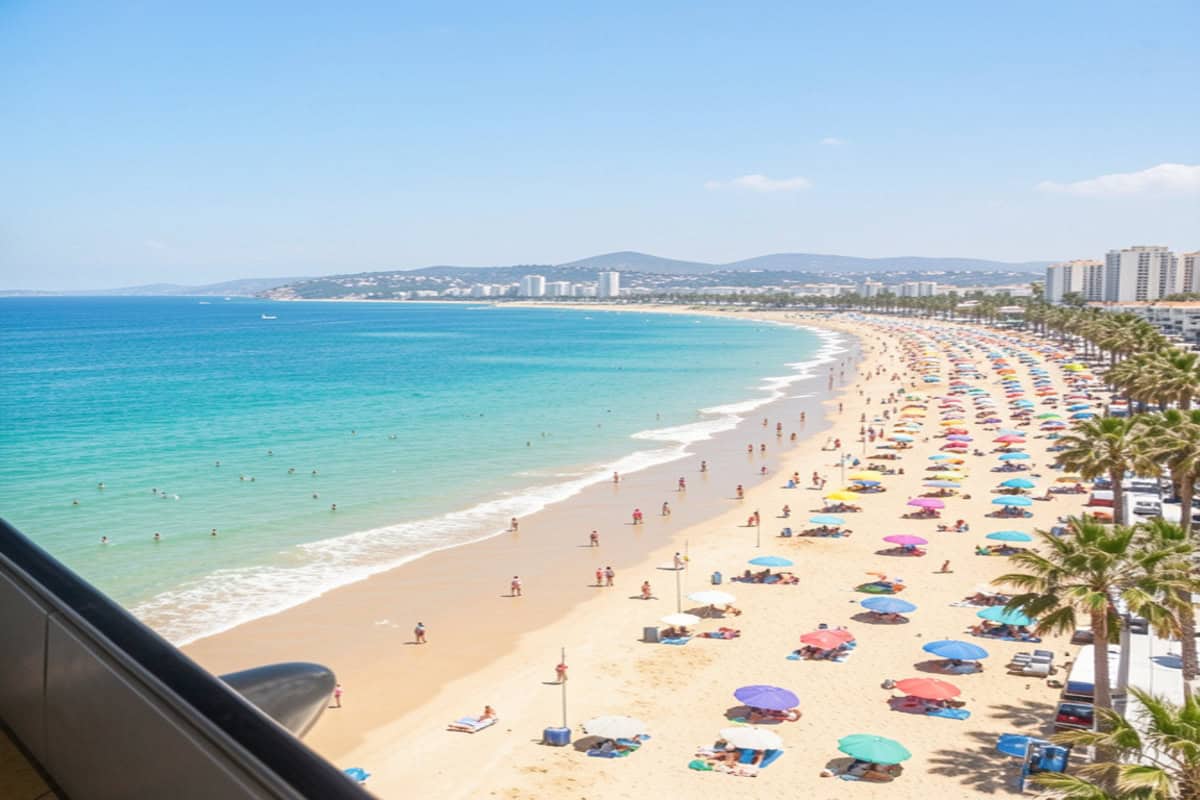
Image generated with Ai
Spain’s leading resort destinations, including Mallorca, Costa del Sol and other Spanish hotspots, are becoming the centre of Europe’s new summer travel surge as millions of UK travellers head overseas for holidays amid rising heat risks, longer airport queues and changing border control procedures. The massive travel movement is expected to place significant pressure on airports, tourism infrastructure and popular coastal regions during the peak summer season, while destinations prepare to manage record demand and evolving traveller expectations.
British Summer Travel Surge Sends 2.2 Million Holidaymakers Overseas as Mallorca Faces Extreme Heat and Europe Braces for Border Delays
Around 2.2 million British holidaymakers are expected to travel overseas between 24 and 27 July as the first fully nationwide weekend of the UK school summer holidays triggers one of the year’s largest passenger movements. Spain is preparing to receive a significant share of this demand, with Mallorca, the Costa del Sol, Costa Blanca, Canary Islands and the wider Balearic Islands remaining dominant family choices. However, intense summer temperatures, crowded airports and continuing uncertainty surrounding Europe’s Entry/Exit System could make the journey more complicated than many travellers expect.
The timing is particularly important for Mallorca. The island is entering one of the most commercially valuable periods of its summer tourism season, when hotels, airlines, restaurants, attractions and transport operators depend heavily on family arrivals from Britain. A strong opening weekend could provide momentum for the remaining weeks of the peak season, while operational disruption or uncomfortable heat conditions could place pressure on visitor satisfaction.
Advertisement
Mallorca is expected to be among the leading beneficiaries of the British summer travel exodus. The island has long been one of the most accessible Mediterranean destinations for UK families because of its extensive flight network, established resort infrastructure and broad accommodation market.
Popular coastal areas are likely to experience a sharp increase in arrivals as schools across England, Wales, Scotland and Northern Ireland enter the summer holiday period. Demand is expected to be concentrated around family resorts, beaches, water attractions and all-inclusive properties.
The scale of the movement could also place pressure on Palma de Mallorca Airport, transfer services, taxis, car hire desks and local roads. Travellers arriving during peak periods may face longer waits for baggage, transport and hotel check-ins, particularly when several flights land within a short period.
This weekend could therefore shape perceptions of Mallorca’s wider summer performance. Tourism businesses will be required to handle heavy passenger volumes while maintaining service standards during one of the hottest periods of the year.
High temperatures are emerging as a major concern for visitors travelling to Mallorca and other southern European destinations. Extreme heat can quickly transform a conventional beach holiday into a demanding experience, especially for young children, older travellers and people with existing health vulnerabilities.
Families may need to reconsider how they organise sightseeing, outdoor activities and excursions. Walking tours, cycling trips, inland visits and prolonged periods on exposed beaches can become difficult during the hottest hours of the day.
Travellers are likely to rely more heavily on shaded areas, air-conditioned accommodation, swimming facilities and evening entertainment. Travellers may increasingly prefer exploring destinations during cooler morning hours or after sunset, as daytime heat could make midday outdoor activities less comfortable.
The heat could also increase demand for bottled water, local transport and indoor attractions. Hotels may experience greater pressure on air-conditioning systems, while restaurants and leisure venues with shaded or climate-controlled spaces could attract more customers.
Travellers should closely monitor regional weather updates and follow guidance issued by local authorities to ensure a safe and comfortable holiday experience during periods of extreme conditions. Regular hydration, lightweight clothing, sun protection and reduced physical activity during peak heat periods can help lower the risk of heat exhaustion.
Visitors should also check whether their accommodation provides reliable air conditioning. This may be particularly important for families staying in private apartments, older properties or lower-cost rooms where cooling facilities can vary.
Spain remains the leading overseas destination for British families during the summer school break. Its combination of frequent flights, Mediterranean beaches, familiar resorts and varied accommodation continues to support strong demand.
Alongside Mallorca and the Balearic Islands, the Costa del Sol, Costa Blanca and Canary Islands are expected to receive large numbers of British visitors. Each destination offers a different holiday environment, from mainland beach resorts and urban attractions to island-based packages and year-round leisure facilities.
Greece, Portugal, Italy and Turkey are also attracting strong summer holiday interest, with these Mediterranean destinations continuing to appeal to families through extensive flight connectivity, competitive holiday packages and a wide range of resort experiences suited to peak-season travellers.
Long-haul travel is also contributing to the summer surge. Florida and Mexico are expected to attract families seeking theme parks, large resorts and extended beach holidays.
European city breaks remain another important part of the market. Barcelona, Budapest, Dublin, Amsterdam and Paris are among the cities expected to receive British travellers during the opening weekend of the school holidays.
The diversity of demand shows that the summer movement is not limited to traditional seaside packages. Families, couples and groups are booking a mixture of resort stays, city escapes and long-haul experiences.
Airports across Britain are preparing for intense departure traffic. Hundreds of thousands of passengers are expected to travel through Heathrow and Gatwick, while approximately 220,000 passengers are due to depart from Stansted.
Luton Airport is expected to handle around 130,000 departing passengers. Manchester Airport could see approximately 250,000 departures, making it one of the busiest regional gateways during the weekend.
More than 110,000 passengers are expected to leave from Birmingham Airport, while Bristol Airport is preparing for around 80,000 departures.
Scottish schools began their summer holidays earlier, but airports in Scotland are still expected to remain busy. Regional airports, ferry ports and Channel Tunnel services are also likely to experience elevated passenger volumes.
The concentration of departures over a four-day period increases the possibility of queues at security checkpoints, airline check-in areas, baggage-drop counters and border facilities.
Travellers should check their airline’s recommended arrival time rather than reaching the airport excessively early. Arriving far earlier than advised can sometimes add unnecessary congestion to already crowded terminals.
Online check-in, advance seat selection and pre-booked airport transport could help simplify the journey. Passengers should also verify baggage allowances before leaving home, as last-minute luggage problems can lead to additional charges and delays.
The European Entry/Exit System represents another potential challenge for British travellers. For many passengers, this summer may provide their first direct experience of the new border-control process.
The system is designed to digitally record the entry and departure of eligible non-European travellers. Depending on the stage of implementation and the facilities available at each crossing point, some passengers may need to complete additional identity and biometric procedures.
Not every traveller or border location will experience the same delay. However, unfamiliarity with the process could slow queues, particularly when large numbers of families arrive together.
The greatest pressure may be felt at airports, ferry terminals and Channel crossings serving high volumes of British passengers. Families travelling with children, large groups and passengers unfamiliar with automated border technology may require additional assistance.
The impact may also be more noticeable during the return journey. Travellers should leave enough time to reach their departure airport or port abroad, complete check-in procedures and pass through border controls.
Passports should be kept easily accessible, and travellers should follow instructions from border officials and transport operators. Families should avoid packing essential documents inside checked luggage.
The opening weekend of the UK school holidays is expected to deliver a major boost to destinations across Europe and beyond. Yet the combination of extreme heat, crowded transport hubs and developing border procedures means careful preparation will be essential.
Travellers heading to Mallorca should plan around the hottest periods, remain hydrated and confirm that accommodation and transport arrangements are suitable for high temperatures.
Those using busy British airports should check flight information regularly, allow sufficient travel time and prepare for congested terminals. Passengers entering or leaving the European Union should also expect passport processing to take longer than on previous journeys.
For Mallorca, the weekend represents more than a routine rise in arrivals. It is a major test of how effectively the island can manage intense British demand during severe summer conditions. A smooth experience could strengthen confidence in the destination throughout the remaining holiday period. Disruption, excessive heat or prolonged queues could instead influence how travellers evaluate one of Europe’s most popular summer islands.
Advertisement
Advertisement
Advertisement













Saturday, September 5, 2026

Friday, September 4, 2026

Saturday, September 5, 2026

Friday, September 4, 2026

Thursday, September 3, 2026

Wednesday, September 2, 2026
Saturday, September 5, 2026