
Manila Leads Philippine Cruise Tourism Boom as Boracay, Coron and Palawan Gain Global Cruise Calls

Published
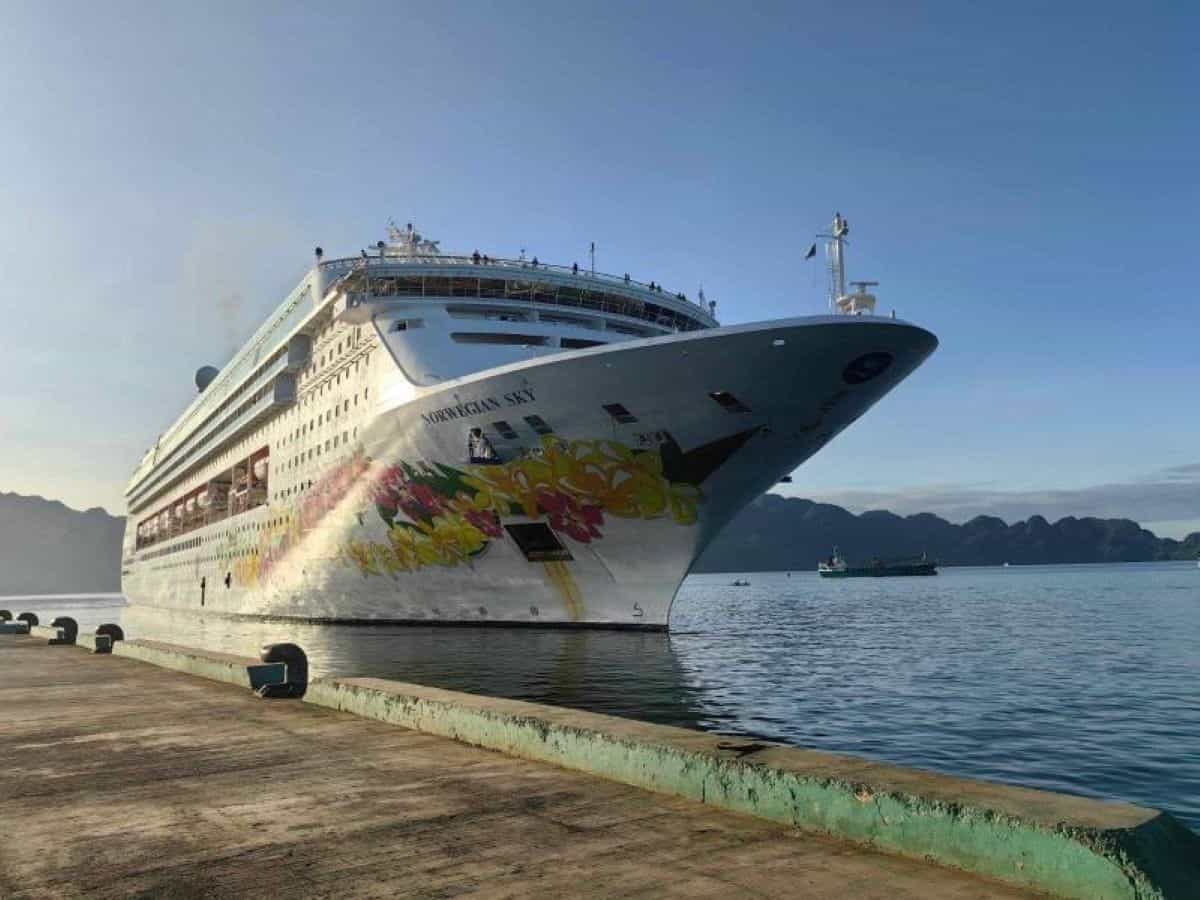
The Philippines is moving beyond the traditional cruise stopover as Manila, Boracay, Coron and Palawan emerge within a broader multi-port strategy. Philippine Ports Authority data show 70 cruise calls and 165,340 passengers in the first half of 2026, with calls rising 4.48% year on year. The government is also developing cruise facilities in Coron, Aklan, Camiguin and Puerto Galera, while upgrading Manila South Harbor. Meanwhile, cruise visa waivers have made entry easier for visa-required passengers. Cruise lines are responding with itineraries that combine Philippine ports with destinations across Japan and Southeast Asia. The shift matters because the country’s greatest cruise asset may not be one famous island, but its ability to connect contrasting experiences within one voyage.
The Cruise Map Is Becoming More Ambitious
For years, Manila largely shaped the international perception of cruising in the Philippines. The capital offered a practical gateway into the country, while destinations such as Boracay and Palawan supplied the headline leisure appeal.
That model is changing. The Philippine Ports Authority recorded 165,340 cruise passengers across 70 calls from January to June 2026, with the number of calls 4.48% higher than the same period in 2025. Cruise activity also reached Ilocos Sur, Ilocos Norte, Pangasinan and Palawan, demonstrating a wider geographic footprint.
The numbers become even more revealing when viewed over several years. PPA recorded 88,080 cruise passengers in 2023 and 142,574 in 2024, representing a 61.9% increase. The authority subsequently reported 226,247 passengers for 2025 in its 2026 cruise update, placing the latest trajectory above the country’s pre-pandemic benchmark of 213,765 recorded in 2019.
Advertisement
Advertisement
| Philippine Cruise Indicator | Reported Figure |
|---|---|
| Cruise passengers, 2019 | 213,765 |
| Cruise passengers, 2023 | 88,080 |
| Cruise passengers, 2024 | 142,574 |
| Cruise passengers, 2025 | 226,247 |
| Cruise calls, Jan–Jun 2026 | 70 |
| Cruise passengers, Jan–Jun 2026 | 165,340 |
| Year-on-year change in 2026 calls | +4.48% |
There is an important statistical caveat for readers. The Department of Tourism separately reported 136 cruise calls and 56,040 onboard passengers for 2025, while PPA published substantially higher passenger totals. These datasets should not be merged without qualification, because the agencies use different reporting frames and definitions.
Advertisement
Advertisement
For travel businesses, however, the broader direction remains significant. Philippine ports are receiving more vessels, while the government is simultaneously expanding the number of destinations capable of receiving them.
Geography Is Becoming the Philippines’ Cruise Advantage
The country’s competitive proposition begins with geography. The archipelago can offer radically different shore experiences without forcing cruise operators to abandon the wider Asian itinerary.
Manila provides urban history, heritage, shopping and gastronomy. Boracay delivers a globally recognisable beach proposition, while Coron and Puerto Princesa open access to Palawan’s limestone landscapes and marine environments.
Bohol adds another layer. When MS Europa 2 called at Bohol in January 2025, passengers visited Baclayon Church, the Chocolate Hills and the Tarsier Sanctuary before the vessel continued towards Kalanggaman Island. That itinerary demonstrates how a single port can package heritage, nature and wildlife into a compact excursion programme.
Ilocos offers a contrasting northern-Luzon experience. Its heritage architecture, regional food and cultural landscapes give cruise operators an alternative to the familiar tropical-island formula.
Advertisement
Advertisement
This diversity matters because cruise itineraries increasingly compete through shore-time variety, not simply through the number of countries visited. A voyage that can offer a metropolitan gateway, heritage town, beach destination and nature-focused port gains greater itinerary flexibility.
| Destination | Distinctive Cruise Proposition |
|---|---|
| Manila | Urban culture, heritage, shopping and gateway access |
| Boracay | Beach, leisure and water-based experiences |
| Coron | Limestone landscapes, marine scenery and island excursions |
| Puerto Princesa | Palawan gateway, nature and cultural experiences |
| Bohol | Heritage, wildlife and inland attractions |
| Ilocos | Heritage, food and northern-Luzon culture |
| Subic Bay | Coastal tourism, history and excursion variety |
| Siargao | Surf culture, islands and emerging destination appeal |
Cruise Lines Are Building Port-Rich Voyages
The commercial evidence is increasingly visible in cruise schedules. Norwegian Cruise Line’s future Southeast Asian itineraries include Coron and Puerto Princesa, placing Philippine ports alongside destinations such as Singapore, Thailand, Vietnam and Malaysia.
Its 2027–28 deployment also illustrates the industry’s appetite for longer Asian voyages. Selected Southeast Asian sailings will run between Singapore and Hong Kong, with multiple destinations packed into nine- to 14-day itineraries. The Philippines therefore becomes one component of a wider regional travel circuit rather than an isolated destination.
Princess Cruises provides another useful signal. Its 2026 World Cruise included an inaugural call at Boracay, alongside 52 destinations and 45 UNESCO World Heritage Sites. The itinerary also included late-night stays at selected ports and an overnight in Hong Kong, reflecting a broader emphasis on giving passengers more destination time.
Royal Caribbean’s Asian network likewise lists Boracay, Ilocos and Subic Bay among its Philippine destinations. Those calls sit alongside ports across Japan, Vietnam, Malaysia, Indonesia, India and Singapore.
Advertisement
Advertisement
The significance is straightforward. The Philippines can slot into the existing Asian cruise architecture without requiring operators to construct an entirely separate regional proposition.
Manila Wants More Than Stopover Status
The strategic ambition extends beyond receiving visiting ships. Philippine tourism authorities have previously articulated a vision of Manila becoming a cruise hub rather than merely a port of call, with the city positioned as a gateway to the country’s wider maritime network.
That ambition is becoming more tangible through turnaround operations. PPA reported six turnaround calls at the Eva Macapagal Cruise Terminal by April 2026, compared with two during the whole of 2025. Turnaround passengers embark or disembark in Manila, giving the destination greater potential to capture pre- and post-cruise stays.
This distinction matters economically. A transit passenger may spend several hours ashore, whereas an embarking passenger can potentially arrive days earlier or remain after the cruise.
That creates opportunities for hotels, restaurants, airport transfers, attractions and local guides. It also gives Manila a stronger role within the cruise value chain.
Advertisement
Advertisement
Smaller Ports Could Spread the Economic Dividend
The most consequential development may happen away from the capital. PPA has advanced dedicated or upgraded cruise infrastructure in Coron, Aklan, Camiguin and Puerto Galera, while the Jubang Port Cruise Ship Terminal in Dapa, Surigao del Norte has already been completed.
Additional development is also underway at ports including Coron, Alegria in Buruanga, Catagbacan in Bohol and Balbagon in Camiguin. The government has framed these investments around greater port readiness and wider regional tourism participation.
That changes the destination-development equation. Instead of concentrating every cruise excursion around Manila, a distributed network can channel spending towards local transport operators, guides, restaurants, attractions, retailers and community enterprises.
The potential is already visible in regional cruise activity. MIMAROPA recorded 40 cruise calls in 2024, compared with just 12 in 2019 and zero during 2020–2022. Puerto Princesa and Coron remain major attractions within that regional cruise market.
The Traveller Gains More Choice Ashore
For passengers, the expansion changes what a Philippine cruise can actually deliver. A traveller could encounter Manila’s Spanish-era heritage, Boracay’s beaches and Palawan’s dramatic seascapes during one regional voyage.
Advertisement
Advertisement
That creates a different value proposition from a conventional resort holiday. The traveller can sample several destinations without arranging separate domestic flights, hotels and transfers between islands.
It also creates an important practical consideration. Cruise excursions often operate within a narrow window, so travellers should evaluate port distance, excursion duration and local transport reliability before booking independent activities.
The smaller the destination, the more important that calculation becomes. A two-hour excursion delay can matter considerably when a ship has a fixed departure schedule.
Visa Rules Are Removing One Layer of Friction
Access policy has also evolved. The Philippines introduced its Cruise Visa Waiver through Immigration Memorandum Circular No. 2024-001, allowing eligible visa-required foreign nationals travelling aboard cruise ships to enter for cruise tourism under defined conditions.
The waiver applies to cruise passengers handled by accredited Philippine operators. The authorised stay follows the voyage within Philippine territory and cannot exceed 14 days under the circular.
Advertisement
Advertisement
The Department of Tourism said nearly 7,000 cruise visa waivers had been issued by late 2025. The government has also continued strengthening its cruise-tourism coordination through the planned reconstitution of the Cruise Tourism Development Committee and implementation of the National Cruise Tourism Development Strategy.
For Indian travellers, the wider entry environment has also become more accessible. Since June 2025, eligible Indian nationals can enter visa-free for tourism for up to 14 days under specified conditions. Indian passport holders with qualifying AJACSSUK visas or residence permits can receive up to 30 days, including entry through Philippine seaports.
| Traveller Category | Current Philippine Entry Position |
|---|---|
| Eligible cruise passengers requiring visas | Cruise Visa Waiver, subject to conditions |
| Indian tourists | 14-day visa-free entry under specified conditions |
| Indian travellers with qualifying AJACSSUK visa/residence permit | Up to 30 days under specified conditions |
| Cruise waiver maximum voyage-related stay | Up to 14 days |
Travellers should still verify their exact nationality requirements before sailing. Cruise-line documentation rules and Philippine immigration requirements can also differ according to itinerary and passenger status.
Infrastructure Must Keep Pace With Ships
Growth creates its own operational test. Larger vessels bring more passengers into destinations within a short period, placing pressure on berths, terminals, roads, excursion fleets and attractions.
PPA’s infrastructure programme therefore has significance beyond cruise ships themselves. Manila South Harbor upgrades, new regional terminals and improved passenger facilities are intended to make ports more capable of handling international visitors.
Advertisement
Advertisement
The authority reported that Manila’s cruise terminal was already accommodating vessels carrying approximately 1,000 to 3,000 passengers. Covered walkways, improved gangways and upgraded passenger facilities form part of the effort to improve the arrival experience.
Yet port construction alone cannot guarantee a successful cruise destination. The excursion ecosystem must expand alongside the berth.
A port may accept a large ship, but its surrounding destination also needs sufficient coaches, guides, restaurants, attractions, toilets, digital connectivity and traffic management. That is where destination planning becomes as important as maritime engineering.
The Spending Question Needs Fresh Measurement
Cruise tourism can generate substantial local activity, but passenger volume alone does not reveal its full economic value. In 2019, Philippine tourism officials cited an average cruise passenger spend of approximately US$100 in the country.
That figure remains useful as a historical benchmark, not as a current spending estimate. Today’s passenger mix, excursion pricing, inflation, itinerary structure and length of stay have changed considerably since 2019.
Advertisement
Advertisement
The more useful future metric would therefore be economic value per port call, measured through excursion purchases, local transport, retail spending, food and beverage, attractions and pre- or post-cruise accommodation.
That would also help destinations distinguish between high-volume calls and high-value calls.
Sustainable Growth Will Decide the Next Chapter
The Philippines now faces a more sophisticated challenge than simply attracting more ships. It must determine how cruise growth can remain compatible with fragile island environments and local community capacity.
Smaller destinations can be particularly vulnerable to concentrated visitor surges. Waste management, water consumption, coastal ecosystems, traffic and crowd density all become relevant when thousands of passengers arrive within hours.
PPA has already highlighted measures including gradual adoption of electric-powered port equipment and solar lighting. The Department of Tourism has likewise stressed collaboration between destinations, ports and cruise lines to ensure that growth remains sustainable and beneficial to host communities.
Advertisement
Advertisement
For the industry, that suggests a gradual shift from volume-led expansion towards capacity-aware itinerary planning. Smaller ships, longer port stays, carefully managed excursions and stronger local partnerships could eventually become as important as the number of annual calls.
A New Asian Cruise Circuit Is Emerging
The Philippines’ opportunity ultimately rests on something larger than its beaches. Its position between East and Southeast Asian cruise markets allows operators to combine Philippine destinations with Japan, Hong Kong, Singapore, Vietnam, Thailand, Malaysia and other regional ports.
That network effect gives the country several ways to participate in the Asian cruise economy. Manila can pursue turnaround traffic, while Boracay and Palawan can strengthen leisure appeal. Ilocos and emerging destinations can diversify the shore-experience portfolio.
The latest numbers show that this transformation is already underway. 165,340 passengers across 70 calls in the first half of 2026 represent more than a recovery statistic; they illustrate how cruise traffic is spreading across a broader Philippine port geography.
For travellers, the result could be a richer form of Philippine exploration. For cruise operators, it offers itinerary flexibility. For local destinations, it creates a chance to participate in international tourism without relying exclusively on the capital.
Advertisement
Advertisement
The decisive question now is not whether the Philippines can attract cruise ships. It is whether the country can build a coherent, sustainable and economically productive network of ports around them.
The Philippines Has More Ports to Sell
The next phase of Philippine cruising will likely be measured less by a single headline passenger figure. The more revealing indicators will be the number of turnaround calls, regional port participation, passenger spending, excursion quality and the spread of tourism income.
That makes the country’s cruise development story unusually relevant for travellers and industry professionals alike. An archipelago once viewed mainly through individual island destinations is increasingly being packaged as a connected maritime experience.
The strategy also creates practical benefits for passengers. More ports can mean more varied itineraries, shorter transfers to attractions and new destinations beyond the familiar Manila-Boracay-Palawan circuit.
If infrastructure, immigration facilitation and destination management continue moving together, the Philippines could strengthen its place within Asia’s expanding cruise geography. The country’s advantage will ultimately lie in turning its fragmented islands into a coherent collection of experiences, giving cruise lines more reasons to stay longer and travellers more reasons to step ashore.
Advertisement
