Subhadip Dey Subhadip Dey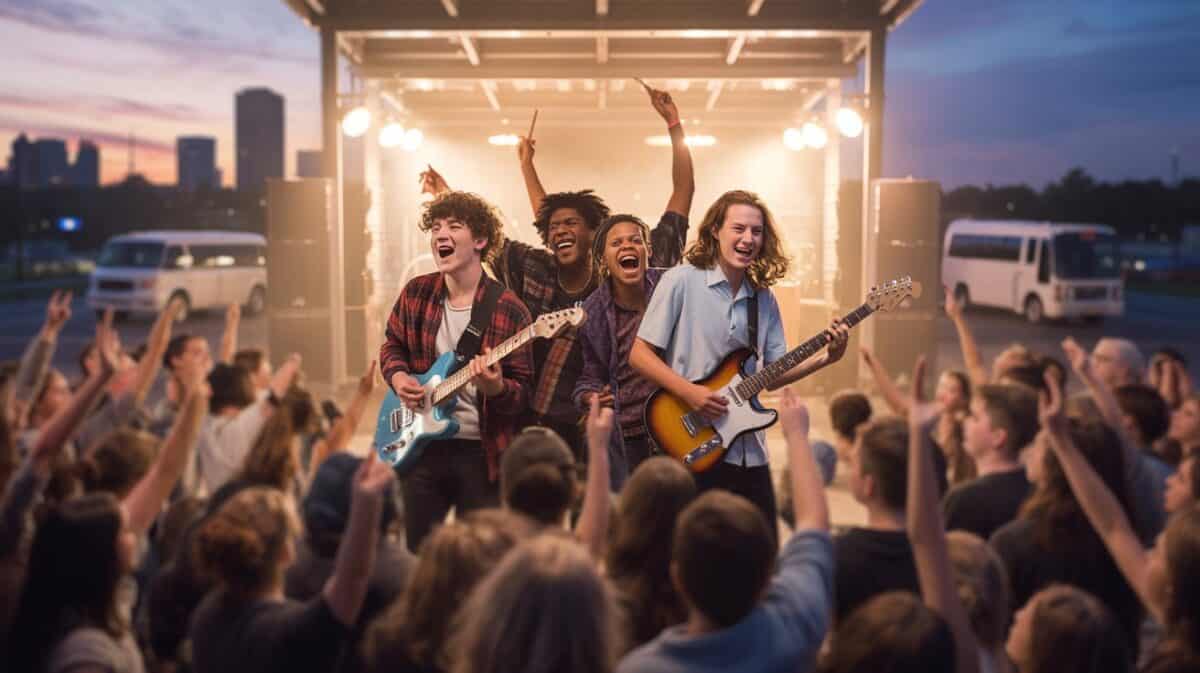
Image generated with Ai
The United States travel landscape is witnessing an unusual but powerful shift as the School of Rock AllStars 2026 nationwide tour turns live music education into a structured travel experience. This growing form of music tourism in the United States blends performance, education, and multi-city mobility into a single cultural journey. Young musicians travel across major American cities while performing live concerts in professional venues. The result creates a rare fusion of youth development and domestic tourism expansion.
The United States travel and tourism ecosystem already thrives on sports, concerts, and festivals. Yet this initiative introduces a new layer of educational performance tourism, where travel itself becomes part of artistic training. Students do not only perform music. They live a touring lifestyle across states, venues, and audiences.
Advertisement
The School of Rock AllStars 2026 tour gathers top student performers selected from a global network of music schools. These young musicians represent a highly competitive group chosen through auditions and performance evaluations. The tour places them into a professional-style travel circuit across the United States.
The tour mirrors the logistics of global concert touring. Students move together as touring bands across multiple U.S. cities. Each stop includes rehearsals, live performances, and city-based cultural exposure. The structure introduces them to real-world touring conditions, including travel schedules, stage coordination, and performance discipline.
Advertisement
Advertisement
This model creates a unique intersection between youth travel in the United States and professional entertainment logistics. The tour typically spans dozens of cities, which increases demand for domestic transport, accommodation, and venue coordination.
The rise of the School of Rock AllStars 2026 nationwide tour highlights the growth of youth music tourism in the United States. This category connects education with structured travel experiences. Students participate in cultural mobility that extends beyond classrooms or rehearsal spaces.
The touring experience places young musicians in continuous motion across regions. They travel by road and air depending on tour routing. They stay in hotels and perform in regional venues. Each city introduces a new audience, a new cultural environment, and a new stage dynamic.
This creates a layered experience where travel becomes inseparable from artistic development. It also strengthens the concept of experience-based travel in the United States, where learning and mobility merge into one system.
Advertisement
Advertisement
The nationwide tour model in the United States spreads tourism impact across multiple destinations. Unlike traditional tourism concentrated in major hubs, this tour activates mid-sized and regional cities.
Each tour stop generates local economic activity. Hotels accommodate touring teams. Restaurants serve groups and staff. Venues host ticketed performances that attract local audiences. This creates a repeated cycle of micro-tourism across cities.
This structure supports regional tourism development in the United States, especially in cities that do not always receive large-scale international tourism flows. The tour turns them into temporary cultural hotspots.
The School of Rock AllStars 2026 tour also reflects a deeper emotional layer within modern travel trends. Families, audiences, and participants engage in experiences that combine performance, travel, and personal growth.
Young performers experience independence, teamwork, and discipline through continuous movement. Families follow performances across cities. Local audiences engage with youthful creativity in live environments.
This creates emotional connectivity between travel and performance. It strengthens the rise of emotional travel experiences in the United States, where journeys are defined by memory and participation rather than simple sightseeing.
The growth of the experience economy in the United States travel sector continues to expand beyond traditional tourism categories. Music-based travel experiences now play a stronger role in shaping domestic travel demand.
Music tours like the School of Rock AllStars generate structured travel flows. Venues fill with audiences. Cities gain temporary cultural identity boosts. Tourism operators benefit from increased demand for accommodation and local services.
This reflects a broader shift where live music tourism in the United States becomes part of economic and cultural infrastructure rather than isolated entertainment.
The AllStars tour also signals a broader transformation in educational travel models in the United States. Traditional exchange programs and academic trips now sit alongside performance-based mobility systems.
Students learn through experience rather than static instruction. They adapt to touring life, stage performance pressure, and collaborative creative environments. Travel becomes a core part of education rather than a supporting element.
This model aligns with growing global interest in experiential education travel, where mobility and learning operate together in real time.
The concept of cultural mobility in youth tourism is becoming increasingly visible through initiatives like the School of Rock AllStars tour. Students move through cultural spaces while actively contributing to them.
Each city introduces different audiences, venues, and regional identities. Students interact with diverse cultural environments across the United States. This builds adaptability and awareness that traditional classroom learning cannot replicate.
This type of travel strengthens the foundation of cultural tourism education in the United States, where movement becomes part of cultural exchange.
The School of Rock AllStars 2026 nationwide tour represents more than a music initiative. It highlights a growing shift in United States travel patterns, where education, entertainment, and mobility merge into a single structured system.
This evolution reflects the rise of music tourism in the United States, where young performers travel across cities, engage audiences, and learn through lived experience. It also demonstrates how the experience economy continues to expand into youth development and cultural mobility.
As travel continues to evolve, initiatives like this redefine what movement across cities truly means. It becomes not just travel, but participation, learning, and emotional connection through performance.
Advertisement
Tags: cultural mobility travel, domestic tourism USA, educational travel USA, Experience Economy Travel, live music tourism
Advertisement
Advertisement













Saturday, September 5, 2026

Friday, September 4, 2026

Saturday, September 5, 2026
Saturday, September 5, 2026

Thursday, September 3, 2026

Wednesday, September 2, 2026

Saturday, September 5, 2026