

Eurasia’s Next Connectivity Hub Emerges as Kazakhstan and More Strengthen Regional Rail Travel Links

Published
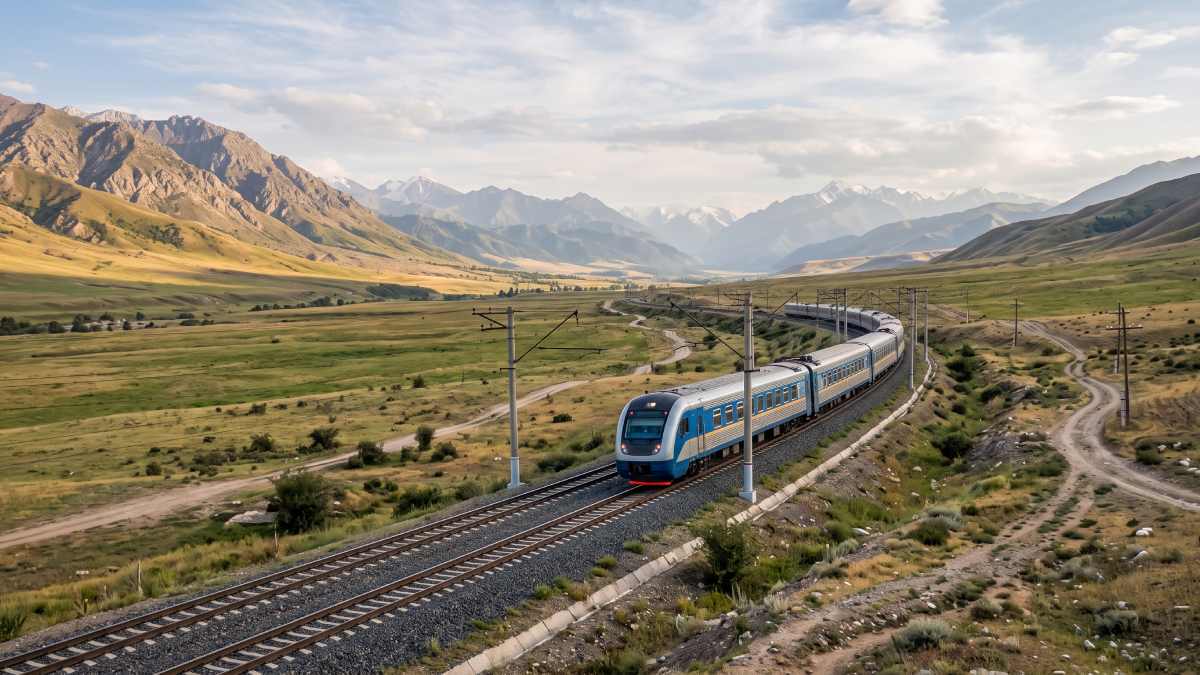
The revitalization strategy of overland connectivity on the Eurasian continent has arrived at a historical milestone as multilateral financing in Europe speeds up in Central Asia. Not limited to conventional freight logistics, the multi-billion-euro Global Gateway initiative will make the Trans-Caspian Transport Corridor an exemplary multi-modal travel corridor. Enabled by massive investment in road infrastructure, broadband networks in rural satellites, and efficient border crossing procedures, this overland route will convert industrial paths into sustainable traveler paths. The linkage of the ancient capitals of the Silk Route with emerging industrial cities will make international organizations unlock experiential slow tourism, corporate executive travel, and rural digital nomadic travel.
Background and Geopolitical Genesis of the Middle Corridor
The historical trade arteries linking Western Europe to the Pacific basin are undergoing their most consequential structural realignment since the late nineteenth century. Historically reliant on northern rail passages transiting the Russian Federation, international commerce, passenger transit, and cross-border logistics have decisively pivoted towards the Trans-Caspian Transport Corridor, known across international logistics and diplomatic circles as the Middle Corridor. What originated in the 1990s as a United Nations- and EU-backed connectivity framework under the TRACECA programme has evolved into a strategic necessity for Eurasian economic resilience.
Advertisement
Advertisement
At the landmark EU-Central Asia Investors Forum in Brussels, a coordinated financing envelope exceeding €10 billion was mobilised by European and international financial institutions, specifically targeted at closing physical and soft infrastructure gaps along the route. This commitment operates in tandem with the European Union’s broader €12 billion Global Gateway investment strategy for Central Asia, by which dedicated capital is allocated across transport networks, critical mineral extraction, energy resilience, and digital infrastructure.
The financing is steered primarily by the European Investment Bank (EIB), operating as the long-term lending arm of the European Union. While the corridor is predominantly evaluated by public diplomacy and commercial reports through the narrow lens of container shipping capacity, supply chain security, and energy logistics, profound secondary and tertiary externalities are created by this unprecedented capital deployment for transcontinental passenger travel, hospitality real estate, and cross-border human mobility.
Advertisement
Advertisement
Through the physical rehabilitation of thousands of kilometres of transport routes, combined with the digital modernisation of customs terminals and the installation of low-latency telecommunications, an industrial logistics passage is being converted into a multi-modal passenger axis. The metropolitan economic centres of Austria and Germany are directly linked by this overland network through Southeastern Europe, traversing the Black Sea and South Caucasus, crossing the Caspian basin, and permeating the interior plains and mountain ranges of Kazakhstan, Uzbekistan, Kyrgyzstan, and Tajikistan before connecting with East Asian commercial terminals.
Latest Official Developments and EIB Multilateral Commitments
Operational momentum behind the corridor was significantly accelerated following high-level bilateral summits in Brussels and Central Asian capitals. On 22 June 2026, a landmark €150 million framework loan agreement was concluded by the European Investment Bank with Kazakhstan’s national road operator, JSC NC QazAvtoZhol. Supported by the European Union’s European Fund for Sustainable Development Plus (EFSD+) guarantee under the Global Europe NDICI financial instrument, a comprehensive €300 million capital expenditure programme is co-financed by this loan, dedicated to the structural rehabilitation of approximately 1,370 kilometres of strategic highway links across central and southern Kazakhstan.
Advertisement
Advertisement
The targeted road sections represent core transit conduits of the Trans-Caspian Transport Corridor, constructed to withstand acute continental climatic variations while continuous passenger and commercial mobility are facilitated. It was confirmed by official bank assessments that approximately 5,900 person-years of direct employment will be generated during project execution, with localized economic stimulus being delivered across intermediate steppe communities.
During the official signing proceedings, it was highlighted by EIB Vice-President Marek Mora that human populations are directly integrated, enterprise market access is expanded, road safety is improved, and practical corridors of mutual resilience between Europe and Central Asia are established when surface transport networks are modernised beyond pure cartography. It was reaffirmed by EU Commissioner for International Partnerships Jozef Síkela that the delivery of tangible, durable infrastructure assets by the European Union’s Global Gateway strategy was demonstrated by the deployment, securing supply chains while interregional institutional integration is deepened. It was similarly emphasised by Aleška Simkić, EU Ambassador to Kazakhstan, that baseline conditions required for sustainable economic diversification and regional tourism development are provided by high-specification transport corridors.
This highway modernisation project operates alongside complementary financial interventions. A €200 million framework facility was executed by the EIB alongside the Development Bank of Kazakhstan (DBK) to finance broader sustainable transport schemes and renewable power installations. In Uzbekistan, a parallel EIB facility of up to €100 million was allocated toward the modernization of the Nukus highway network so that cross-border transport friction with neighbouring states could be removed.
To administer this expanding capital footprint, a dedicated Central Asia regional office was inaugurated by the European Investment Bank in Tashkent in June 2026, followed by diplomatic arrangements to establish a permanent operational representation in Astana. Continuous technical assistance, procurement oversight adhering to strict international ESG criteria, and the synchronized execution of transboundary connectivity projects are guaranteed by these institutional anchors.
Trans-Caspian Overland Slow-Tourism and Multi-Modal Journeys
The foundation for a modern overland travel market—high-yield, transcontinental slow tourism—is created by the systemic modernisation of transport infrastructure along the corridor. Historically, overland passenger travel across Eurasia was restricted to bespoke luxury train charters or adventurous individual expeditions constrained by poor road conditions, unpredictable border delays, and maritime transit bottlenecks across the Caspian Sea.
By modernising more than 1,370 kilometres of highway networks in Kazakhstan and expanding electrified rail connectivity across Azerbaijan and Uzbekistan, the core physical barriers that have impeded commercial overland itineraries are being removed by international financial institutions. A transition is being made away from carbon-heavy aviation toward immersive, multi-week journeys that weave through Central and Eastern Europe, the South Caucasus, and Central Asian oasis hubs.
Advertisement
Advertisement
Starting in primary European origin hubs such as Vienna and Budapest, passengers are moved along modernized rail corridors managed by operators such as Austria’s ÖBB Rail Cargo Group, connecting with the Black Sea ports of Constanța in Romania and Varna in Bulgaria. Scheduled Ro-Pax ferries transit the Black Sea to Georgia’s deep-water ports of Batumi and Poti from these western maritime nodes. Travelers then proceed via the upgraded Baku-Tbilisi-Kars (BTK) rail axis to the Port of Baku at Alat, Azerbaijan, before the Caspian basin is crossed into Central Asia.
Length of Stay and Decentralised Expenditure Economics
The macroeconomic impact of shifting consumer behaviour toward slow travel along this route is substantial. According to official data from the Ministry of Tourism and Sports of the Republic of Kazakhstan, 15.3 million total foreign arrivals were recorded by the country in 2024, of which 10.4 million were classified as overnight tourists, generating international tourism receipts exceeding $2.6 billion. However, the historic average length of stay (LOS) for foreign visitors remained compressed at approximately 4 days, with tourist expenditures being heavily concentrated in the administrative capitals of Astana and Almaty.
By establishing high-specification road networks and integrated rail timetables along the Trans-Caspian alignment, the average length of stay for overland visitors is extended to between 14 and 28 days. With an average of €220 to €380 per day being spent by overland travellers across transport, regional hospitality, dining, and cultural heritage excursions, the total economic expenditure per visitor rises substantially compared to short-stay air transit travellers.
Caspian Ferry Upgrades and Maritime Modernisation
The Caspian transit bottleneck represents a primary focus of contemporary corridor improvements. Between 2006 and the present day, Caspian Sea water levels were observed to drop by more than two metres, causing the coastline to retreat and navigation access to be restricted in shallow shelf zones. To preserve round-the-clock roll-on/roll-off (Ro-Ro) vessel operations between Baku and Kazakhstan’s twin ports of Aktau and Kuryk, comprehensive international dredging initiatives were executed.
Navigation channels were dredged and harbour berths were expanded to depths of 7 to 8 metres by specialised maritime contractors, including Jan de Nul and Van Oord. Berth expansions and crane electrification at Aktau were funded by the European Bank for Reconstruction and Development (EBRD) alongside EU grant facilities, ensuring that seamless transit is achieved for passenger vehicles, overland campervans, and intermodal carriages without multi-day maritime anchoring delays.
Cross-Border Digital Mobility Passports and Border Streamlining
To capitalize on physical transit upgrades, plans are being advanced by regional authorities for a single-ticket, multi-modal travel credential modelled after the European Interrail pass. Integrated with harmonised electronic visas and unified digital border screening platforms, administrative border-crossing clearance times are reduced to minutes, unlocking uninterrupted overland transit across Azerbaijan, Georgia, Kazakhstan, and Uzbekistan.
Advertisement
Advertisement
Frontiers are navigated without bureaucratic friction by overland tour groups and independent self-drive travellers through customs automation platforms and pre-arrival clearance systems established via international technical assistance packages.
Corporate MICE Mobility and Critical Mineral Value Chains
The expansion of corporate meetings, incentives, conferences, and exhibitions (MICE) linked to critical supply chains serves as the second core driver transforming human mobility across the Trans-Caspian alignment. Access to responsibly extracted Critical Raw Materials (CRMs) has been prioritised by the European Union’s industrial strategy, which are indispensable for battery manufacturing, electric vehicles, aerospace, and renewable power infrastructure.
Vast global mineral reserves are contained within Central Asia, with roughly 40% of known manganese deposits being held alongside significant reserves of lithium, copper, rare earth elements, and uranium. It was assessed by EU international partnerships leadership that up to 40% of Europe’s strategic raw material requirements could be reliably provided by Central Asia.
Executive Spend Profiles in Emerging Energy and Mining Capitals
Following the bilateral strategic partnerships signed between Brussels, Astana, and Tashkent, the region is being transited in record numbers by Western European corporate delegations. A high-spending executive travel tier is generated by this commercial movement, composed of engineering consultants, environmental legal auditors, institutional project financiers, and mining technology specialists originating from Frankfurt, Munich, Paris, Amsterdam, Stockholm, and Tokyo.
Expenditure profiles that far exceed conventional business travel averages are demonstrated by these executive travellers, requiring high-grade accommodation, secure intercity surface transit, and specialised conference infrastructure. Urban hospitality footprints in Astana and Tashkent have been adapted to accommodate this demand, with recurrent bilateral trade assemblies, raw material investment forums, and infrastructure procurement congresses being hosted.
Industrial Bleisure Integration and Corporate Scope-3 Travel Auditing
“Industrial bleisure” extensions have been formalised within corporate travel policies among multinational corporations, whereby site evaluations at extraction or processing facilities are combined by visiting technical executives with structured cultural and wellness itineraries. Itineraries are extended by executive travellers visiting mining hubs or hydrogen generation developments in Mangystau or Karaganda to incorporate UNESCO World Heritage destinations in Uzbekistan—such as Samarkand, Bukhara, and Khiva, accessible via the high-speed Afrosiyob rail line—or guided eco-tours through Kazakhstan’s Charyn Canyon and the Tian Shan alpine corridor.
Advertisement
Advertisement
Simultaneously, rigorous auditing requirements regarding Scope-3 business travel greenhouse gas emissions are faced by multinational enterprises operating under the EU’s Corporate Sustainability Reporting Directive (CSRD). In-person technical missions that would otherwise be prohibited or heavily penalized under strict corporate aviation emissions caps can be approved by corporate ESG officers owing to the presence of modernized electrified rail networks and low-carbon multi-modal transport links along the Trans-Caspian corridor.
Satellite Broadband, Digital Nomadism, and Rural Eco-Lodging
Infrastructural development along the Trans-Caspian route extends beyond hard transit engineering to encompass transformative digital communications. In March 2025, an unprecedented €60 million regional digital connectivity financing package was formalised by Team Europe.
Comprising a €34.4 million European Union capital investment grant combined with a €25.45 million EIB Global direct corporate loan, the acquisition and deployment of advanced satellite ground terminal infrastructure engineered by Luxembourg-based satellite operator SES is financed by the project. A direct connection is established between this network and the promoter’s O3b mPOWER satellite constellation, operating in medium Earth orbit (MEO) roughly 8,000 kilometres above the Earth.
The €60 Million Team Europe Satellite Telecommunications Deployment
Satellite ground stations are installed by the telecommunications initiative across 1,663 underserved rural settlements located throughout Kazakhstan, Uzbekistan, Kyrgyzstan, and Tajikistan, establishing high-capacity backhaul connections into national core fibre networks. High-speed, low-latency broadband internet access is delivered by this intervention to approximately three million individuals residing in isolated steppe, alpine, and desert topographies who were historically affected by chronic digital exclusion.
By establishing continuous digital coverage across remote intermediate landscapes, connectivity dead-zones that previously deterred international independent travellers, research expeditions, and business executives navigating overland routes between major urban nodes are eliminated.
Remote Worker Multipliers and the Neo Nomad Visa
The rural visitor economy has been transformed by this telecommunications deployment through the empowerment of location-independent professionals and nomadic digital entrepreneurs. Recognising this structural shift, the Neo Nomad Visa (visa classification B12-1) was formally established by the Government of Kazakhstan. Legal residency in Kazakhstan for up to twelve months can be maintained under this immigration instrument by international remote workers while working for overseas employers. It was noted by former Minister of Tourism and Sports Yerbol Myrzabossynov that with more than 35 million digital nomads active worldwide, targeted immigration policies and modern digital infrastructure are essential for Kazakhstan to be established as a premier global remote work destination.
Advertisement
Advertisement
A baseline monthly spend between €1,800 and €2,600 is demonstrated by remote workers taking up 30- to 90-day seasonal residencies, with expenditures distributed directly across local homestays, artisanal food producers, equipment outfitters, and regional service providers. Local economic activity is expanded, and rural settlements are revitalized without the displacement of existing cultural or agricultural traditions.
De-Risking Boutique Wilderness Hospitality Investments
The risk calculus for private boutique hospitality and eco-lodging developers is radically changed by the presence of dependable MEO satellite broadband. Constructing luxury wilderness camps, off-grid eco-lodges, or community-based yurt retreats in picturesque landscapes—such as Kazakhstan’s Kolsai Lakes, the high-altitude pastures of Song-Kul in Kyrgyzstan, or the Pamir mountain trails of Tajikistan—was previously financially precarious due to the lack of connectivity required by high-spending travellers.
High-value accommodation can be deployed with minimal fixed capital expenditure by international hospitality operators and community-based tourism (CBT) associations by pairing satellite connectivity with decentralized off-grid solar microgrids. Capital is injected directly into rural pastoral economies by digital nomads and slow travellers, generating recurring income for family homestays, local mountain guides, and regional organic agricultural producers without causing cultural disruption or environmental degradation.
Decarbonised Eurasian Travel Corridors and ESG Standards
The modernisation of the Trans-Caspian Transport Corridor aligns directly with international Net-Zero commitments, including the European Union’s 2050 climate neutrality targets and United Nations Sustainable Development Goals. Cross-border travel between Europe and Central Asia has traditionally depended almost exclusively on commercial aviation, generating acute greenhouse gas emissions per passenger-kilometre. Substantial environmental advantages are offered by the ongoing modal shift toward electrified surface transport.
Comparative Emissions Savings and Modal Rail Electrification
It is demonstrated by comparative life-cycle emissions assessments that greenhouse gas emissions are reduced by up to 68% through multi-modal surface journeys along the Trans-Caspian corridor—combining electrified rail lines, modernised highway pavements, and Ro-Pax maritime crossings—compared to equivalent short- and medium-haul aviation itineraries.
In Kazakhstan, where over 68% of commercial rail traffic is carried across electrified tracks, transport-related emissions are being driven downward through ongoing grid decarbonisation initiatives funded via EIB and DBK green facilities. Furthermore, automotive fuel consumption and vehicular emissions are directly reduced by the physical rehabilitation of 1,370 kilometres of substandard roads, as road surfaces are smoothed, vehicle transit times are cut, and prolonged idling at congested border checkpoints is eliminated.
Advertisement
Advertisement
EIB Green Procurement Standards in Sustainable Hospitality
Complementing transport electrification, rigorous Environmental, Social, and Governance (ESG) procurement standards are applied by the European Investment Bank to all associated infrastructure developments. European green building methodologies are being adopted by hospitality developers along the corridor, incorporating rooftop photovoltaic systems, closed-loop greywater recycling, and non-extractive construction waste protocols.
These low-carbon accommodation footprints integrate with major clean energy developments in the region, such as the massive Rogun hydroelectric facility in Tajikistan and the Kambarata-1 project in Kyrgyzstan, positioning the corridor as an ecologically responsible mobility axis.
Comprehensive Worldwide Country-by-Country Mobility Matrix
The development of the Trans-Caspian Transport Corridor links diverse sovereign jurisdictions, each contributing distinct transit assets while realizing specific economic and tourism benefits:
| Country / Jurisdiction | Transport & Infrastructure Driver | Tourism & Mobility Focus Area | Key Economic & Yield Impact |
| Austria / Hungary | ÖBB Rail Cargo Group intermodal expansions; Danube rail-river hub modernisations. | Outbound European overland tour origin hubs; cultural MICE operator headquarters. | High-value outbound package tours, long-stay rail journeys, corporate headquarters revenues. |
| Romania / Bulgaria | Constanța and Varna Black Sea port capacity upgrades; Ro-Pax ferry terminal integration. | Maritime-rail passenger transit hubs; Western Black Sea coastal stopovers. | Port-side hospitality yield, cross-border European tour routing, intermodal logistics receipts. |
| Georgia / Azerbaijan | Baku-Tbilisi-Kars (BTK) rail line; Port of Baku (Alat) deep-water terminal expansions. | South Caucasus cultural circuits; Trans-Caspian passenger ferry embarkation points. | Elevated hotel occupancy in Baku and Tbilisi; transit visa fees and culinary tourism spend. |
| Türkiye | Marmaray Bosphorus subsea tunnel; Anatolian high-speed rail network extensions. | Trans-Eurasian rail bridge; Istanbul MICE stopovers; overland motor expedition routing. | High-yield multi-continent stopover travel; cultural heritage hospitality revenues. |
| Kazakhstan | EIB €150M QazAvtoZhol loan; 1,370 km road rehabilitation; SES MEO broadband. | Drive-tourism; corporate MICE; alpine glamping; Neo Nomad remote work hubs. | Extended Length of Stay (LOS); decentralized rural homestay and hospitality income. |
| Uzbekistan | Afrosiyob high-speed rail line; EIB Tashkent regional hub; Nukus highway upgrade. | Heritage Silk Road tours (Bukhara, Samarkand, Khiva); UNESCO cultural preservation. | Exponential growth in leisure spend; expanded private artisan craft economies. |
| Kyrgyzstan / Tajikistan | Team Europe satellite broadband; Kambarata-1 and Rogun clean energy infrastructure. | High-altitude adventure trekking; community-based tourism (CBT); Pamir Highway tours. | Direct revenue distribution to mountain guides, yurt camps, and rural drivers. |
| China | Belt & Road Xi’an dry ports; Xinjiang rail-highway integration corridors. | Outbound and inbound Silk Road expeditions; cross-border business travel. | High passenger volumes; cross-continental group touring revenues; intermodal transit fees. |
| Germany / France / Nordics | EU Global Gateway lead investors; Team Europe diplomatic and funding architectures. | Corporate MICE delegations; technical ESG missions; luxury eco-lodge investments. | High-expenditure B2B travel; institutional investments in boutique hospitality assets. |
| United States / Japan | Multilateral co-financing; World Bank / EBRD capital syndications. | Corporate mineral audits; high-end experiential Silk Road journeys. | Premium expeditionary spend; institutional hospitality foreign direct investment (FDI). |
Macroeconomic Value Components of Corridor Mobility
To project and evaluate the total economic value generated by infrastructure and connectivity investments across the Trans-Caspian Transport Corridor, a unified economic valuation model is utilized by regional planners. The model incorporates four foundational segments:
Overland Leisure Travel Spend
This segment evaluates the aggregate annual volume of non-resident overland leisure visitors traversing two or more corridor states, combined with the average daily expenditure per traveler and the extended length of stay along the route. Decentralized disbursements within rural and intermediate steppe and oasis economies are directly captured by this metric.
Corporate and MICE B2B Spend
This component assesses the total inflow of international corporate executives, technical engineers, and legal auditors entering the corridor for commercial objectives. Direct expenditures associated with summit registrations and urban business accommodations are integrated with regional technical audit journeys and extended recreational bleisure travel.
Advertisement
Advertisement
Digital Nomad Revenue
This revenue stream accounts for the population active under remote work immigration frameworks, baseline living expenses, duration of residence, and the associated local retention multiplier across domestic homestays, supply markets, and regional service enterprises.
Public-Private Partnership Real Estate Foreign Direct Investment
This component tracks the deployment of gross capital across regional hospitality assets—such as eco-lodges, glamping developments, and intermodal road stations—amplified by the catalytic de-risking effects of multilateral concessionary finance, loan guarantees, and public infrastructure provision.
Policy Bottlenecks, Cross-Border Governance, and Outlook
For the full potential of the Trans-Caspian Transport Corridor to be realized, critical operational and institutional bottlenecks must be addressed. Despite significant physical improvements, administrative processing delays are frequently encountered at border crossings by cargo trains and passenger convoys.
Synchronized documentation and customs coordination are required by the Middle Corridor’s multi-modal profile, which necessitates handoffs between standard-gauge European rail, maritime roll-on vessels, broad-gauge post-Soviet railway systems, and highway roads. To address these challenges, a permanent Coordination Platform for the Middle Corridor was launched by the EU, advancing “soft connectivity” measures such as digital customs clearance, standardized rail transit tariffs, and automated cross-border data exchanges.
A pressing physical risk continues to be posed by the environmental regression of the Caspian Sea. Commercial navigation drafts at Aktau and Kuryk must be maintained through continued capital dredging by marine contractors like Jan de Nul and Van Oord. Concurrently, additional purpose-built Ro-Pax vessels must be deployed by national operators to meet growing passenger vehicle demand without diverting capacity away from industrial container shipping.
Looking toward 2030, the corridor is being transformed from an industrial freight detour into a balanced transcontinental economic spine by coordinated capital investments from the European Investment Bank, partner development banks, and regional governments. By linking modernised highway engineering with rural satellite broadband, high-speed rail links, and clean energy investments, an enduring foundation for economic diversification, low-carbon mobility, and interconnected Eurasian tourism is provided by the Trans-Caspian Transport Corridor.
Advertisement
Advertisement
Conclusion
The Trans-Caspian Transport Corridor is being developed into a reliable economic corridor that goes beyond conventional trade thanks to multilateral infrastructure financing, space communications technologies, and sustainable transportation. Through the process of de-risking investments and solving systemic constraints, sustainable business travel, decentralization of slow tourism, and transcontinental integration are firmly promoted on the Eurasian continent.
Advertisement
