

Vietnam’s Tà Xùa Faces Tourism Growth Test as Hmong Livelihoods and Mountain Conservation Gain Priority

Published
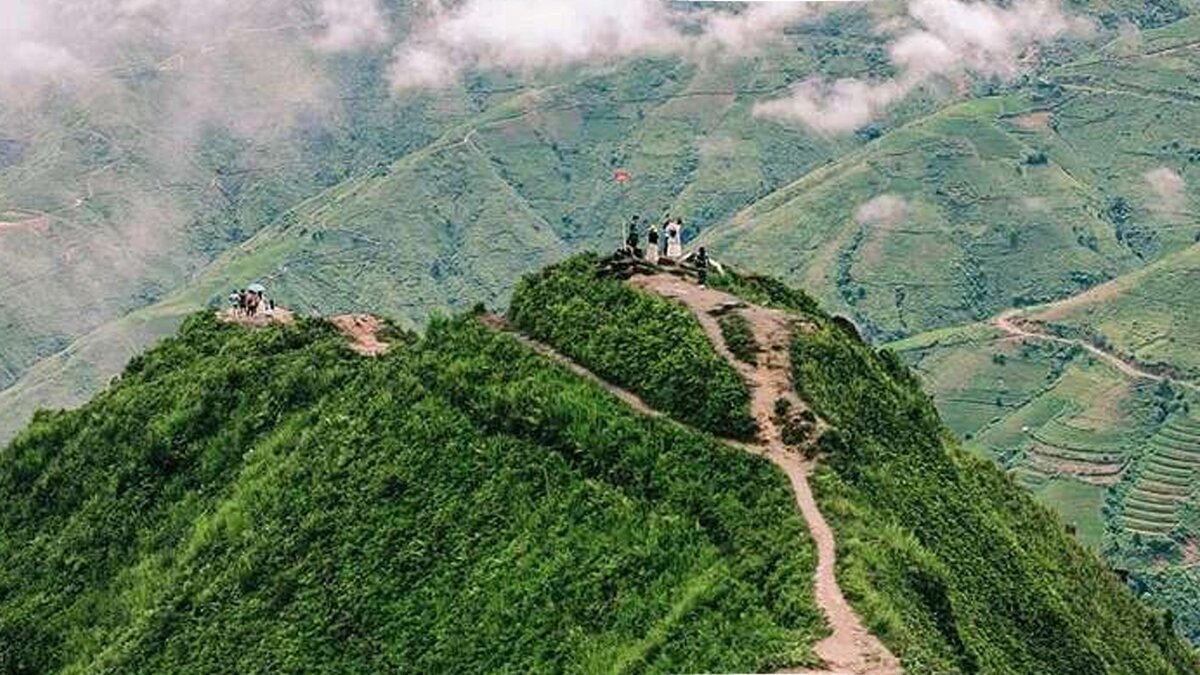
Vietnam’s award-winning Tà Xùa faces an important tourism development test. According to official figures released on 10 October 2026, the mountain commune welcomed approximately 56,000 visitors and generated VND54 billion in tourism revenue during the first half of the year. Reaching its annual targets would require a further 64,000 visits and VND66 billion in revenue across July–December. However, nearly half of local households remain poor or near-poor. Provincial destination-accreditation preparations and environmental safeguards add another dimension to the challenge of expanding sustainable tourism while strengthening Hmong livelihoods.
Vietnam’s Tà Xùa Tourism Development Enters a More Demanding Phase After International Recognition
Vietnam’s emerging mountain tourism industry is confronting a significant question about economic sustainability, infrastructure readiness and community participation following Tà Xùa’s recognition at the World Travel Awards 2026.
Advertisement
Advertisement
The latest development centres on a Vietnamese government report published on 10 October 2026. The report places greater emphasis on how tourism income reaches local communities and how the destination can protect its landscapes as visitor interest increases.
According to Vietnam Government News, Tà Xùa recorded approximately 56,000 visitor visits and VND54 billion in tourism revenue during January–June 2026. The commune’s full-year ambition is 120,000 visits and VND120 billion in tourism receipts.
Advertisement
Advertisement
The figures establish a measurable benchmark for the second half of 2026. They do not, however, provide an updated January–September result.
A separate development deserves attention. The provincial authorities have already established an administrative process for assessing Tà Xùa against the conditions required for formal recognition as a provincial-level tourism area.
Advertisement
Advertisement
That process is distinct from its international award.
According to the Sơn La Provincial Official Gazette, Decision 891/QĐ-UBND, issued on 8 April 2026, introduced a plan to review, assess and complete the requirements for recognising the Tà Xùa tourism area.
The October government report and this existing administrative framework together create a particularly relevant development for travel businesses. International visibility is growing, but the quality of accommodation, environmental services, visitor safety and local economic participation will help determine whether that visibility translates into sustainable commercial growth.
Tà Xùa’s 2026 Tourism Figures Reveal the Scale of the Revenue and Visitor Challenge
The latest published local figures offer an unusually detailed opportunity to examine the financial expectations associated with Vietnam’s growing community-based tourism economy.
Tà Xùa’s annual tourism ambition is not simply to attract more visitors. The destination also aims to increase the economic value generated by the tourism sector.
The following table separates official figures from calculations based on those figures.
Advertisement
Advertisement
Official Tourism Performance and Calculated Second-Half Requirements
| Tourism indicator | H1 2026 actual estimate | Full-year 2026 target | H2 requirement |
|---|---|---|---|
| Visitor visits | 56,000 | 120,000 | 64,000 |
| Tourism revenue | VND54 billion | VND120 billion | VND66 billion |
| Share of annual visitor target | 46.7% | 100% | 53.3% |
| Share of annual revenue target | 45% | 100% | 55% |
| Average monthly visits | 9,333 | 10,000 | 10,667 |
| Average monthly tourism revenue | VND9 billion | VND10 billion | VND11 billion |
| Implied revenue per recorded visit | VND964,286 | VND1 million | VND1,031,250 |
Source: Vietnam Government News, 10 October 2026. Second-half requirements, percentages, monthly averages and revenue-per-visit values are editorial calculations using approximate official figures, not separate government forecasts.
The arithmetic establishes that the second half would need to generate approximately 22.2% more monthly tourism revenue than the first half to achieve the full-year target.
Monthly visitor volume would need to increase by approximately 14.3%.
Importantly, these are planning comparisons, not forecasts. The government report does not establish how much of the required second-half revenue had already been generated between July and September.
Seasonal demand, weather conditions, accommodation availability and the mix of overnight and day visitors may affect the final result.
For travel agents and destination management companies, this distinction matters. The available figures support an assessment of the destination’s annual growth ambitions, but they do not yet demonstrate that booking demand, accommodation occupancy or visitor spending increased during the third quarter.
Advertisement
Advertisement
Nearly Half of Local Households Remain Poor or Near-Poor Despite Growing Tourism Activity
The economic development challenge extends beyond the annual revenue target.
According to Vietnam Government News, Tà Xùa is classified as a particularly disadvantaged mountain commune, with nearly 50% of households falling into the combined poor and near-poor categories.
Agriculture, forestry and livestock remain important sources of livelihood for much of the population.
The same government report identifies approximately 150 households operating tourism-related businesses and more than 80 community accommodation establishments.
These figures demonstrate that tourism has developed a local enterprise base. They do not establish the proportion of all households participating in the industry, the profitability of individual businesses or the share of revenue received by lower-income families.
For the tourism trade, this creates an important distinction between generating local expenditure and distributing economic opportunities.
Advertisement
Advertisement
A visitor may pay for accommodation, transport, guided excursions and locally produced goods. Yet each transaction can benefit a different business, and the money retained within the community depends on ownership, staffing, sourcing and operating costs.
The opportunity identified in the October government report therefore extends to accommodation, locally guided nature experiences, traditional crafts, agricultural products and community-led cultural activities.
Expanding these connections could create additional ways for local households to participate without requiring every family to establish an accommodation business.
It also places greater importance on tourism training, transparent commercial arrangements and the ability of smaller local suppliers to participate in organised travel itineraries.
Original Analysis Reveals Why Visitor Revenue Cannot Yet Measure Household Prosperity
The strongest economic finding emerges from comparing Tà Xùa’s official revenue figures with the poverty and business-participation information released in October.
Dividing VND54 billion in estimated tourism receipts by 56,000 recorded visitor visits produces an implied revenue yield of approximately VND964,000 per visit during the first half of 2026.
Advertisement
Advertisement
If both annual targets were achieved exactly, the corresponding second-half figure would be approximately VND1.03 million per visit.
That represents an increase of roughly 6.9% in the implied revenue yield.
However, neither figure measures the money actually spent by an individual traveller. Nor does it measure income received by a resident household. The calculation combines destination-wide receipts and recorded visits, without distinguishing business costs, overnight stays or repeat visits.
The critical missing indicators are therefore accommodation revenue retained by resident operators, payments to local guides, earnings from agricultural experiences, employment income and the proportion of bookings handled by locally owned enterprises.
For travel companies, this points towards a more useful measure of sustainable tourism than arrival growth alone: the amount of visitor expenditure reaching community suppliers.
Tracking that measure alongside environmental performance would make it easier to assess whether future tourism expansion improves household livelihoods while maintaining the destination’s natural appeal.
Advertisement
Advertisement
Provincial Tourism Accreditation Could Become a Major Test of Infrastructure Readiness
Tà Xùa’s international recognition and its domestic administrative status must be considered separately.
The World Travel Awards 2026 winner register confirms Tà Xùa as Asia’s Leading Emerging Tourism Destination.
However, the award itself does not confer formal recognition as a provincial-level tourism area under Vietnamese law.
According to Sơn La’s official gazette, Decision 891/QĐ-UBND of 8 April 2026 established a process for reviewing and completing the conditions required for provincial tourism-area recognition. The decision is an existing administrative measure, not a regulation introduced on 10 October.
Vietnam’s national legal database identifies Decree 168/2017/NĐ-CP as remaining in force. Article 12 establishes requirements covering tourism resources, service infrastructure, visitor facilities, transport connectivity, safety and environmental protection.
Tourism Recognition Requirements and Their Implications for Tà Xùa
| Requirement | National regulatory framework | Relevance to Tà Xùa |
|---|---|---|
| Tourism resources | At least one provincial-level tourism resource with defined boundaries | Natural attractions require formal documentation and assessment |
| Visitor services | Service capacity for at least 100,000 visitors annually | The 120,000-visit target alone does not prove operational capacity |
| Accommodation | Facilities capable of serving at least 50,000 overnight guests annually | More than 80 homestay establishments are reported, but their combined annual capacity is not disclosed |
| Essential infrastructure | Electricity and clean-water supply | Compliance needs assessment rather than assumption |
| Connectivity | Connections to transport and telecommunications infrastructure | Access and communications readiness are relevant to tour operations |
| Visitor information | Signage, interpretation and visitor guidance | Reliable information is necessary for organised itineraries |
| Safety | Visitor protection, rescue provision and emergency arrangements | Particularly important for mountain and trekking experiences |
| Environment | Waste collection, wastewater management and sanitation facilities | Infrastructure must support tourism without damaging the landscape |
Regulatory requirements are based on Article 12 of Decree 168/2017/NĐ-CP, as published by Vietnam’s national legal database. Destination information comes from the October government report. This table is not a certification audit.
Advertisement
Advertisement
One particularly important distinction concerns overnight capacity.
The existence of more than 80 community accommodation establishments does not establish whether the area can serve the legally specified number of overnight guests.
That assessment would require information on bed capacity, operating days, service standards and compliance with applicable tourism regulations.
The official documents reviewed for this report establish an assessment process but do not establish that final provincial recognition had been granted by 10 October 2026.
For tour operators, accreditation progress may become a useful indicator of destination-management maturity. It should not, however, be presented as a substitute for checking the condition and suitability of individual suppliers.
Hmong Cultural Tourism and Ancient Tea Experiences Offer a Route Towards Higher Local Earnings
The October government report identifies a further economic opportunity beyond scenery-based tourism.
Advertisement
Advertisement
Tà Xùa’s Hmong cultural heritage and ancient Shan Tuyết tea resources provide opportunities to develop experiences in which visitors engage directly with local producers and residents.
According to Vietnam Government News, tourism development is being connected with locally produced agricultural goods, particularly ancient Shan Tuyết tea.
The activities identified include participation in tea harvesting, processing and tasting, alongside opportunities involving traditional crafts, community hospitality and locally guided nature experiences.
For travel businesses, the commercial relevance is substantial.
A short sightseeing visit may create relatively limited opportunities for transactions with local households. An itinerary incorporating a community homestay, a guided agricultural experience and purchases from producers offers several different ways for visitors to spend money locally.
This is not evidence that every existing tea experience is formally packaged, bookable or commercially successful. The government report does not provide a consolidated inventory of available products or their prices.
Advertisement
Advertisement
Nevertheless, it identifies a clear direction for destination product development.
Community participation also creates an important cultural responsibility. Tourism products need to respect local control over cultural knowledge, traditional practices and the way those experiences are presented to visitors.
That approach could support a broader range of small businesses while protecting the cultural distinctiveness that contributes to Tà Xùa’s appeal.
Vietnam’s Existing Development Framework Connects Tourism Ambitions With Poverty Reduction
The wider planning framework adds context to the October developments.
A local council resolution adopted on 19 December 2025 approved a socioeconomic development plan for 2026–2030. Its objectives include sustainable tourism, cultural preservation, improved livelihoods, environmental management and progress towards provincial tourism-area status by 2030.
The plan also incorporates rural workforce development and agricultural activities linked to tourism.
Advertisement
Advertisement
Another relevant administrative development occurred on 2 October 2026.
According to the October 2026 public investment resolution, Tà Xùa’s People’s Council adopted Resolution 24/NQ-HĐND covering a medium-term public investment plan for 2026–2030 under national programmes addressing rural development, sustainable poverty reduction and socioeconomic development in ethnic minority and mountainous communities.
This is a relevant public investment framework, but it should not be interpreted as proof of a newly awarded tourism infrastructure contract.
The resolution’s stated programme scope does not, by itself, confirm the amount of funding allocated to homestays, visitor facilities or individual tourism projects.
What the Verified Development Measures Mean for Tourism Businesses
| Development measure | Official status as of 10 October 2026 | Potential industry significance |
|---|---|---|
| Tourism income and landscape priorities | Detailed in the 10 October government report | Greater attention to local supply chains and environmental management |
| Provincial tourism-area accreditation review | Administrative process established in April 2026 | Potential improvements in standards, documentation and destination oversight |
| Community tourism enterprise base | Approximately 150 participating business households reported | Opportunities for locally sourced accommodation and visitor services |
| 2026–2030 socioeconomic objectives | Existing council development framework | Longer-term connection between tourism, skills and poverty reduction |
| Medium-term public investment planning | Resolution adopted on 2 October 2026 | Relevant to the wider enabling environment, without proving tourism-specific expenditure |
| International emerging-destination award | Officially confirmed for 2026 | Increased destination visibility and potential marketing opportunities |
The central issue is how effectively these separate measures are implemented.
Administrative planning can establish objectives and responsibilities. Commercial development still depends on viable businesses, reliable facilities, trained workers and a consistent visitor experience.
Advertisement
Advertisement
Mountain Access and Environmental Protection Remain Central to Visitor Experience
Tà Xùa’s natural setting explains both its tourism appeal and some of its operational challenges.
According to the Vietnam National Authority of Tourism, the destination is characterised by high mountain scenery, cloud formations, terraced landscapes and rugged terrain.
The official tourism guide identifies cloud viewing as weather-dependent and describes some mountain approaches as difficult.
These characteristics matter when international travel companies design itineraries around specific scenic experiences.
Cloud conditions cannot be guaranteed. Mountain journeys also require realistic scheduling, suitable transportation arrangements and appropriate precautions for outdoor activities.
The October government report identifies infrastructure improvements, environmental protection, construction management, visitor safety and professional training among the destination’s development priorities.
Advertisement
Advertisement
Those priorities indicate areas requiring attention rather than confirming that new infrastructure has already opened.
For accommodation businesses, waste management and sanitation are especially relevant to growth. Additional visitors can increase demand for water, energy, food services and waste collection.
For guides and excursion providers, service quality involves more than access to attractive viewpoints. Clear activity descriptions, local knowledge, suitable equipment and contingency arrangements all contribute to a reliable experience.
The commercial challenge is therefore to increase the value of tourism without encouraging development that undermines the landscape on which demand depends.
Why the 2026 Tourism Developments Matter to International Travel Companies
Tà Xùa illustrates an important distinction in emerging-destination development.
International recognition can improve awareness rapidly, but the process of translating that awareness into dependable travel products is considerably more complex.
Advertisement
Advertisement
The destination’s current development priorities are relevant to several segments of Vietnam’s inbound travel industry, particularly small-group tourism, nature-based travel, cultural itineraries and community accommodation.
The opportunities should not be confused with confirmed new air routes, airport construction, visa changes or major hotel investments. The official October announcement does not establish developments of that kind.
Instead, its significance lies in the evolution of an existing mountain tourism economy.
Travel companies seeking to introduce Tà Xùa to international customers need to evaluate local supplier capacity, transport arrangements, environmental conditions and cultural experience quality.
Partnerships with resident operators may strengthen local economic participation, but suppliers still require appropriate operational standards and viable commercial terms.
The strongest products will be those that combine distinctive experiences with predictable service delivery and transparent information for customers.
Advertisement
Advertisement
Essential Operational Takeaways for Travel Agents and Tour Operators
Travel businesses considering Tà Xùa within their Vietnam destination portfolios should prioritise the following actions:
- Verify accommodation capacity: Confirm available rooms, operating standards, booking arrangements and the suitability of community homestays before committing inventory.
- Separate awards from accreditation: Describe the 2026 international award accurately without suggesting that it automatically establishes provincial tourism-area recognition.
- Strengthen community sourcing: Consider locally operated accommodation, guides, agricultural experiences and craft suppliers, while maintaining appropriate commercial and safety standards.
- Manage weather-related expectations: Explain that cloud viewing is conditional and arrange alternatives when outdoor experiences cannot proceed as intended.
- Assess environmental practices: Review waste handling, sanitation and visitor-impact management when selecting accommodation and excursion partners.
- Monitor official updates: Check local tourism statistics, accreditation developments and published infrastructure information rather than relying on promotional claims.
- Improve financial transparency: Where feasible, record payments to resident suppliers and distinguish community earnings from total visitor expenditure.
- Avoid unverified expansion claims: Do not advertise new routes, facilities, restrictions or investment commitments unless supported by a published official decision or an operating provider.
Closing Updates: Tà Xùa’s Long-Term Tourism Prospects Depend on More Than Visitor Growth
Vietnam’s latest Tà Xùa tourism developments highlight a significant question for the long-term future of emerging mountain destinations: whether increasing international visibility can create sustained local prosperity without diminishing the environmental and cultural resources that attract visitors.
The October government report provides a timely assessment of this challenge. The existing provincial recognition process adds an administrative dimension, while the official tourism figures provide measurable commercial benchmarks.
The most important developments to monitor will be updated 2026 revenue and visitor statistics, progress towards formal tourism-area recognition, improvements in visitor services and evidence that a greater share of tourism activity benefits resident households.
In the longer term, the destination’s success could offer lessons for Vietnam’s broader sustainable tourism sector. Community accommodation, agricultural tourism, heritage experiences and landscape conservation can reinforce one another when they are supported by effective management and commercially viable local businesses.
Yet international awards and rising visitor numbers alone cannot establish that this model is working.
For Tà Xùa, the decisive measure will be whether tourism creates dependable livelihoods, maintains authentic cultural experiences and preserves the mountain environment while delivering services that travellers and the international tourism trade can trust.
Advertisement
