
Over 590 Cancellations and 6,100 Delays Impacted Asia Travel across Shanghai, Jakarta and More Airports

Updated
Published
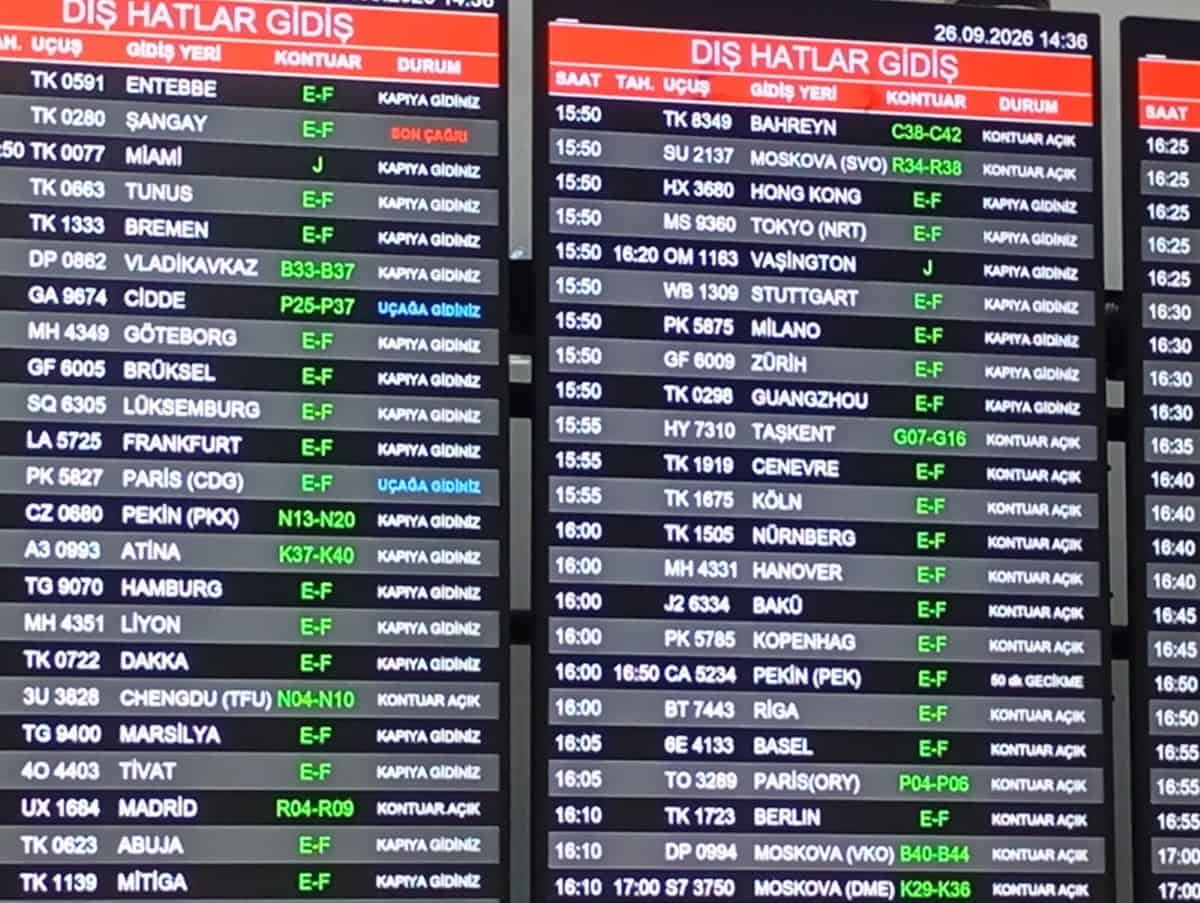
Major airports, including Shanghai, Jakarta, and other airports in the region, saw more than 6,100 delays and 590 cancellations today, causing major disruption to flights around Asia. As major aviation hubs in China, Japan, Thailand, India, and Southeast Asia faced with operational pressure, thousands of travelers were impacted. The increasing number of delayed and canceled flights was also caused by network outages, aircraft scheduling problems, excessive airport traffic, and weather-related difficulties. Significant effects were noted at Bangkok Suvarnabhumi, Tokyo Haneda, Shanghai Pudong, Jakarta-Soekarno-Hatta, and other important airports. As a result, although airlines attempted to resume regular operations, travelers throughout Asia saw altered timetables, extended wait times, and unforeseen travel disruptions.
The highest pressure was recorded at major airports including Tokyo Haneda, Bangkok Suvarnabhumi, Shenzhen Bao’an, Guangzhou Baiyun, Shanghai Pudong, Delhi Indira Gandhi International, and Jakarta Soekarno-Hatta. Airline operations were also affected, with carriers such as Japan Airlines, China Eastern, Thai Airways, China Southern Airlines, All Nippon Airways, IndiGo, and Air China reporting significant delays and cancellations.
Which Asian Airports Experienced the Highest Flight Disruptions?
The disruption was concentrated across some of Asia’s busiest aviation gateways. Tokyo Haneda Airport recorded the highest number of delays, with 650 delayed flights and 11 cancellations, creating significant pressure on Japan’s domestic and international connectivity.
Bangkok Suvarnabhumi International Airport experienced 327 delays and 46 cancellations, making it one of the most affected airports in terms of cancelled flights. Shenzhen Bao’an International Airport reported 295 delays and 13 cancellations, while Guangzhou Baiyun International Airport recorded 279 delays and 26 cancellations.
Advertisement
Advertisement
Shanghai Pudong International Airport also faced heavy operational pressure with 272 delays and 33 cancellations. Other Chinese airports, including Chengdu Shuangliu International (92 delays and 19 cancellations), Chengdu Tianfu International (86 delays and 26 cancellations), Beijing Capital International (95 delays and 33 cancellations), and Shanghai Hongqiao International (93 delays and 44 cancellations) also experienced significant disruption.
India’s aviation sector was affected as well. Delhi Indira Gandhi International Airport recorded 228 delays and 13 cancellations, while Mumbai Chhatrapati Shivaji International Airport reported 75 delays and 10 cancellations.
Advertisement
Advertisement
Other major affected airports included Jakarta-Soekarno-Hatta International with 193 delays and 19 cancellations, New Chitose Airport in Japan with 200 delays and 7 cancellations, Istanbul Airport with 210 delays and 3 cancellations, and Dubai International Airport with 208 delays and 9 cancellations.
China, Japan and Southeast Asia Remain the Most Affected Aviation Markets
China experienced widespread disruption across multiple airports and airlines. The country’s aviation network recorded delays at several major hubs, with Shenzhen Bao’an, Guangzhou Baiyun, Shanghai Pudong, Beijing Capital, Chengdu, Hangzhou, Nanjing, and other airports reporting operational challenges.
Japan also faced major disruption, particularly at Tokyo Haneda. New Chitose Airport reported 200 delays and 7 cancellations, while Fukuoka Airport recorded 139 delays and 2 cancellations. Osaka Itami Airport reported 123 delays and 4 cancellations.
Southeast Asian aviation operations were also affected. Thailand’s Phuket International Airport recorded 48 delays and 4 cancellations, while Vietnam’s Noi Bai International Airport reported 125 delays and 11 cancellations and Da Nang International Airport recorded 63 delays and 8 cancellations.
Indonesia’s Jakarta-Soekarno-Hatta International Airport reported 193 delays and 19 cancellations, while Sultan Hasanuddin International Airport recorded 68 delays and 5 cancellations.
Which Airlines Were Most Affected by Today’s Asia Flight Disruptions?
Airline operations across Asia reflected the widespread pressure on airport networks.
Advertisement
Advertisement
Japanese Airlines Face Heavy Delays
Japan Airlines recorded the highest airline delay figure among the listed carriers, with 346 delays, representing 44% of its operations, along with 4 cancellations (0%).
All Nippon Airways reported 224 delays (38%) and 5 cancellations (0%), while ANA Wings recorded 119 delays (32%) and 6 cancellations (1%).
Jetstar Japan experienced 44 delays (47%) and 1 cancellation (1%), while StarFlyer recorded 28 delays (45%) and 2 cancellations (3%).
Chinese Airlines Report Large Operational Pressure
China Eastern recorded 311 delays (12%) and 103 cancellations (4%), the highest cancellation count among the listed airlines.
Air China reported 131 delays (7%) and 78 cancellations (4%), while China Southern Airlines experienced 271 delays (11%) and 2 cancellations (0%).
Other affected Chinese carriers included:
Advertisement
Advertisement
- Hainan Airlines: 60 delays (7%), 24 cancellations (3%)
- Shanghai Airlines: 57 delays (17%), 15 cancellations (4%)
- Shenzhen Airlines: 134 delays (17%), 8 cancellations (1%)
- XiamenAir: 133 delays (18%), 2 cancellations (0%)
- China Express Airlines: 93 delays (20%), 2 cancellations (0%)
- Sichuan Airlines: 81 delays (11%), 2 cancellations (0%)
- Spring Airlines: 123 delays (19%), 1 cancellation (0%)
Thai, Indian and Southeast Asian Carriers Experience Disruptions
Thai Airways recorded one of the highest delay percentages, with 147 delays representing 53% of flights, alongside 44 cancellations (15%).
Indian carriers also faced operational issues:
- IndiGo: 183 delays (9%), 5 cancellations (0%)
- SpiceJet: 22 delays (31%), 9 cancellations (12%)
- Akasa Air: 10 delays (5%), 5 cancellations (2%)
Southeast Asian airlines also reported disruptions:
- Batik Air: 68 delays (22%), 16 cancellations (5%)
- Citilink: 23 delays (8%), 6 cancellations (2%)
- AirAsia: 65 delays (14%), 4 cancellations (0%)
- Vietnam Airlines: 67 delays (18%), 9 cancellations (2%)
Middle Eastern airlines operating Asia routes were also impacted:
- Saudia: 81 delays (15%), 19 cancellations (3%)
- FlyDubai: 100 delays (33%), 4 cancellations (1%)
- Etihad Airways: 90 delays (26%), 1 cancellation (0%)
- Qatar Airways: 81 delays (13%), 2 cancellations (0%)
Analysis of Affected Airports, Cities, Countries and Airlines
The disruption pattern shows that the impact was not limited to a single country but spread across major Asian aviation corridors.
Japan’s Tokyo and Osaka markets experienced strong operational pressure, while China’s largest commercial cities, including Shanghai, Guangzhou, Shenzhen, Beijing, Chengdu, and Hangzhou, faced widespread delays.
Advertisement
Advertisement
Thailand’s Bangkok hub experienced one of the largest cancellation impacts, affecting travellers connecting through Southeast Asia. India’s Delhi and Mumbai airports also saw delays affecting domestic and international routes.
Airlines with extensive regional networks were among the most affected because delays at major hubs can quickly affect aircraft rotations, crew schedules, and connecting flights.
The combination of high passenger volumes, busy airport capacity, and network dependency created wider operational impacts across Asia’s aviation system.
What Affected Passengers Should Do Now
Passengers affected by these disruptions should take several immediate steps:
- Check flight status directly with the airline before travelling to the airport.
- Use airline mobile applications and online portals for real-time updates and rebooking options.
- Arrive earlier than usual if flights are operating but experiencing delays.
- Keep alternative travel options available, especially for important connections.
- Contact airlines regarding cancellation support, including possible rebooking or refund options.
- Avoid making separate accommodation or transport arrangements until airline confirmation is received, as schedules can change quickly.
Travellers connecting through major hubs such as Tokyo Haneda, Bangkok Suvarnabhumi, Shanghai Pudong, Guangzhou Baiyun, Shenzhen Bao’an, Delhi, and Jakarta should allow additional time for possible schedule changes.
Asia Aviation Faces a Challenging Day of Network Disruptions
Today’s disruption affected thousands of passengers across Asia, with 6,108 delays and 591 cancellations reported across the listed airports and airlines. The impact was concentrated among major aviation hubs and carriers that operate large domestic and international networks.
Advertisement
Advertisement
Data Verification Notice
The data has been carefully compiled by our editorial team based on real-time aviation figures recorded on 28 September 2026 at 6:29 pm ET (USA), corresponding to 29 September 2026 at 7:35 am Tokyo Time (GMT+9).
Primary Source: FlightAware, Local Correspondent
All reported statistics have undergone independent review and verification by our human editorial team. Timestamped records, operational data logs, and feed snapshots have been securely maintained to ensure accuracy, transparency, and historical reference.
Note: Real-time flight tracking data reflects active aviation operations and airspace conditions. Figures may experience minor variations compared with updates shown on individual airline websites, airport information boards, or departure terminals.
Yesterday, airports across Asia recorded 239 flight cancellations and 4,597 delays, disrupting travel operations across the region. Explore the complete disruption report for detailed airport and airline updates.
Advertisement
Verified by Somudranil Sarkar
