
Where to Watch India’s Flamingos: Here is What You Need To Know About Mumbai’s New AI-Powered Bird Sanctuary

Published
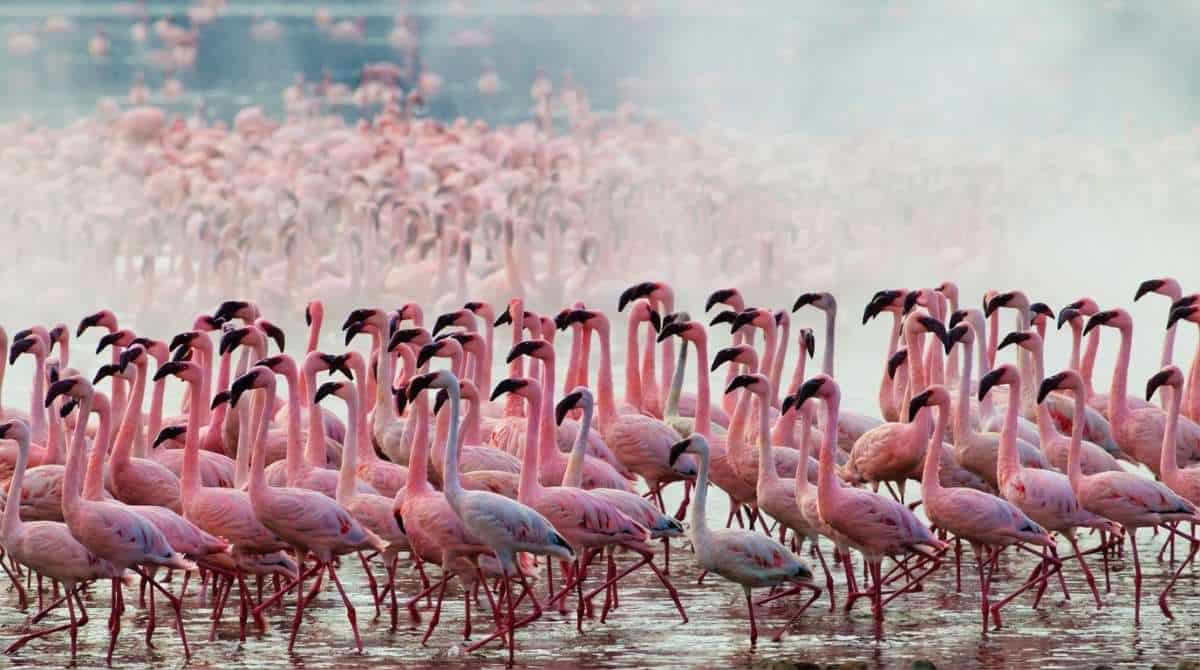
Image generated with Ai
The integration of advanced technology into wildlife conservation has been officially initiated in Mumbai, India. A modern AI sanctuary is being developed to monitor native and migratory wildlife. Administrative approval has been granted for this project. A total allocation of forty-five crore rupees was secured through the District Planning Committee. Furthermore, government officials inspected the proposed site at Bhandup Bird Park to assess infrastructural plans.
The facility spans 20.09 hectares along the shoreline of Thane Creek. The entire area falls inside the designated Ramsar site known as the Thane Creek Flamingo Sanctuary. Ecological studies confirm that the region supports rich mangrove forests and expansive mudflats. Consequently, these habitats sustain over two hundred and fifty avian species. The project aims to strengthen environmental conservation through active technological oversight.
Advertisement
Advertisement
- Location: Shoreline of Thane Creek within the Thane Creek Flamingo Sanctuary in Mumbai, India.
- Area size: 20.09 hectares total, with only 0.35 hectares allocated for tourist infrastructure.
- Avian diversity: Supports over 250 native and migratory species.
- Funding: Forty-five crore rupees funded via District Planning Committee.
Practical Information for Visitors
Administrative oversight is managed by local municipal authorities in Mumbai, India. Access to Bhandup Bird Park will be carefully controlled via designated trails and towers. As a result, delicate mangrove plants remain safe from foot traffic. Furthermore, construction remains strictly restricted to the specified 0.35-hectare zone. This restriction ensures full compliance with wetland protection laws governing the Thane Creek Flamingo Sanctuary. Safety guidelines and entry rules are regulated to maintain ecological safety.
- Designated paths keep visitors away from sensitive mudflats.
- Structural development is confined to 0.35 hectares.
- Operational guidelines follow international Ramsar wetland standards.
- Entry protocols are managed by local municipal bodies.
What to Do (Visitor Guidelines & Tips)
- Plan According to Tides: Schedule visits based on local tide timings, as bird activity and boat safaris are heavily dependent on water levels.
- Carry Essentials: Bring binoculars, a hat, sunscreen, mosquito repellent, and a reusable steel water bottle for comfort during trail walks.
- Stay on Designated Paths: Strictly walk only on the constructed 2.16-kilometre mangrove trail and designated viewing decks to protect the ecosystem.
- Opt for Private Transport: Arrange for a return cab or private vehicle in advance, as public transport options directly at the remote jetty area are limited.
What Not to Do (Restrictions & Prohibited Actions)
- Do Not Litter: Avoid carrying single-use plastics, and ensure that no garbage or waste is left behind in the sanctuary.
- Do Not Disturb Wildlife: Never feed the birds, use flash photography, play loud music, or make sudden noises that could startle native or migratory species.
- Do Not Step Off Trails: Stepping onto the delicate mudflats or wandering into restricted non-tourist zones is strictly forbidden.
- Do Not Carry Prohibited Items: Avoid bringing outside food, non-steel bottles, cosmetics, or single-use plastics past the security checkpoint.
Impact on Travellers Through Smart Tourism
Smart tourism practices are being reshaped for travelers visiting Mumbai, India. Human disturbance will be kept low because built amenities occupy only 0.35 hectares. Therefore, natural habitats remain undisturbed by large crowds.
Advertisement
Advertisement
Visitors will access a 2.16-kilometre mangrove nature trail. Multi-storey observation towers and viewing decks are also provided. In addition, real-time analytics will offer automated insights into avian movements. This model enhances learning while supporting environmental conservation.
Advertisement
Advertisement
- A 2.16-kilometre dedicated mangrove nature trail.
- Multi-storey observation towers and specialized viewing decks.
- Live data feeds displaying bird movements and local biodiversity trends.
- Minimal structural footprint to preserve the surrounding quietness.
Industry Insights and AI Sanctuary Capabilities
Technological innovation plays a central role in this novel AI sanctuary. Automated identification systems operate across a 1.5-kilometre radius. Thus, continuous monitoring of bird species is maintained without manual effort.
Centralized data platforms collect ecological information over long periods. Additionally, conservation researchers can analyze shifting wildlife patterns and climate impacts. Experts highlight that Bhandup Bird Park sets a high benchmark for regional ecological management.
- Continuous tracking covering a 1.5-kilometre radius.
- Centralized data management for species recording.
- Real-time digital analytics for ecological researchers.
- Non-intrusive monitoring suited for fragile wetland ecosystems.
Comparison with Previous Policies or Developments
Traditional sanctuaries in Mumbai, India relied heavily on manual physical surveys. Consequently, data collection was often delayed or incomplete. Older policies often struggled to balance public access with habitat preservation.
Advertisement
Advertisement
In contrast, the new AI sanctuary at Bhandup Bird Park utilizes automated tracking and strict zoning. This framework limits physical human presence while maximizing research output. Active technological monitoring now replaces passive management across the Thane Creek Flamingo Sanctuary.
- Past approaches: Manual surveys, higher human disturbance, delayed data updates.
- Current approach: Automated tracking, controlled access, real-time analytics.
- Environmental goal: Priority given to strict habitat protection over mass tourism.
Advertisement
