
Quedlinburg Mirrors Görlitz and More as Hidden Gems of Germany Unleash Unforgettable Travel Experiences!

Published
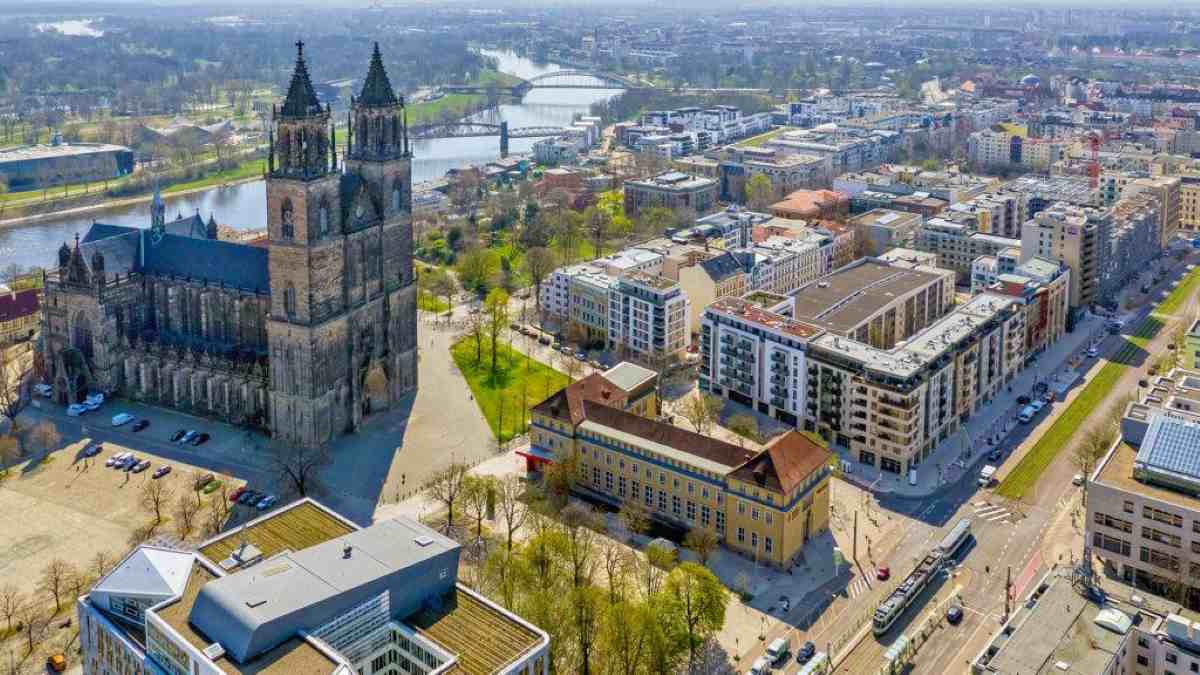
Image generated with Ai
Quedlinburg mirrors Görlitz as more hidden gems of Germany invite travellers to discover unforgettable travel experiences. These hidden gems of Germany combine heritage, culture, food and nature in distinctive ways. Moreover, Quedlinburg and Görlitz reveal how unforgettable travel experiences can extend beyond Germany’s famous cities. From historic streets to regional flavours, these destinations offer fresh reasons to explore. More hidden gems add further depth, connecting travellers with authentic German experiences. Travel And Tour World explores how Quedlinburg mirrors Görlitz and more destinations through remarkable journeys, local discoveries and memorable attractions. Read the entire story to uncover these hidden gems and plan unforgettable travel experiences across Germany.
6 Lesser-Known German Destinations Where Unique Experiences, Heritage, Food and Nature Shape Authentic Holidays
Germany’s tourism market is operating at an exceptionally large scale, yet the country extends far beyond Berlin, Munich, Frankfurt and Hamburg. The latest national figures show 497.5 million guest overnight stays in 2025, the highest annual figure recorded by Germany’s Federal Statistical Office. International visitors accounted for 83.8 million overnight stays.
That wider tourism landscape creates an opportunity for travellers seeking more personal journeys. Smaller historic cities can combine architecture, food, museums, nature and walkable neighbourhoods within a single trip.
The following six destinations offer different interpretations of experiential travel. The visitor statistics use official accommodation data wherever available. Figures generally cover establishments with at least 10 beds, while some cities also publish separate tourist-tax or day-visitor measurements. These definitions should not be mixed when comparing destinations.
Advertisement
Advertisement
| Destination | State | Key travel identity | UNESCO status | Latest annual overnight figure used |
|---|---|---|---|---|
| Quedlinburg | Saxony-Anhalt | Half-timbered heritage and Harz nature | Yes | 452,876 in 2024 |
| Görlitz | Saxony | Historic architecture, film heritage and border culture | No city UNESCO listing | 340,851 in 2025 |
| Bamberg | Bavaria | Medieval cityscape, gardens and Franconian food | Yes | 831,640 in 2025 |
| Weimar | Thuringia | Classical culture and Bauhaus | Yes | 792,940 in 2025 |
| Erfurt | Thuringia | Medieval centre, Jewish heritage and gardens | Yes | 1,135,646 in 2025 |
| Lübeck | Schleswig-Holstein | Hanseatic heritage, brick Gothic and Baltic coast | Yes | 2,102,727 in 2025 |
Statistics are not perfectly like-for-like because individual state statistical systems and municipal reports can use different reporting boundaries and publication dates.
Quedlinburg: A Half-Timbered Journey Into Germany’s Medieval Past
Quedlinburg provides one of Germany’s strongest combinations of architectural heritage, small-city exploration and access to outdoor landscapes. The official tourism authority describes a historic town with more than 2,000 half-timbered buildings representing eight centuries of construction. UNESCO recognises the Collegiate Church, Castle and Old Town as World Heritage.
Advertisement
Advertisement
The visitor experience should begin around the Market Square before moving uphill towards the castle complex and Collegiate Church of St Servatius. Münzenberg provides another historic perspective, while the smaller districts of Bad Suderode and Gernrode add spa, religious and walking experiences. The official destination information also highlights the Harz hiking network, Selketal-Stieg and Harzer Klosterwanderweg.
Food is another reason to stay overnight. Travellers can explore traditional Harz products, regional specialities and restaurants using local ingredients. Quedlinburg’s official tourism service specifically highlights traditional cooking alongside modern interpretations and regional products.
For accommodation, the historic centre is the most practical base for travellers wanting to walk between the main attractions. The official tourism organisation lists hotels, guesthouses, apartments and holiday homes, including options in Bad Suderode and Gernrode.
A two-night itinerary works particularly well. Day one can cover the Market Square, Old Town, castle hill and St Servatius. Day two can combine Münzenberg with a Harz excursion. Travellers who prefer a slower pace can add a third night for hiking or a trip towards the Brocken area.
The official statistics show 441,664 overnight stays in 2022, followed by 468,288 in 2023 and 452,876 in 2024. The city separately recorded 480,399 tourist-tax overnight stays in 2024, illustrating how smaller accommodation providers can fall outside the federal accommodation series.
| Quedlinburg tourism indicator | 2022 | 2023 | 2024 |
|---|---|---|---|
| Official overnight stays | 441,664 | 468,288 | 452,876 |
| Official arrivals | — | 167,734 | 163,381 |
| Tourist-tax overnight stays | — | 458,365 | 480,399 |
| Tourist-tax arrivals | — | 171,999 | 184,643 |
| Average official stay, nights | — | 2.79 | 2.77 |
| Tourist-tax average stay | — | 2.66 | 2.60 |
The official city report notes that the 2024 tourist-tax figures increased even while the conventional accommodation statistics declined. It attributes part of this difference to smaller accommodation providers that are not captured in the standard statistical series.
Advertisement
Advertisement
For an authentic local meal, travellers can explore the traditional restaurant quarter around the historic centre. Brauhaus Lüdde is one current example of a German-style dining option in the Old Town area.
Görlitz: Architecture, Film Locations and a Cross-Border Experience
Görlitz is particularly interesting for travellers who want architecture without limiting their holiday to conventional sightseeing. The city’s official tourism organisation presents its historic centre, museums, cultural programme, gastronomy and film connections as major elements of the destination.
The restored Old Town is the natural starting point. Untermarkt, Peterskirche, historic merchant houses and the surrounding streets can be explored largely on foot. The city also promotes its “Görliwood” identity, reflecting the role of Görlitz as a location for national and international film productions.
A second day should move beyond the centre. Berzdorfer See provides a contrasting landscape for cycling, walking and waterside recreation. The city’s wider tourism strategy also links urban exploration with outdoor experiences in the surrounding region.
Food planning can focus on Saxon and Lusatian traditions. Visitors can use the official tourism portal to identify restaurants and culinary experiences in the Old Town. Accommodation is similarly concentrated around hotels, guesthouses, pensions and holiday properties.
The city’s statistics show 214,394 overnight stays in 2021, 300,154 in 2022, 328,265 in 2023, 321,226 in 2024 and 340,851 in 2025. The 2021 figure comes from Saxony’s statistical reporting, while later figures are published by Görlitz using State Statistical Office data.
Advertisement
Advertisement
| Görlitz tourism development | Overnight stays | Arrivals |
|---|---|---|
| 2021 | 214,394 | 86,042 |
| 2022 | 300,154 | 134,287 |
| 2023 | 328,265 | 146,936 |
| 2024 | 321,226 | 147,454 |
| 2025 | 340,851 | 146,609 |
The five-year comparison shows how dramatically the city’s accommodation market moved from the pandemic period into a much stronger recent position. Between 2021 and 2025, official overnight stays increased by about 59%.
The 2025 destination report recorded an average stay of 2.3 days, compared with 2.2 days in 2024. Capacity reached 2,303 beds in establishments covered by the statistical system, with average bed occupancy of 41.3 percent.
The wider economic footprint is considerably larger. A city-commissioned 2024 tourism study estimated 2.3 million day visitors, approximately 370,000 total overnight stays when smaller private accommodation was included, and €120.6 million in tourism-related gross revenue. These figures should not be directly compared with the official accommodation series because their methodology is broader.
A practical two-night plan is simple. Spend the first day exploring the historic centre and film-related locations. Use the second day for museums, local food and Berzdorfer See.
Bamberg: A Food-Led City Break Through Medieval Bavaria
Bamberg is an especially useful destination for travellers who want culture and cuisine in the same itinerary. UNESCO recognises the historic town for its preserved medieval urban structure and architectural heritage.
The city naturally divides into different experiences. The hilltop area introduces the cathedral and historic religious architecture. The island district brings visitors towards the famous Little Venice area. The former gardeners’ district adds another dimension through its historic urban agriculture traditions. Bamberg Tourism also presents the surrounding region as suitable for cycling and hiking.
Advertisement
Advertisement
Food should be central to the itinerary. Franconian dishes, local beer culture, traditional brewery restaurants and beer gardens can be incorporated between sightseeing stops. The official city map allows visitors to filter restaurants, brewery inns, beer gardens, cafés, accommodation and attractions.
For accommodation, staying around the Old Town or nearby central districts reduces the need for daily transport. Travellers planning longer stays can also use Bamberg as a base for Franconian Switzerland and nearby rural landscapes.
Bamberg recorded 462,099 overnight stays in 2021. The number climbed to 726,250 in 2022 and reached approximately 808,000 in 2023, before reaching 842,297 in 2024 and 831,640 in 2025. The 2024 figure represented a 4.3 percent increase over 2023, while 2025 was 1.3 percent below 2024.
| Bamberg tourism development | Overnight stays |
|---|---|
| 2021 | 462,099 |
| 2022 | 726,250 |
| 2023 | ≈808,000 |
| 2024 | 842,297 |
| 2025 | 831,640 |
The pandemic recovery is particularly visible between 2021 and 2022. Overnight stays increased by roughly 57% in the city during that period. By 2025, Bamberg remained substantially above its 2021 accommodation level.
In 2025, the city had 4,011 available beds and an average bed occupancy rate of 52 percent. Average visitor stay was 1.8 nights. International overnight stays declined 8 percent, reaching 112,644, while German overnight stays remained almost unchanged at 718,996.
A two-night itinerary should include the Old Town, cathedral area, Little Venice, gardeners’ district and a brewery experience. A third day can be reserved for cycling or hiking in the surrounding region.
Advertisement
Advertisement
For travellers seeking a current Franconian dining option, Kachelofen Bamberg is located in the Old Town area.
Weimar: Classical Culture Meets Bauhaus and Garden Landscapes
Weimar suits travellers who prefer intellectual history, museums, architecture and landscaped parks. The city is closely associated with Goethe and Schiller, while Bauhaus adds a modern artistic dimension. UNESCO lists Classical Weimar among Germany’s World Heritage properties.
The most efficient itinerary begins with a walking tour. Goethe’s residence, Schiller’s house, the Duchess Anna Amalia Library and the historic centre can then be combined with the Park an der Ilm.
The Bauhaus Museum provides a contrasting experience and connects the city with twentieth-century design. Weimar’s official tourism information also highlights Belvedere Palace, Ettersburg and Tiefurt as important cultural landscapes.
Food provides another reason to slow down. Weimar’s tourism authority highlights Thüringer Klöße, Thüringer Bratwurst, regional wine and locally produced food and drinks.
Accommodation is easiest around the historic centre or the railway station. The city’s official booking directory includes hotels, pensions and other accommodation categories.
Advertisement
Advertisement
Weimar’s five-year accommodation series is particularly complete.
| Weimar tourism development | Arrivals | Overnight stays | Average stay |
|---|---|---|---|
| 2021 | 204,926 | 419,882 | 2.0 days |
| 2022 | 332,727 | 652,040 | 2.0 days |
| 2023 | 388,521 | 734,765 | 1.9 days |
| 2024 | 421,693 | 798,748 | 1.9 days |
| 2025 | 419,274 | 792,940 | 1.9 days |
The official Thüringer Landesamt für Statistik records 2025 accommodation at 419,274 arrivals and 792,940 overnight stays, including 73,312 international overnight stays. Average occupancy of available sleeping capacity reached 43.8 percent.
From 2021 to 2025, overnight stays increased by approximately 89 percent, although the annual figures softened slightly between 2024 and 2025.
A useful three-day plan is to spend the first day in Classical Weimar, the second around Bauhaus and the Park an der Ilm, and the third exploring Belvedere or another surrounding cultural landscape.
For a traditional meal in the central area, Zum Schwarzen Bären is one current Thuringian restaurant option.
Erfurt: Medieval Streets, Jewish Heritage and Thuringian Flavours
Erfurt offers one of the most complete combinations of medieval architecture and contemporary city life. Germany Travel highlights its historic centre, Cathedral of St Mary, Church of St Severus, Krämerbrücke, Petersberg Citadel and Augustinian Monastery.
Advertisement
Advertisement
The city also gained UNESCO recognition for its Jewish-Medieval Heritage in 2023. The property includes the Old Synagogue, medieval mikveh and Stone House.
Travellers should dedicate the first morning to the Cathedral and Krämerbrücke. The afternoon can cover Petersberg Citadel and the surrounding Old Town. A second day can include the Old Synagogue and egapark.
Food can become part of the cultural experience. Erfurt’s official tourism service highlights regional cooking and traditions, including the Erfurt broad bean and Thuringian specialities.
For accommodation, the central Old Town is convenient for first-time visitors. Erfurt Tourism operates an accommodation directory covering hotels, guesthouses, youth hostels and other properties.
| Erfurt tourism development | Arrivals | Overnight stays |
|---|---|---|
| 2021 | 336,935 | 632,896 |
| 2022 | 472,364 | 817,038 |
| 2023 | ≈570,000 | ≈1.00 million |
| 2024 | 607,289 | 1,081,333 |
| 2025 | 647,158 | 1,135,646 |
The 2021 and 2022 figures come from Thüringer Landesamt für Statistik. The 2024 city report recorded 1.081 million overnight stays, while the latest state database reports 1.136 million for 2025.
The 2025 total represented roughly 79 percent more overnight stays than 2021. The latest state statistics also recorded 93,238 international overnight stays and an average stay of 1.8 days.
Advertisement
Advertisement
Erfurt is particularly practical for a rail itinerary. Germany Travel notes that the central railway station is within walking distance of the historic centre, while the city also has extensive tram and bus connections.
A two-night stay allows visitors to combine history with gardens, museums and local food without rushing.
Lübeck: Hanseatic Heritage With a Baltic Sea Extension
Lübeck offers a different version of German experiential travel. Its Old Town is surrounded by water and recognised by UNESCO as a historic Hanseatic city. UNESCO identifies Lübeck as a major former trading centre of northern Europe, with a historic urban plan shaped by its commercial role.
The official tourism authority recommends a walking route around the Old Town. The free route takes roughly two to two and a half hours without entering attractions.
Holstentor should be the obvious starting point. From there, travellers can explore the churches, merchant houses, narrow lanes, museums and waterfront areas.
A longer trip should include Travemünde. This allows travellers to combine urban heritage with Baltic Sea scenery.
Advertisement
Advertisement
Food is another important part of the Lübeck experience. The city is particularly associated with marzipan, while northern German cuisine and Baltic seafood can shape a food-focused itinerary.
Accommodation can be split between the Old Town and waterfront areas, depending on whether the priority is heritage sightseeing or a coastal extension.
Lübeck’s official statistical series provides one of the clearest five-year comparisons.
| Lübeck tourism development | Arrivals | Overnight stays | Average stay |
|---|---|---|---|
| 2021 | 542,897 | 1,756,429 | 3.2 days |
| 2022 | 790,233 | 2,232,278 | 2.8 days |
| 2023 | 812,748 | 2,203,705 | 2.7 days |
| 2024 | 832,539 | 2,270,187 | 2.7 days |
| 2025 | 806,547 | 2,102,727 | 2.6 days |
The figures are based on establishments with at least ten beds and exclude camping.
The 2024 figure was a record under that statistical series, with 2.27 million overnight stays. International visitors accounted for 14.3 percent of total overnight stays, with Denmark, the Netherlands, Sweden, Belgium and Switzerland among the leading foreign markets.
The 2025 figure was lower than 2024 but remained substantially above 2021. The official municipal statistics also distinguish between Lübeck city and Travemünde, making it important not to combine individual sub-destination figures with the citywide total.
Advertisement
Advertisement
A three-day itinerary can therefore begin with two days around the UNESCO Old Town before moving to Travemünde for the Baltic Sea experience.
For a current traditional dining option inside the Old Town, Brauberger zu Lübeck is one example travellers can consider.
Five-Year Comparison Shows How German City Travel Has Changed
The wider numbers help explain why smaller cities can fit the emerging demand for distinctive experiences.
Germany recorded 310.2 million overnight stays in 2021, 450.7 million in 2022, 487.1 million in 2023, 496.0 million in 2024 and approximately 497.4 million in 2025.
| Germany tourism | Arrivals | Overnight stays | Average stay |
|---|---|---|---|
| 2021 | 96.8 million | 310.2 million | 3.2 days |
| 2022 | 163.0 million | 450.7 million | 2.8 days |
| 2023 | 183.3 million | 487.1 million | 2.7 days |
| 2024 | 189.8 million | 496.0 million | 2.6 days |
| 2025 | 192.0 million | 497.4 million | 2.6 days |
The national recovery was substantial after 2021. By 2025, Germany’s overnight total was about 60 percent higher than in 2021.
International tourism is also important. Destatis reported 83.8 million international overnight stays in 2025, representing 16.8 percent of all overnight stays. Domestic overnight stays reached 413.7 million.
Advertisement
Advertisement
| 2025 Germany tourism indicator | Figure |
|---|---|
| Total overnight stays | 497.5 million |
| Domestic overnight stays | 413.7 million |
| International overnight stays | 83.8 million |
| International share | 16.8% |
| Hotel accommodation change | -0.4% |
| Holiday accommodation change | +0.2% |
| Camping overnight-stay change | +4.2% |
| Camping change versus 2019 | +24.9% |
These national figures reinforce the value of looking beyond major gateway cities. Germany’s tourism infrastructure now supports multiple forms of travel, including cultural breaks, culinary journeys, outdoor holidays, camping and short city escapes.
How to Build a Six-City German Experience Itinerary
Travellers can combine several of these destinations into a longer cultural route.
| Suggested stage | Destination | Recommended stay | Main experience |
|---|---|---|---|
| 1 | Erfurt | 2 nights | Medieval centre and Jewish heritage |
| 2 | Weimar | 2 nights | Classical culture and Bauhaus |
| 3 | Bamberg | 2 nights | UNESCO heritage and Franconian food |
| 4 | Quedlinburg | 2 nights | Half-timbered architecture and Harz |
| 5 | Görlitz | 2 nights | Architecture, film and border culture |
| 6 | Lübeck | 3 nights | Hanseatic history and Baltic coast |
This itinerary deliberately avoids treating Germany as a collection of famous landmarks.
Instead, each stop provides a different travel experience.
Erfurt brings medieval streets and Jewish heritage.
Weimar adds literature, philosophy and design.
Advertisement
Advertisement
Bamberg introduces architecture and Franconian culinary traditions.
Quedlinburg combines heritage with hiking.
Görlitz connects architecture with film and cross-border travel.
Lübeck adds Hanseatic history and the Baltic Sea.
Germany’s National Tourist Board is itself placing culture and cuisine, cities and nature at the centre of its 2026 international campaigns. Its current strategy also specifically highlights the distinctive character of smaller cities.
That positioning closely matches the practical needs of travellers looking for holidays built around specific interests.
Advertisement
Advertisement
For global tourists, these destinations also demonstrate why a German journey does not need to revolve around the country’s largest cities.
The combination of historic streets, regional food, museums, walking routes, gardens, waterways and nearby landscapes allows visitors to build highly individual itineraries.
For travellers following the experience-led direction highlighted in German travel research, these six destinations provide particularly useful starting points for discovering another side of Germany.
Conclusion
Quedlinburg, Görlitz and more hidden gems show that Germany offers far more than its best-known tourist cities. From historic architecture and UNESCO heritage to regional food, culture and surrounding nature, these destinations create memorable travel experiences for global travellers. Moreover, each city offers a distinct character and a slower way to discover Germany. Quedlinburg brings remarkable medieval heritage, while other destinations add artistic, culinary and cultural depth. Germany Travel also highlights lesser-known places for travellers seeking experiences beyond traditional routes.
For travellers planning their next European adventure, these hidden gems provide fresh reasons to explore Germany from a different perspective. Together, they reveal how unforgettable journeys can begin beyond the usual tourist trail.
Advertisement
