Angana Dutta Angana Dutta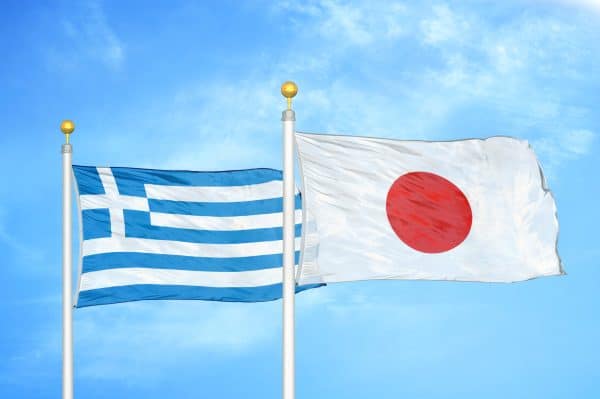
photo credit: https://thediplomat.com/2022/06/greece-japan-and-maritime-disputes/
In 2026, Japan and Greece are working to improve tourism. However, the lack of an agreed on non-stop flight route is a major issue when considering the potential of long distance tourism. This is important because at Thessaloniki International Fair (from the 5th to 13th September) Japan is taking on a major tourism role and JNTO and H.I.S Dream Travel are participating. Greece and Japan have formal tourism cooperation and growing audiences of tourists. However, despite this, most travelers still need to have connecting travel, which increases the length of the travel time and travel complexities for leisure and business related travel.
Advertisement
The latest push in Japan Greece tourism ties is visible at the 90th Thessaloniki International Fair, which opened on 5 September 2026 with Japan participating as the Honoured Country for the first time.
The official fair programme places tourism alongside mobility, infrastructure, maritime industries, healthcare, technology, agriculture and manufacturing. Japan’s pavilion also includes the Japan National Tourism Organization, or JNTO, and H.I.S. Dream Travel, giving the event a clear travel-industry dimension rather than limiting it to investment and industrial cooperation.
Advertisement
The Embassy of Japan in Greece has also included tourism in its formal programme. Discussions on 6 September covered tourism, sustainable infrastructure, mobility and opportunities to study in Japan, while the wider nine-day programme combines business discussions with Japanese food, traditional music, education, anime, sport, craftsmanship and maritime themes.
That combination matters because tourism relations between distant markets often grow through familiarity before they grow through airline capacity. Cultural exposure, destination promotion and trade events can make travellers more aware of a country, but converting that interest into regular traffic depends heavily on how easy the journey becomes.
The full official Japan Pavilion programme is available through the Embassy of Japan in Greece.
The 2026 development is not the beginning of tourism cooperation between Greece and Japan.
Advertisement
Advertisement
The two countries formally recognised tourism as an area for closer coordination as far back as the Japan-Greece Joint Action Plan of 2002. That framework stated that their tourism promotion authorities intended to coordinate efforts to increase travel in both directions.
Relations moved to a higher level in January 2023, when then Japanese Prime Minister Fumio Kishida and Greek Prime Minister Kyriakos Mitsotakis agreed to upgrade bilateral relations to a strategic partnership.
The Japanese Ministry of Foreign Affairs confirmed at the time that the two governments welcomed the signing of a memorandum of cooperation between their tourism authorities. The agreement created a formal framework for closer tourism exchanges rather than relying only on individual campaigns or cultural events.
The two governments also designated 2024 as the Japan-Greece Year of Culture and Tourism, marking 125 years of diplomatic relations. Cultural events and exchanges were organised in both countries, strengthening public awareness beyond government and commercial circles.
That historical progression is significant.
What started as tourism coordination developed into a government-backed tourism memorandum, a year-long cultural programme and now a major Japanese promotional presence in Greece in 2026.
Greece’s tourism economy has expanded substantially, giving the country more weight when negotiating partnerships with long-haul markets.
Final Bank of Greece figures show that travel receipts reached €23.63 billion in 2025, an increase of 9.4% from 2024. The number of inbound travellers increased by 6.4%, while overnight stays rose by 1.6% to about 244.7 million.
Average expenditure per trip rose to €545.5, while average expenditure per overnight stay climbed to €96.6.
The improvement continued in 2026.
During the first half of 2026, Greece generated €8.80 billion in travel receipts, up 14.8% compared with the same six months of 2025. Inbound traveller flows increased by 15.4%, according to the Bank of Greece.
Those figures make long-haul diversification increasingly relevant.
Greece remains highly dependent on European visitor markets, but stronger connections with Asia can help broaden its source-market base and support travel outside the traditional summer peak.
The latest official travel balance data can be followed through the Bank of Greece travel services statistics.
Japan brings an equally strong tourism story to the bilateral relationship.
JNTO recorded 42,683,600 international visitors in 2025, the highest annual total on record and 15.8% above 2024.
The momentum continued into 2026, although growth varied by month and market.
Japan welcomed 21,084,800 overseas visitors during the first six months of 2026. JNTO reported 3.15 million arrivals in June, followed by approximately 3.44 million in July, which was a record for that month.
Japan’s tourism strategy has also moved beyond a simple race for visitor numbers.
JNTO notes that the country’s fifth Tourism Nation Promotion Basic Plan, adopted in March 2026, includes government targets linked to repeat visitors, tourism expenditure and overnight stays in regional areas. The strategy therefore places growing emphasis on where visitors travel and how tourism benefits destinations outside the largest gateways.
For Greece, this creates an opportunity to build awareness in a country whose outbound travellers are already familiar with long-haul international journeys.
For Japan, Greece represents another European market that could feed cultural, leisure and specialist travel demand.
The strongest weakness in the bilateral tourism relationship is direct air connectivity.
No official airport, airline or government source reviewed for this report confirms a scheduled nonstop passenger route between Greece and Japan as of 7 September 2026.
That distinction is important. It would be inaccurate to suggest that an Athens-Tokyo service has been announced or is under development unless an airline or aviation authority confirms it.
Athens International Airport’s published 2026 route-development material shows that the airport is actively expanding its long-haul network, particularly towards Asia.
The airport has highlighted new direct connectivity to Seoul, while 2026 has also brought direct services between Athens and Delhi and Mumbai, opening India as another strategic Asian market.
Japan does not appear among the new long-haul routes announced in that official 2026 connectivity presentation.
Athens International Airport’s current direct-flight timetable can be checked through its official direct-flights page.
The gap does not mean travellers cannot move between the countries. They can use one-stop itineraries through established European, Middle Eastern and Asian hubs, depending on airline schedules.
The difference is convenience.
A connecting itinerary creates another airport transfer, another flight segment and potentially longer journey times. Those factors can influence leisure travellers, families, tour groups and passengers with limited holiday periods.
Air connectivity has a different level of importance when two destinations are separated by thousands of kilometres.
Travellers considering Greece from Japan are not choosing between neighbouring European countries connected by rail or short-haul flights. They are committing to a substantial international journey.
The same applies to Greek travellers considering Japan.
A nonstop route can reduce friction by removing an intermediate transfer. It can also make packaged tours easier to organise and give travel agencies a simpler product to sell.
For airlines, however, a route must demonstrate sustainable passenger demand, sufficient yields and workable aircraft economics.
That is why rising cultural interest alone does not automatically result in a new flight.
The tourism relationship must first produce enough demand across different passenger segments, potentially including:
The strong maritime relationship between Japan and Greece may provide an additional business-travel base.
Both governments repeatedly describe their countries as major maritime nations, while the 2026 Japanese pavilion dedicates an entire programme day to maritime ties.
Japan’s presence in Greece is especially notable because it combines formal tourism promotion with culture.
The programme includes taiko, shamisen and koto performances, Japanese cuisine, anime, cosplay, martial arts, kimono, calligraphy, traditional dance and bonsai.
These activities may appear cultural rather than commercial, but they have a direct relationship with modern destination marketing.
Visitors often choose Japan because of its cuisine, pop culture, traditional arts, temples, urban experiences and regional identity. Bringing those experiences into Greece allows potential travellers to encounter elements of Japan before booking a journey.
JNTO’s presence strengthens that connection.
It means visitors are not only being introduced to Japanese culture. They are also being exposed to an organisation whose purpose is to promote travel to Japan.
H.I.S. Dream Travel adds another commercial tourism layer.
The combination gives Japan an opportunity to build outbound demand from Greece without depending solely on conventional advertising.
The exchange can work in both directions.
Greece has strong recognition in Japan through history, archaeology, islands, Mediterranean culture and cuisine.
The countries also share a long diplomatic relationship. Formal relations began in 1899, while Japan’s Ministry of Foreign Affairs records a long series of cultural, diplomatic and municipal exchanges since then.
Greek tourism promotion in Japan has previously included participation in Tourism Expo Japan, according to Greece’s official economic diplomacy planning.
That programme identified Japan as a market where Greece could present itself directly as a travel destination.
The challenge is therefore not a complete lack of destination awareness.
It is turning awareness into larger and more consistent visitor flows.
Better air access would not automatically deliver that result, but it could remove one of the practical barriers once sufficient demand exists.
For airlines, stronger Greece Japan travel demand could eventually become a network-planning question.
Athens has already demonstrated that its Asian connectivity can expand when commercial conditions are favourable.
The airport’s 2026 strategy specifically highlights strengthening long-haul connectivity and opening new strategic markets. Its published network development includes Seoul as well as direct links to India.
That does not indicate that Japan will follow.
It does show that Athens is pursuing deeper Asian connectivity as part of its wider network strategy.
Any future Greece-Japan route would still depend on airline decisions, aircraft availability, operating costs, slot conditions, seasonality and proven passenger demand.
No official target date, airline commitment or route announcement for a Greece-Japan nonstop service was found in the authoritative sources reviewed for this report.
Long-haul connectivity can have effects beyond the airline itself.
Athens International Airport benefits when passengers use the airport not only as an origin and destination point but also as a gateway into Greece’s domestic network.
A visitor arriving in Athens can connect onwards to island and regional destinations.
That potentially spreads visitor expenditure across accommodation, food, local transport, attractions and tourism services.
Japanese visitors are also likely to be attracted by cultural itineraries that extend beyond a single destination.
Athens, archaeological sites, islands and regional cultural centres can therefore form part of a wider Greek product.
Japan offers a similar opportunity for Greek travellers because its national tourism strategy is actively encouraging travel beyond the largest cities.
Hotels and tour operators stand to benefit from deeper bilateral tourism even before any nonstop route appears.
Operators can package cultural itineraries around the characteristics that distinguish each market.
For Greek travellers to Japan, that may include food, railway journeys, historical districts, natural landscapes, traditional accommodation, seasonal experiences and pop culture.
For Japanese travellers to Greece, products can combine classical heritage, Mediterranean cuisine, island travel, museums and regional experiences.
The market may remain smaller than Greece’s major European source markets, but long-haul visitors can be valuable because their journeys often involve more planning and multiple tourism services.
There is currently no official bilateral dataset reviewed for this article that isolates hotel employment, airline jobs or tourism employment created specifically by Greece-Japan travel.
Any precise bilateral employment figure would therefore be unsupported and has been excluded.
A stronger travel corridor would also matter to smaller tourism enterprises.
Cultural travellers frequently spend money across restaurants, guides, museums, craft businesses, transport operators and specialist shops rather than limiting expenditure to accommodation.
That fits closely with the themes being promoted in 2026.
Japan’s pavilion is built around Takumi, a concept associated with mastery and craftsmanship. Greece has its own strong traditions in food, wine, crafts and local cultural production.
Tourism built around those assets can direct spending towards local businesses.
It also creates more reasons for visitors to travel beyond the conventional sightseeing circuit.
The economic argument is clear from Greece’s national tourism figures.
Travel receipts of €23.63 billion in 2025 represented a substantial source of external revenue, while net travel receipts contributed heavily to Greece’s services balance.
The first-half 2026 increase of 14.8% in travel receipts shows that the sector has continued to expand.
Developing additional long-haul markets can support diversification.
It can also create opportunities during periods when European travel demand is softer, although actual seasonality depends on each market’s travel behaviour.
Japan’s importance should therefore be viewed as a diversification opportunity rather than a replacement for Greece’s established European markets.
The 2026 TIF programme is heavily focused on economic cooperation, investment and business.
That matters to tourism because business relationships create travel of their own.
Corporate meetings, shipping cooperation, trade events, academic exchanges and investment activity can generate passenger flows alongside leisure tourism.
Japan and Greece signed a strategic partnership in 2023 that includes cooperation across tourism, trade, investment, technology and maritime activity.
The Japan-Greece tax convention later entered into force in December 2024, with Japan’s Ministry of Foreign Affairs saying the framework was expected to support greater investment and economic exchange.
This broader economic relationship can help create the mixed passenger base that long-haul aviation routes typically need.
Education is another overlooked part of the tourism and mobility story.
Japan’s pavilion programme on 7 September 2026 focuses on university cooperation, youth connections and opportunities to learn Japanese.
Japan’s government also provides scholarships for a small number of Greek students each year, according to the Japanese Ministry of Foreign Affairs.
Student flows may be modest, but education links generate repeat mobility.
Students travel. Families visit. Academic staff attend conferences. Cultural exchanges create future leisure travellers.
This does not by itself justify direct air services, but it broadens the relationship beyond seasonal holidays.
For travellers, the main structural issue highlighted by the current relationship is connectivity rather than a newly announced bilateral visa restriction.
No new Greece-Japan tourism visa reform was announced as part of the September 2026 TIF development in the official sources reviewed.
Japanese visitors entering Greece are also affected by the wider European border environment.
Athens International Airport states that the European Union’s Entry/Exit System, or EES, has been fully deployed for relevant non-EU travellers at external Schengen borders, with passengers advised to allow additional time for formalities where applicable.
Travellers should always check current passport, entry and transit conditions before booking, particularly when using a connecting country.
Travellers should not interpret the closer tourism relationship as an announcement of a new direct flight.
There is no officially confirmed scheduled nonstop Greece-Japan passenger route in the sources reviewed as of 7 September 2026.
Passengers planning journeys between the countries should therefore compare connecting itineraries carefully.
Important factors include:
Those details can have a significant effect on long-haul travel, particularly when an itinerary contains multiple tickets or different airlines.
The official direction is clear even though the aviation outcome is not.
Japan and Greece have committed to deeper bilateral exchanges under their strategic partnership.
They have signed a tourism cooperation memorandum, completed the Japan-Greece Year of Culture and Tourism, and continued tourism promotion through the 2026 Thessaloniki International Fair.
Japan’s current national tourism strategy also calls for strategic international promotion and stronger regional distribution of visitors.
Athens International Airport, meanwhile, has officially stated that long-haul connectivity and new strategic markets remain part of its network-development priorities.
None of these official plans confirms a Japan route.
The credible outlook is therefore narrower: tourism cooperation is strengthening, destination visibility is increasing and Athens is expanding eastward, while direct Greece-Japan aviation remains an unfilled part of the bilateral travel network.
No official airport, airline or government source reviewed for this article confirms a scheduled nonstop passenger service between Greece and Japan as of 7 September 2026. Travellers should check live airline and Athens International Airport schedules before booking because routes can change.
The countries have had formal tourism cooperation ambitions for more than two decades. Their relationship was upgraded to a strategic partnership in 2023, a tourism cooperation memorandum was signed, 2024 became the Japan-Greece Year of Culture and Tourism, and Japan is using its 2026 TIF presence to promote tourism and wider cultural exchange.
Travellers should compare connection times, baggage arrangements, transit requirements and ticket conditions. Those using Athens should also check current airport and Schengen border procedures before departure, particularly where passport control or EES registration applies.
Japanese and Greek governments formerly put an emphasis on ceremonial friendship, but pivoted to more structured tourism. This includes government agreements, cultural exchanges, and tourism promotions. The 2026 Thessaloniki International Fair adds visibility to thisnew chapter of the partnership. Both Greeks and Japanese enjoy a boom in tourism, indicating further tourism partnerships will be a mutually beneficial deal. The only challenge is air connectivity. There does not appear to be official clearance on direct Greece to Japan flights. Until there is clarity, travelers will have to book itineraries with stop-overs. The gap is the biggest challenge for travel related services and airlines. Travel partnerships have already changed the perception of travel for most people, even with no direct routes.
Embassy of Japan in Greece — Japan Pavilion and TIF 2026 programme:
Official Embassy programme
Bank of Greece — Travel Services Statistics:
Official Bank of Greece tourism data
Athens International Airport — Direct Flight Timetable:
Official Athens Airport direct-flight network
Advertisement
Tags: greece, japan, long-haul travel, Tourism news, Travel News
Advertisement
Advertisement













Monday, September 7, 2026

Monday, September 7, 2026

Monday, September 7, 2026

Monday, September 7, 2026

Monday, September 7, 2026