
Thailand Flood Crisis Hits Bangkok As All 50 Districts Declared Disaster Zones After Record Rainfall Triggers Travel Disruptions

Published
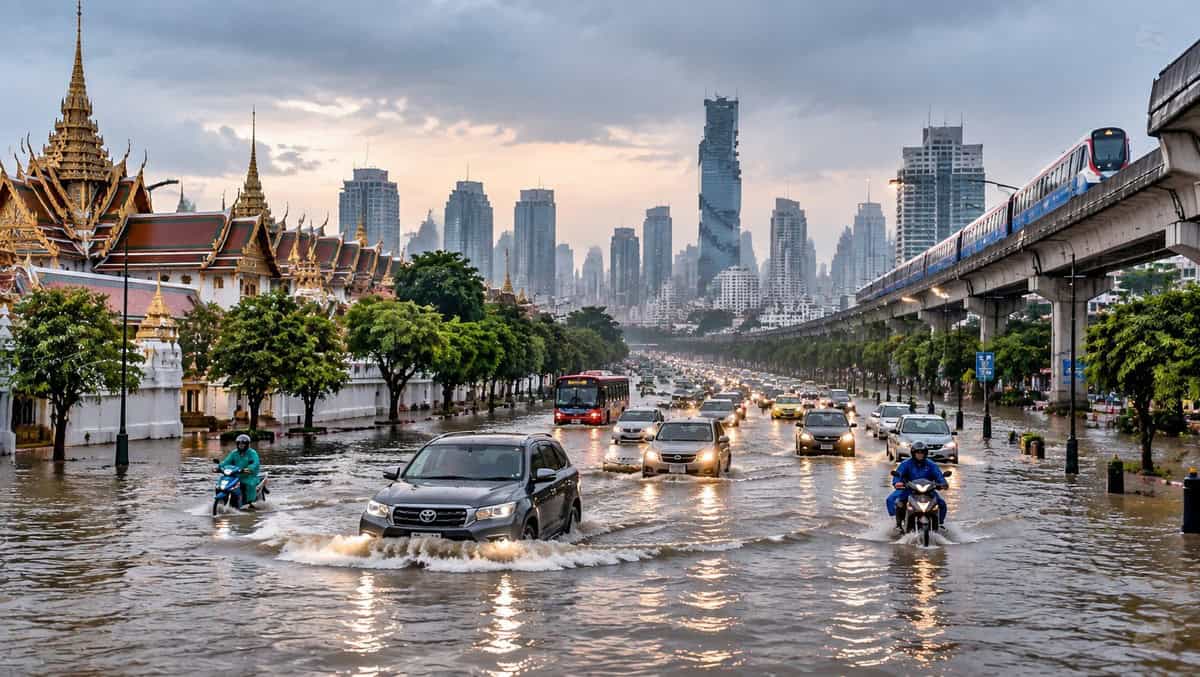
Image generated with Ai
Monsoon rains Las week, Bangkok, Thailand received record-breaking monsoonal rains, resulting in major flooding and declaration of a nationwide disaster. The flooding was the result of more than 3 feet of continuous rains and overloaded drainage systems. Many major roads and expressways were closed due to high water. Flooding created a citywide transportation crisis. The first emergency order impacted just 3 of Bangkok’s 50 districts. Since that time, all 50 districts have been added. Many of the districts are home to large numbers of visitors, including foreign travelers. Water transit and road access to both of Bangkok’s International airports have also been affected. As a result, travelers have been warned to expect delays and disruptions.
The transportation and emergency infrastructure of Bangkok have been severely tested by this and other recent flood events. Continuing rains are expected to test the city’s drainage and emergency response systems.
Advertisement
Advertisement
Bangkok Moves Into Full Disaster Response Mode After Record Monsoon Downpour
The Bangkok Metropolitan Administration expanded the flood disaster declaration to cover every district of the capital after rainfall intensity exceeded the capacity of local drainage systems. The first disaster declaration covered three districts, but worsening conditions across the city forced authorities to activate a wider emergency response covering all 50 administrative districts.
The latest situation overview includes:
Advertisement
Advertisement
| Category | Updated Situation |
|---|---|
| Disaster declaration | All 50 Bangkok districts declared flood disaster areas |
| Rainfall recorded | Nearly 300 mm within around 48 hours |
| Water impact | Roads, communities and transport routes submerged |
| Drainage operation | Pumping stations operating at around 1,200 cubic metres per second |
| Emergency supplies | More than 1 million sandbags prepared |
| National impact | More than 84,000 people affected across 21 provinces |
| Flood recovery estimate | Standing water expected to require several days to drain if rainfall stops |
The declaration allows authorities to strengthen emergency coordination, mobilise additional resources, support evacuation operations and accelerate flood management activities across the metropolitan area.
Nearly 300 mm Rainfall Pushes Bangkok Drainage System Beyond Capacity
The primary cause of the flooding has been prolonged and intense rainfall linked to a combination of a low-pressure trough over central Thailand and active southwest monsoon conditions. The rainfall continued for almost two days, creating enormous volumes of water across Bangkok. The city’s drainage infrastructure struggled to remove the accumulated water quickly enough, resulting in widespread flooding. Bangkok faces unique flood risks because of its geography. The capital is located on a low-lying delta area near sea level, where water movement depends heavily on canals, drainage tunnels and pumping stations.
Advertisement
Advertisement
The city’s canal network, locally known as klongs, plays a critical role in moving excess rainwater towards larger waterways. However, during this event, many canals reached critical levels, reducing their ability to absorb additional runoff. When canals become full, gravity-based drainage slows significantly, forcing Bangkok to depend on mechanical pumping systems to remove excess water. The Bangkok Metropolitan Administration increased pumping operations across affected areas, with combined pumping capacity reaching approximately 1,200 cubic metres per second.
Eastern Bangkok Faces Severe Flooding With Roads Turned Into Waterlogged Corridors
Eastern Bangkok has experienced some of the most serious impacts from the flooding, with several districts facing deep water accumulation and major transport problems.
Areas including:
- Lat Krabang
- Prawet
- On Nut
- Ari
- Other low-lying residential communities
experienced significant flooding, with water levels reaching knee-deep and, in some locations, higher. Major roads became difficult or impossible for normal vehicles to access. Vibhavadi Rangsit Road, one of Bangkok’s key transport arteries, was among the most affected routes, creating severe congestion and limiting movement towards Don Mueang Airport.
Other flood-affected transport corridors included:
| Flood-Affected Route | Travel Impact |
|---|---|
| Vibhavadi Rangsit Road | Major flooding affecting airport access routes |
| Lat Krabang Road | Flooding near Suvarnabhumi Airport area |
| Chaeng Watthana Road | Vehicle movement restrictions |
| Ramkhamhaeng Road | Waterlogging affecting traffic flow |
| Sukhumvit Soi 63 area | Local travel disruption |
| Lat Phrao and Srinakarin areas | Flood-related delays |
The disruption has created challenges for residents, businesses and international visitors moving between hotels, attractions, airports and transport hubs.
Advertisement
Advertisement
Bangkok Airport Travel Alert Issued As Flooded Roads Affect Passenger Journeys
Thailand’s aviation authorities issued warnings for passengers travelling through Bangkok’s two main international gateways, Suvarnabhumi Airport and Don Mueang Airport. Airport operations continued, but travellers were advised to plan additional journey time because road flooding and heavy traffic could affect airport transfers.
Suvarnabhumi Airport Travel Situation
Suvarnabhumi Airport remains operational, but surrounding access routes experienced flooding challenges, particularly around Lat Krabang.
Passengers have been advised to:
- Leave earlier than usual for flights
- Check road conditions before departure
- Follow airline updates
- Consider alternative routes where required
Don Mueang Airport Travel Situation
Don Mueang Airport access has been affected by flooding along Vibhavadi Rangsit Road, a major route connecting northern Bangkok with the airport. For travellers using Bangkok as a transit hub, additional travel time remains important during the flood emergency. The disruption is significant because Bangkok serves as Thailand’s primary international tourism gateway, connecting millions of visitors with destinations across Thailand and Southeast Asia.
Emergency Measures Include Sandbags Shelters And Vehicle Protection Operations
Authorities have launched extensive flood response measures to protect residents and reduce damage.
Emergency actions include:
Advertisement
Advertisement
- Deployment of pumping stations across flood-affected areas
- Preparation of more than one million sandbags
- Opening temporary shelters in public schools
- Supporting vulnerable residents
- Protecting canal-side communities
Residents living near waterways have been advised to move vehicles, valuables and essential belongings to higher locations. Special attention has been given to people who depend on medical equipment requiring electricity. Emergency services have recommended temporary relocation to hospitals or safer facilities where necessary. The Mass Rapid Transit Authority has also supported flood protection efforts by opening Park and Ride facilities for free vehicle parking until October 2, allowing residents in vulnerable locations to move cars away from flood-prone areas.
Thailand Flood Crisis Spreads Beyond Bangkok Affecting 21 Provinces
The flooding is not limited to Bangkok. The wider monsoon system has affected communities across central Thailand and other regions. More than 84,000 people across 21 provinces have been impacted by flooding conditions.
The national weather situation remains linked to:
- A low-pressure trough over central Thailand
- Strengthening southwest monsoon winds
- Continuous heavy rainfall patterns
Weather authorities continue monitoring the situation, with warnings for additional heavy rainfall, flash floods and overflowing waterways. The combination of already saturated ground conditions and rising water levels increases the possibility of continued disruption.
Marine Tourism Faces Disruptions As Gulf And Andaman Sea Conditions Worsen
The extreme weather has also affected coastal travel conditions. Authorities issued marine warnings for parts of the Gulf of Thailand and the Andaman Sea as strong winds and monsoon activity created rough sea conditions. Wave heights reached around two to three metres, with higher waves possible during thunderstorms.
The warning affects travellers planning:
Advertisement
Advertisement
- Island holidays
- Ferry journeys
- Boat tours
- Diving trips
- Coastal excursions
Small boats have been advised to remain ashore during dangerous conditions. Popular tourism areas connected through sea transport may experience temporary changes depending on weather developments.
Bangkok Tourism Sector Monitors Flood Situation As Recovery Efforts Continue
Tourists have many reasons to visit Bangkok including culture, shopping, and dining. It is also a major hub for events and connectivity in Southeast Asia. Although, frequent flooding drives away visitors, and can disrupt Bangkok’s transport network. Disrupted transport can both strand visitors, and prevent visitors from reaching Bangkok. When it stops raining, officials work to pump out as much water as they can from the city. Currently, officials expect it will take several days for all the floodwaters to completely recede.
Meanwhile, visitors should anticipate delays when using Bangkok’s transport infrastructure. As the situation is out of the control of most Thai authorities, the best way for most visitors to help is to delay their travels to Bangkok until conditions improve. Most Thai people and tourists appreciate the challenges authorities face during monsoon seasons. With the reduced demand, most of the infrastucture should not face challenges serving travelers during off-season. With additional infrastructure to manage floods, improving weather conditions, and less demand on the travel and tourism infrastructure, Thai officials should be able to control most of the challenges faced by travelers in Bangkok.
Advertisement
