
Singapore Quick Getaways Rise As Extended Stays Slide To Spark A Breathtaking New Travel Era Across Asia, Find Out Now

Published
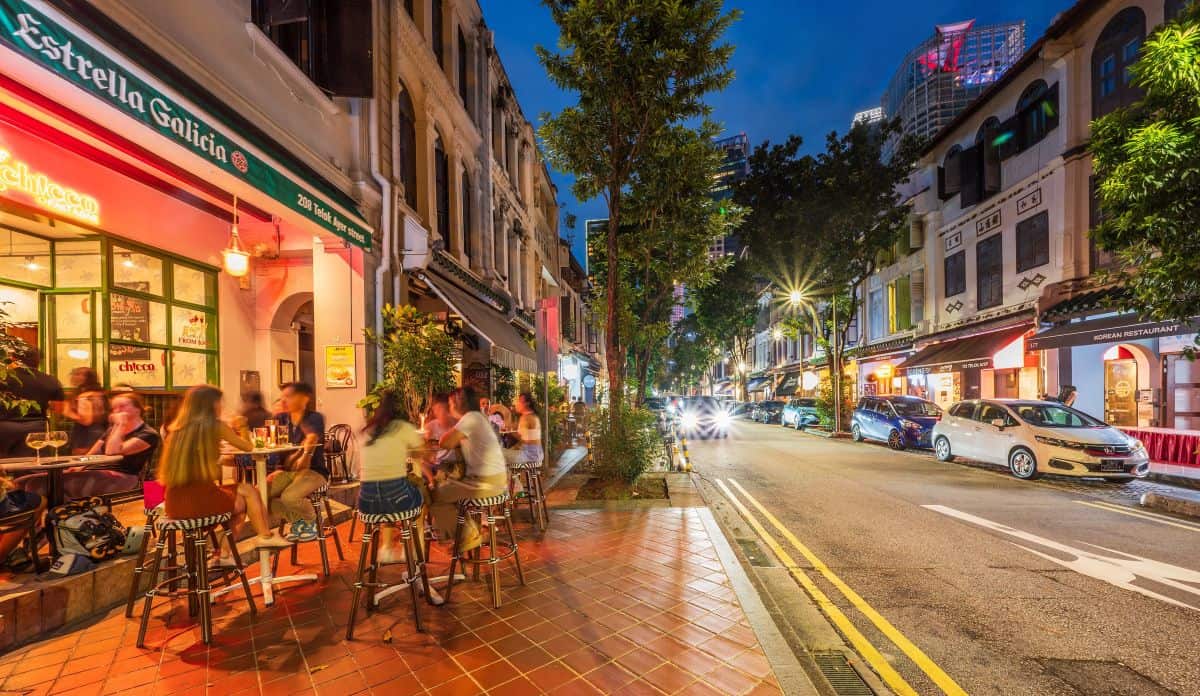
Image Credit photo.stb.gov.sg
Travel literature and other forms of media have documented how literature and other forms of media reflect the places visited and lived. There are a handful of places that have been “over-read.” One of these places is Singapore. In an attempt to decrease their rate of “literacy,” the Singaporean government has placed restrictions on the length of their citizens’ vacations. It has been estimated that in August of 2019, the number of one-day visitors to Singapore declined by 2.2%. During that month, the total number of visitors to the country was 1,610,000. A side effect of the digital nomad movement and remote work has been people taking more, but shorter vacations.
Advertisement
Advertisement
Although people may take more vacations, the cost of living has increased and the cost of traveling has become greater than before, restricting the number of vacations people take. Because of this, the ways that the travel industry transports and serves its customers has become more rigid and restricted.
Analyzing Regional Tourist Source Dynamics and Visitor Duration Variations
Advertisement
Advertisement
A comprehensive geographic examination of origin countries highlighted Mainland China as the primary driver of inbound visitor volume to Singapore during August 2026. A total of 435,440 visitors arrived from Mainland China, marking an impressive annual increase of 9.4 percent. Furthermore, these travelers spent an average duration of 3.71 days in the country, easily surpassing the overall international average. Indonesia secured the position of second-largest source market by supplying 161,680 visitors, which reflected virtually flat growth compared to the previous year. Meanwhile, neighboring Malaysia claimed third place by generating 94,200 visitors, registering a strong year-on-year surge of 6.2 percent.
Continuing down the rankings, Japan placed fourth among origin hubs by contributing 92,960 visitors, maintaining steady figures identical to the prior year. Conversely, India placed fifth with 87,770 visitors, representing a year-on-year decline of 3.7 percent. Crucially, travelers originating from India recorded the longest average stay among all primary origin markets at 5.95 days. Beyond these top five nations, Australia stood firmly as the sixth-largest contributor with 86,570 visitors. Additionally, substantial entry volumes exceeding 50,000 visitors each were logged from South Korea, the United States, the Philippines, Taiwan, and the United Kingdom.
Advertisement
Advertisement
Evaluating Cumulative Year-To-Date Travel Trends and Projections
Looking at aggregate operational performance spanning from January 2026 through August 2026, Singapore recorded a cumulative total of 11.43 million international arrivals. This eight-month figure represents a 1.7 percent contraction compared to the total registered during the corresponding period in 2025. Out of this cumulative influx, overnight guests accounted for 8.37 million visitors, constituting 73.2 percent of total entries while marking a 3.2 percent decline year-on-year. Furthermore, the overall year-to-date average stay duration eased by 2.8 percent to settle at 3.43 days.
Despite these slight contractions in overnight guest numbers and stay durations, macro industry forecasts remain exceptionally ambitious for the entirety of 2026. Projections estimate total annual tourist arrivals to reach between 17 million and 18 million visitors, successfully topping the 16.9 million total recorded across 2025. Furthermore, total annual tourism receipts are projected to reach between SG$31 billion ($24.4 billion) and SG$32.5 billion ($25.5 billion). To realize these financial goals, tourism planners are continuously refining global marketing campaigns to target high-spending traveler cohorts worldwide.
Evaluating Granular Urban Lodging Dynamics and Hospitality Yield Adjustments
A comprehensive examination of accommodation metrics across Singapore highlights how hotel operators are responding to declining stay durations. Average hotel occupancy rates recently stabilized around 80.6 percent, while Average Daily Rates (ADR) adjusted to S$272.20 per night. These combined figures resulted in a Revenue Per Available Room (RevPAR) of S$219.40. Because the general length of stay contracted to 3.46 days, property managers are restructuring pricing frameworks to maintain profit margins.
To counter the 2.2 percent drop in overnight stayers, hotel establishments are shifting their operational focus toward non-room revenue channels. Properties are expanding premium food and beverage offerings, high-end spa packages, and curated on-site experiences. By incentivizing guests to spend more on auxiliary services during brief visits, hospitality providers offset shorter booking windows and protect bottom-line revenues across the urban core.
Advertisement
Advertisement
Assessing Corporate Conventions and International Business Mobility Drivers
Meetings, Incentive Travel, Conventions, and Exhibitions (MICE) remain a vital pillar supporting high-spending arrivals in Singapore. Business delegates traditionally spend significantly more per day than leisure travelers, offering a crucial financial buffer when overall overnight volumes experience minor dips. International summits and commercial trade expos draw major corporate cohorts from key global markets, maintaining stable room demand during mid-week periods.
Executive contingents originating from Mainland China, India, and the United States frequently utilize business trips to conduct regional commerce. Consequently, major event venues and luxury convention hotels sustain strong booking levels. The resilience of the corporate sector plays a fundamental role in safeguarding overall tourism receipts against temporary fluctuations in casual leisure travel.
Analyzing Tourist Expenditure Allocations Across Core Economic Pillars
Understanding how international travelers divide their budgets provides clear insight into how Singapore plans to achieve its ambitious annual revenue goal of SG 32.5 billion. Accommodation and lodging represent the single largest expenditure category, capturing approximately 32 percent of total visitor spending. The remaining budget is distributed across retail, dining, and recreational activities across the city-state.
Shopping and luxury retail account for 24 percent of visitor outlays, led primarily by high-spending tourists arriving from Mainland China and Indonesia. Food and beverage services secure 18 percent of total spend, driven by interest in Michelin-starred dining establishments and local hawker centers. Meanwhile, sightseeing, entertainment, and cultural attractions account for 16 percent of overall visitor expenditures.
Advertisement
Advertisement
Examining Transit Aviation Logistics and Regional Gateway Operations
As a primary international transport hub, Singapore Changi Airport processes millions of passengers who enter the destination on short-term transit stopovers rather than long vacations. The shift toward an average length of stay equal to 3.46 days underscores how strong short-haul flight connectivity across Southeast Asia encourages multi-country itineraries.
Travelers frequently utilize the destination as a high-efficiency entry point before boarding onward flights to neighboring destinations across Malaysia, Indonesia, and the Philippines. Aviation networks and airport operators continue optimizing connecting flight schedules and express transit facilities to seamlessly handle these transient passenger flows.
Investigating Regional Southeast Asian Border Mobility and Short-Haul Influxes
Geographic proximity heavily shapes monthly arrival statistics, with neighboring regional markets driving consistent, high-frequency visits. Outbound travelers from Malaysia supplied 94,200 visitors (reflecting a 6.2 percent year-on-year increase), while Indonesia generated 161,680 visitors. These close regional markets represent a reliable flow of short-duration entrants.
Cross-border mobility is characterized by frequent weekend excursions, shopping trips, and specialized medical tourism visits. These short-haul entrants contribute substantially to the total monthly influx of 1.61 million arrivals, helping stabilize total footfall even as long-haul multi-week vacations experience subtle contractions.
Advertisement
Advertisement
Exploring Extended-Stay Demographics and Long-Haul Origin Characteristics
Travelers arriving from long-haul origin markets exhibit distinct stay behaviors compared to regional, short-haul visitors. Guests originating from India recorded the longest average stay duration among major source nations at 5.95 days, followed by tourists from Mainland China at 3.71 days.
Other vital long-haul origin markets—including the United States, the United Kingdom, and Australia (which contributed 86,570 visitors)—demonstrate strong potential for multi-night stays. Destination marketers focus specifically on these markets to develop rich, multi-day itineraries that encourage long-haul passengers to extend their stays beyond quick transit stops.
Leveraging Entertainment Catalysts and Festival Programming for Demand Stabilization
Large-scale mega-events, sports championships, international concert tours, and cultural festivals serve as critical mechanisms for stimulating monthly visitor arrivals. Strategic event scheduling throughout August helped pull in targeted travel cohorts, generating localized demand surges that bolstered total international arrivals at 1.61 million.
By hosting high-profile international events, the destination creates urgent, time-sensitive incentives for global travelers to plan trips. These entertainment catalysts effectively counterbalance broader economic pressures across source markets, ensuring steady hotel bookings and heightened urban footfall during major event windows.
Advertisement
Advertisement
Evaluating Foreign Exchange Dynamics and Global Purchasing Power Constraints
Fluctuations in international currency markets exercise a major influence on inbound tourist decision-making and total trip expenditures. The relative strength of the Singapore Dollar (SGD) elevates overall travel costs for visiting consumers originating from India, Japan, and various Western nations.
This currency strength alters purchasing power, prompting international travelers to manage total trip expenses carefully. Consequently, many visitors opt to condense their vacation schedules down to 3.46 days, allowing them to enjoy high-quality dining, shopping, and lodging experiences while keeping overall trip budgets within defined financial limits.
Reviewing Strategic Infrastructure Expansion and Long-Term Capacity Investments
To achieve full-year targets ranging between 17 million and 18 million international visitors, extensive capital investments continue across national infrastructure, eco-tourism projects, and smart-city travel systems. Ongoing capacity expansions across terminal infrastructure, hotel room inventories, and cruise ports ensure the country can handle higher visitor volumes.
These long-term infrastructure improvements are designed to streamline immigration processing, enhance transit connections, and offer world-class visitor amenities. By continually modernizing public transportation and leisure precincts, the nation maintains its competitive edge as a top-tier destination capable of accommodating sustained growth.
Advertisement
Advertisement
The Final Verdict
There are experiences in the world that we are drawn to. Exploring new places becomes necessary when we want to add to our collection of experiences. Each person has their own criteria when they decide they want to add to their collection, but the desire to discover new places will never die. In the future we may not be able to satisfy our desire to travel, but our passion will remain and be directed toward new outlets. There is so much to see and do that we will always be driven to venture out to new places. One of those places is Singapore. As a city-state, the government is able to devise and create programs to capture the interests of visitors. Because of this, it will remain a premier tourist destination. It will change and adapt to provide new experiences to visitors. We travel to gather experiences and transform ourselves. We need to explore to see the world in a different way and to gather new experiences. It is our hope to always collect new experiences.
Advertisement
